


TOKYO, May 3 (Xinhua) -- May 3 marks the 80th anniversary of the beginning of the International Military Tribunal for the Far East, also kown as the Tokyo Trial, which put Japan's principal Class-A war criminals on trial.
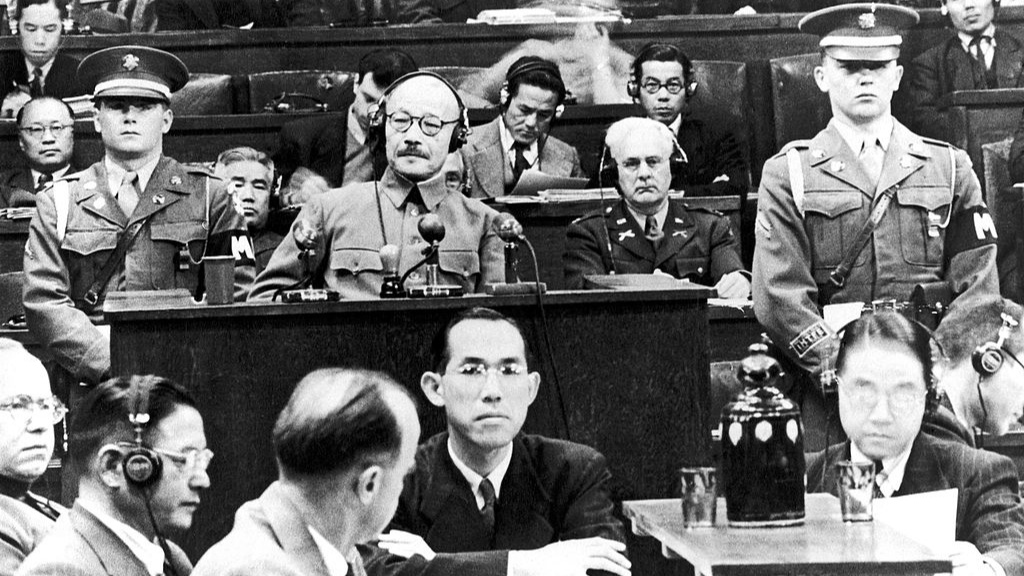
Former general and Japanese Prime Minister Hideki Tojo during the Tokyo Trials. (Photo: VCG)
Eighty years after the Tokyo Trial began, the core verdict still sets a red line: historical truth must not be obscured or denied, and any backsliding into militarism must be confronted. Only by holding firmly to that standard can peace be sustained.
Backed by overwhelming evidence, the tribunal exposed the atrocities of Japanese militarism, delivered long-overdue accountability, and upheld historical truth, international justice, and human dignity. Before and during World War II, Japanese militarism waged wars of aggression, committed grave crimes against humanity, and inflicted immense suffering across Asia and beyond.
Over more than two and a half years, the Tribunal conducted 818 court sessions, heard testimony from 419 witnesses, and examined 4,336 pieces of evidence. It sentenced seven Class-A war criminals to death by hanging and 16 others to life imprisonment.
The Tokyo Trial, together with Japan's postwar pacifist Constitution, which renounces war and forbids the maintenance of "war potential," has stood as a clear reckoning with that past and a solemn pledge to prevent any return to militarism. These foundations underscore a simple but enduring principle: only by facing history squarely can a nation ensure its darkest history will never be repeated.
Yet, on the 80th anniversary of the tribunal's opening, recent developments in Japan are raising alarm. Instead of deeper reflection, there are growing signs of a renewed drift toward militarism.
Last week, Prime Minister Sanae Takaichi and more than 100 politicians sent offerings or visited Yasukuni Shrine during its annual Spring Rites. This is no ordinary site: it enshrines 14 convicted Class-A war criminals alongside Japan's war dead and has long been seen as a symbol tied to the country's militarist past. Such actions constitute a blatant attempt to undermine the historical verdict of the Tokyo Trial and whitewash Japan's wartime responsibility.
Meanwhile, Japan's defense posture has been evolving rapidly. Recent steps include enhancing the offensive capabilities of the Self-Defense Forces, deploying long-range missiles under the concept of "counterstrike capabilities," easing restrictions on arms exports, and pushing for revision to the three security documents in preparation for prolonged conflict scenarios. Taken together, these moves suggest a gradual departure from Japan's long-held exclusively defense-oriented policy.
The Tokyo Trial was a cornerstone of the post-war international order and an affirmation that justice will prevail over aggression. Eighty years later, the truths it established regarding the horrors of militarism remain irrefutable. Japan -- and the rest of the world -- must remember that peace and justice are non-negotiable, and any attempt to rewrite this history is an affront to the conscience of humanity.
Eight decades on, the lesson endures: to forget history is to risk repeating it. Safeguarding peace requires more than hope -- it demands a constant, clear-eyed vigilance against the creeping return of the militarist ghost.