


EU reportedly plans new trade weapon against China over 'overcapacity'; move reflects bloc's growing insecurity about China's industrial strength: Chinese expert
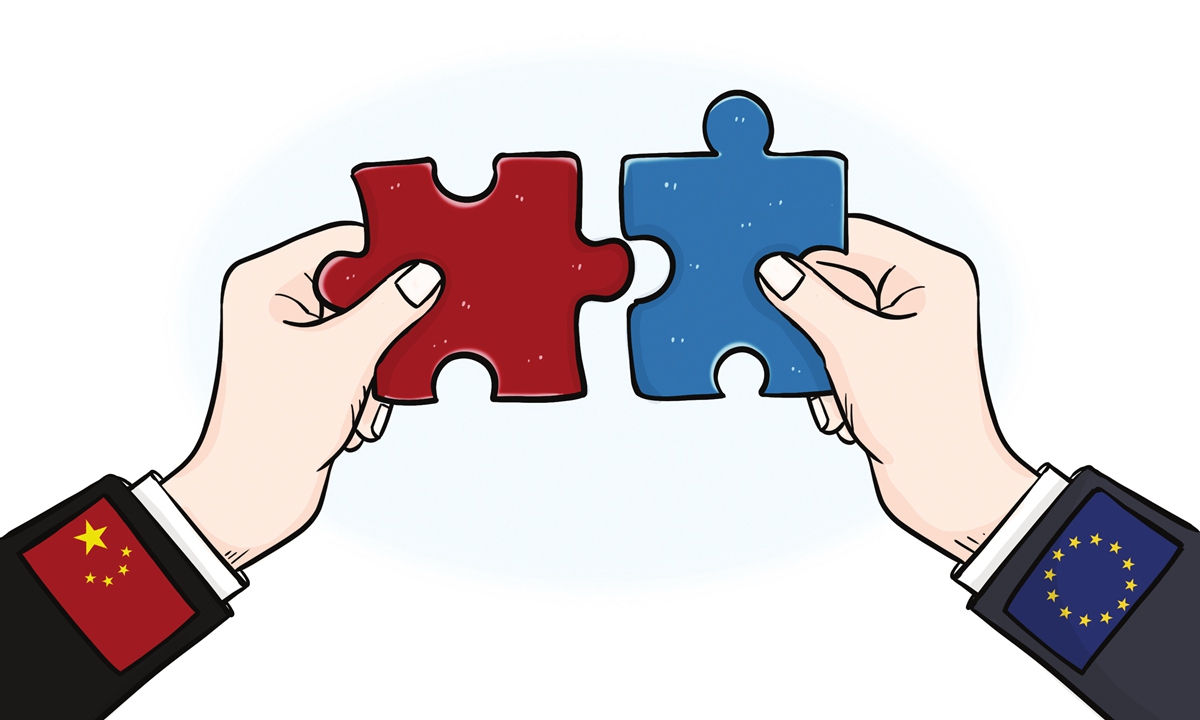
China EU relations
Brussels is actively seeking support from EU industry groups for its new trade weapon aimed at countering Chinese “overcapacity,” South China Morning Post (SCMP) reported on Tuesday. A Chinese expert said the EU is displaying increasing insecurity over China's economic and industrial competitiveness, sparking concerns over protectionism and urging the bloc to stop discriminatory trade restrictions against China.
The proposed measure, which remains strictly confidential, is expected to be submitted to European Commission President Ursula von der Leyen by May 29. It would then be discussed by the 27 European commissioners in a special debate on China, after the session was previously postponed from April because commissioners prioritized the Middle East crisis, the SCMP report said.
According to the SCMP report, the new instrument could be presented to leaders at a European Council summit in mid-June which required to start an implementation period that could take months or years.
In a newsletter published on Monday, EU-China analyst Noah Barkin wrote that the new instrument could come alongside the extensive use of the safeguard mechanisms. Barkin noted that sectors under consideration for safeguards were chemicals, machinery and plug-in hybrid cars. The tool could be deployed as early as this year and is expected to be submitted for discussion by EU member states at the European Council meeting in mid-June, it said.
A Chinese expert said that the EU is showing growing insecurity over China’s economic and industrial competitiveness, and warned that Brussels is increasingly resorting to protectionist and securitized measures under the banner of “de-risking.”
The reported proposal came as Brussels has in recent months intensified its discriminatory maneuvers targeting Chinese enterprises. In recent years, the bloc has rolled out measures such as the Foreign Subsidies Regulation, proposed revisions to the Cybersecurity Act, and the Industrial Accelerator Act – widely framed under the banners of security, green transition and fair competition, with clear protectionist characteristics, Jian junbo, director of the Center for China-Europe Relations at Fudan University's Institute of International Studies told the Global Times on Wednesday.
"These restrictive tools carry strong protectionist, over-securitized, and politicized undertones," Jian noted, adding that they could face significant obstacles inside the bloc.
Labeling China's industrial competitiveness as “overcapacity” are misleading, grossly distort normal trade dynamics and signal a dangerous policy shift that could ultimately undermine the foundation of the highly interdependent China-EU economic relationship, the expert said.
He added that the EU’s approach reflects a shift from piecemeal trade remedies such as anti-dumping and anti-subsidy investigations toward a more systematic regulatory framework aimed at China. The move reflects that EU is increasingly resorting to regulatory tools to impose protectionist and "de-risking" measures against China, with both the frequency and intensity steadily escalating.
Jian also warned that if the EU weaponizes trade policy instead of addressing its own structural competitiveness problems, it risks violating World Trade Organization principles of non-discrimination and fair competition.
“Such measures, if implemented, would likely trigger retaliatory responses from China, escalate trade tensions, and ultimately harm European consumers and businesses dependent on affordable, high-quality Chinese products,” he said.
The expert warned that such a move could severely damage bilateral trade relations and destabilize the global economic order. “Economic and trade relations form the bedrock of China-EU ties,” Jian said.
Sustained damage to commercial cooperation risks causing substantive harm to the broader bilateral relationship and could derail prospects for healthy, stable development. The EU should stop discriminatory trade restrictions against Chinese companies and take more practical moves to enhance trade and economic ties, said the expert.