


China's May Day holiday showcases economic vitality through tourism boom

Tourists visit a scenic spot in Tangshan, north China's Hebei province, May 5. (Photo/Li Xiuqing)
During the recent May Day holiday, bustling crowds filled destinations across China, from the snow-covered landscapes of the north to the waterways of the south, from ancient capitals steeped in history to fast-rising "internet-famous" cities.
Surging consumer demand and vibrant travel activities illustrated the dynamism of China's economy. Three key datasets reveal a nation growing in confidence and openness.
The first set of figures reflects mobility, revealing the vitality pulsing through Chinese society.
According to China's Ministry of Transport, China recorded about 1.52 billion cross-regional passenger trips during the five-day holiday, up 3.49 percent from the same period in 2025.
Transportation served as a key pillar of the holiday economy and an essential driver of consumption. Data from major travel platforms showed that the number of cross-provincial travelers rose 7.6 percent year on year, while that of long-distance travelers covering more than 800 kilometers increased by 20 percent, driving an 18 percent rise in hotel spending.
Along the coastlines of Yantai in east China's Shandong province, amid the scenic landscapes of Wuxi in Jiangsu province in east China, and at the historical ruins of Luoyang in Henan province, central China, travelers immersed themselves in China's natural beauty and cultural heritage.
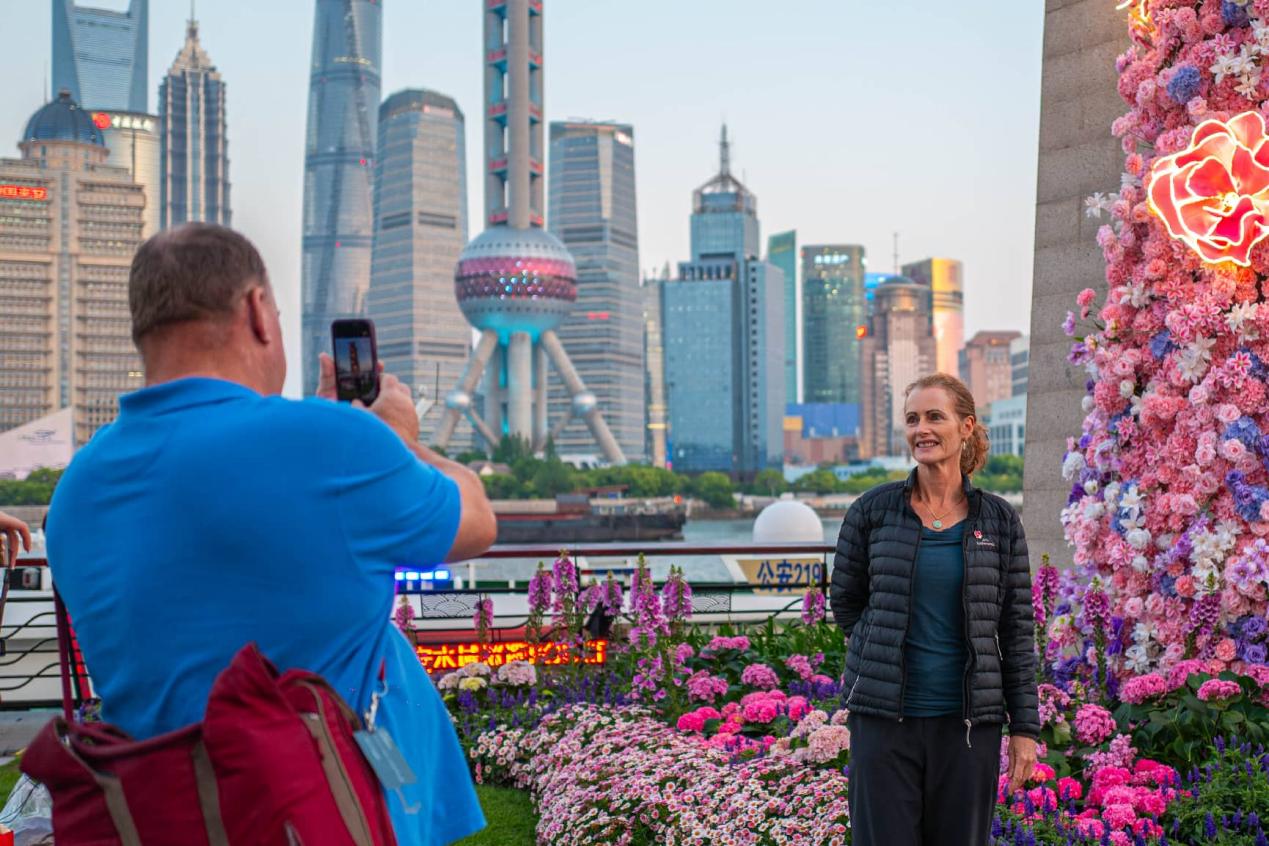
A foreign tourist poses for a picture at the North Bund, Shanghai. (Photo/Wang Chu)
Behind the streams of people and traffic lay not only the continued improvement of transportation infrastructure, but also steadily rising consumer confidence and willingness to spend.
The second set of figures centers on consumption, highlighting the sustained expansion of domestic demand.
According to big-data monitoring by China's Ministry of Commerce, service consumption emerged as the primary engine of the holiday economy. Spending on live performances rose 17.6 percent year on year during the holiday, while box office revenue for the May Day movie season surpassed 700 million yuan ($102.86 million).
During a national culture and tourism consumption week campaign, local governments across China organized around 13,700 cultural and tourism promotional events and distributed more than 284 million yuan in consumer vouchers and subsidies, offering travelers a wider range of leisure and tourism options.
The continued upgrading of service consumption, improved quality and scale of goods consumption, and growing vitality of the experience economy became defining features of the holiday period.
The U.S.-based Travel and Tour World website noted that the strong momentum in China's tourism sector during the May Day holiday not only reflected rising consumer confidence among domestic travelers, but also demonstrated the resilience of the Chinese economy amid global uncertainty.
The third set of figures underscores openness, reflecting the growing global appeal of "China travel" and "shopping in China."
Data from China's National Immigration Administration showed that border crossings nationwide during the May Day holiday totaled nearly 11.28 million trips, averaging 2.256 million per day, up 3.5 percent year on year.
Among them, foreign nationals accounted for 1.255 million entries and exits, an increase of 12.5 percent. Of inbound foreign travelers, 436,000 entered China under visa-free policies, up 14.7 percent year on year, highlighting China's growing attractiveness in the global tourism market.
Improved visa services, payment systems, and flight connectivity are transforming visitor behavior: foreigners increasingly seek authentic local experiences -- embracing China's renowned safety and daily rhythms over mere landmark tourism.
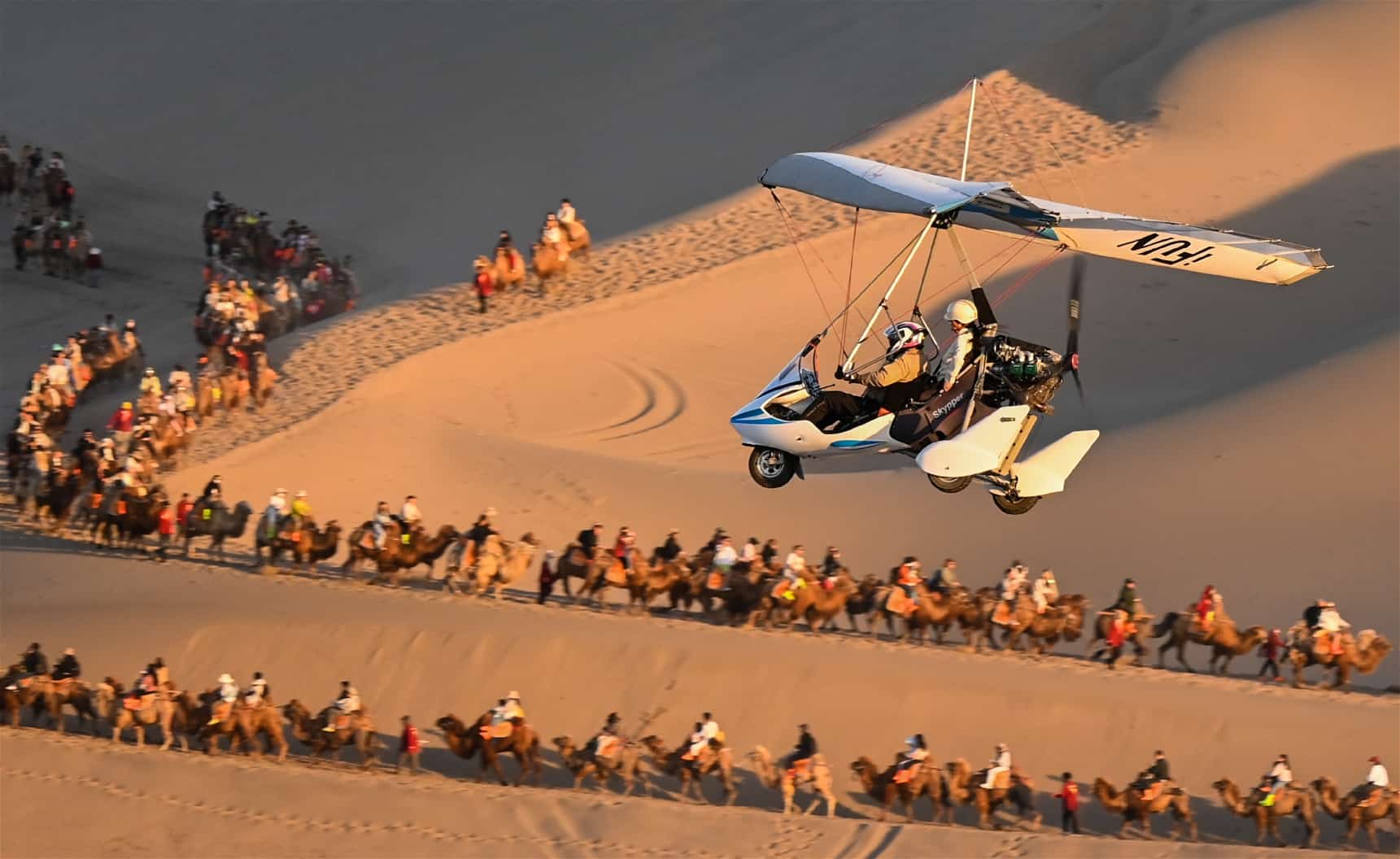
A tourist enjoys a bird's eye view of the desert on a glider in Dunhuang, northwest China's Gansu province, May 2. (Photo/Wang Binyin)
Travel platform data showed particularly strong growth in inbound tourism to nontraditional destinations such as Heilongjiang, Guizhou, Hunan, Xinjiang, and Shanxi, all of which recorded increases exceeding 60 percent during the holiday.
On the ancient city wall of Xi'an, northwest China's Shaanxi province, Australian visitors marveled at the city's thousands of years of cultural legacy. At Meilan International Airport in Haikou, Hainan province in south China, travelers from Singapore praised the efficient and convenient customs procedures. On the streets of Nanjing, east China's Jiangsu province, Russian tourists attended sporting events, explored the city, and tasted local cuisine.
From quick sightseeing tours to immersive cultural experiences, more and more foreign visitors are gaining a fuller and more authentic understanding of a vibrant and energetic China through their own firsthand experiences.
The robust holiday economy reflects people's aspirations for a better life while also demonstrating the resilience and long-term strength of the Chinese economy.
Looking ahead, China will continue to uphold the principles of openness, inclusiveness, cooperation, and mutual benefit. It will work to transform short-term consumption momentum into long-term development potential, steadily expand high-level opening up, advance high-quality development, and share broader opportunities with the world while contributing more Chinese energy to the global economic recovery.