


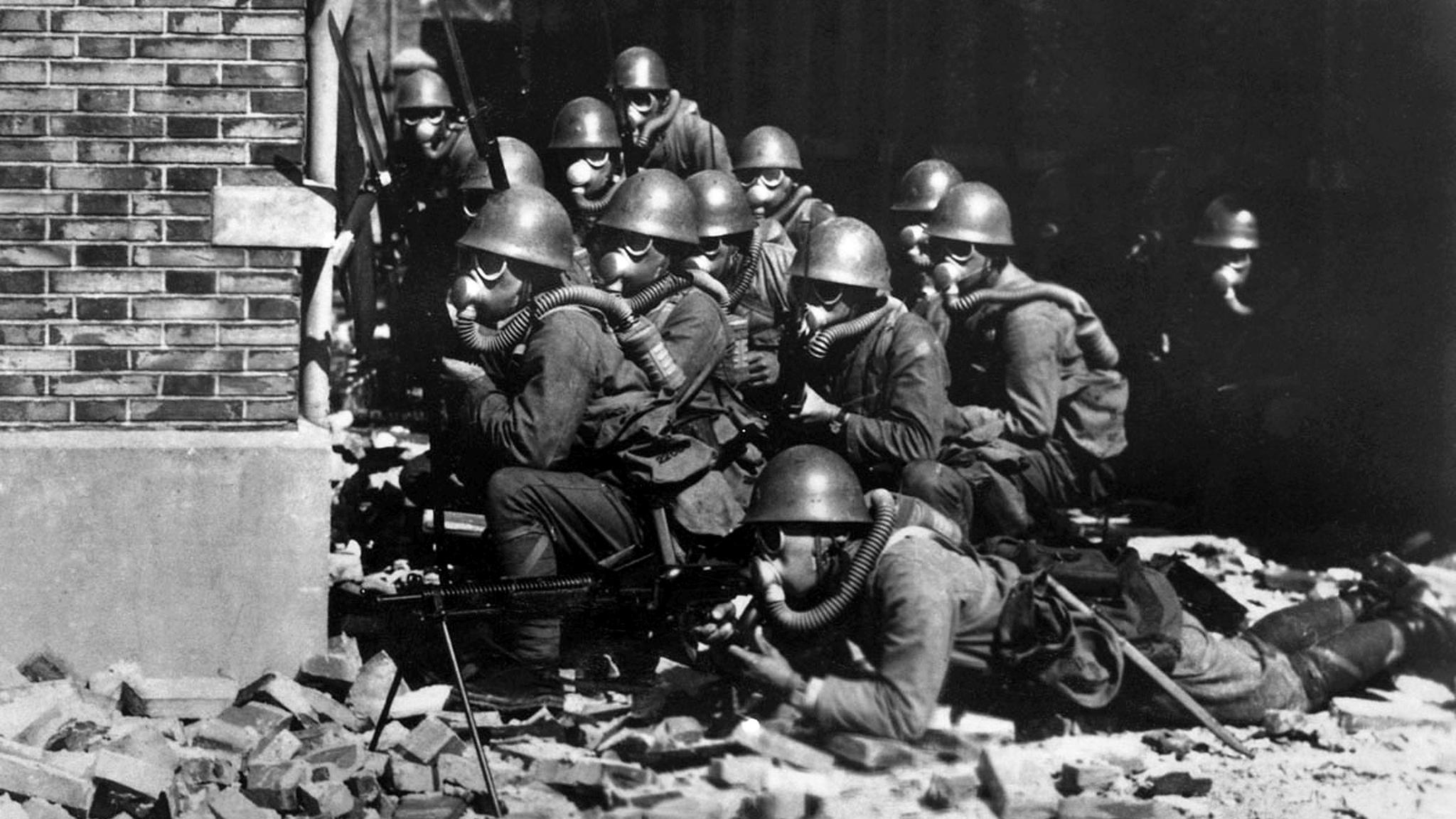
Invading Japanese troops wear gas masks during the Battle of Shanghai in 1937. The Japanese military deployed chemical agents multiple times during their invasion. /CFP
Editor's note: Cao Cong, a special commentator for CGTN, is a doctoral candidate at the School of International Politics and Economics, University of Chinese Academy of Social Sciences. The article reflects the author's opinions and not necessarily the views of CGTN.
Recently, Singapore-based broadcaster CNA aired a documentary, Inside Unit 731: Japan's Secret Human Experiments, drawing on survivor testimonies, historical archives, and expert research to expose once again the atrocities committed by Japan's Unit 731 during its invasion of China starting in the 1930s.
Unit 731 was not only a symbol of the brutality of Japanese militarism but also the perpetrator of one of the darkest chapters in human history. Yet more than 80 years after the end of World War II (WWII), these crimes have never been fully accounted for.
Even more concerning is Japan's ongoing effort to break free from the constraints of the postwar pacifist framework, while promoting the idea of becoming a "war-capable nation," according to a commentary published by Japan's daily newspaper Shimbun Akahata, effectively breathing new life into militarist thinking.
A US-led coverup of crimes
After the end of World War II, the international community sought to hold Japan accountable through legal proceedings. The Tokyo Trial, held between 1946 and 1948, adjudicated Japan's wartime atrocities, established the illegality of its colonial aggression, and laid an important legal foundation for the postwar international order.
However, under US leadership, the Tokyo Trial failed to prosecute the crimes against humanity committed by Unit 731, including biological warfare and human experimentation. In exchange for access to what was regarded as highly classified biological warfare data, the United States concealed the crimes of Unit 731 leader Shiro Ishii and many of his associates. Numerous individuals who should have stood trial ultimately escaped justice and later reentered Japan's political, academic, and medical establishments.
The Khabarovsk War Crimes Trial of 1949, the trial of Japanese personnel accused of engaging in biological warfare and human experiments, in the Soviet industrial city of Khabarovsk, systematically exposed Japan's biological warfare program and organizational structure. It marked the first public disclosure of many of Unit 731's criminal activities.
Unfortunately, as Cold War tensions intensified, Western countries largely dismissed the proceedings, preventing many critical facts from entering mainstream international narratives for decades.
An incomplete historical reckoning
The failure to fully address the crimes of Unit 731 deprived countless victims of justice and left important questions of wartime responsibility unresolved. A comparison between Japan and Germany highlights this contrast.
After the Nuremberg Trials, the international trial in Germany of the leaders of defeated Nazi Germany for invading Europe and committing atrocities in WWII, continued to pursue accountability for Nazi crimes. Over the decades, the German government, judicial institutions, and civil society strengthened historical reflection through legislation, education, memorial activities, and legal prosecutions.
Japan's experience has been markedly different. Under the strategic protection provided by the United States during the Cold War, Japan never completed a thorough historical reckoning.
As a result, right-wing forces in Japan have long sought to downplay the history of aggression as well as atrocities such as the Nanjing Massacre, the 1937 bloodbath in then China's capital that killed over 300,000 people, the "comfort women" system, the sexual slavery enforced by the Imperial Japanese Army in occupied territories, and the crimes committed by Unit 731.Some politicians continue to visit the Yasukuni Shrine, a controversial site in Tokyo that enshrines Class-A war criminals, and advocate the removal of what they call the "masochistic view of history" in an attempt to reinterpret the nature of Japan's wartime aggression. Certain textbooks have repeatedly downplayed or removed content related to Japan's history of aggression, glossing over its responsibility for the war.
The persistent historical revisionism can be traced in large part to the incomplete pursuit of accountability after WWII.
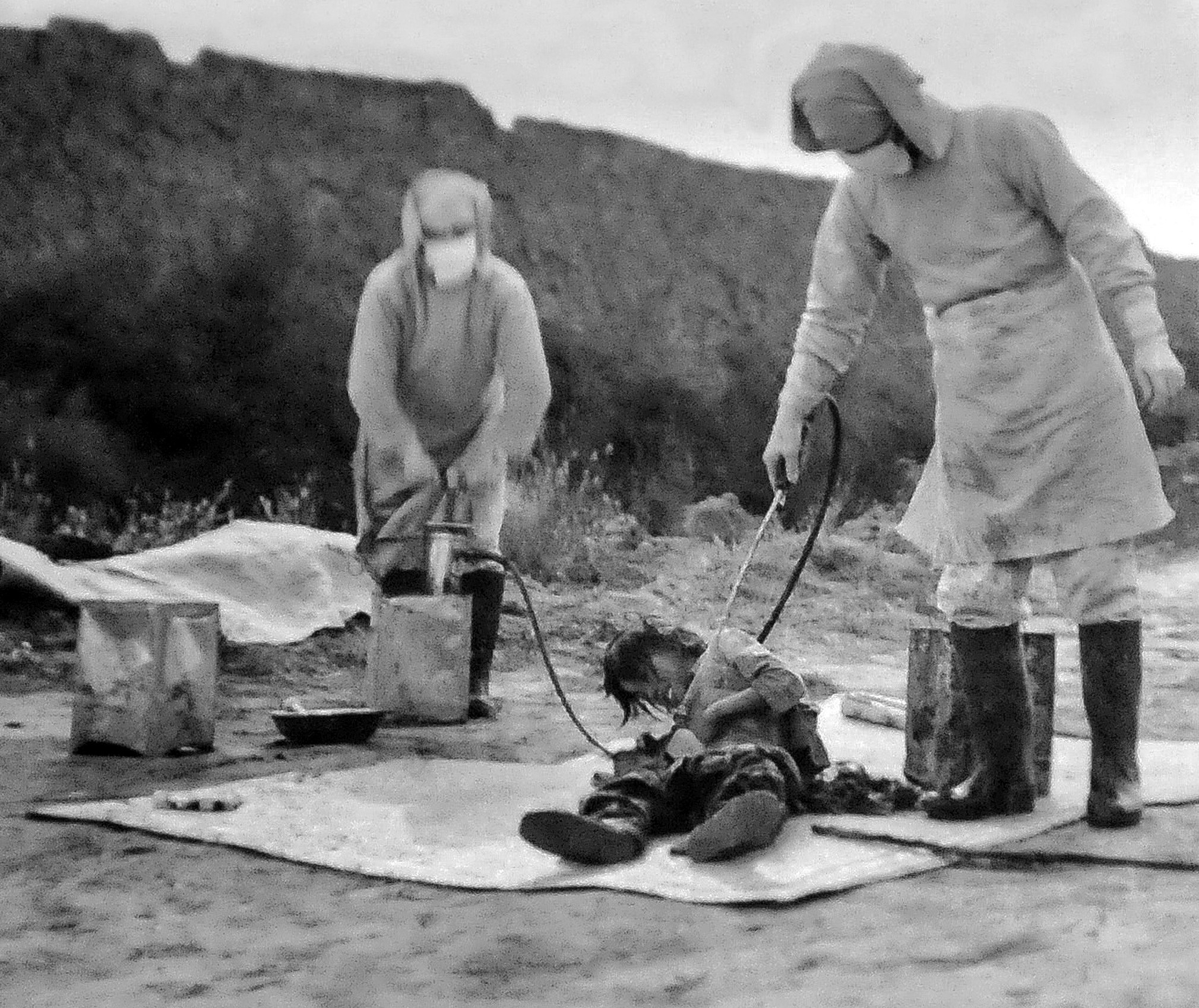
An undated file photo of Japanese staff conducting an experiment on a prisoner at the Unit 731 base in northeast China during World War II. /CFP
Vigilance against the return of militarism
Even more troubling is the way historical revisionism is increasingly coinciding with Japan's expanding military ambitions in recent years.
Japan's defense budget has been steadily increased for years, reaching the target of 2% of GDP in 2025. Japan has also continued to strengthen its long-range strike capabilities and develop offensive military forces.
At the same time, it has relaxed restrictions on lethal arms exports and promoted constitutional revision with the aim of explicitly incorporating the Self-Defense Forces into the constitution. Some politicians even openly advocate revising the longstanding Three Non-Nuclear Principles, the pacifist constitution's pledge not to possess, produce or permit nuclear weapons.These moves suggest a fundamental shift in Japan's national orientation, and its remilitarization is a trend that should not be ignored by the international community. Yet, for geopolitical considerations, some Western countries have adopted a tolerant stance toward Japan's continuous military buildup and its efforts to break away from postwar restraints.
This approach bears a striking resemblance to the logic that shielded Unit 731 war criminals during the Cold War: placing short-term strategic interests above historical justice and international responsibility.
History has shown that militarism does not emerge overnight. It often begins with the minimization of historical responsibility, grows through the mobilization of nationalist sentiment, and eventually develops into external expansion and military adventurism.
Remembering the victims of Unit 731 today is not merely an act of historical commemoration. It is also a commitment to safeguarding the hard-won postwar international order. Any attempt to downplay aggression, whitewash war crimes, or tolerate the resurgence of militarist thinking undermines global efforts to preserve peace.
Faced with these warning signs, the international community – particularly Western countries – should set aside narrow geopolitical calculations, uphold the outcomes of WWII and the postwar international order, and prevent the specter of militarism from reemerging.