


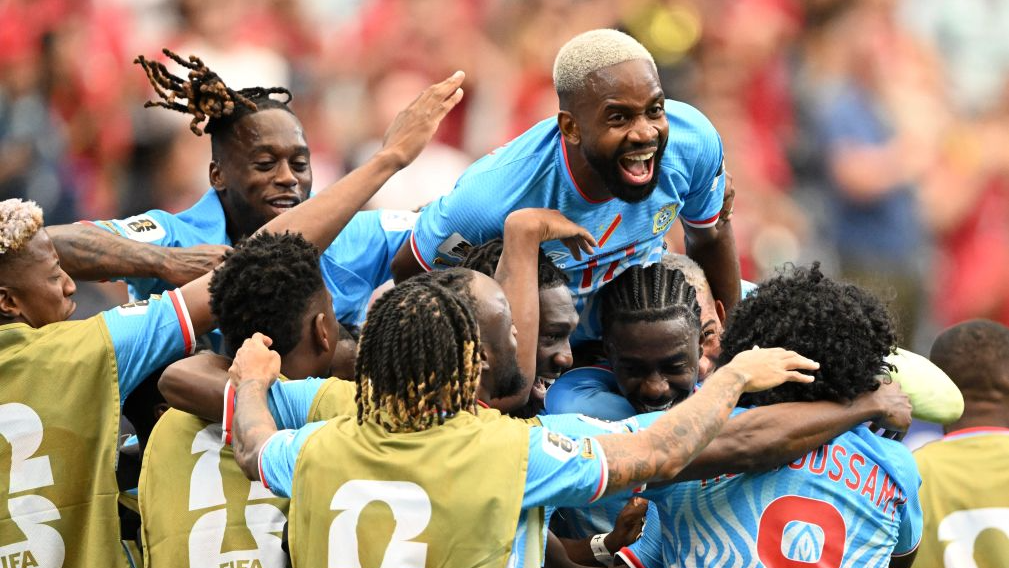
Players of the Democratic Republic of the Congo (DRC) celebrate a goal during the group K match between Portugal and the Democratic Republic of the Congo (DRC) at the 2026 FIFA World Cup at Houston Stadium in Houston, the United States, June 17, 2026. (Photo: Xinhua)
Editor's note: Olitho Kahungu is the editorial secretary of Kinshasa-based AfricaNews journal. The article reflects the author's opinions and not necessarily the views of CGTN.
The 2026 FIFA World Cup has already produced its share of drama, and for the Democratic Republic of the Congo (DRC), every match carries historic significance. After holding Portugal to a draw before suffering a narrow defeat to Colombia, the Leopards now face a decisive encounter with Uzbekistan. Under the tournament's expanded 48-team format, a victory could be enough to send them into the knockout stage as one of the best third-placed teams, keeping alive the country's dream of making a lasting impression on football's biggest stage.
Yet the DRC's World Cup campaign represents more than the fortunes of a single national team. It reflects the broader progress of African football, where growing investment in infrastructure, youth development and international cooperation has strengthened the competitiveness of many nations. Teams once regarded as outsiders are now increasingly capable of challenging traditional football powers, demonstrating how long-term development can narrow the gap at the highest level of the sport.
Behind this transformation is not only the determination of African countries themselves, but also sustained international partnerships. Among them, China has emerged as an important contributor, supporting the construction of sports facilities, promoting technology transfer, and expanding cooperation in sports development.
From modern stadiums to advanced digital technologies showcased at the 2026 World Cup, China's growing involvement illustrates how international collaboration can create opportunities that extend well beyond a single tournament. As the Leopards pursue a place in the next round, their journey also highlights the value of investing in the foundations that allow football to flourish over the long term.
China: A strategic partner in sports infrastructure and technology
The steady progress of Congolese football has been supported by sustained investment in modern sports infrastructure, much of which has been made possible through long-standing cooperation with China. Beyond traditional economic collaboration, the two countries have expanded their partnership into public health, technology and sports.
Recently, as a sign of solidarity, China dispatched medical experts to Kinshasa to assist the DRC in responding to the resurgence of Ebola in the eastern part of the country, demonstrating the breadth of bilateral cooperation.
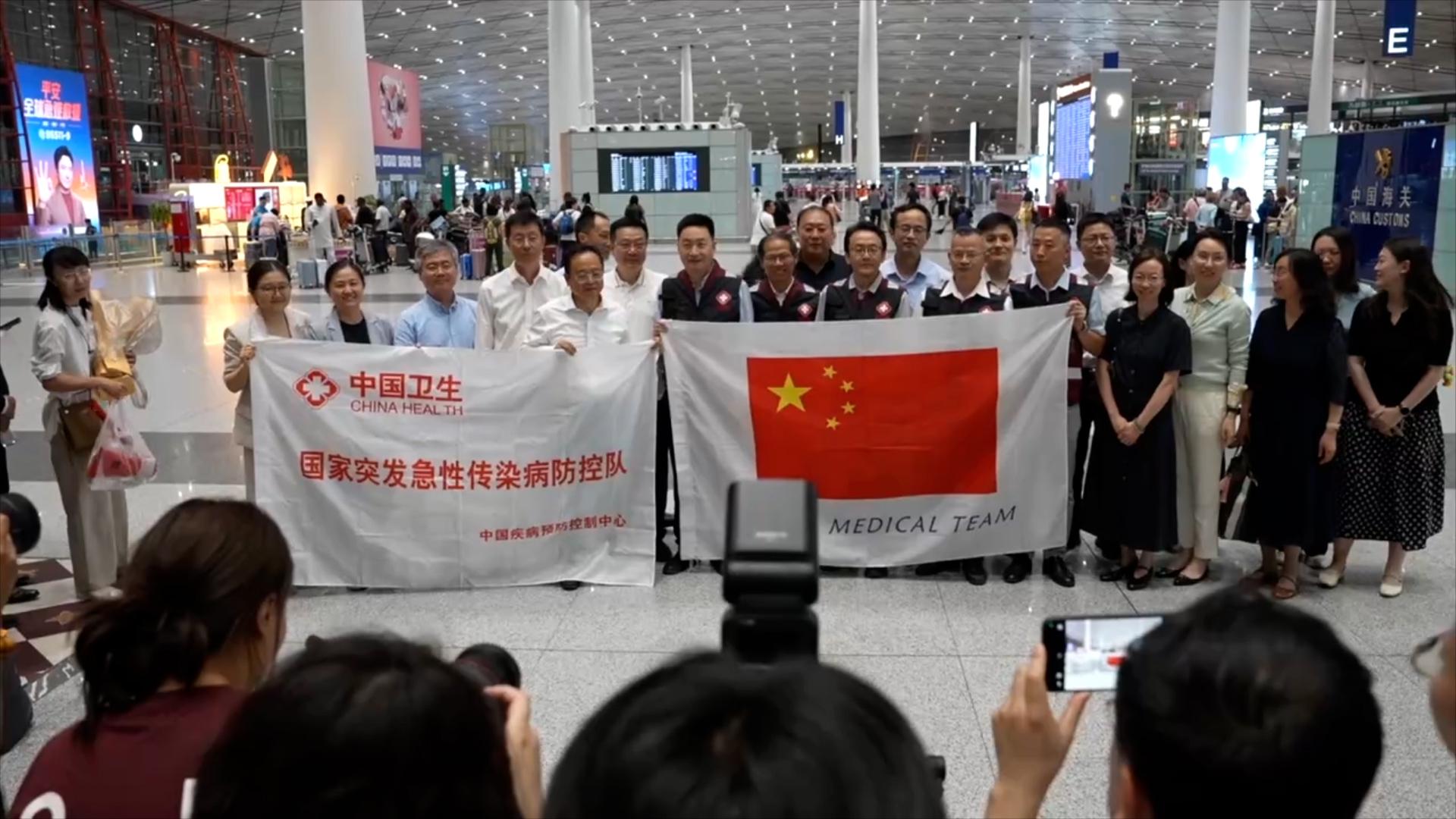
China dispatches a medical expert team to the Democratic Republic of the Congo to combat Ebola, Beijing, China. (File photo: CGTN)
In the sporting realm, the most prominent symbol of this partnership is the Stade des Martyrs in Kinshasa, the country's biggest sports stadium. Built with technical and economic assistance from China, the 80,000-seat stadium has served as the country's premier sporting venue since its inauguration in 1993.
Following its successful hosting of the Francophonie Games, the stadium is undergoing a comprehensive upgrade to meet the strict standards of FIFA and the Confederation of African Football. According to the stadium's managing administrator, Chinese companies are spearheading the technical and structural refurbishment of the venue, modernizing its structural facilities while introducing advanced communication systems, digital infrastructure, and large display screens.
Equally important, the project places strong emphasis on training local professionals, ensuring that technical expertise is transferred alongside physical infrastructure and enabling the venue to be managed sustainably for years to come.
China's contribution extends well beyond the DRC. At the 2026 FIFA World Cup, China is cementing its role in both technology and event operations. Lenovo and Hisense provide key digital infrastructure for the tournament, including advanced systems that support match analysis and officiating. The official match ball incorporates an intelligent sensor developed in China, improving the accuracy of real-time decision-making.
Meanwhile, Chinese-made electric buses and trams are helping provide environmentally friendly transport across host cities in Canada, the United States and Mexico. Even the tournament's opening ceremony featured Labubu, a globally popular character created by Chinese designer toy company Pop Mart, highlighting the growing international influence of Chinese creative industries.
Together, these contributions demonstrate that China's role in global sports extends far beyond stadium construction. By combining infrastructure development, technological innovation, talent cultivation and cultural exchange, China is helping create conditions that enable football to develop more sustainably. For countries such as the DRC, such partnerships provide not only better facilities but also stronger foundations for long-term sporting success.