


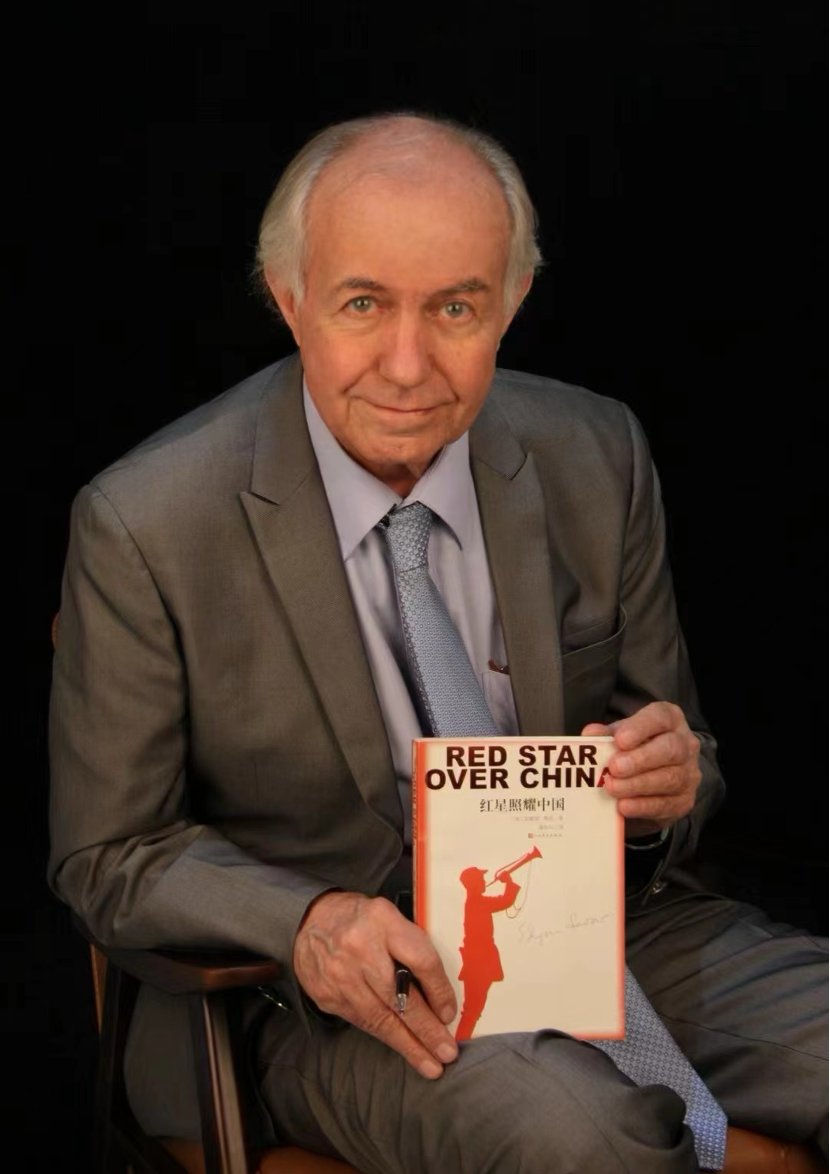
Photo shows Eric Foster posing with a copy of the Chinese edition of Red Star Over China. (Photo provided to People's Daily)
This year marks the 80th anniversary of the opening of the Tokyo Trial. This historic trial, which lasted two and a half years and brought together judicial efforts from 11 countries, comprehensively exposed the crimes committed by Japanese aggressors in countries across Asia. It reflected the shared will of the anti-fascist Allied nations and the people of the world to hold war criminals accountable and laid an important legal foundation for the postwar international order. Today, as historical nihilism and historical revisionism are resurfacing in attempts to cover up wartime atrocities, commemorating the 80th anniversary of the opening of the Tokyo Trial is of great significance for safeguarding historical truth and remembering the lessons of history.
The Tokyo Trial safeguarded historical truth. Although Japan organized the destruction of a large amount of incriminating evidence before and after its surrender, the Tokyo Trial, through painstaking investigations, evidence collection and multilateral cooperation, gathered a great deal of witness testimony, written affidavits and courtroom evidence. With irrefutable facts, it exposed the truth about the crimes of aggression and crimes against humanity committed by Japanese militarism, including the Nanjing Massacre. These trial records, court evidence and historical archives remain important grounds for refuting attempts to overturn history and for defending historical truth.
Among the testimonies presented at the Tokyo Trial, those concerning the Nanjing Massacre were especially grave. The court heard and accepted a large amount of witness testimony, written evidence and original documents. Through the judgment of an international tribunal, it conducted a dedicated examination of this unprecedented catastrophe in the history of human civilization, in which more than 300,000 Chinese were brutally killed, and made a comprehensive legal finding on its nature. Those sober and painful testimonies not only made the suffering of the victims known to the world, but also formally recorded the Nanjing Massacre as ironclad evidence of the crimes of aggression committed by Japanese militarism in the history of international law and in the historical memory of the world.
The Tokyo Trial was also an important exploration of international judicial justice. After the catastrophe of a global war, the Allied nations hoped to create a precedent for holding war criminals accountable. The International Military Tribunal for the Far East conducted the trial in accordance with the principles and procedures of a fair trial and followed rigorous legal processes. This provided safeguards for the continuity, legality and authority of the proceedings, and reflected the great efforts made by the international community to pursue responsibility for war crimes. The historical record left by the International Military Tribunal for the Far East remains indispensable and continues to have a profound influence on contemporary discussions related to the prosecution of war crimes.
My aunt, Helen Foster Snow, devoted her life to helping the world hear the voices of the Chinese people. Her ex-husband, Edgar Snow, author of Red Star Over China, profoundly influenced the way the West came to understand the Chinese revolution. Through journalism and firsthand reporting, they recorded China and conveyed to the world the Chinese people’s wartime resistance and historical voice. The Tokyo Trial used legal procedures, witness testimony and courtroom evidence to record the crimes of aggression committed by Japanese militarism in the history of international law. Together, they show that historical truth needs to be witnessed, recorded, and remembered.
Commemorating the 80th anniversary of the opening of the Tokyo Trial is not only about looking back at the past; it is also about warning the present. Even today, efforts to glorify, downplay or even deny the history of aggression still appear in different forms in some places. The Tokyo Trial reminds the world that aggression must be condemned, atrocities must be recorded, and responsibility must be pursued. No matter how much time passes, and no matter how denialists try to argue otherwise, historical truth must not be erased, and international justice must not be trampled upon. To remember the Tokyo Trial is to remember the heavy price humanity paid for peace and justice; it is to defend the legal foundation of the postwar international order; and it is to safeguard the peaceful future shared by people around the world.
(The author is the nephew of Edgar Snow, author of Red Star Over China.)