


BEIJING, July 12 (Xinhua) -- Lies repeated a thousand times are still lies, and recurring farces can only bring even more chaos, not justice.
Ten years after the so-called South China Sea arbitration award was issued in 2016, the Philippines continues to recycle and politicize this deeply flawed decision, falsely portraying it as a legally binding verdict.
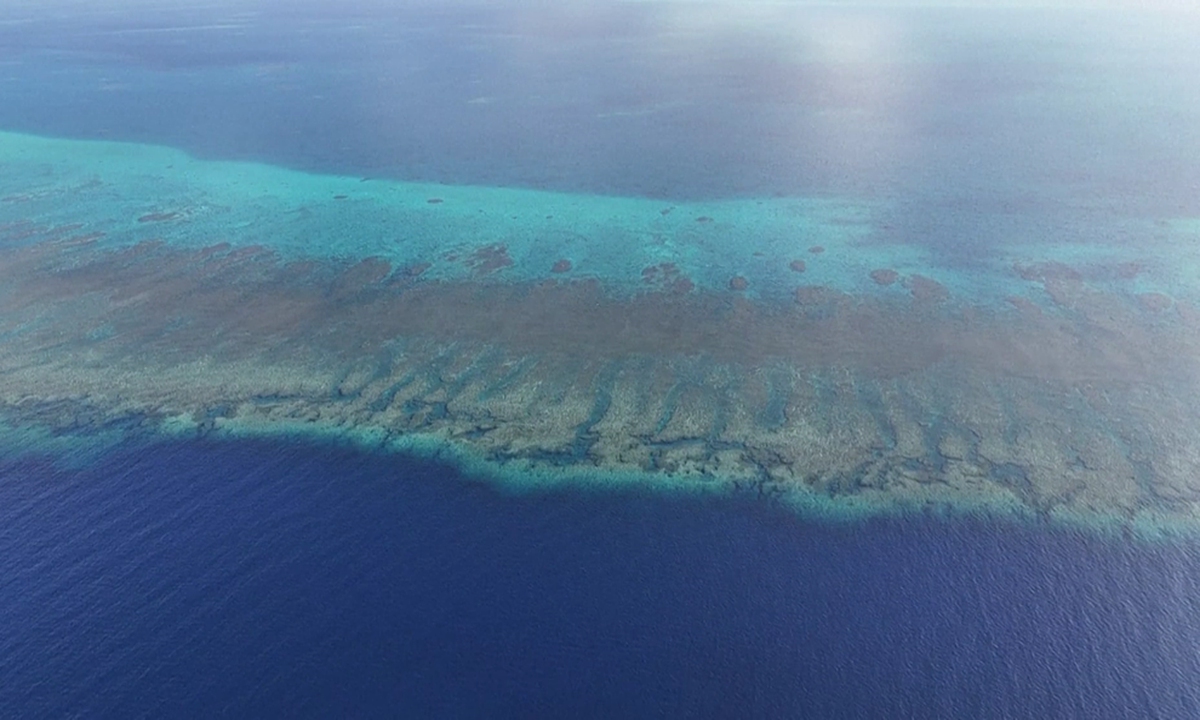
File photo: CFP
However, repetition cannot transform illegality into legitimacy, nor can time wash away the fundamental flaws of a politically manipulated process.
Rather than resolving disputes, the arbitration has become a poisoned legacy -- one that has fueled confrontation, distorted the application of international law, and undermined peace and stability in the South China Sea.
The arbitration itself began with bad faith: by unilaterally initiating the proceedings, the Philippines violated the bilateral agreement it reached with China, as well as the commitment made by China and ASEAN members, including the Philippines, in the 2002 Declaration on the Conduct of Parties in the South China Sea to resolve relevant disputes through negotiations.
Established amid grave controversies and in breach of the state consent principle underpinning international dispute settlement mechanisms as enshrined in the United Nations Convention on the Law of the Sea (UNCLOS), the so-called tribunal was formed more by political considerations than by legal reasoning.
It exercised its jurisdiction ultra vires and rubber-stamped the Philippines' legally baseless claims while systematically disregarding China's longstanding sovereign rights and historic interests in the South China Sea, leaving both its jurisdiction and impartiality highly questionable at the very beginning.
Like a poisoned tree, the award was rotten at the root and can never bear good fruit. The so-called arbitration and its award were, at best, a cynical parody of justice. It distorted international law, abused legal procedures and betrayed their basic principles.
Over the years, some external powers, including a certain country that is not even a party to UNCLOS, have further muddied the waters. They manipulated and backed this arbitration behind the scenes out of ulterior motives to contain China's development, exposing the case as nothing but pure political provocation.
This explains why, over the past decade, many leading international legal experts, including a former president of the International Court of Justice and a former judge of the International Tribunal for the Law of the Sea, have criticized the award as seriously flawed.
The lesson is clear: international law cannot retain its credibility when selectively applied or weaponized for political purpose. The legitimacy of legal institutions derives from their fairness, impartiality, and respect for rules, not from power politics.
China has always maintained that such an award is illegal, null and void, and it shall in no way undermine China's territorial sovereignty and maritime rights and interests in the South China Sea.
However, the illegal award has served as a convenient tool for the Philippines to escalate provocations, embolden relevant parties and fuel increasingly confrontational behavior.
Through repeated incursions into China's maritime waters, illegal construction on China's islands and reefs, and politically motivated provocations, the Philippines has fueled tensions, harmed marine ecology, endangered navigation safety, and threatened fishermen's livelihoods.
Also, by holding military drills with external forces and colluding with Japan to start "maritime delimitation" negotiations, the Philippines is making the situation in the region even more complicated.
The blight of the arbitration is obvious: the award has entirely failed to reduce tensions and solve disputes. Rather, it has become another point of contention in an already complex situation.
Should the blight continue, regional ocean governance will plunge into greater chaos: damaging local fishing industries, sabotaging maritime cooperation and impeding orderly passage of vessels in relevant waters.
The politically manipulated award is a notorious mess. Those who attempt to revive the old verdict can by no means safeguard maritime rules, nor will it be truly delivered.
China's commitment to seeking solutions via dialogue and consultation and upholding peace and stability in the South China Sea remains unchanged. The sooner the Philippine side and its ilk cast aside the absurd and meaningless political manipulation and move back to the right track, the earlier the South China Sea will restore its tranquility and peace.