


Editor's note: CGTN's First Voice provides instant commentary on breaking stories. The column clarifies emerging issues and better defines the news agenda, offering a Chinese perspective on the latest global events.
On July 20, Philippine personnel from a Philippine Navy ship illegally "grounded" on China’s Ren'ai Jiao reef in the South China Sea accosted a Chinese Coast Guard patrol vessel in rubber boats and attempted to ram into it, disregarding repeated warnings.
While China was conducting a legal patrol in its own territory and showed restraint and rationality during the provocation, the US has now meddled in the clash, condemning China's "dangerous and aggressive actions" and urging it to immediately cease its "destabilizing conduct."
Washington presents itself as a "defender" of stability and rules, but its behavior in the South China Sea has repeatedly raised tensions. By blindly backing Manila's confrontational tactics and framing Beijing’s lawful response as "bullying," Washington is not helping peace. It is encouraging recklessness.
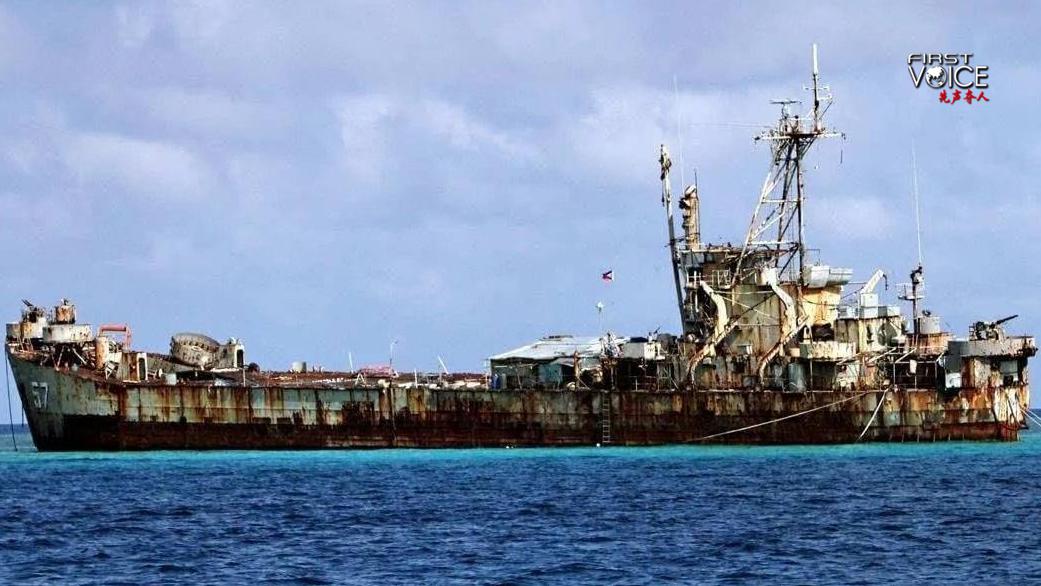
At the heart of the issue is a basic fact: Ren'ai Jiao has long been part of China's Nansha Islands. In 1999, the Philippines illegally grounded an active-duty military vessel there. Though it promised to remove it, that promise was never honored. The rusting ship poses an ecological hazard and is suspected of being used as an illegal monitoring outpost.
For years, Beijing has shown flexibility, allowing the delivery of necessary living supplies to the personnel on the “grounded” vessel, under specific conditions.
But regrettably, Manila has repeatedly taken advantage of Beijing's humanitarian restraint. Under the guise of delivering necessities, it has persistently smuggled in building materials in an attempt to maintain an unlawful presence and push for permanent occupation.
Worse, the Philippine government has become increasingly provocative in recent years. The new clash reinforces this.
The footage recorded by China Coast Guard clearly shows the confrontation began with deliberate Philippine provocation. Two Philippine rubber boats repeatedly harassed the patrol vessel and the Philippine personnel were the first to attack Chinese officers with paddles and poles. China responded with verbal warnings and maneuvering, and took corresponding countermeasures only after that.
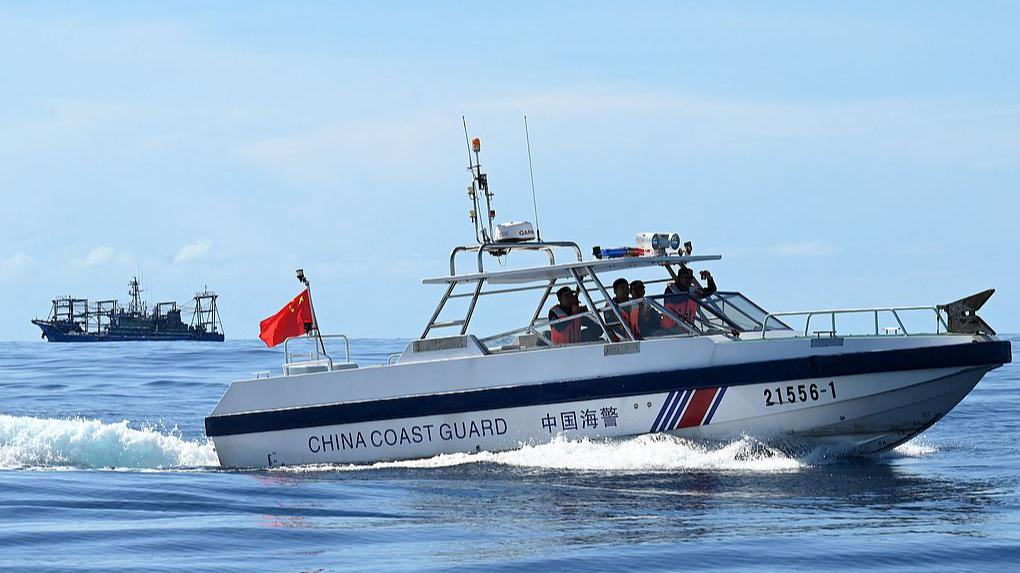
The fact is clear.
Washington knows it. It is also clear that the South China Sea dispute should be handled by the countries directly involved in it through dialogue and negotiation. But still, it is inserting itself into the dispute, not as a mediator but as a party with strategic interests of its own.
Washington is not acting from principle; it is acting from geopolitics. South China Sea tensions are an easy card for the US to justify its military deployment, tighten alliance dependence, and strengthen its narrative of strategic competition with China. The more friction there is, the easier it is for the US to portray itself as indispensable in the region. In that sense, instability in the South China Sea is what Washington needs.
But Southeast Asia does not need another arena for great-power rivalry. It needs stability, restraint, and practical cooperation. The South China Sea is a vital waterway for trade, energy, and regional connectivity. Turning it into a theater for military signaling and media spectacle only raises the risk of a miscalculated catastrophe. That risk is especially dangerous when the Philippine government is encouraged to take bolder actions, believing it will be backed by the United States.
China's position has remained consistent: defending sovereignty, managing disputes, and avoiding unnecessary escalation. China is not seeking confrontation, but is resolved to safeguard its legitimate rights and national interests. For the Philippines, seeking a solution through bilateral dialogue is the only way out that also serves its interests and ensures stability in the South China Sea.