


The World Economic Situation and Prospects as of mid-2026 recently published by the United Nations describes the current turmoil in global energy markets as "among the largest in modern history."
As multiple international institutions lower their forecasts for global economic growth -- particularly in light of ongoing conflict in the Middle East -- China stands out as a notable exception. The World Bank, in its latest outlook, notes that China's economic growth has remained resilient. Meanwhile, Morgan Stanley, Deutsche Bank, and other institutions have revised their growth forecasts for China upward, citing the country's energy advantages as a key reason for their optimism.
In a world marked by transformation and uncertainty, certainty is becoming a scarce resource. Examining the stability of China's energy sector offers valuable insight into why the country has emerged as an "oasis of certainty."
That certainty stems from China's resolve to focus on managing its own affairs well.
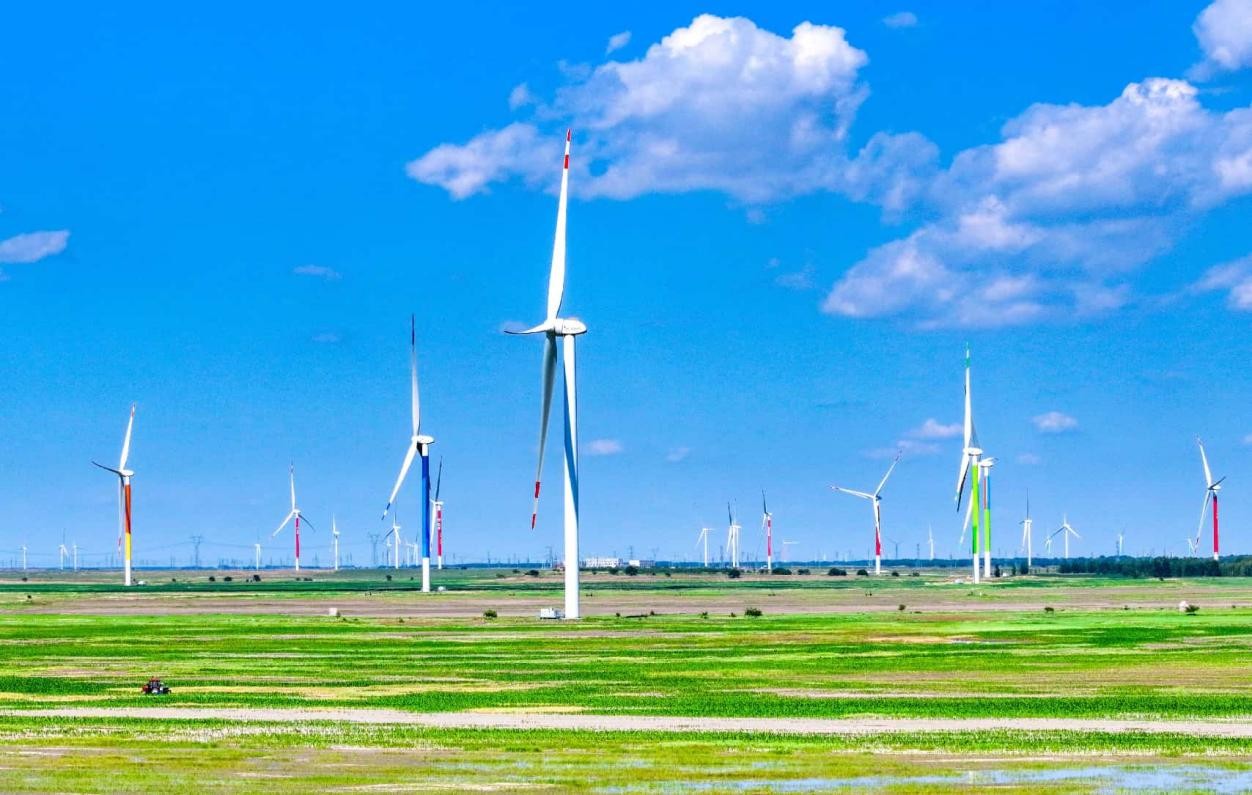
Photo shows a wind farm in Xing'an league, North China's Inner Mongolia Autonomous Region. (Photo: Wang Zheng)
Energy is the lifeline of industry and the economy. Amid sharp fluctuations in international oil and gas prices, China's energy system has demonstrated strong resilience, providing solid support for stable economic performance and the livelihoods of its people. This resilience is rooted in strategic clarity and a determined focus on national priorities.
International energy security challenges are growing increasingly complex. As the world's largest energy consumer and importer, China faces the critical task of reducing its reliance on foreign supplies. Through measures such as building up strategic petroleum reserves, exceeding the targets of its seven-year action plan to boost oil and gas exploration and production, and developing an independent deep-water oil and gas exploration technology system, China's energy self-sufficiency rate has risen steadily in recent years. This progress strengthens the country's energy certainty, serving as a buffer against external volatility.
That certainty also stems from China's commitment to turning its development blueprint into reality.
The rapid growth of artificial intelligence (AI) has driven a surge in demand for electricity infrastructure. As observers note, "the end of AI is electricity." China has become the world's first significant "electrostate," leveraging its abundant power supply to help its domestic AI industry reach the front ranks globally.
What may appear as a timely opportunity is, in fact, the result of sustained, long-term effort.
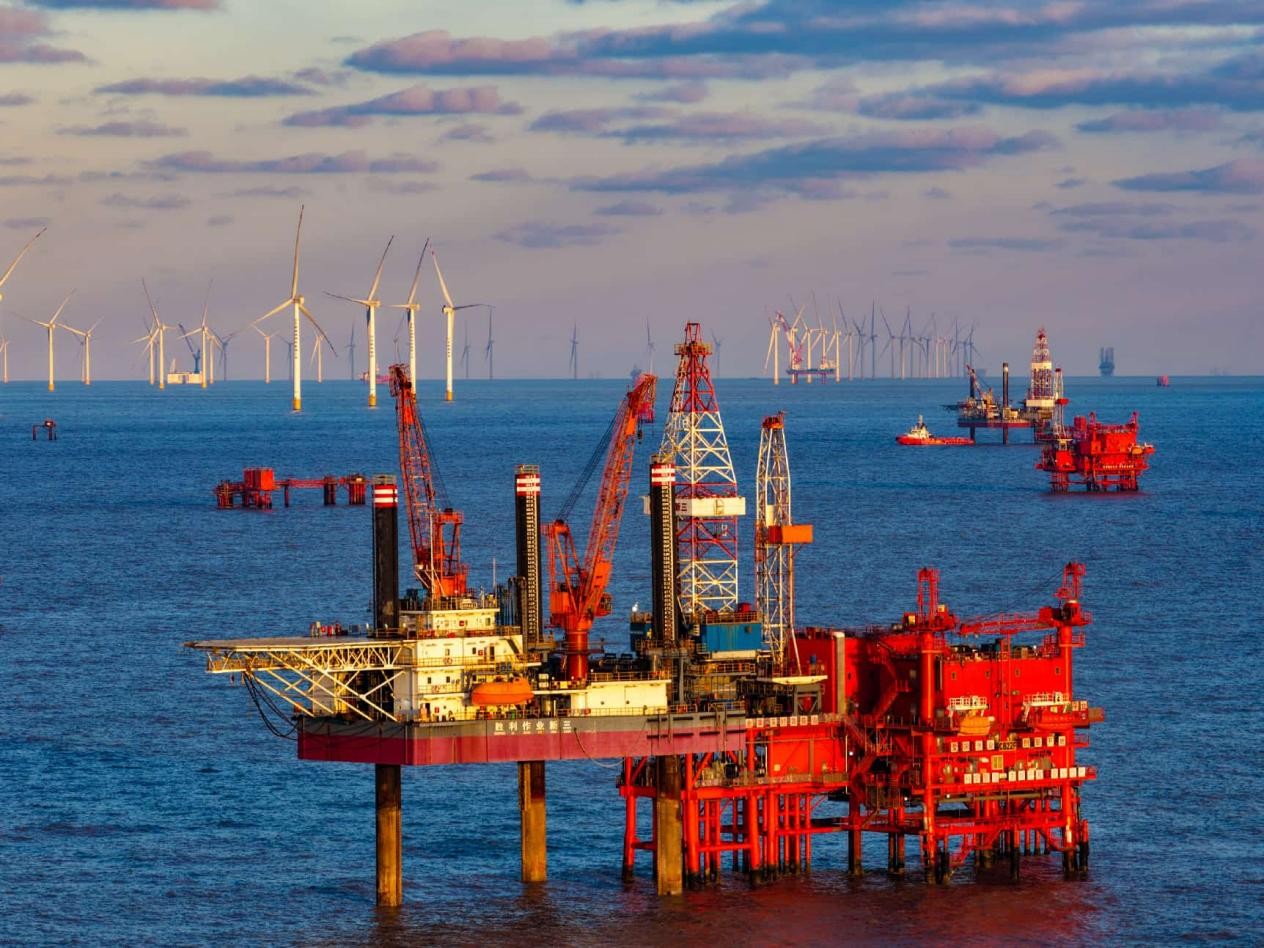
Photo shows an offshore oil production site of the Shengli Oilfield of Sinopec in Dongying, East China's Shandong Province. (Photo: Zhang Can)
At the 2026 Summer Davos forum, American scholar Kelly Sims Gallagher offered an explanation for how China built its energy advantages: "China sets targets, and then it works on developing a stable policy infrastructure to achieve the targets."
In recent years, energy policies in some European and American countries have swung back and forth, and renewable energy projects have faced repeated setbacks.
China, by contrast, has stayed the course: major energy development projects were rolled out during the 13th Five-Year Plan period (2016-2020); large-scale clean energy bases were built at an accelerated pace during the 14th Five-Year Plan period (2021-2025); and now, in the 15th Five-Year Plan period (2026-2030), China will implement a 10-year action plan to double non-fossil energy output.
This consistent top-level design and well-coordinated policy follow-through have propelled renewable energy from a supporting role in the power system to a leading force, achieving leapfrog development.
That certainty is also grounded in China's commitment to pursuing its own development in a way that contributes to development for all.
In today's world, competition over energy resources, transport routes and markets is intensifying. While some countries treat energy as a geopolitical weapon or diplomatic bargaining chip, China has chosen a path of "open-source modernization," helping other countries address their energy challenges.
Not long ago, a Kenyan farmer named Nicholas shared his household accounts, showing how Chinese solar panels had freed him from power outages and sharply cut his electricity bills. In Pakistan, Chinese solar panels are even included as part of wedding dowries, prized for the income they can generate for households. Globally, China supplies over 80 percent of photovoltaic modules and 70 percent of wind power equipment, while also helping many countries build industrial ecosystems and train technical talent.
As an old Chinese saying goes, "A sovereign who shares the interests of the people will have their support." In the first five months of this year, China's exports of green products such as lithium batteries and wind turbines grew by about 40 percent year on year. This shows that by steadfastly expanding opening up and deepening international cooperation, China's value as a source of global certainty will only become more apparent.