


The Jingye Group logo is displayed against a background of the British flag. (Photos: CFP)
On July 16, the UK's Steel Industry (Nationalization) Act received royal assent and formally entered into force, placing British Steel – owned by China's Hebei-based Jingye Group – fully under state ownership. Jingye Group subsequently initiated consultation procedures under the China-UK Bilateral Investment Treaty and reserved all legal rights to pursue international investment arbitration, including claims for compensation. China's Ministry of Commerce has also expressed strong dissatisfaction with the UK's actions and voiced support for Jingye's legal remedies.
In fact, Jingye and the UK government had already engaged in multiple rounds of negotiations over the steelworks. When Jingye acquired British Steel in 2020, it was hailed as a "white knight" rescuing Britain's faltering traditional industrial heritage. Following the acquisition, Jingye injected substantial capital to upgrade equipment, safeguard employment, and gradually advance British Steel's green transition. The company briefly returned to profitability, but persistently high energy prices, weak market demand, and the enormous costs of environmental retrofitting drove sustained losses – at their peak, reportedly reaching approximately 700,000 pounds ($936,898) per day.
To salvage the operations, Jingye entered subsidy negotiations with the UK government, which collapsed after London offered insufficient support with onerous conditions. Fearing that the plant's insolvency would eliminate Britain's only primary steelmaking capacity, the UK Parliament rushed through the Steel Industry (Special Measures) Act in April 2025 on national security grounds, setting the stage for today's outcome.
Severe negative consequences
This situation is of the UK government's own making. Regardless of the final resolution, several profound negative repercussions are already evident.
First, it inflicts direct and lasting damage on Jingye Group. The company's cumulative investment in the UK exceeds several billion pounds. A forced takeover would entail incalculable financial losses and severely tarnish the group's brand reputation. International credit rating agencies have already downgraded its outlook, driving up its cost of capital.
Second, it creates widespread uncertainty for Chinese investment across the UK and other parts of Europe. The UK has acted under its National Security and Investment Act, a statute with exceptionally broad discretionary scope. This episode sent a stark signal to all Chinese enterprises operating in Europe: legally compliant commercial conduct no longer guarantees security, and political risk can at any moment translate into outright asset expropriation. This uncertainty will significantly dampen Chinese firms' appetite for European investment, with many prospective projects likely to be shelved or redirected elsewhere.
Third, it inflicts substantial harm on China-Europe economic and trade relations. In recent years, Chinese investment in Europe has helped mitigate the long-standing bilateral trade imbalance. Local manufacturing and procurement have converted a portion of China's exports into local production – aligning with the EU's own re-industrialization agenda. The Jingye incident, however, will deepen Chinese enterprises' profound skepticism towards the European business environment. As market principles are increasingly eroded by Europe's securitization mindset, the trajectory of China-Europe investment relations and broader economic ties will shift accordingly.
Fourth, it places Europe itself in a dilemma. On one hand, Europe urgently needs external capital to modernize its aging industrial infrastructure, and China is among the few partners with both the financial capacity and execution efficiency to deliver; attracting high-quality Chinese greenfield investment remains a policy priority. On the other hand, domestic populist forces and transatlantic security alignment compel Europe to raise the political scrutiny bar for Chinese capital. This contradictory stance produces policy inconsistency, undermining Europe's ability to attract stable, high-quality Chinese investment – while also failing to reassure other overseas investors (from the Middle East, Southeast Asia and beyond) of the predictability of its business climate, thereby weakening Europe's overall appeal for foreign capital.
Such incidents are becoming increasingly frequent
Arguably, the Jingye affair is merely the latest instance of Western governments seizing Chinese assets with little restraint. In recent years, comparable cases have proliferated across the West: In Australia, the Darwin Port lease involving Chinese capital has faced repeated government demands for compulsory repossession; in the United States, the forced "sell-or-ban" ultimatum to TikTok represents a brazen attempt to seize corporate assets; in the Netherlands, authorities launched a retroactive security review of Nexperia's acquisition of Nowi, effectively endorsing a domestic takeover with virtually no clear advance warning. Notably, this wave of reviews and forced takeovers is spreading from the Five Eyes alliance to EU member states, and even to parts of Southeast Asia and Latin America, creating copycat regulatory pressure on Chinese enterprises.
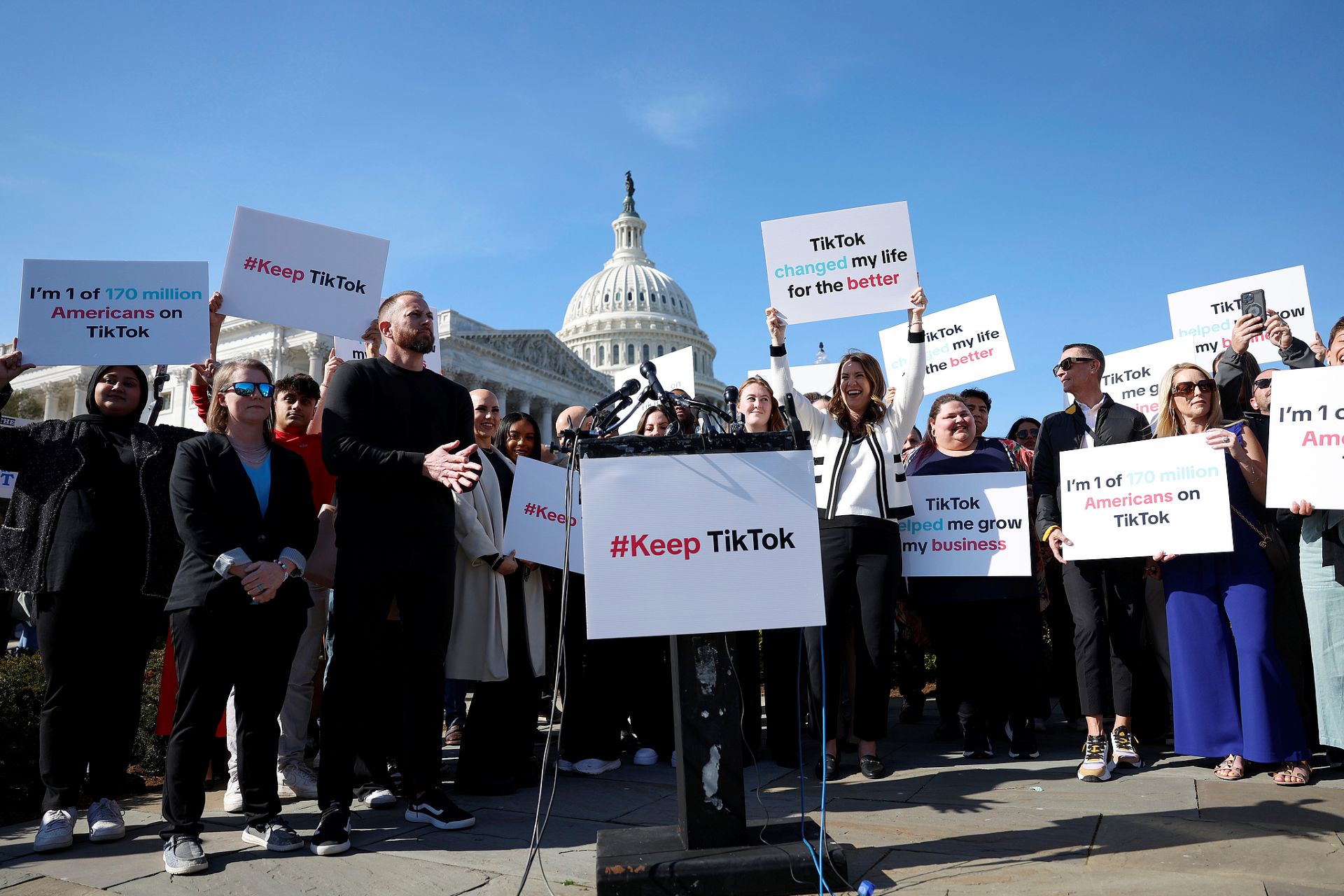
Participants hold up signs in support of TikTok at a news conference outside the US Capitol Building in Washington, DC, March 12, 2024.
Naturally, the stated rationale varies from case to case – technology leakage and supply chain vulnerability in the Nexperia matter, privacy and data sovereignty in the TikTok dispute, military security in the Darwin Port case, and foundational defense-industrial security in the Jingye affair. Yet beneath these differing justifications lies a remarkably consistent core logic: Chinese capital is framed as an inherently threatening, alien force that, amid geopolitical rivalry with China, warrants scrutiny exceeding normal commercial and market principles. Securitization is the unifying thread across all these cases – a policy manifestation of deep-seated distrust toward Chinese enterprises.
Three structural contradictions between China and Western markets exposed by the Jingye incident
First, geopolitical thinking in the West has comprehensively overridden economic rationality. Under the framework of geopolitical confrontation with China, Chinese capital and enterprises are pre-labeled as "strategic competitors" and "potential security threats" rather than mere "commercial partners." Within this cognition, security reviews frequently function as identity-based political adjudications rather than evidence-based risk assessments. However robust Jingye's data submissions and security guarantees may be, they cannot dispel the UK government's preconceived distrust – market rationality is cast aside. For instance, even after nationalization, British Steel is unlikely to return to profitability, yet the UK has pressed ahead with the takeover regardless.
Second, international rules are being systematically undermined by certain countries, led by the United States, yet lack any means of restraint. The stalled Appellate Body has long paralyzed the World Trade Organization dispute settlement system. Meanwhile, the EU and UK have in recent years introduced new rules on foreign subsidies, international procurement instruments and anti-economic coercion – effectively circumventing reciprocal obligations under the multilateral framework. Amid this chaotic landscape of overlapping rules and regulatory vacuums, Western states can readily invoke "national security exceptions" to evade their obligations under international investment agreements. Existing international arbitration mechanisms, by contrast, are protracted and weakly enforceable, offering Chinese enterprises little timely and effective redress.
Third, there exists a deep cognitive and institutional mismatch between Chinese enterprises and Western societies. Chinese entrepreneurs broadly embrace market-oriented, rule-of-law-based and liberal international business logic, assuming that compliance with local laws, job creation and tax payment will guarantee fair treatment. Yet Western societies are undergoing a sharp ideological shift from neoliberalism towards securitization and populism. In critical industries, data, infrastructure and core technologies, security logic now supersedes market logic. This tension between a "liberal business and globalization mindset" and a "populist security and anti-globalization mindset" often leaves Chinese enterprises exposed to abrupt policy reversals years into a project, after sunk costs have become substantial – leaving them with very little room for maneuver.
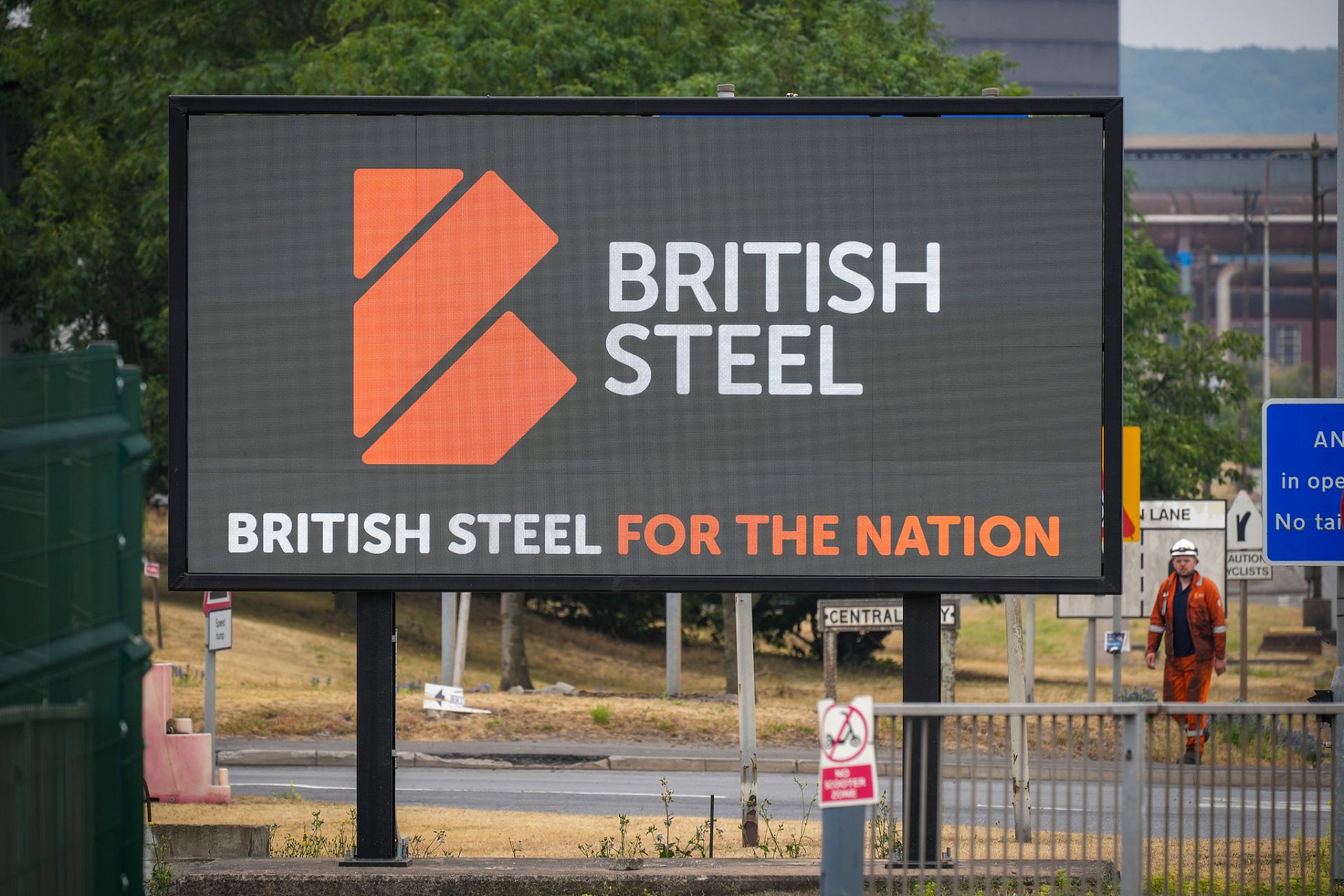
A sign outside British Steel's Scunthorpe works declares "British Steel For The Nation" in Scunthorpe, England, July 16, 2026.
How should China respond?
First, vigorously defend rights through legal and multilateral channels. Jingye Group should pursue UK domestic judicial review to challenge procedural irregularities, while initiating international investment arbitration under the China-UK Bilateral Investment Treaty and other international legal instruments where applicable. The Chinese government should, at multilateral fora such as the WTO and UN Conference on Trade and Development, continue to expose the discriminatory nature of unilateral securitization measures and build international opinion against excessive national security reviews.
Second, enterprises must integrate political risk assessment and full-cycle management into pre-investment decision-making. Chinese firms should move beyond their prevailing "commercial feasibility first, political and social risk second" approach. For sensitive sectors – steel, semiconductors, ports, telecommunications, AI and digital industries – geopolitical stress testing should be conducted prior to investment, with built-in exit mechanisms and contingency protection clauses. Concurrently, enterprises should establish long-term communication channels with host-country parliaments, trade unions, think tanks and media, using localized narratives to defuse perceived security threats and minimize the risk of politicization.
Third, implementing proportionate and lawful countermeasures. Drawing on the Anti-Foreign Sanctions Law and other domestic legislation, the Chinese government may impose corresponding restrictions on foreign entities and individuals that unjustly target Chinese enterprises – including visa restrictions, reciprocal investment review requirements and export controls on critical raw materials. Such countermeasures should strictly adhere to the principles of proportionality and necessity under international law, aimed at raising the cost of political decision-making rather than escalating into full-scale confrontation. A dynamic update and clarification mechanism for the "Unreliable Entity List" could also enhance transparency and predictability, avoiding collateral damage to legitimate commercial exchange.
Last but not least, strengthening internal compliance systems. Regardless of external conditions, strict adherence to host-country regulations on competition, data, environment, labor and anti-corruption remains the foundation of sustainable operations and the bedrock of defense against arbitrary intervention. When confronted with unjust interference, comprehensive compliance records serve as the most powerful evidence in legal proceedings and bolster a company's moral standing in international public opinion. Legality and compliance are not merely an operational baseline – they are a legitimate weapon against political persecution.
The Jingye Group incident is by no means an isolated episode. It is a vivid reflection of global geopolitical fragmentation playing out in Chinese overseas investment. It serves as a warning that when Chinese enterprises "go global," they are no longer engaged in simple market expansion and technological integration, but in a systemic, multidimensional contest spanning law, politics, public opinion and values.
Facing an increasingly stringent Western security review regime and deepening geopolitical confrontation, Chinese enterprises must maintain strategic resolve and uphold market and rule-of-law principles – while recognizing that the regulatory environment has fundamentally changed. Only by embedding political sensitivity into corporate DNA, treating compliance and transparency as core competitiveness, and drawing on national-level legal, diplomatic and institutional support, can Chinese enterprises navigate the turbulent waters of internationalization with steady progress.
Of course, both China-EU and China-UK relations must draw lessons from these events. The two sides should jointly explore an investment security dialogue mechanism grounded in facts rather than groundless securitization suspicions. Otherwise, the cost of eroding mutual trust will inflict severe damage not only economically but strategically on bilateral relations, and undermine the stability of the international order itself.