


Illustration: Xia Qing/GT
On July 25, a rally and march under the slogan "I am human, I oppose poisoning Taiwan" was held on Ketagalan Boulevard in Taipei. Participants held banners reading "oppose toxic oil, protect food safety," expressing dissatisfaction with the prolonged fallout from the "toxic oil" scandal and the Democratic Progressive Party (DPP) authorities' ineffective governance. According to the organizers, by around 7:30 pm, attendance had exceeded 200,000.
Behind the sheer size of the crowd, what truly merits attention is the social sentiment revealed by the rally: people of Taiwan region are no longer simply protesting contaminated oil itself, but are raising a more fundamental question - if ordinary citizens cannot even feel safe about the food they consume every day, what is the DPP authorities actually capable of safeguarding?
Public attention surrounding the rally remains high. A poll conducted by ETtoday News showed that regarding the July 25 rally, 44 percent of respondents "strongly supported" it, while 19.7 percent "somewhat supported" it, bringing total support to about 60 percent. This indicates that the contaminated oil scandal is no longer an isolated incident, but a trigger for a broader crisis of trust.
The anger among people of Taiwan region is not only directed at the "toxic oil" itself, but also at the fact that, after the scandal was exposed, many people still do not know which "toxic oil" products they had previously consumed, how serious the potential health risks may be, or whether the affected products were promptly removed from shelves. For ordinary families, this is not an abstract political debate - it directly concerns everyday activities such as shopping, cooking, and eating. That is precisely why the issue has quickly pierced through partisan rhetoric. What people care about is not who argues more aggressively on TV or who shifts blame faster, but a simple, practical question: What cooking oil can they safely use tonight?
A recent commentary titled "What oil should we use tonight?" published by Singapore's Lianhe Zaobao noted that food safety was once the DPP's sharpest "weapon," but has now turned against itself. The reason for this reversal is not complicated. Food safety is not an ordinary public issue - it is directly tied to every household's daily meal and to people's expectations of their own health. Other controversies may be observed from a distance, but when it comes to whether what people eat is safe, no one can remain unaffected.
This is why the crowds gathering on Ketagalan Boulevard cannot simply be viewed as an ordinary political rally. Many took to the streets not necessarily to support a specific person or group, but because they felt a profound sense of uncertainty: If even the most fundamental bottom line regarding food safety is repeatedly breached, and if the immediate response to such incidents involves buck-passing, distancing, and political maneuvering rather than clear explanations, comprehensive handling, and definite accountability, then public trust in the DPP authorities' governance capabilities will inevitably erode at an accelerated pace.
The volume of problematic "Chung Lien" oil, initially reported at 1,300 tons, doubled to 2,600 tons; by now, seven batches have been found to exceed safety standards, totaling approximately 8,000 tons and affecting all 22 counties and cities across Taiwan. The contamination extends beyond salad dressings and Thousand Island sauce to include staples such as soy milk, rice balls, and ready-to-eat bento boxes. The "toxic oil" crisis did not erupt overnight; as early as May, a business detected excessive levels of contaminants during routine self-testing and reported the issue up the supply chain, yet regulatory authorities were not notified until late June. This "gap" of over 50 days allowed the "toxic oil" to spread throughout the island. The incident, characterized by its wide impact and the authorities' sluggish response, has prompted the public to ask: If the safety of dinner tables cannot be guaranteed, what can? If even the most basic sense of security is lacking, how can there be any talk of governance achievements or competence?
What further fueled public outrage was the arrogance of the DPP authorities. In the wake of the incident, Taiwan leader Lai Ching-te went "missing," while Cho Jung-tai, chief of the island's executive body, refused to apologize. DPP spokesperson Wu Cheng even made the absurd remark -- "It's not as if I forced you to eat it." Thus, the true sentiment echoing on Ketagalan Boulevard on the 25th was a collective demand for accountability regarding governance incompetence: Why was the issue allowed to drag on until now? Why couldn't the flow of the products have been disclosed earlier and more comprehensively? Why have the DPP authorities been so slow to clearly address the issue of responsibility? And in the face of public anxiety, why are some always so eager to offer political "explanations" rather than first addressing the people's pressing concerns?
Ultimately, what the public finds most unacceptable is the continued lack of sufficient sincerity, speed, and accountability after the incidents occurred.
Moreover, the "tainted oil" scandal is merely the tip of the iceberg regarding the DPP's harmful actions against Taiwan. Earlier this year, Taiwan's economic authorities—citing provisions of the so-called US-Taiwan Agreement on Reciprocal Trade—relaxed inspection standards for imported US potatoes; the previous rule requiring the return of an entire shipment if even a single potato had sprouted was replaced by a policy allowing for the removal of only the individual affected ones. Shortly thereafter, Taiwan's health authorities raised the maximum residue limit for the pesticide fenpropathrin on apples from 0.5 parts per million (ppm) to 3 ppm, a level 300 times higher than the EU standard of 0.01 mg/kg. Beyond apples, Taiwan has relaxed pesticide residue standards for a total of 174 US agricultural products; notably, the permissible limits for oranges and lemons were raised from 0.5 ppm to 2.0 ppm. With "toxic oil," "tainted potatoes," and "tainted apples" following one after another, how can the public possibly tolerate this any longer? The DPP authorities' reckless and arbitrary disregard for food safety bottom lines clearly demonstrates that their true priorities are not the health and well-being of the Taiwan people, but rather currying favor with the US, securing profits, and hoodwinking voters.
Ultimately, the DPP's governance failure has ultimately triggered a surge of public outrage. The July 25 rally on Ketagalan Boulevard represents a collective struggle by people of Taiwan region for the basic right to safe food. Food is the first necessity of the people; food safety is the top priority; and safety is built on trust. Politicians may continue to argue, and parties may continue to calculate, but the public's dining table cannot be put at risk. For every family, what matters most is whether they can pick up their chopsticks without hesitation or unease.
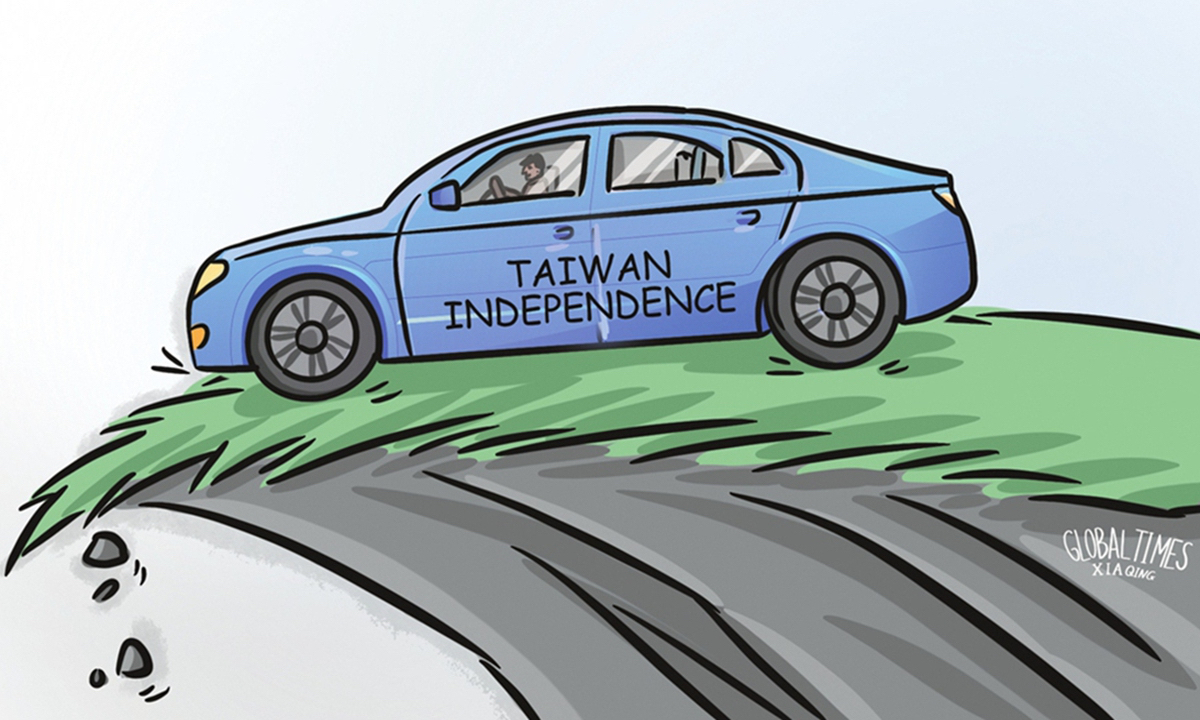
If this episode leaves any lesson, it is a simple one: The livelihood issues on the island have gone unaddressed. Public grievances will not remain confined to the kitchen - they will inevitably take to the streets. This incident also underscores once again the claim that the root cause of "poisoning Taiwan" lies in "Taiwan independence."
(Source: Global Times)