


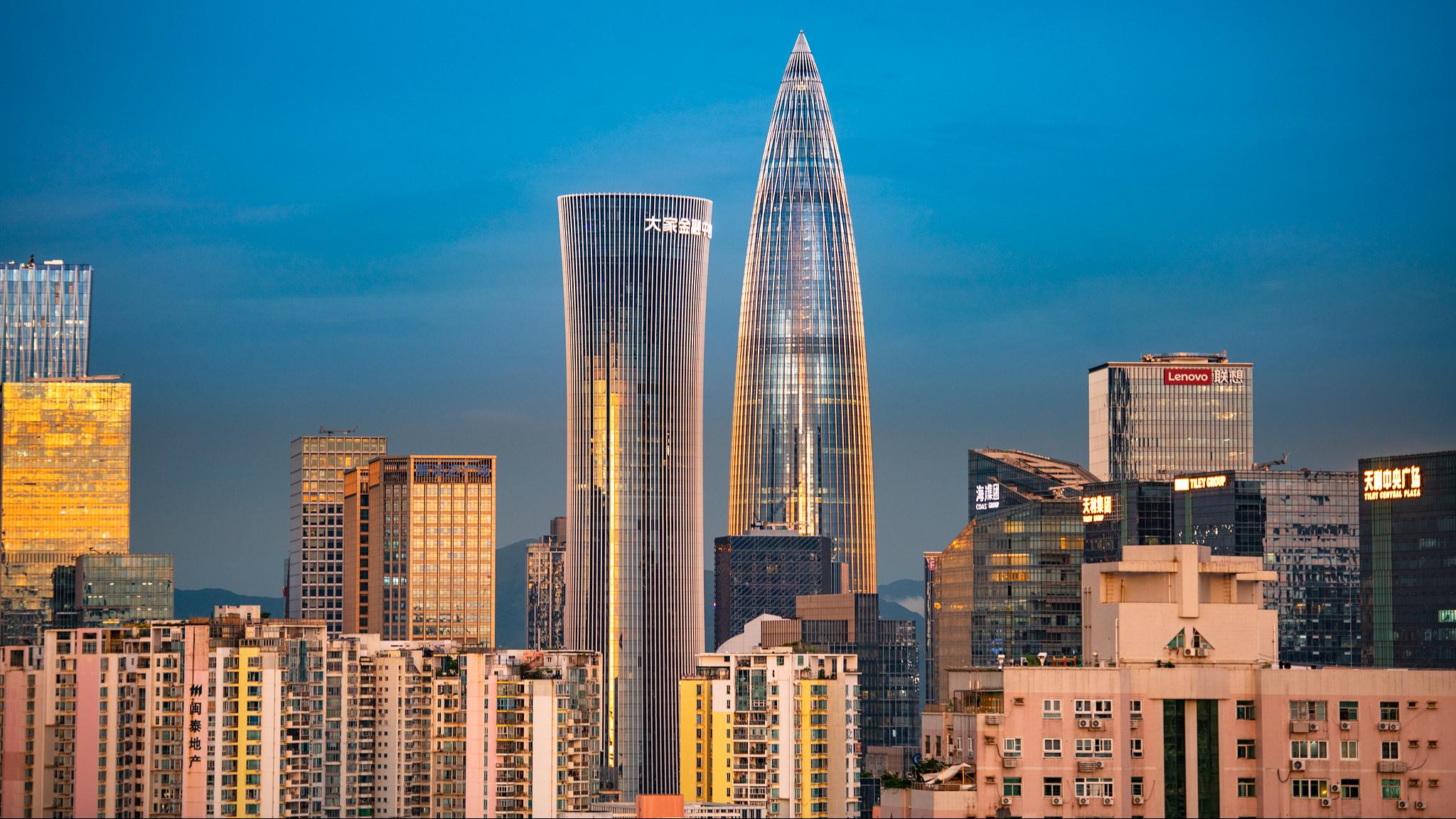
Nanshan District in Shenzhen, Guangdong Province, glows under the setting sun, July 16, 2026. /CFP
Editor's note: Zhao Xiaotao, a special commentator for CGTN, is an assistant professor at the Shanghai Academy of Social Sciences. The article reflects the author's views and not necessarily those of CGTN.
At a time of geopolitical conflict, trade fragmentation and repeated disruptions to global supply chains, stability has become one of the world economy's scarcest resources. On July 30, the Political Bureau of the Communist Party of China Central Committee called for stronger domestic demand, better supply, and timely, practical, incremental policies to keep the economy moving toward newer drivers, higher quality and stronger momentum.
These calls were grounded in a broader framework that reaffirmed pursuing progress while ensuring stability, fully applying the new development philosophy, accelerating the new development dynamic, deepening reform and opening up and better coordinating domestic and international priorities as well as development and security.
Official data show an economy operating within an appropriate range, but still facing an acute imbalance between strong supply and weak demand and a recovery that needs further consolidation. The IMF's July update also raised its 2026 China growth forecast from 4.4% to 4.6% after a stronger-than-expected first quarter, despite higher energy costs and weaker trading-partner demand.
The broader significance of the meeting, however, lies beyond the performance of any single quarter. The central question is whether a major economy can keep risks under control, absorb external shocks and preserve the conditions for recovery when the international environment becomes increasingly volatile. In this respect, China's economic role is evolving from that of a major global supplier into a broader anchor of stability.
An anchor of stability should not be mistaken for an economy without fluctuations, pressures or structural adjustment. Stability is not immobility. It is the capacity to contain local pressures before they become systemic crises, to cushion rather than amplify external shocks and to restore effective economic activity after disruption.
In the language of complex systems, a large and adaptive economy can also act as an anchor: When uncertainty diverts production, investment, trade and expectations from a viable course, it helps draw them back toward a sustainable path. China cannot eliminate volatility from the world economy. But its scale, policy capacity and ability to adjust can reduce the likelihood that temporary disruption develops into prolonged economic disorder.
This capacity rests on more than economic size or manufacturing strength alone. Its deeper foundation lies in the interaction between a changing structure of demand and a changing structure of production. As incomes rise, consumption patterns do not simply expand in fixed proportions. Households increasingly seek higher quality, better services, improved health, greater convenience, richer experiences and a cleaner environment. These emerging needs create a powerful market force for economic upgrading.
At the same time, artificial intelligence (AI), digital infrastructure, advanced manufacturing, new materials and clean-energy technologies are changing how capital, labor, energy and data are combined in production, allowing firms to meet new demand at greater scale and lower cost.
Green development is therefore not merely an environmental constraint imposed on growth. Technological progress can make production cleaner while also raising efficiency and competitiveness. The underlying logic of the 15th Five-Year Plan is to connect these forces: Expanding domestic demand creates markets for innovation, technological upgrading improves the quality and affordability of supply, and greener production opens new fields of consumption and investment.
China thus remains the "world's factory," but its international function is becoming broader – from supplying goods to sustaining productive networks, from responding to existing demand to generating new demand and from contributing to global growth to strengthening the conditions under which that growth can continue.
The first component of this model is domestic demand. A large internal market does more than support China's own growth. It gives the economy room to absorb fluctuations in external demand. It provides producers around the world with a market less dependent on any single foreign economic cycle.
In the first half of 2026, per capita disposable income rose 5.2% in nominal terms and 4.2% in real terms, while total retail sales of goods and services increased 2.7%. Service retail sales grew 5.3%, but goods rose only 1.1%. Weak household confidence, property-sector adjustment and uneven income expectations continue to constrain consumption and should be acknowledged directly.
Yet these pressures strengthen rather than weaken the case for expanding domestic demand. During the 15th Five-Year Plan period, the central task is not simply to provide temporary consumption incentives, but to strengthen households' underlying capacity to consume.
More stable employment, sustained income growth, a larger middle-income group, stronger social protection and better public services can reduce precautionary saving and convert China's market size into more reliable effective demand.
This creates a mutually reinforcing process: Rising incomes generate new and more sophisticated needs, while improved supply creates products and services capable of satisfying them. For the world economy, a stronger Chinese domestic market would function as a shock absorber and a source of incremental demand for global goods, services, technology and investment.
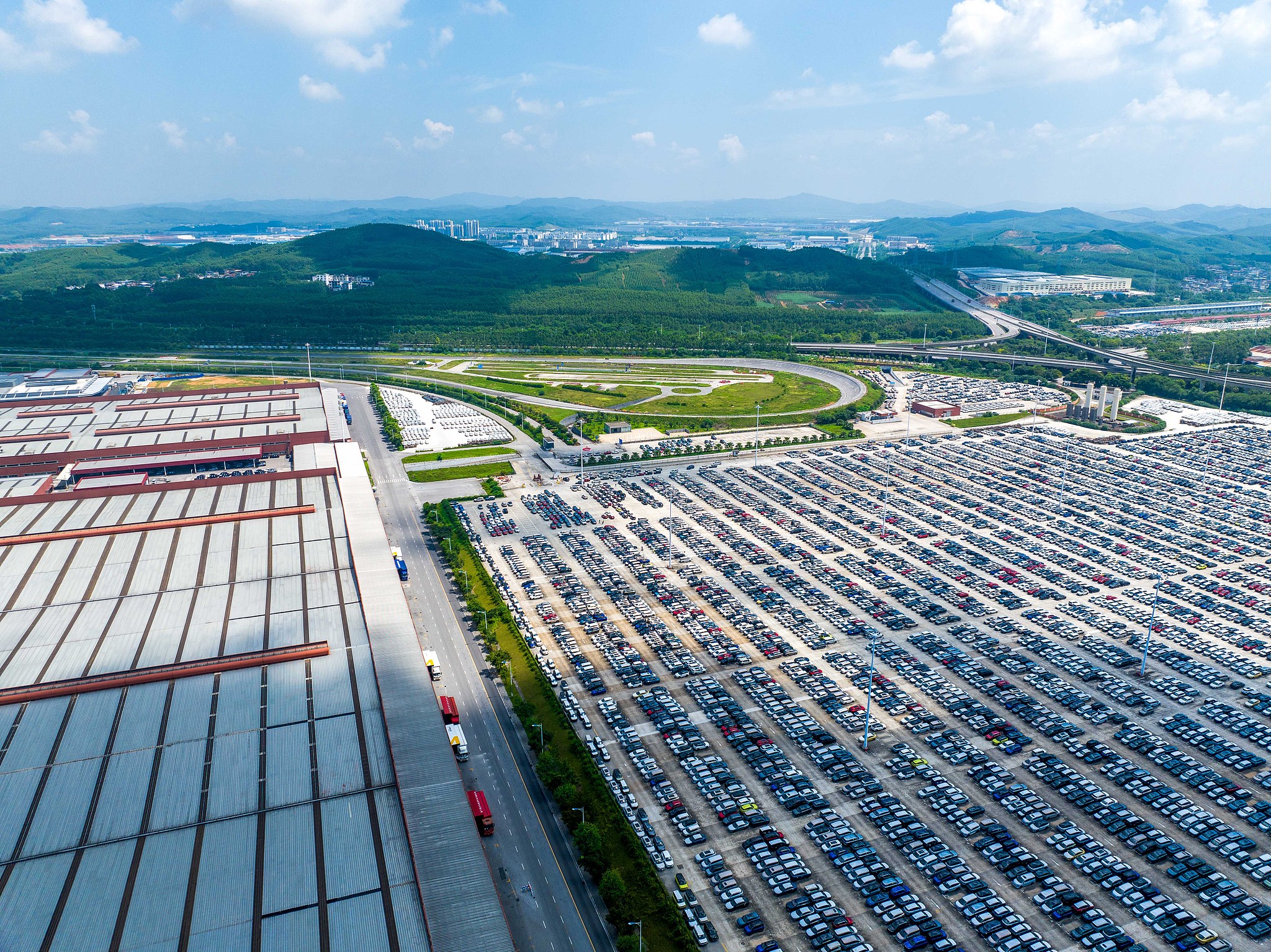
Thousands of new vehicles are ready for delivery at a logistics base in Liuzhou, Guangxi Zhuang Autonomous Region, July 25, 2026. /CFP
The second component is China's industrial and technological system. The country's role as the "world's factory" remains the material foundation of its wider international contribution, but that role is changing in substance. The value of a complete industrial system lies not only in the volume of goods it can produce, but also in its ability to maintain supply, replace disrupted links and reorganize production when conditions change.
In the first half, value added by industrial enterprises above the designated size grew 5.4%, while equipment manufacturing and high-tech manufacturing expanded by 9.3% and 13.3%, respectively. New-generation technologies further strengthen this adaptability by changing how capital, labor, energy and data are used. They can reduce dependence on vulnerable links, increase the range of substitutes available across production networks and lower the cost of meeting emerging demand. Technological self-reliance should therefore not be equated with economic isolation.
When stronger domestic capabilities expand supply, improve productivity and prevent a bottleneck in one market from paralyzing an entire production chain, the benefits extend beyond China's borders. China's industrial base helps keep disruptions manageable, preserves essential productive connections and provides the manufacturing scale required to turn innovation into affordable applications.
The green transition provides a long-term direction toward which capital, technology and production can converge. The world economy currently faces not only insufficient demand, but also a shortage of investment opportunities that combine commercial viability with lasting social value. China's development of renewable energy, electric mobility, energy storage, modern power grids and efficiency-enhancing technologies helps fill this gap.
The essential point is not simply that these technologies are greener. Innovation and large-scale application can also make them cheaper, more efficient and more competitive, without requiring developing economies to sacrifice their legitimate growth needs. Scale manufacturing, repeated technological improvement and broad market application reduce the cost of environmental progress, making greener development an economically rational choice rather than a privilege available only to wealthy countries.
High-level opening up determines how widely these gains are shared. Opening up now extends beyond trade in finished goods. It increasingly involves a new division of labor across global value chains through two-way investment, overseas production, services cooperation, infrastructure connectivity, and the development and mutual recognition of industrial and green standards.
Chinese outbound investment and international industrial cooperation can translate technological and productivity gains into local employment, lower production costs and stronger industrial capacity in partner economies. China's scale creates the capacity to manage disruption; openness turns that capacity into shared development opportunities. The July 30 meeting reinforced this outward-facing dimension by calling for broader mutually beneficial economic and trade cooperation, stronger services trade, more balanced trade, better overseas support for outbound investment and more active use of foreign investment.
The meeting balanced short-term support with medium-term transformation. It called for a more proactive fiscal policy, a moderately accommodative monetary policy, fuller use of existing measures and timely practical incremental policies, alongside stronger domestic demand, better supply, modern industry, the AI Plus initiative, employment and livelihoods.
China's medium-term planning framework is itself an important source of predictability. A five-year horizon that sets a visible direction, establishes achievable objectives and allows regular evaluation gives households, firms, local governments and international partners a more credible basis for decision-making.
Such planning does not replace decentralized market choice. It reduces coordination costs by clarifying the likely direction of future demand, technology, infrastructure and regulation. Market participants can then direct investment and cooperation toward opportunities that are expected to become commercially viable.
This coordinating function is particularly valuable when development is creating new demand, new technologies and new fields of investment rather than merely redistributing a fixed stock of resources. The resulting expansion creates greater scope for positive-sum cooperation: China gains stronger foundations for structural upgrading, while foreign firms and partner economies obtain new opportunities to participate in production, investment and technological diffusion.
China's role as an anchor of global stability therefore does not depend on preserving the world economy in its existing form. It rests on providing a more predictable path through structural change.
By combining a large domestic market, a flexible industrial base, greener and more efficient technologies, high-level opening up and a credible medium-term policy framework, China can help the world economy withstand disruption, preserve productive connectivity and move toward a new and more sustainable equilibrium. China contributes certainty not by eliminating change, but by helping ensure that change does not become disorder.