


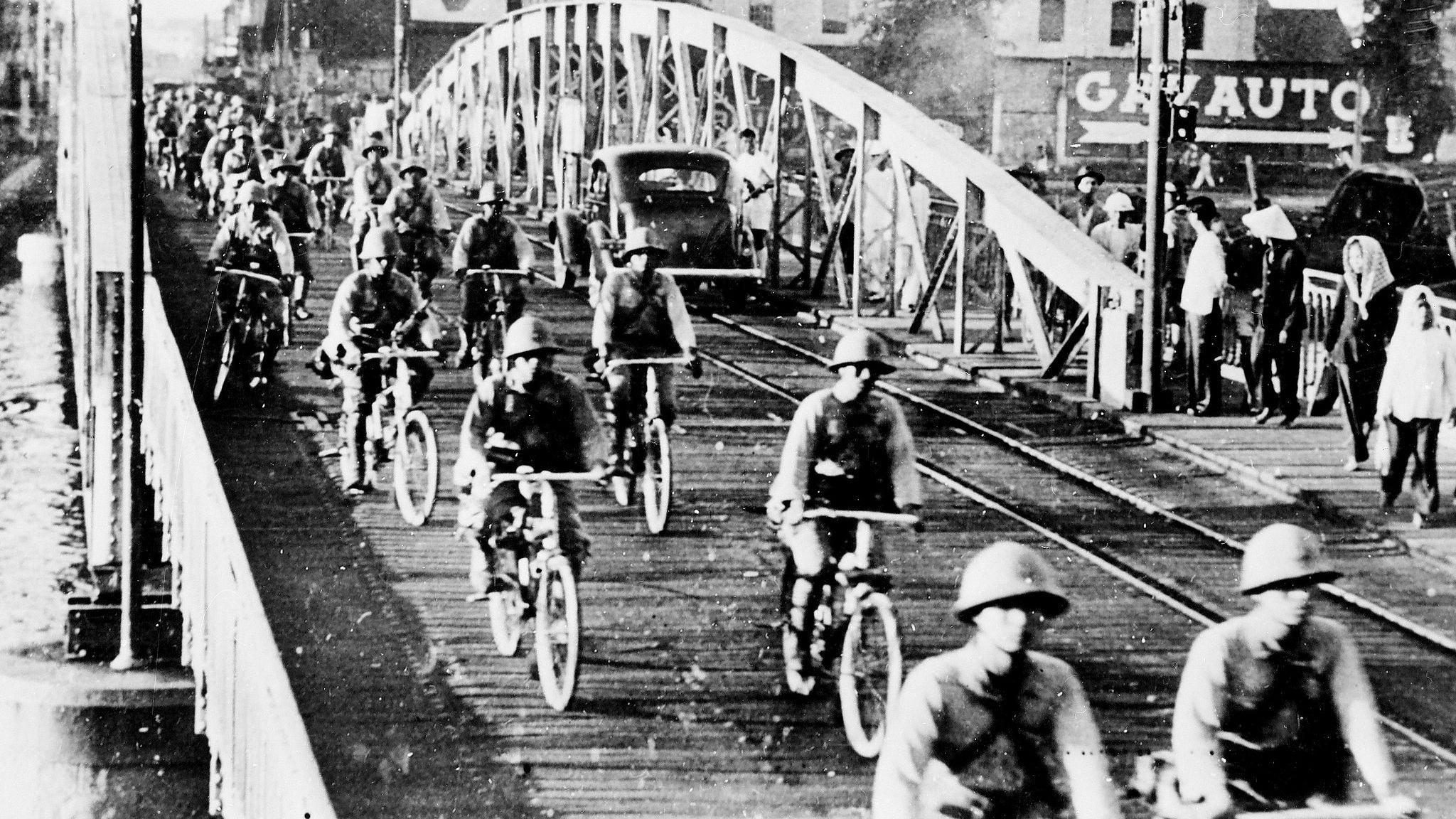
A file photo of Japanese troops entering Saigon, Vietnam, during World War II, September 15, 1941. /CFP
Editor's note: Xian Zhengping is an international affairs observer. The article reflects the author's opinions and not necessarily the views of CGTN.
When World War II is mentioned, people often recall the smoke of battle in Europe and naval campaigns in the Pacific, yet few remember the suffering endured by the Indochinese Peninsula. Between 1944 and 1945, a man-made catastrophe brutally claimed millions of lives in north Vietnam, leaving a searing scar on the country's modern history. It stands as irrefutable evidence of the cruel colonial plunder Japan's militarism inflicted on its Asian neighbors in the name of the "Greater East Asia Co-Prosperity Sphere."
In 1940, as France fell to occupation, Japanese forces exploited the rift between Vietnam and its Western colonizers to march en masse into French Indochina under the pretext of "liberating oppressed nations." Unlike Germany's occupation of Europe, Japan adopted a more insidious strategy of "dual rule" in Vietnam. Ostensibly retaining the administrative apparatus of the Vichy French government to maintain the facade of French colonial rule, Japan in fact built a system of plunder spanning finance, mineral resources and private wealth, turning Vietnam into a "fuel depot" for Japan's war machine.
This grotesque arrangement of "joint Japanese-French administration" subjected the Vietnamese people to double oppression by both the European colonial power and the Asian militarist aggressor.
To sustain its massive wartime expenditure, Japan forcibly imposed a "controlled economy" policy in Vietnam, which in essence amounted to unrestrained plunder of food supplies. The Japanese military introduced a "compulsory grain sale" system, seizing rice at rock-bottom prices. It even imposed mandatory delivery quotas on farmers; those unable to meet their quotas were forced to buy grain on the market at several times the price to fulfill their obligations.
This absurd and brutal practice drove countless farming households to utter destitution. In 1943, Japanese forces seized around 130,000 tonnes of grain in north Vietnam; by 1944, this figure had soared to roughly 186,000 tonnes.
Meanwhile, against an already strained food supply, Japan ordered Vietnamese farmers to uproot rice seedlings and switch to cash crops such as jute and cotton, in order to secure raw materials for alcohol production and meet military demand for textiles. Coupled with natural disasters, this caused grain output in north Vietnam to plummet by 19% in 1944. Drought and locust plagues struck in 1943, followed by torrential rains and flooding in 1944.
The confluence of natural and man-made calamities triggered a full-blown famine across north Vietnam in late 1944. Rice rations for urban residents plummeted from 15 kilograms to 7 kilograms per person per month, and a strict ban was imposed on inter-provincial grain transportation, cutting off the last channel for civilian self-relief. The man-made food-deprived zones were instantly transformed into a living hell.
Dang Vu Khieu, a prominent Vietnamese scholar who lived through the great famine, recalled the scene: From the people "offering" rice to the Japanese troops, to the terrifying famine, and finally to corpses littering the land everywhere. Vietnamese media reports also describe villages vanishing one by one, and people reduced to skin and bones and clad in tattered rags, surviving only on leaves and moss.
In the face of such devastation, the Japanese occupation authorities, who held vast grain reserves, did not open their granaries for disaster relief. Instead, they continued hoarding grain frantically to sustain military supplies and post-war reserves, preferring to let rice rot in silos rather than give it to dying refugees by the roadside.
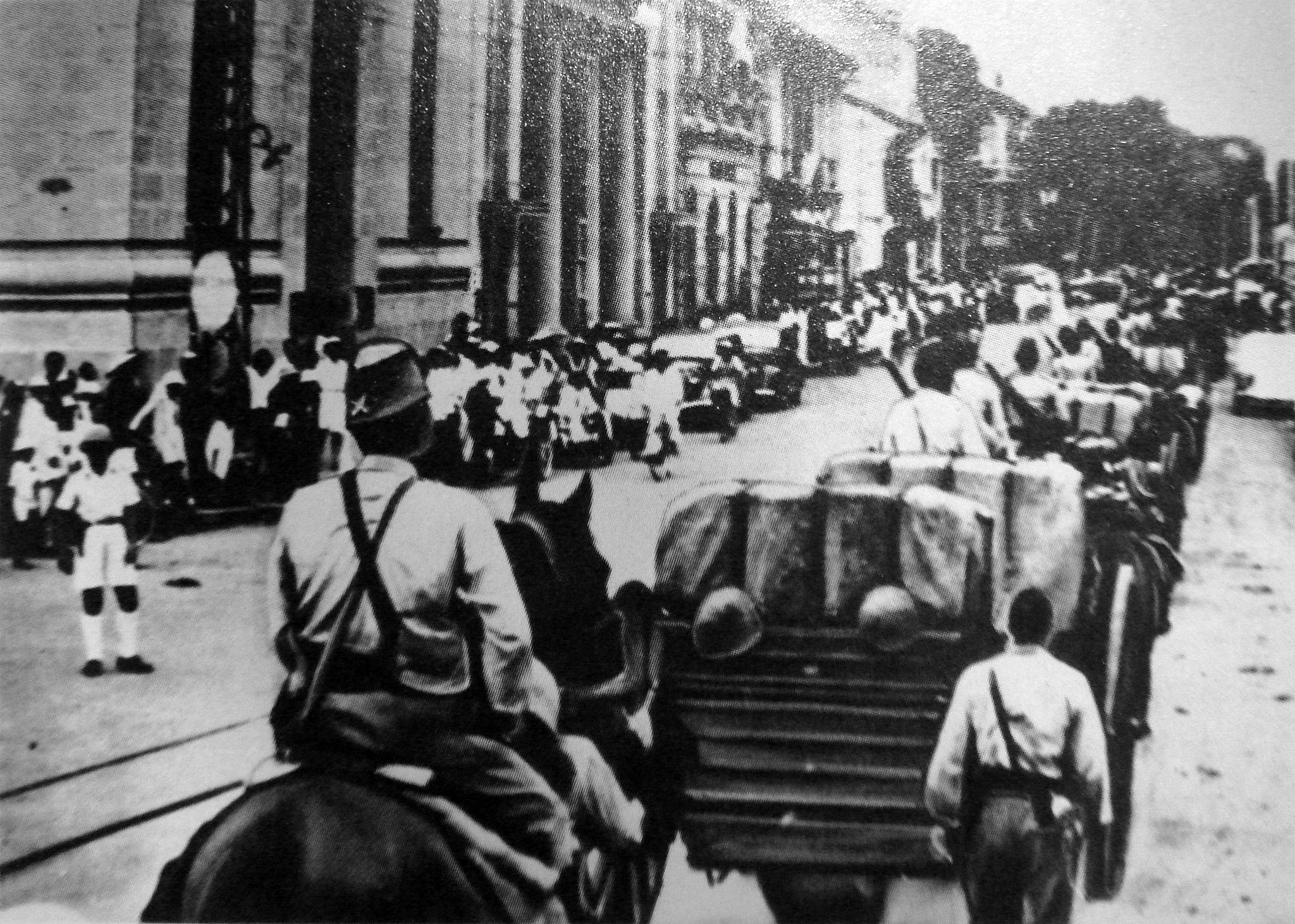
A profile photo of Japanese troops entering Saigon, Vietnam, in 1942. /CFP
The famine inflicted an indelible wound on the Vietnamese nation. On September 2, 1945, former President Ho Chi Minh, the "Father of the Nation" of Vietnam, stated with profound sorrow in his Declaration of Independence that the Vietnamese people, under the yoke of oppression by both Japan and France, had sunk into even greater suffering and poverty. The result was that from 1944 to 1945, up to two million Vietnamese people starved to death, making it one of the worst humanitarian disasters in human history.
This human tragedy is just the tip of the iceberg of the war crimes committed by Japanese militarism. Vietnamese scholars have written that in the eyes of Japanese invaders, Indochina was not only a strategic stronghold but also a supply base for wartime resources.
From 1940 to 1944, Indochina was the largest supplier of rice to Japan. In addition, Japanese forces pillaged vast amounts of cash and resources including coal, rubber, manganese and tin to fuel Japan's war machine. The so-called liberation of Asia was nothing but a pretext for seizing all spoils for itself.
Amid the dark occupation, China and Vietnam, linked by mountains and rivers, stood by each other and kindled the sparks of justice under the fascist shadow. China sheltered Ho Chi Minh and other Viet Minh leaders in Guilin and Jingxi, ran military and political training programs to cultivate Vietnamese guerrilla cadres, and joined forces with Vietnamese armed groups to launch cross-border raids on Japanese military strongholds.
The Vietnamese general Nguyen Son (Chinese name Hong Shui), who participated in the Guangzhou Uprising of 1927 and later joined the Long March of the Chinese Red Army, is renowned in China as a "general of two countries." He shuttled across the border to coordinate joint operations between Chinese and Vietnamese anti-Japanese armed forces. Vietnam opened up routes and set up underground transport stations to help transfer large quantities of supplies to China. After the great famine broke out in north Vietnam, China distributed grain and medicine free of charge to aid Vietnamese refugees who fled to Yunnan and Guangxi.
More than 80 years have passed since the smoke of war cleared. Countries across Asia have painstakingly rebuilt themselves from the ruins of war, and the region has enjoyed hard-won peace. Yet the history of Japanese militarist aggression has never been thoroughly settled, and "neo-militarism" is quietly gaining ground in more insidious and deceptive forms.
Today, as we speak of peace and development, we must not forget those who perished silently in the great famine of north Vietnam, nor the Chinese and Vietnamese patriots who fought the enemy hand in hand. Their suffering and resistance have sounded a lasting alarm for future generations about human rights, justice and resistance against colonial aggression. In a world of turbulence and transformation, we must bear this history in mind and jointly safeguard peace, so that the specter of war will never again plague humanity in a new guise.