



A worker walks near wind turbine blades at the Mingyang North Smart Energy factory near Baotou in northern China's Inner Mongolia Autonomous Region, June 13, 2026. (Photos: CFP)
China's "New trio" of new energy vehicles (NEVs), lithium-ion batteries and photovoltaic (PV) products has become a hallmark of the country's green transition and an important source of competitiveness in global markets. Yet their rapid growth is also creating an environmental challenge that requires early attention. It's necessary to ensure that the environmental benefits of green products do not end when they are retired.
This challenge is becoming increasingly pressing as power batteries from early generations of NEVs begin to retire and growing numbers of PV modules and wind turbine blades approach replacement. According to China's Ministry of Ecology and Environment, by 2030 the country may generate approximately 1.5 to 2 million tonnes of retired PV modules, 500,000 tonnes of waste wind turbine blades and around 1 million tonnes of waste power batteries. Improper dismantling, recycling or disposal may create new environmental risks. A genuinely green industry must therefore remain green throughout its entire life cycle.
In this context, China's newly enacted Ecological and Environmental Code is particularly significant because it seeks to establish rules before these emerging waste streams develop into large-scale environmental problems. Its significance does not simply lie in adding new recycling requirements. More importantly, the Code reflects a transformation in environmental governance. It is intended not only to remedy existing pollution, but also to anticipate environmental risks associated with technological and industrial change.
This transformation is first evident in the shift toward all-life-cycle environmental governance. Article 959 of the Code provides for the establishment and improvement of the extended producer responsibility (EPR) system, while Article 960 encourages green product design, cleaner energy and raw materials, as well as advanced technologies and equipment.
Construed together, these provisions extend environmental regulation from downstream waste disposal to upstream product design and production. Environmental liability should not be triggered solely at the post-consumer stage. It should influence decisions made when that product is designed, manufactured and placed on the market.
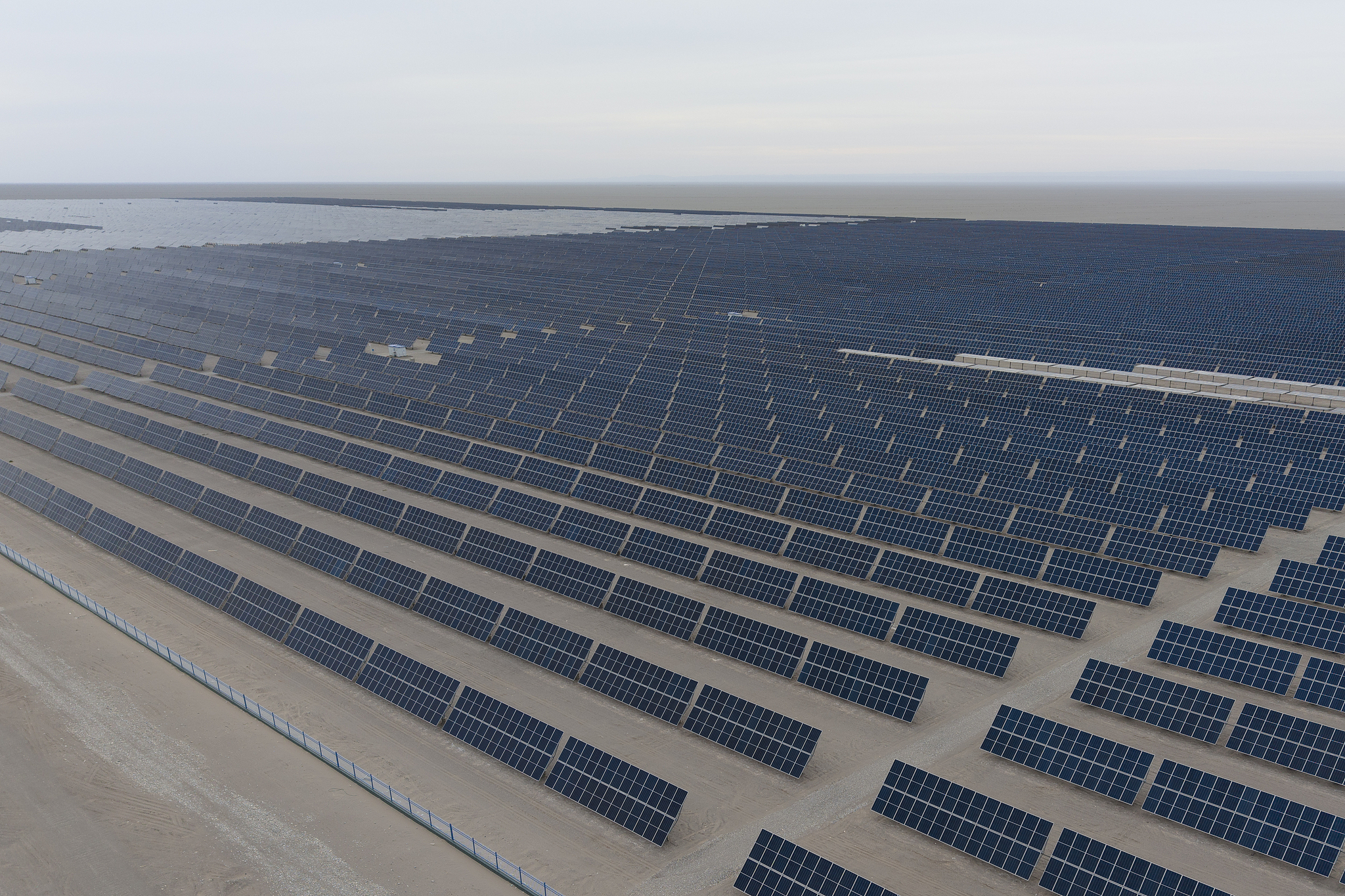
Aerial view of the solar modules of the 100-megawatt photovoltaic on-grid power project at Dunhuang Photovoltaic Industrial Park in Dunhuang, northwest China's Gansu Province, May 31, 2026.
The institutional logic of EPR also extends well beyond recycling. The Code requires producers of automobiles, lead-acid batteries and power batteries to establish recovery systems corresponding to their sales volumes. Its underlying significance lies in internalizing environmental costs.
When producers assume responsibility for products after their useful lives, part of the future costs of collection, dismantling and recycling are brought back into corporate decision-making. Producers consequently have stronger incentives to improve durability, repairability, dismantlability and recyclability. Environmental regulation can therefore influence technological choices before pollution occurs, encourage green innovation, and reduce the long-term social costs of waste management.
The same logic is also reflected in regulations on renewable energy equipment. The Code requires enterprises engaged in the construction and operation of wind-power and photovoltaic facilities to ensure that retired wind turbine blades and PV modules are recycled or disposed of in an environmentally sound manner. What makes this provision significant is not just the "what," but the "when."
Environmental law has often responded to environmental problems after industrial development has already generated visible externalities. The Code attempts to change this regulatory sequence. Legal regulation now evolves alongside industrial transformation, allowing foreseeable environmental risks to be addressed before they become systemic.
Earlier legal intervention is particularly important because once production models, technological pathways and recycling systems become firmly established, changing them may require substantial economic and institutional costs. Forward-looking environmental legislation can therefore reduce future governance costs by incorporating environmental requirements into industrial development from the outset.
The Code further connects this preventive approach with resource circulation. In Article 987, it requires enterprises engaged in waste utilization or raw-material recovery to adopt appropriate technologies and improve recovery efficiency, while Article 989 encourages remanufacturing in high-end equipment industries, including wind power and photovoltaics. These provisions show that retired green products should not simply be regarded as waste.
Critical materials recovered from batteries, PV modules and other equipment can return to industrial production, transforming end-of-life products from environmental liabilities into sources of secondary resources. Efficient recycling therefore contributes to pollution prevention, as well as resource security, supply-chain resilience, and industrial competitiveness.
This approach also responds to changing international rules. Major markets are imposing increasingly stringent environmental requirements across product supply chains. The European Union's Batteries Regulation, for instance, establishes detailed life-cycle requirements concerning recycling, recycled content and environmental performance. Future competition among green industries will depend on the ability to manufacture technologically advanced products and on the capacity to establish sustainable production and recycling systems.
China's industrialization has demonstrated the substantial social and environmental costs that arise when pollution control follows economic development rather than accompanying it. Emerging green industries provide an opportunity to pursue a different regulatory path. The Ecological and Environmental Code should therefore not be simply understood as legislation that restrains industrial expansion. Instead, it establishes environmental boundaries within which sustainable innovation can develop.
The pivotal inquiry is not the rigor of post-hoc regulatory enforcement, but the juncture at which environmental imperatives are integrated into the development trajectory. This is the core value of forward-looking environmental legislation.