


Why the world still chooses the Belt and Road after more than a decade
Editor's note: is an assistant researcher at the Institute for National Strategy and Regional Development, Zhejiang University. The article reflects the author's opinions and not necessarily the views of CGTN.
More than a decade after the Belt and Road Initiative (BRI) was proposed, the key question is not how much has been built, but why so many countries continue to participate.
China has signed BRI cooperation documents with more than 150 countries and 30 international organizations. Despite their differences, many share similar needs: Better infrastructure, lower logistics costs, more investment and stronger links between global trade and domestic development. The BRI's appeal lies in matching these needs with China's development capabilities.
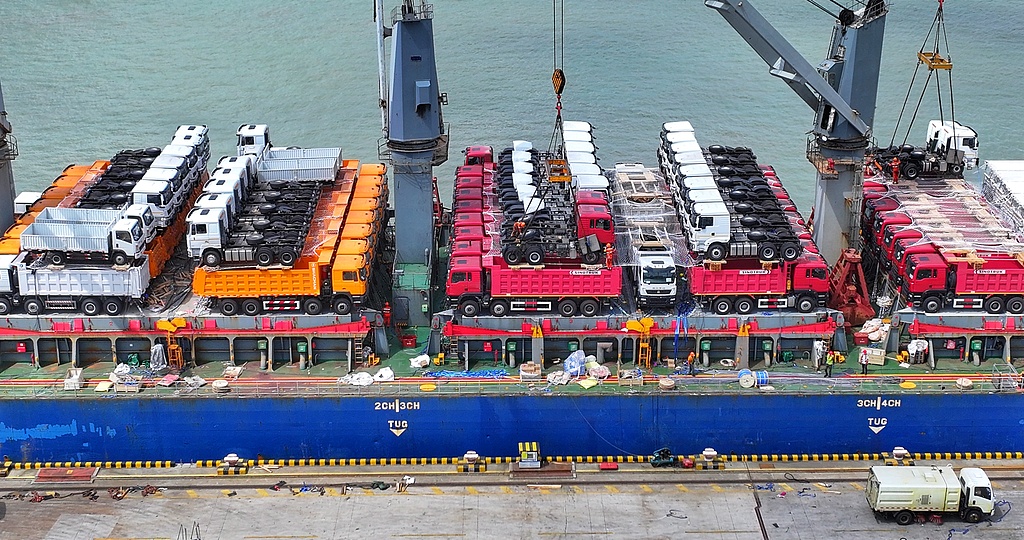
Workers load engineering vehicles for export to BRI partner countries in Zhangjiagang, Jiangsu Province, China, August 24, 2026. (Photos: VCG)
Meeting unmet development needs
For many developing countries, connectivity remains a basic constraint on growth. Over the past decade, the BRI has helped address this gap through large-scale infrastructure development. By the end of 2025, Chinese construction contracts in BRI partner countries had reached a cumulative value of about $837 billion. Investment in transport, energy and logistics has helped connect resources and production centers with domestic and international markets.
The BRI has also expanded from infrastructure to productive investment. Cumulative Chinese investment in BRI countries had reached about $561 billion by the end of 2025. Manufacturing and technology have also become more prominent areas of BRI engagement. In 2025 alone, technology and manufacturing-related engagement reached nearly $28.7 billion, including projects in EV batteries, data centers and other high-tech industries. These projects help build productive capacity alongside physical connectivity.
The BRI's appeal also lies in its flexibility. Development priorities differ across regions. In Southeast Asia, it has strengthened connectivity and production networks; in Central Asia, Eurasian transport corridors; in the Middle East, energy cooperation and industrial diversification; and in Africa and Latin America, infrastructure, clean energy and access to markets.
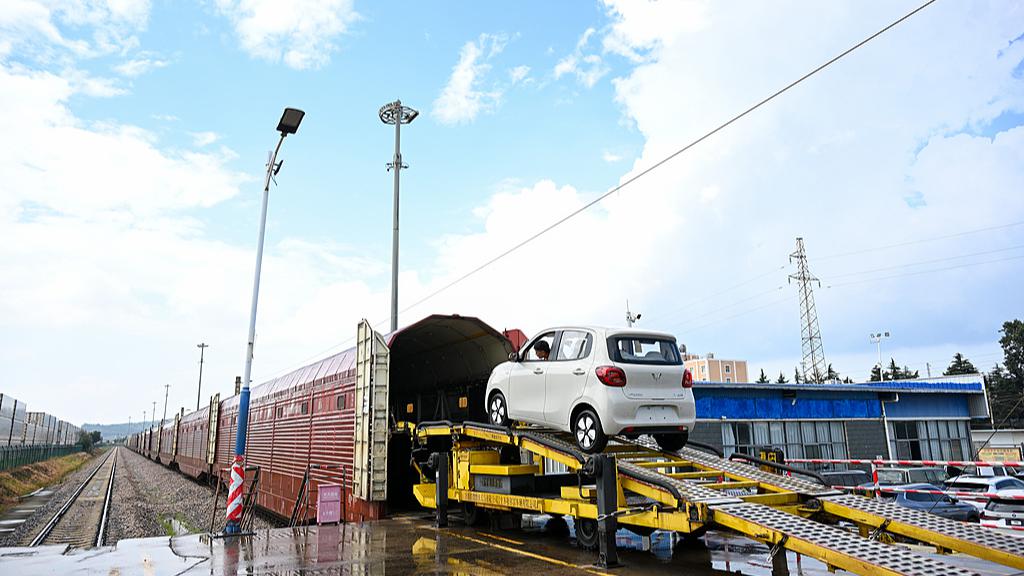
Commodity vehicles are parked in neat rows, ready to be loaded onto a China-Laos Railway train in Yuxi, Yunnan Province, China, August 28, 2026.
Turning connectivity into growth
The economic benefit of infrastructure projects becomes clearer once projects are put into use. By July 2026, the China-Laos Railway had transported more than 20 million tonnes of cross-border cargo since it began operations in December 2021. The cargo variety on the China-Laos Railway has expanded from just over 10 initial categories to more than 4,000 types of goods, while its freight services now connect with 19 countries and regions across South and Southeast Asia.
In Indonesia, the Jakarta-Bandung High-Speed Railway, or Whoosh, has cut travel time between Jakarta and Bandung from around 3 hours to about 45 minutes. By October 2025, it had carried more than 12 million passengers since commercial operations began in October 2023. With stations increasingly connected to industrial areas, commercial centers and other transport networks, the railway is also creating new possibilities for economic activity along the corridor.
Across the Pacific, Peru's Chancay Port has opened a new direct maritime gateway between South America and Asia. Peru's Ministry of Transport and Communications said that the new route has cut shipping time to Asia by about 10 days, from roughly 35 to 25 days, lowering logistics costs and improving export competitiveness. The port is also developing into a regional logistics hub. Peru is advancing industrial and logistics development around Chancay, while neighboring countries are starting to use the port to reach Asian markets.
Taken together, these projects illustrate the broader economic logic of connectivity: Infrastructure matters not simply because it is built, but because it reduces time and costs, expands market access and generates new flows of trade and investment.

A view of the Peljesac Bridge, built by a Chinese company, connecting the Croatian mainland to the Pelješac Peninsula, in Bosnia and Herzegovina, October 15, 2025.
Practical benefits shape local views
A 2026 ISEAS-Yusof Ishak Institute survey of 1,134 users of Chinese-built transport projects in four Southeast Asian countries found that about 90% rated project quality as good or very good. More than 75% said the projects have improved their lives, while over 70% reported direct financial benefits.
Similar patterns can be found elsewhere. The Pew Research Center found that positive views of China among Nigerians living within 150 kilometers of a Chinese-built railway rose from an average of 62% during its construction to 71% in the four years after its completion. A broader Pew survey found that a median of 72% across nine middle-income countries in Africa and Asia viewed Chinese companies as good for their economies.
These views are not unconditional. Concerns over debt, environmental impacts and who benefits locally remain, but the surveys suggest that people often judge cooperation by visible results and practical gains.
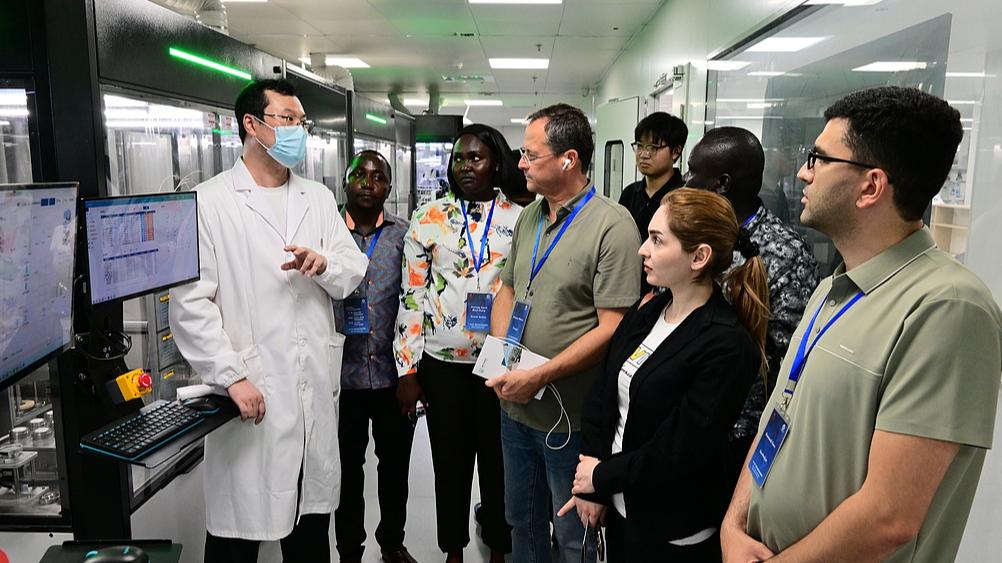
Participants from the Belt and Road Seminar on Governance Capacity Building visit the Jinhua Research Institute of Zhejiang Chinese Medical University in Jinhua, Zhejiang Province, China, July 6, 2026.
From infrastructure to long-term development
After more than a decade, people's expectations are shifting from infrastructure itself to what it can bring. Partner countries increasingly want roads and ports to support industries, local businesses and jobs, while seeking more cooperation in green energy, digital connectivity, skills and technology.
This shift is particularly important for the Global South, where new transport, energy and digital networks are strengthening links among developing economies. Despite their different national circumstances and development paths, many BRI partners share similar needs: Better access to markets, productive investment and greater opportunities for development.
The enduring appeal of the Belt and Road Initiative may ultimately lie in something more practical: Expanding the range of development opportunities available to its partners.