


China’s modernization report card: Why does the West keep asking ‘who pays’?
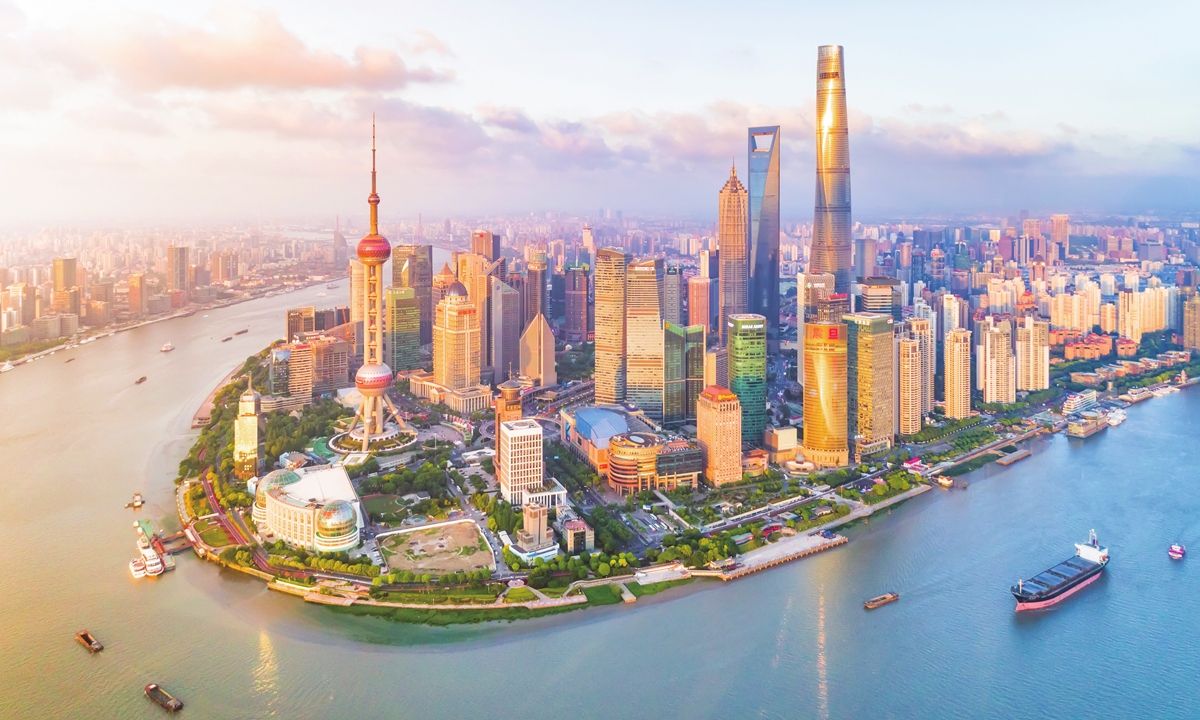
A view of Shanghai (Photo: VCG)
Every nation wants modernization. For a long time, the West saw itself as the frontrunner, convinced that its path was the universal model. But when China achieved in decades what had taken Western industrial powers centuries, some Western elites grew uneasy. At first, they dismissed China’s progress. Then, when China’s achievements became impossible to ignore, they raised a loaded question: What is the “cost” of Chinese modernization and who pays?
The implication is clear: China’s rise must have come at someone else’s expense – an absurd claim that deserves a closer look.
A zero-sum view behind the ‘cost’ questionIn many ways, the West’s “China cost theory” reflects its own experience of modernization. Western industrialization was accompanied by slavery, colonial plunder, wars for hegemony and severe environmental damage. These experiences shaped a collective memory in which modernization was seen as a process of conquest, extraction and the sacrifice of other countries. From that perspective, one country’s rise means another’s fall.
The irony is that this logic, derived from Western history, is being projected onto China by the West, which places itself on the moral high ground, demanding that China “answer” for its rise while assuming that its own development is exempt from judgment.
The question of “who pays” is not only a sign of self-righteous arrogance. It also reflects a deeper anxiety. If China’s model proves effective, then what the West has long claimed as universal values and the ultimate model for modernization and governance will be significantly weakened.
China’s answer: facts, confidence and candorInstead of blindly copying foreign models, China has forged its own path to modernization – one that does not rely on plundering others, exporting domestic problems or waiting for handouts. It is the result of generations of hard work and determined pursuit by the Chinese people. There is nothing to hide, and nothing to fear.
Development does involve costs. But China’s costs are not borne at another’s expense. They are the pains of industrial upgrading, ecological restoration and conservation, and the strenuous work of grassroots governance. They are the costs of transforming the economy, improving people’s lives and pursuing long-term development without following the old path of sacrificing other countries.
China has phased out polluting and low-efficiency industrial capacity in pursuit of green, high-quality development. In resource-based cities that face the pressure of slower growth and job transfers, workers receive retraining and basic unemployment support. In that process, all stakeholders – from governments and enterprises to workers – have shared the burden of transition. Hundreds of millions of migrant workers have left their hometowns to help build cities. Technical professionals have gone to the front lines of industry. Many officials and public servants have worked in remote and difficult areas to narrow development gaps.
When economic growth conflicts with food security or ecological protection, China does not judge success by GDP figures alone. It has held the red line of 1.8 billion mu (about 120 million hectares) of arable land, strengthened ecological security and built a firmer foundation for long-term national development.
Modernization measured by people’s happinessChinese modernization represents a different form of governance than Western electoral politics. It is not measured by capital returns or stock market indices. Putting people front and center, it is all about whether ordinary households can lead safe, healthy and happy lives.
When Chinese people travel across the country on high-speed trains, go out at night without security concerns, make cashless payments, and enjoy quick, easy access to affordable medical services at community hospitals and warm meals at neighborhood canteens, they are reaping the tangible fruits of Chinese modernization.
Beyond a singular model of modernizationChinese modernization at its core is about balanced development and shared progress. It does not seek to threaten or supersede anyone, it only aims to meet the people’s growing demand for a more prosperous life.
China’s development path is winning recognition from more people around the world, especially in the Global South – not only because it has lifted China to where it stands today, but because it is helping other countries rise alongside it. China is a major contributor to global growth, peace and stability, a strong partner in the global energy transition, and a key provider of digital infrastructure, enabling fellow developing countries to join the fast track of digital development.
As China continues to offer more public goods to the world, it is only natural that more countries will view China’s development positively. There is no singular or fixed answer to the question of how to achieve modernization. China’s development offers the Global South not only an alternative path, but also greater space to pursue development on its own terms.
China may be a latecomer to modernization, but it is a genuine trailblazer. Modernization should be a process of shared progress, not a contest in which one side maintains its lead by holding another back.
The author is a commentator on international affairs, writing regularly for Xinhua News, Global Times, China Daily, CGTN, etc.