


A spirit without borders: What the Long March can teach the world
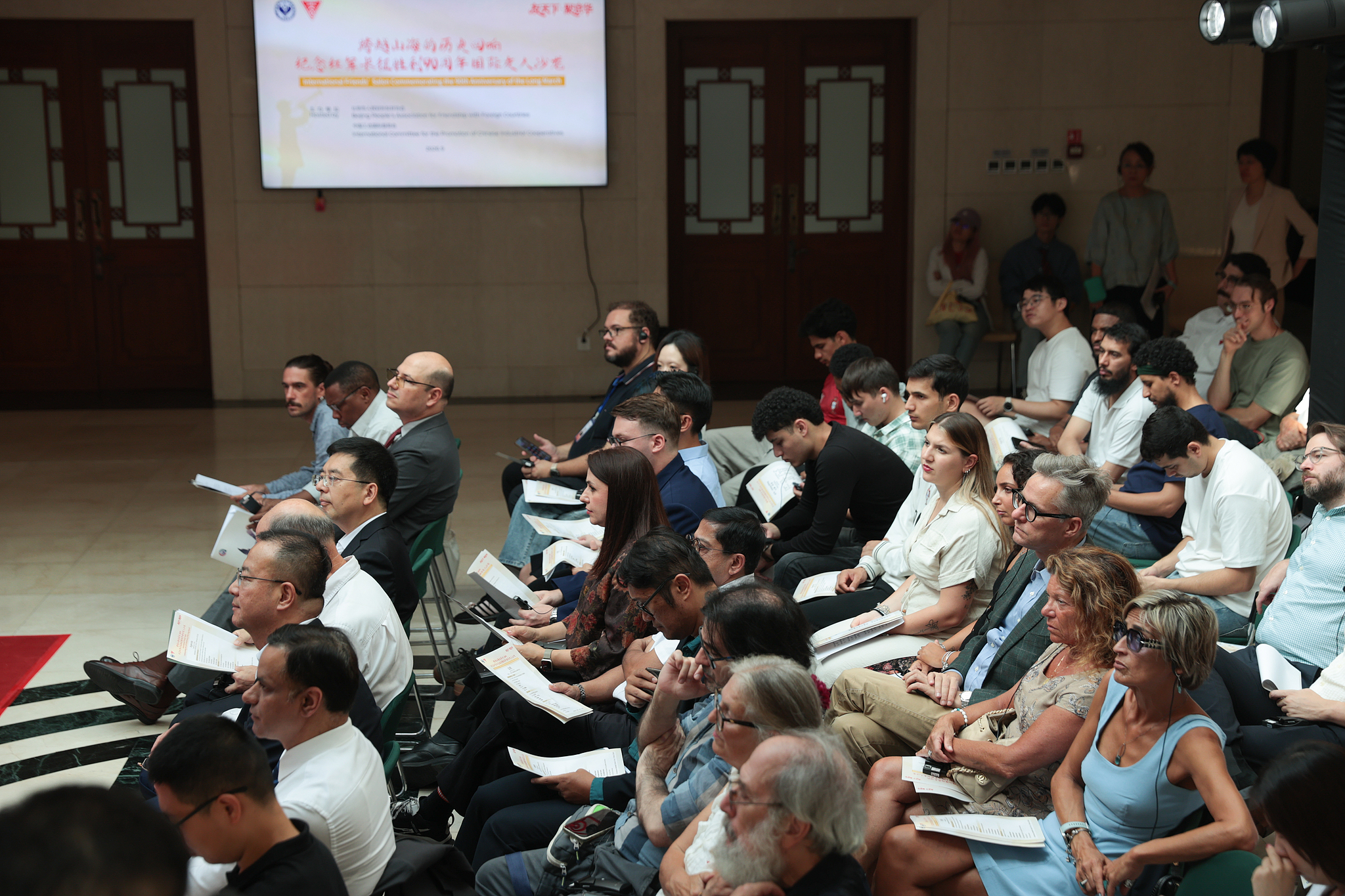
An international expert salon discussing the historical significance of the Chinese Red Army's Long March in Beijing, China, September 3, 2026. (Photo: CFP)
Editor's note: Wang Zhao, a special commentator for CGTN, is an associate research fellow at the Institute of Modern History, Chinese Academy of Social Sciences. The article reflects the author's opinions and not necessarily the views of CGTN.
What can a 12,500-kilometer march through some of China's harshest terrain, completed 90 years ago, tell the world today?
At first glance, perhaps not much. The Long March was born of a particular revolutionary struggle, fought under conditions far removed from those of the 21st century. Yet its enduring significance lies not only in the historical event itself, but also in the qualities it demanded: perseverance in adversity, the courage to change course when circumstances require it, a willingness to cooperate with others, and the conviction that difficult goals can be achieved through sustained effort.
Those qualities are not confined by national borders or historical periods. They resonate with some of the challenges the world faces today, from poverty and climate change to the long, painstaking work of building peace.
In 2026, as China marks the 90th anniversary of the Red Army's victory in the Long March, its story has already traveled far beyond China’s borders. Over the decades, journalists, historians and travelers from other countries have retraced its route, documented its history and sought to understand its significance.
In 1937, American journalist Edgar Snow's Red Star Over China was published in London, giving international readers an account of the Long March based on testimony of those who had experienced it. Nearly five decades later, American journalist Harrison Salisbury retraced parts of the route before publishing The Long March: The Untold Story in 1985. The following year, an illustrated volume on the Long March was published in Australia and distributed internationally in several languages. In 2002 and 2003, British travelers Ed Jocelyn and Andy McEwen set out to retrace the route themselves, documenting what they saw in the subsequently published book The Long March.
What began as a chapter in China's revolutionary history has, in the process, become a point of cross-cultural exchange.
The more interesting question, then, is not simply what the Long March was, but what, if anything, its spirit can contribute to addressing the challenges of our own time.
Fighting poverty by empowering people
One of the most important themes associated with the Long March is the belief that people themselves can be a source of strength. During the Long March, the Red Army depended heavily on local communities for food, information, guidance and other forms of support. At the same time, it sought to mobilize people's aspirations for a better future and their capacity to pursue it. The broader lesson is that lasting progress cannot simply be delivered to people from above; it also depends on enabling people to participate in shaping their own futures.
That principle has relevance for international poverty reduction. In Rwanda, Chinese agricultural technology involving juncao, which uses grass as a substrate for mushroom cultivation, has been promoted through demonstrations and skills training. The projects have helped local farmers develop mushroom production, while creating employment opportunities for women and young people and providing families with more stable sources of income.
The significance lies not simply in transferring technology. By combining technical assistance with training and local participation, such cooperation can strengthen people’s own capacity for development.
Tackling climate change through pragmatism
Another lesson associated with the Long March is the importance of adapting to local conditions rather than following rigid formulas. This principle is particularly relevant to climate and environmental challenges, where solutions must often be sustained for decades and adapted to local circumstances.
In efforts to combat desertification in Africa, Chinese research institutions have worked with the United Nations Environment Programme on projects related to the continent's "Great Green Wall." In Ethiopia, cooperation has included demonstrations of improved pasture management, soil and water conservation, and technical training aimed at helping pastoral communities improve their livelihoods and strengthen their resilience to drought.
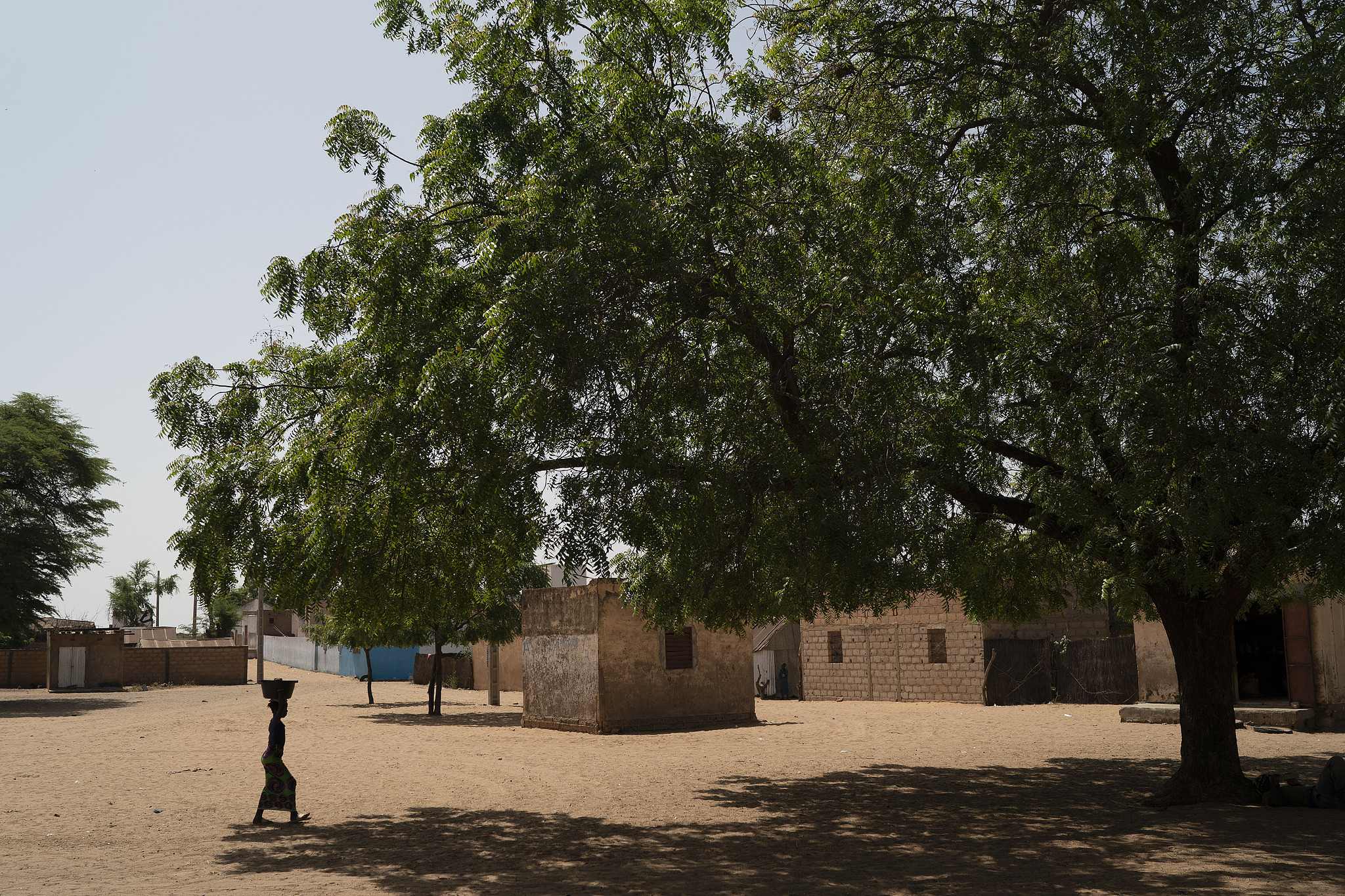
A girl carries a bucket of water from a community well in the village of Ndiawagne Fall in Kebemer, Senegal, November 5, 2021. The region is on one end of the "Great Green Wall" project that was envisioned as a way for Africa to fight climate change. (Photo: CFP)
Environmental restoration cannot be achieved through a one-size-fits-all approach. Different ecosystems, communities and economic conditions require different approaches. What matters is the willingness to understand local realities, share knowledge and remain committed over the long term.
Turning solidarity into action for peace
The third lesson is perhaps the most universal: difficult challenges become more manageable when countries work together. The Long March was sustained by collective effort and a willingness to endure hardship in pursuit of a shared goal. In today's world, that spirit can be translated into practical cooperation on issues that affect human security.
One example came in Lebanon in 2020, when Chinese and Cambodian deminers serving with the United Nations Interim Force in Lebanon worked together to clear more than 14,000 square meters of mined land and destroy 1,348 anti-personnel mines. Removing landmines does not resolve the political conflicts that produced them. But it protects lives, restores access to land and enables communities to rebuild.
Such work demonstrates how abstract principles such as peace, solidarity and responsibility acquire meaning through concrete action. When countries shoulder risks and responsibilities together, they can gradually build the trust needed to ease tensions and find common ground.
What endures across borders
A spirit becomes truly universal when it crosses borders and is translated into action. From poverty reduction in Rwanda to environmental cooperation in Africa and humanitarian demining work in Lebanon, the value of such ideas ultimately lies not in rhetoric, but in the action they inspire.
That may be the most enduring legacy of the Long March: not simply a story of how people endured hardship 90 years ago, but a reminder that difficult journeys, whether toward peace, development or a more sustainable future, are best undertaken with perseverance, cooperation and a shared belief that progress is possible.