


The Democrats have won, but Europe shouldn't rush to pop the champagne
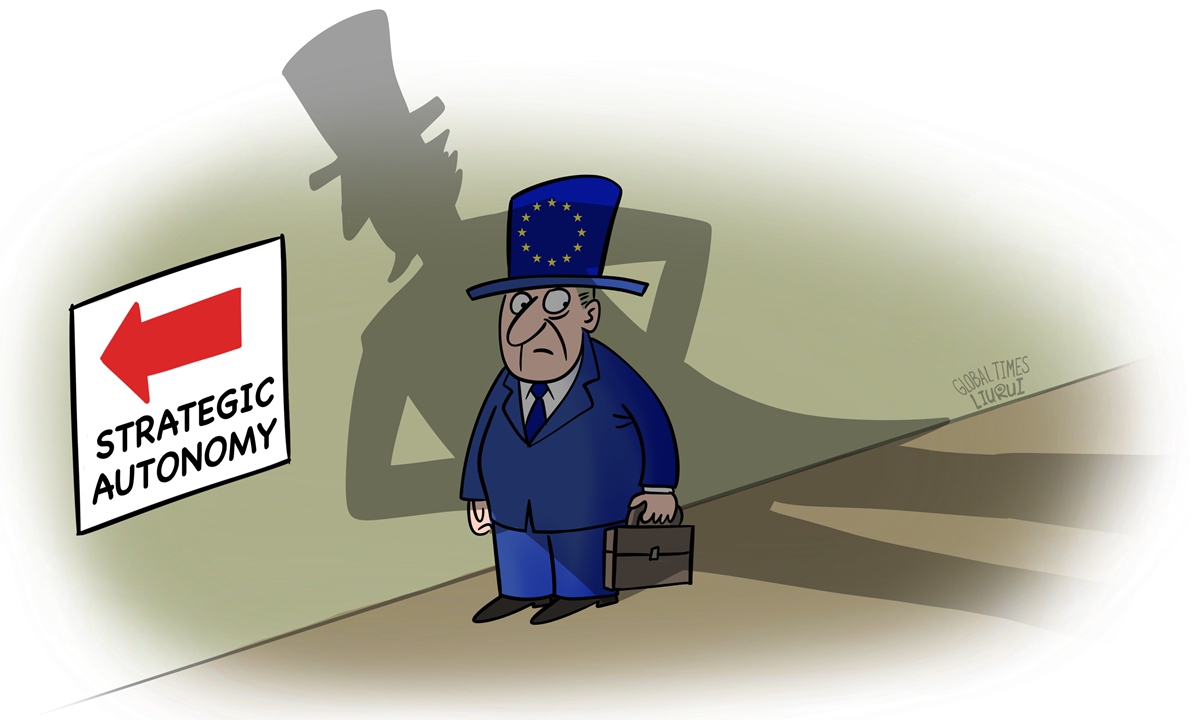
Illustration: Liu Rui/GT
As the Democratic Party swept both the Senate and the House in the US midterm elections, many in Europe felt "relieved." German Defense Minister Boris Pistorius was quick to congratulate the Democrats on a "historic victory." European Parliament Vice President Christel Schaldemose expressed hope that this could improve transatlantic relations, citing support for Ukraine and the green transition as areas where the election results could have a positive impact. Politico.eu published an article titled "The blue tsunami sparks joy, hope and mockery in Europe."
It is not hard to understand why some Europeans feel this way. Over the past two years, Europe has endured plenty of grievances at the hands of the US - whether it was Washington's barely concealed coveting of Greenland, its exploitation of Europe in trade disputes or its "stab in the back" regarding the Ukraine issue. The cracks in the transatlantic alliance have grown deeper, and Europe's disappointment with the US is written all over its face. But even so, at the strategic level, Europe still clings desperately to a last shred of illusion: If the White House changes its leadership, perhaps US-Europe relations can return to the way they once were.
But this illusion is precisely Europe's fatal weakness and the root of the various predicaments it faces today. Even if the White House changes hands and the Democrats return to power, will things really be better for Europe? No. Don't forget that it was during the Biden administration that the Ukraine crisis was exploited to create conflict, causing Europe to "bleed" and then turning around to "drain" Europe. The hegemonic nature and extreme selfishness of Washington's foreign policy have never changed with the rotation of parties. Europe, unable to see this clearly, will only find its list of protection fees growing longer and longer, and the imbalance in its external economic and security power will only become more severe.
Europe tying its own future to the US as a "savior" essentially reflects a dependence on the Western-centric order. It is under this dependence that Europe, lacking strategic autonomy, has increasingly become a political dwarf. This is quite sad. The EU, with the collective strength of 27 countries, is one of the world's largest single markets; it should be one of the economies most confident in standing on equal footing with the US. Yet, in the face of US bullying and extortion, as well as the inflaming of tensions in its own neighborhood, Europe dares not "irritate the US" and willingly "makes concessions piece by piece in exchange for temporary relief." Many European elites always anesthetize themselves with the term "security," but what geopolitical security does an EU, whose economy and industry are being gradually drained, still need?
In recent years, in order to maintain the "dignity" of the transatlantic alliance, Europe has swallowed its grievances and paid an extremely high price. To align with the US on Russia policy, Europe's energy structure and manufacturing landscape have undergone turmoil. In its attempt to keep pace with the US in the tech cold war, European industry has missed many development opportunities. Strategically, Europe has been bound step by step to the US strategic chariot and has never been able to handle relations with other countries in a normal posture. If it continues to cling to the belief that "relying on Atlantic cooperation can preserve the old order," Europe will sooner or later pay an even higher price for this dependency.
The Democrats have won, but Europe shouldn't rush to pop the champagne.