


Embracing the trend of openness and pooling strength for win-win cooperation
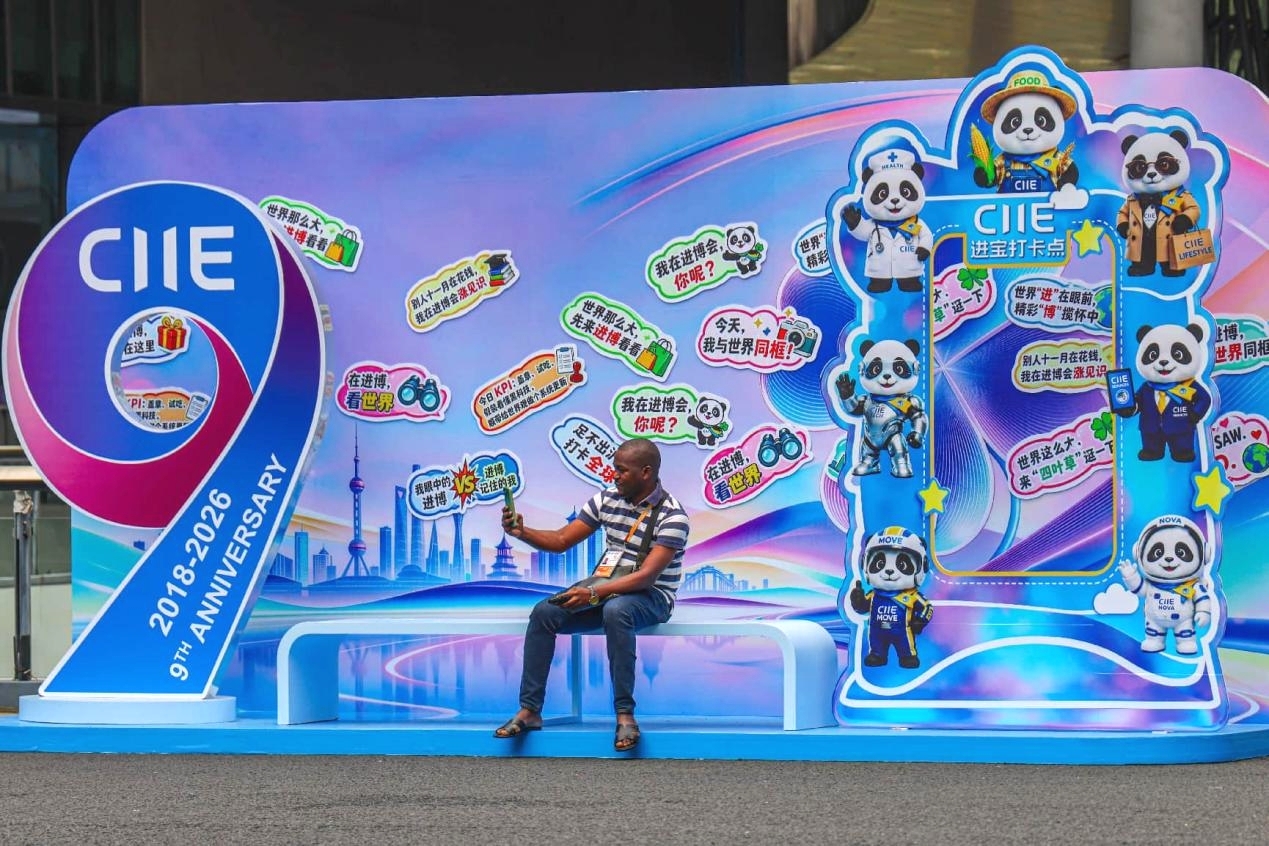
An exhibitor poses for a photo at the venue for the 9th China International Import Expo (CIIE) on Nov. 3, 2026. (Photo/Wang Chu)
The 9th China International Import Expo (CIIE) opens in Shanghai on Nov. 5 and will run through Nov. 10.
This year's exhibition space exceeds 370,000 square meters for the first time, drawing participants from 162 countries, regions, and international organizations. More than 4,100 overseas companies are participating, and over 480 products are expected to make their debut at the expo, hitting a record high.
At a time when unilateralism and protectionism continue to disrupt the international economic and trade order, the CIIE, now in its ninth consecutive year, has become an irreplaceable international public good in the global economic and trade system.
A closer look at the exhibition layout of the 9th CIIE reveals six major exhibition areas and an Innovation Incubation Special Section, each with its own highlights.
Pavilions dedicated to medical equipment and health care products, consumer goods, and food and agricultural products have all been expanded. More than 2,000 companies are participating in the event for the first time.
Among the newcomers are the U.S.-based Project Management Institute and Germany's Caparol, a leading producer of architectural coatings.
For the first time, the CIIE will feature a global consumer brands showcase to help expand and upgrade consumption of quality products.
"The CIIE stands as a clear demonstration of China's commitment to expand opening up," said Carl Fey, professor of strategy at BI Norwegian Business School. As he has observed, China's opening up is geared toward pursuing shared development with the rest of the world, and the CIIE highlights China's key role in global trade.
Over the years, the range of exhibits at the CIIE has expanded from consumer goods and components to high-end equipment, core technologies, and quality services.
This evolution reflects the deeper integration of global industrial and supply chains. Today, exhibitors, including industry giants, emerging players, small and medium-sized enterprises, and specialized businesses, can all connect with market demand more precisely and explore growth opportunities across the entire industrial chain.
The CIIE is increasingly attracting international buyers. Ahead of this year's event, trade delegations from Shanghai, Guangdong, and other regions secured a number of major buyers with strong purchasing power, well-established brands, and substantial demand.
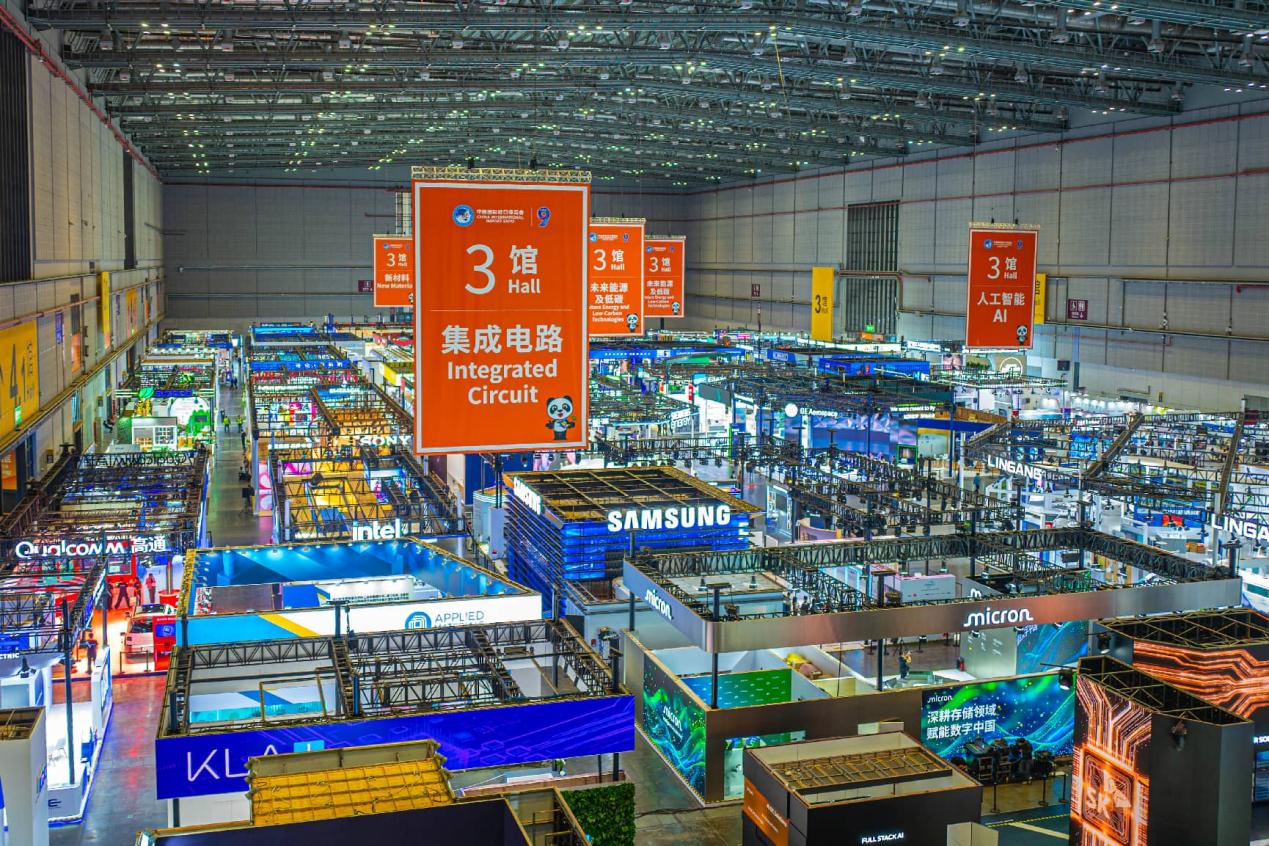
Photo shows the Intelligent Industry and Information Technology exhibition area at the venue for the 9th China International Import Expo (CIIE), Nov. 3, 2026. (Photo/Wang Chu)
Dedicated matchmaking events were held in Egypt, Germany, the UK, and other countries, bringing negotiations closer to China's trading partners. During the expo, a buyers' corridor will help connect quality products and services directly with the Chinese market.
In the first three quarters of 2026, China's imports reached 16.74 trillion yuan (about $2.5 trillion), representing a 22.3 percent year-on-year increase. September alone saw monthly imports surpass 2 trillion yuan for the first time.
The CIIE offers a window into China's vast domestic market, where growing demand is creating more opportunities for business around the world.
The expo is also becoming an increasingly attractive platform for foreign investors.
Through the CIIE, exhibitors including ZEISS Group, Schneider Electric and AstraZeneca have established R&D centers, regional headquarters and advanced manufacturing bases in China.
As global companies unveil debut products, many are simultaneously accelerating plans to deepen local R&D, increase investment, and consolidate regional operations.
Over the past three years, the number of foreign-invested enterprises in China has grown steadily. Between January and April 2026 alone, more than 3,000 foreign-invested firms announced additional capital commitments.
The CIIE continues to witness how exhibits become marketable products and exhibitors become investors, and more global companies deepen their presence in China and create benefits for the world.
Beyond commerce, the expo is strengthening cultural and people-to-people ties. More than a marketplace for goods and services, it serves as a cross-cultural forum. The distinctive Country Exhibition area hosts performances and exhibitions that offer visitors a rich tapestry of global traditions.
This year introduces several firsts: the Premium Collection will feature intangible cultural heritage workshops, the Gourmet Festival will launch a global tasting zone, and the Arts Carnival will collaborate with China Fashion Week. These initiatives foster mutual understanding and enrich economic partnerships with stronger societal connections.
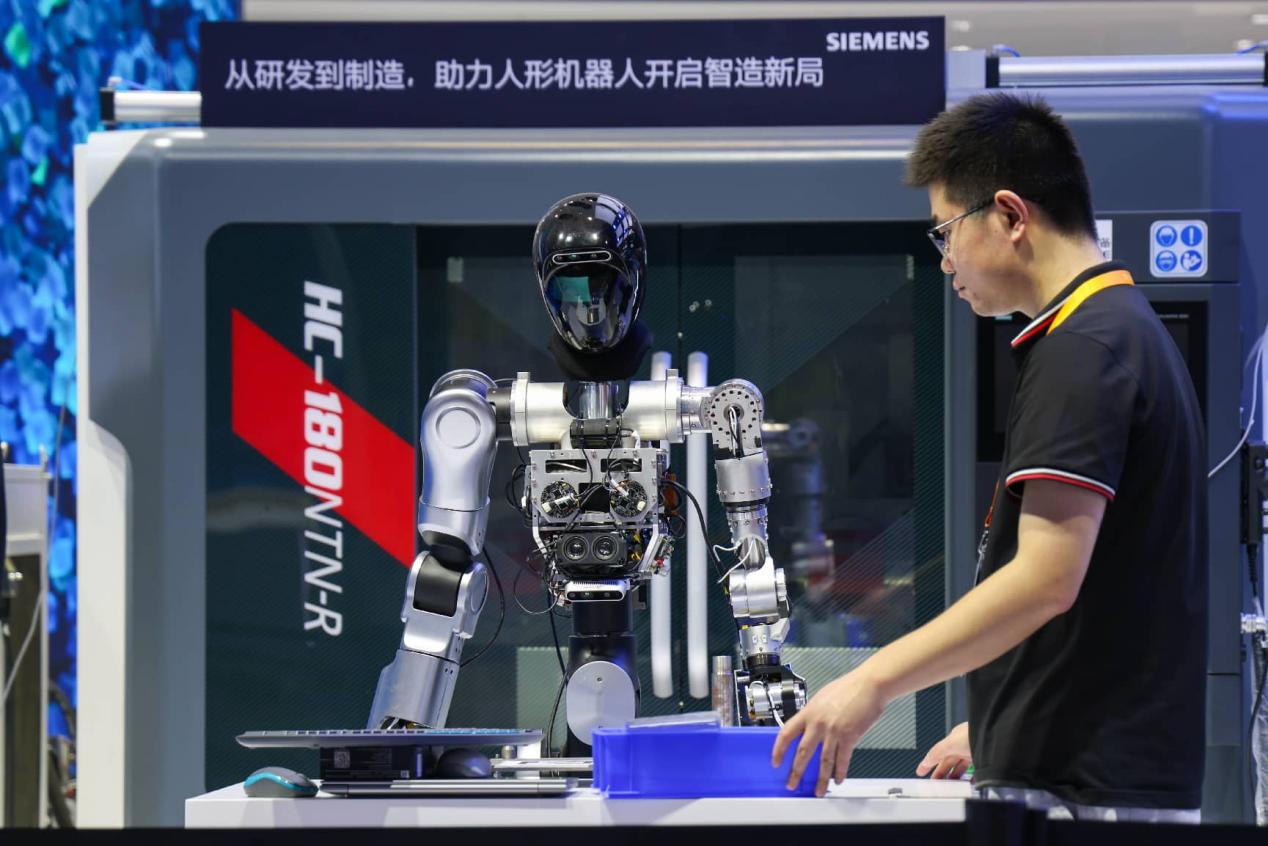
A staff member debugs a humanoid robot at the venue for the 9th China International Import Expo (CIIE). (Photo/Wang Chu)
The CIIE provides a broader multilateral platform for open cooperation. In step with the trend of economic globalization, it has established an authoritative platform for high-level dialogue and multilateral economic and trade cooperation.
For the first time, more than 300 Fortune Global 500 companies and industry leaders are participating. Nearly 200 firms and institutions have attended all nine editions, while five countries, including Moldova and Romania, as well as the United Nations Development Programme, are joining for the first time, demonstrating the strong appeal of openness and cooperation.
China advances high-level opening up with the aim of expanding the pie of cooperation with the rest of the world. Its stories of opening up have sent a message to the world that China is not only the world's factory but also a global market. It is not only a "super seller" but also a "super buyer."
The two-way engagement does not marginalize other stakeholders; rather, it creates tangible benefits for neighboring economies and fosters regional prosperity.
At this year's expo, pavilions dedicated to Asian and African products will be expanded, featuring higher-quality displays and enhanced programming. These enhancements aim to help African countries with diplomatic ties to China leverage tariff-free access and encourage more Global South countries to fully utilize the CIIE.
Stephen Jackson, United Nations Resident Coordinator in China, noted that the CIIE offers developing economies a practical pathway to integrate more deeply into global value chains and share the benefits of trade.
China will harness the momentum of opening up and pool strength for win-win cooperation. It will firmly uphold multilateralism and continue to make the CIIE a success, helping steer economic globalization toward greater openness, inclusiveness, balance and shared benefits.