


CIIE 2026: When industrial exhibits tell bigger chain‑wide stories
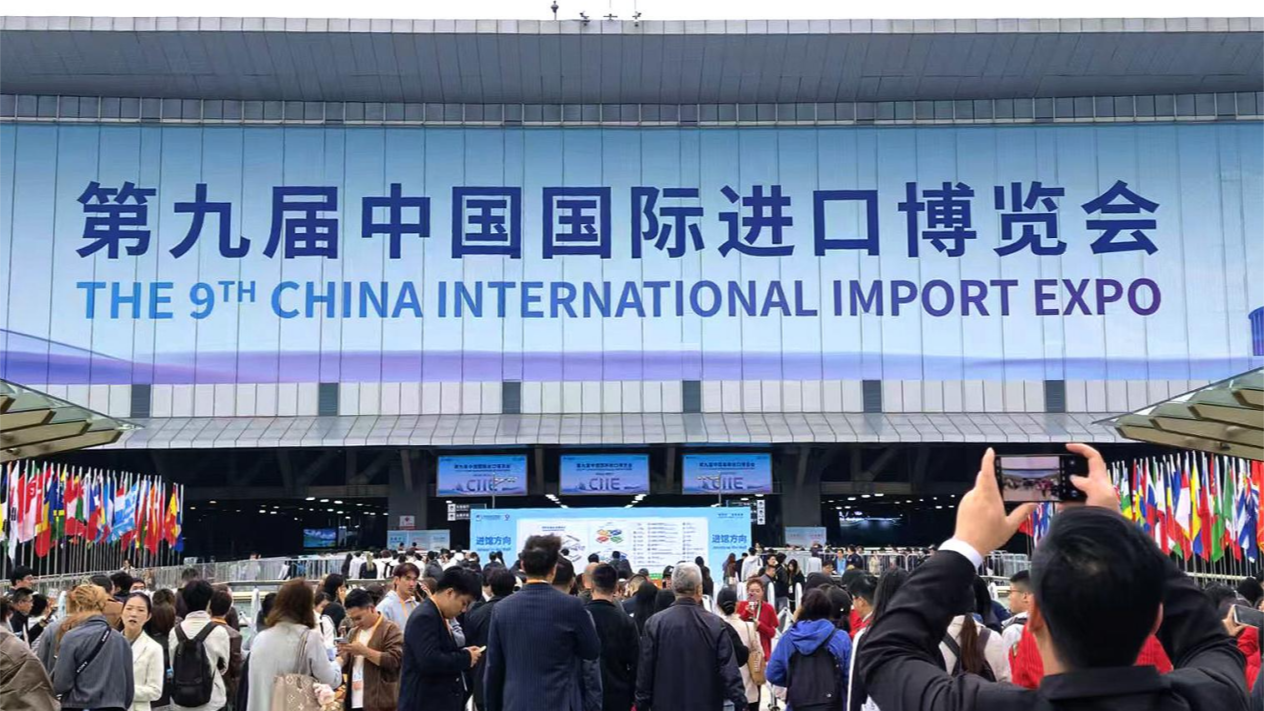
The ninth China International Import Expo opens at the National Exhibition and Convention Center (Shanghai), Shanghai, east China, November 5, 2026. (Photos: Xinhua)
The ninth China International Import Expo (CIIE) opened in Shanghai on Thursday and runs through November 10, gathering thousands of global enterprises across the entire industrial spectrum. Across its exhibition areas, a lineup of sophisticated innovations stands out: split-type laparoscopic surgical robots, cochlear implants capable of 360-degree sound detection and prototype 6G terminals on show for the first time.
But a walk through the exhibition halls reveals more than just these high-profile innovations. Alongside cutting-edge end products, the upstream industrial chains that underpin these technologies are also taking a prominent position as official exhibitors.
From showcasing single items to linking full industrial chains
This year's Intelligent Industry and Information Technology Exhibition Area follows a clear planning logic: "starting from individual points, expanding to industrial sectors, and extending across complete industrial chains," or the "point-to-sector-to-chain" approach. The semiconductor sector is a clear example. Rather than displaying individual pieces of equipment in separate booths, organizers have gathered upstream material suppliers, equipment manufacturers, chip design firms and downstream end-product developers all in the same exhibition area.
This layout brings clear practical benefits. A semiconductor material supplier and its potential downstream equipment partner can meet face to face under the same roof. Discussions begun at booths can quickly translate into practical plans for joint production lines. The true value of the CIIE, therefore, does not lie in the number of standalone high-tech exhibits on display. It lies in its ability to connect upstream and downstream players for in-depth discussions and tangible industrial cooperation.
This shift marks a steady evolution of the expo. It began with a focus on product display and trade promotion before shifting to key industrial links. Today, it is evolving into a platform for full-chain industrial collaboration. Cooperation now goes far beyond simple import and export transactions. More international partners are exploring joint research, local manufacturing and joint supply chain development in China.
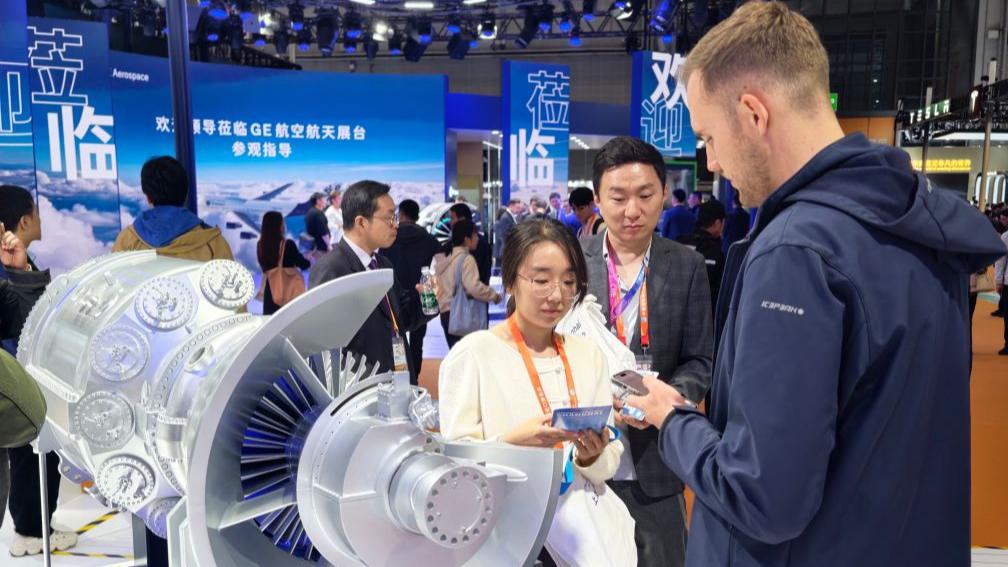
Visitors tour the Intelligent Industry and Information Technology Exhibition Area at the ninth China International Import Expo, Shanghai, east China, November 5, 2026.
A platform responding to domestic industrial priorities
Such a shift responds to real-world national industrial needs. Major technological upgrades rarely rely on one single machine or one breakthrough component. Real progress calls for coordination across entire industrial chains. By gathering related global players in one physical venue, the CIIE creates rare opportunities for overseas technology providers to engage directly with China's domestic industrial ecosystem.
It is not only about purchasing foreign hardware. More importantly, it builds space for technical exchanges and demand matching, supporting China's push toward smarter, higher-end manufacturing. Instead of only bringing ready-made products into the Chinese market, overseas enterprises get to understand local industrial demands at close range, laying the groundwork for more targeted, long-term cooperation.
Behind this trend of deepening long-term cooperation lies a fundamental shift in how global enterprises approach their engagement with China. The nearly 200 companies and institutions that have participated in all nine CIIE editions are the best testament to the deep coupling between international firms and China's industrial chains. Particularly in fields like digital healthcare and artificial intelligence applications, China boasts remarkable global competitiveness with its fast innovation pace, complete industrial supporting system and comprehensive strengths. These advantages form the core source of confidence for enterprises to continue expanding their presence in China.
New cooperative paradigm for a fragmented global supply landscape
This new curatorial logic also carries global significance, as industrial and supply chain fragmentation remains a growing risk worldwide. Many international trade events still focus heavily on individual product transactions. The CIIE offers a different path: It serves not just as a trading venue for goods, but as an open platform for deeper cross-border industrial coupling.
The opportunities brought by the expo extend far beyond commodity trade. Against the backdrop of a new round of scientific and technological revolution and industrial transformation, many countries and small and medium-sized enterprises hold innovative achievements but lack effective channels to reach broader markets and connect with industrial resources. The CIIE's full-chain platform model helps fill this gap by gathering global industrial players under one roof.
Over 2,000 companies are making their CIIE debut this year, including a large number of innovative technology firms from niche industrial segments. The expo's dedicated Innovation Incubation Special Section also offers a display platform for small and medium-sized tech startups, helping them connect with China's vast market and mature industrial resources. Traditional purchase deals still play an important role at the expo, but its mission has expanded well beyond short‑term contracts. Supported by the "6+365" service platform, which was selected as a pilot case of national service industry standardization, exhibits can evolve into marketable products, and exhibitors can grow into long-term investors building factories and research facilities in China.
Public attention at the CIIE has long focused on eye-catching individual exhibits. Yet the expo's true value lies in the connections between booths and the industrial chains behind each product. What started as an import product showcase has evolved into a hub for deep integration between global innovation chains and China's industrial ecosystem. Amid rising global industrial fragmentation, this full-chain model delivers a practical path for cross-border collaboration and two-way innovation, creating shared opportunities for global players.
As China keeps opening its vast market, the ninth CIIE sends a clear message: Lasting global industrial progress comes not from isolated technological highlights, but from connected, collaborative industrial chains.