


Observer | From promises to practice: China's concrete action fuels global climate governance

The 31st United Nations Climate Change Conference (COP31) kicked off in the Turkish coastal city of Antalya on Monday.
Coming in a year of punishing heatwaves in Europe, major wildfires across the globe and an exceptionally strong El Niño fueling more climate chaos, this edition of the UN climate conference is crucial.
This year, the two-week conference puts implementation at the heart of its agenda, focusing on turning climate commitments reached at previous conferences into concrete results. This shift from negotiation to delivery reflects the urgent reality of global climate governance and aligns closely with China's long-standing emphasis on turning words into deeds.
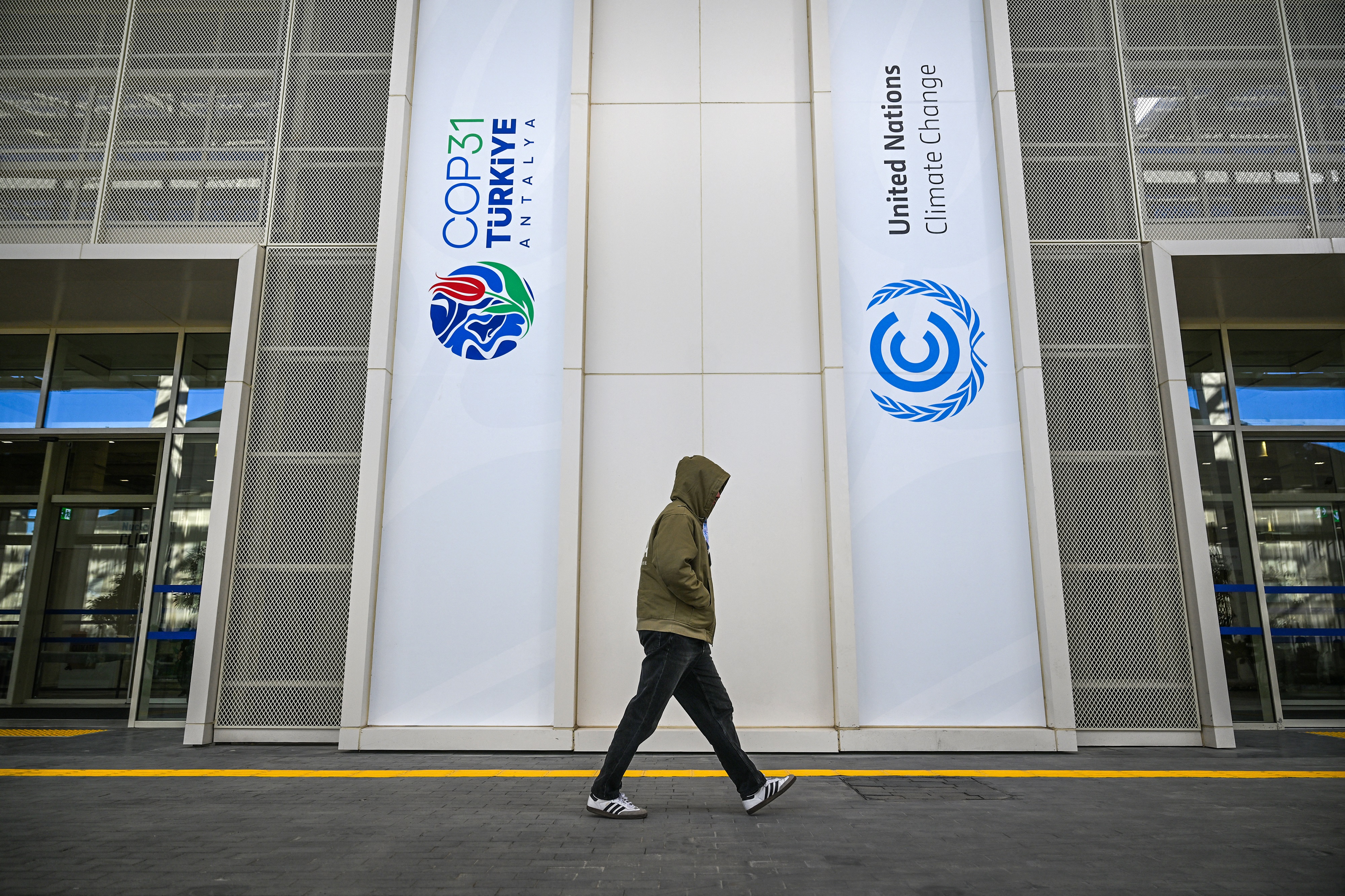
A man walks past COP31 and United Nations Climate Change banners at the Antalya Expo Center on November 8, 2026. (Photo: AFP)
Concrete actions behind the commitments
In the face of intensifying climate change, China has committed to peaking carbon dioxide emissions before 2030 and achieving carbon neutrality by 2060. Yet while ambitious targets set the course, concrete, ground-level actions drive real transformation.
China's execution relies on systemic, top-level design rather than sporadic efforts. Under its comprehensive "1+N" policy system for carbon peaking and neutrality, China has embedded decarbonization into its national economic blueprint.
For example, the country has pioneered the world's largest carbon emissions trading scheme, established the world's largest and fastest-growing renewable energy system, and accelerated the transition toward a clean energy mix.

Rooftop solar panels and greenery are integrated into buildings at Shenzhen Virtual University Park to promote clean energy use on June 21, 2025. (Photo: VCG)
These institutional actions have generated tangible results. By the end of July 2024, China's total installed wind and solar power capacity had reached 1.206 billion kilowatts, fulfilling a commitment made at the 2020 Climate Ambition Summit to exceed 1.2 billion kilowatts by 2030, more than six years ahead of schedule.
Beyond the energy transition, China is aggressively advancing massive afforestation and combating desertification.
A prime example is the Mu Us Desert, which is on the verge of entirely disappearing from the map of Northwest China's Shaanxi Province thanks to decades of sustained ecological restoration.

Grass and trees growing in the Mu Us Desert, in North China's Inner Mongolia Autonomous Region on May 12, 2026. (Photo: Xinhua)
This nationwide re-greening effort is now visibly reshaping planetary stewardship. NASA satellite data has confirmed that over the past two decades, China alone contributed roughly a quarter of the world's net increase in leaf area, despite holding just 6.6 percent of global vegetated land.
These metrics demonstrate a simple truth: ambitious climate targets can be met when backed by strategic resolve, concrete governance and long-term policy consistency.
Bridging the green transition divide
Just as an article published by the UK environmental organization Dialogue Earth noted, China now plays an enormous role in shaping international clean energy markets, influencing countries' climate and development ambitions.
The true value of China's green transition extends far beyond its domestic borders. For many developing nations, the primary barrier to decarbonization has long been exorbitant cost and a lack of scalable technology.
China has actively stepped up to fill these gaps through concrete South-South cooperation. To date, China has signed 60 climate cooperation documents with 46 developing countries, implemented more than 300 projects, and trained more than 10,000 climate professionals.
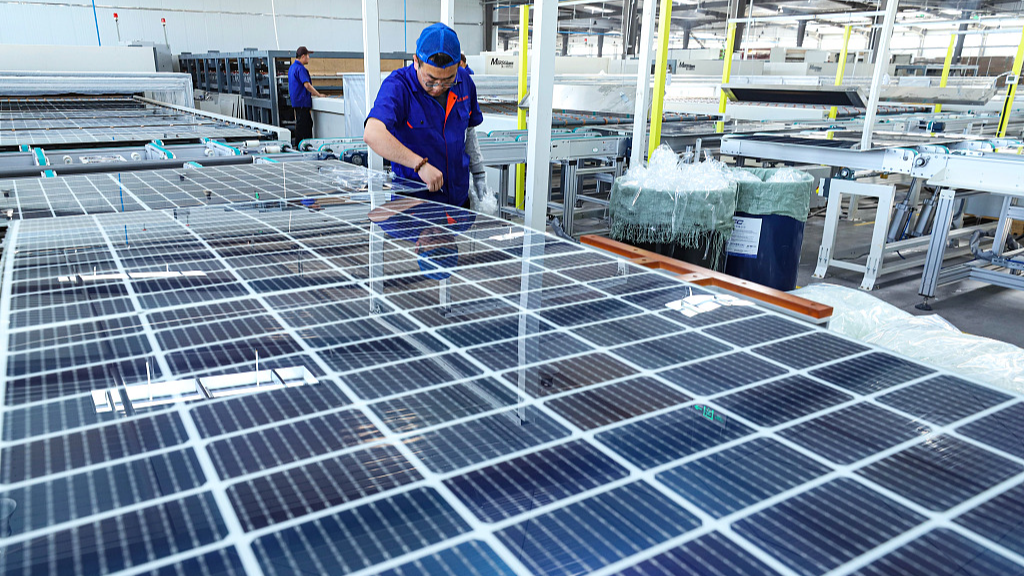
Inside a solar panel manufacturing factory in Zhangye, Northwest China's Gansu Province on April 16, 2024. (Photo: CFP)
Meanwhile, China has served as the backbone of global energy transition by supplying high-quality, affordable green equipment worldwide. China currently supplies 80 percent of the world's solar PV modules and 70 percent of global wind power equipment.
Reports from the International Renewable Energy Agency show that over the past decade, the global levelized cost of electricity for solar PV and wind power dropped by approximately 80 percent and 60 percent, respectively – a trend driven significantly by China's innovation, manufacturing and engineering endeavors.
During China's 14th Five-Year Plan period (2021-2025) alone, its exported wind and solar products helped other countries reduce around 4.1 billion tons of carbon emissions, according to China's National Energy Administration.
From electrified public transit in Latin America to microgrids bringing clean power to rural Africa, China is not merely reducing its own emissions – it is providing essential public goods that make a just, affordable and accessible global transition possible.
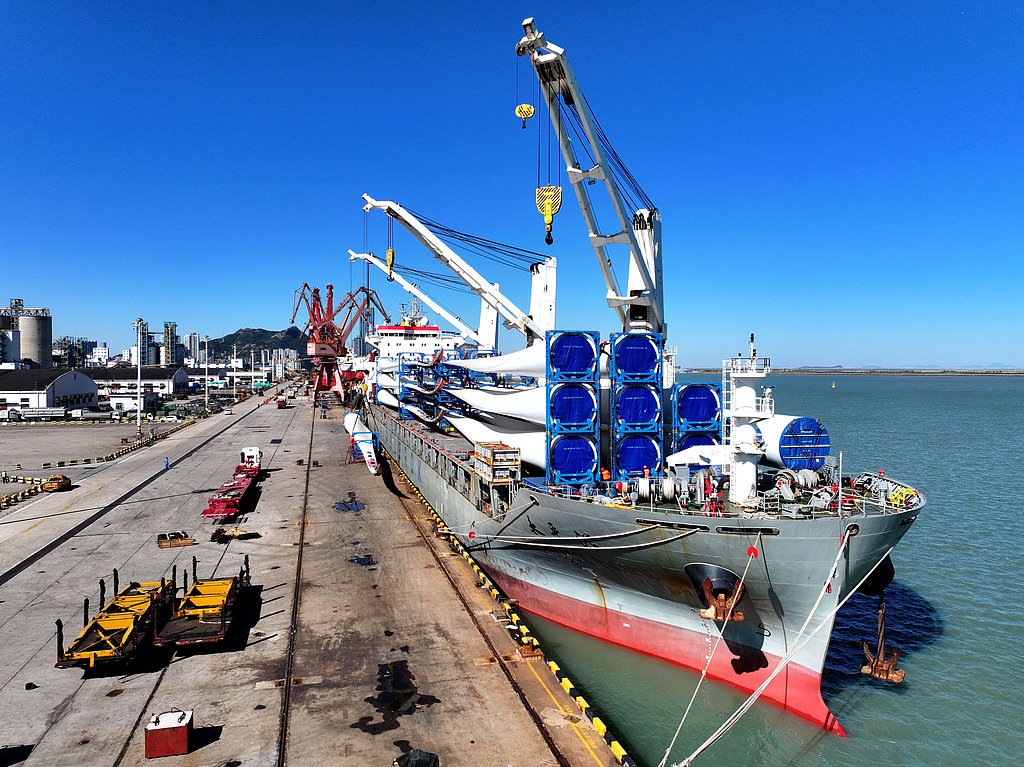
A cargo ship is docked to load large wind power equipment for export to Türkiye in Lianyungang, East China's Jiangsu Province on October 21, 2026. (Photo: VCG)
As the world faces an unprecedented climate crossroads, it is hoped that COP31 will mark a decisive shift from competing over promises to uniting over performance. Fighting climate change requires replacing tariff barriers with open collaboration and transforming written pledges into tangible green progress.
China's clear stance, steady policies and concrete actions demonstrate that it remains firmly on the right side of history in addressing climate change.
As the ongoing COP31 calls for real implementation, China will continue to act as an active participant, a vital contributor and a key driving force – turning shared written pledges into rooted green progress for a clean and beautiful world.