


Observer: Why APEC host Shenzhen doesn't need to be another Silicon Valley

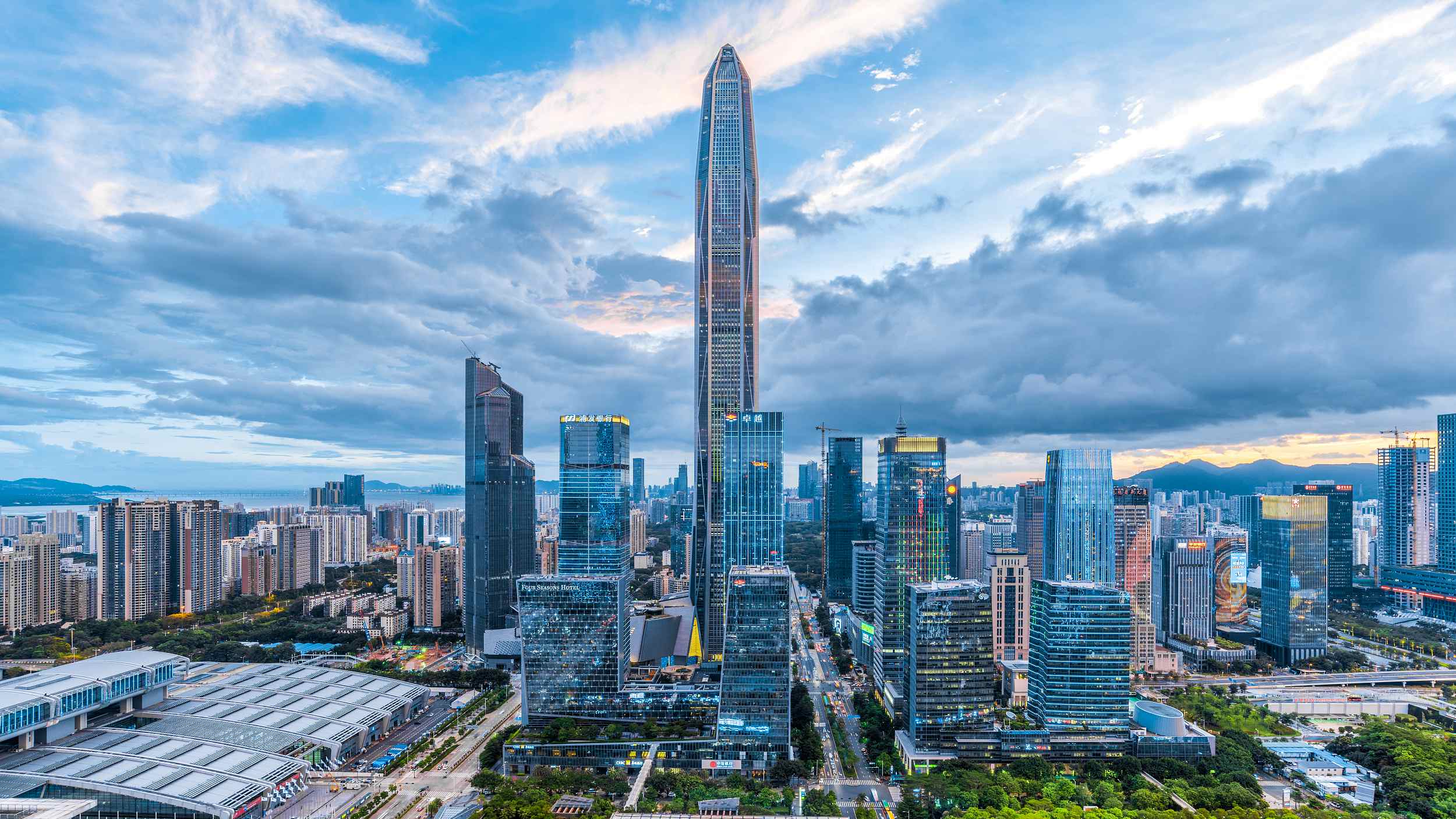
Often called China's Silicon Valley, Shenzhen offers a different model of innovation. Drawing on the Guangdong-Hong Kong-Macao Greater Bay Area and manufacturing networks across China, the city brings research, engineering and industrial demand closer together, creating opportunities not only for technological development at home but also for cooperation across the Asia-Pacific.
Manufacturing is part of the innovation process, not merely its final stage.
File photo: CGTN
Shenzhen's robotics industry spans core components, finished robots and real-world applications. Developing robots requires repeated adjustments, prototyping and testing. Mo Lei, vice president of Shenzhen-based AI² Robotics, told CCTV Finance that nearby suppliers of motors, gearboxes and other key components help shorten development cycles. By 2028, Shenzhen aims to build a 30-minute supply network for core robotics components.
This close connection between engineers and manufacturers allows designs to be tested and refined more quickly.
The relationship also works in reverse: Industrial challenges can drive technological advances.
Aerospace and robotics need lightweight, high-strength components. Yet continuous-fiber 3D printing has faced persistent problems, including loose fibers, weak bonding between layers and difficulties in mass production.
Shenzhen-based Xietong Gaoke developed new fiber-processing, impregnation and curing techniques to address these obstacles. It also upgraded its sensing and control systems to enable continuous, unattended operation.
The case illustrates how industrial needs can shape research priorities, turning production challenges into engineering problems to be solved.
Businesses play a central role in Shenzhen's innovation system. In 2024, they accounted for 93.5 percent of the city's R&D spending, compared with 77.7 percent nationwide, according to official statistics.
Drawing on the Greater Bay Area and manufacturing networks across China, Shenzhen can also turn its industrial strengths into opportunities for cooperation across the Asia-Pacific.
Singapore-based LionsBot has integrated laser-based sensor technology from Shenzhen's RoboSense into its cleaning robots to improve navigation and operational efficiency. LionsBot has also set up an operation in Shenzhen to tap the city's R&D talent and extensive supply chain network, according to the Singapore government.
The case illustrates how Shenzhen's innovation ecosystem can support cross-border cooperation: Overseas companies gain access to research and manufacturing capabilities, while Chinese technologies find applications in international markets.
As Shenzhen prepares to host Asia-Pacific Economic Cooperation (APEC) leaders, its experience highlights the value of connecting research, manufacturing and market demand. Deeper regional cooperation can extend those connections, helping businesses develop technologies, enter new markets and find new sources of growth.
Shenzhen does not need to become another Silicon Valley. By building on its own strengths and connecting them with those of its Asia-Pacific partners, it can contribute to a more innovative and prosperous region.