


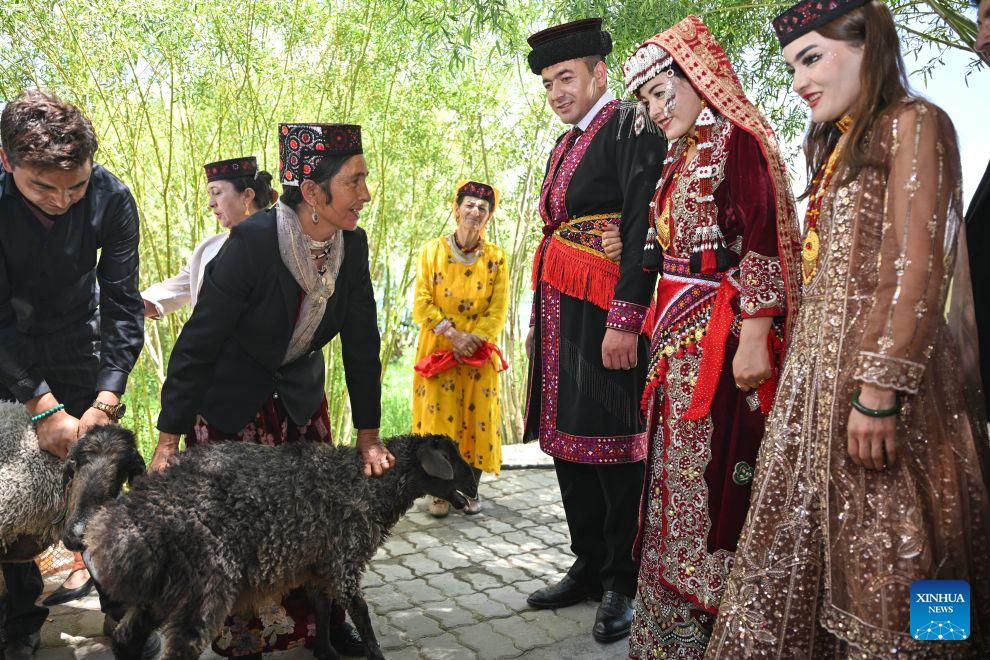
Relatives of the bride present several sheep to the newlyweds to congratulate them on their wedding in Taxkorgan Tajik Autonomous County, northwest China's Xinjiang Uygur Autonomous Region, June 30, 2026. This summer, happiness filled the air around the home of herdsman Duri Jarman. His youngest son Nurkerim tied the knot with his beloved woman. Weddings of the Tajik ethnic group usually last three days. Inscribed on the national intangible cultural heritage list in 2008, the wedding customs of the Tajik ethnic group maintain unique traditions and are always described as festivals of music, dance and food to showcase the resplendent newlyweds and their propitious marriage.
In Aimin Village, this wedding also serves as a vivid epitome of the eight-year transformative leap brought by the poverty alleviation relocation program.
In the winter of 2018, Jarman and his family benefited from the relocation policy for poverty alleviation and settled in Aimin Village. They gradually adapted to the changes, enjoying a new life different from that of their ancestors. Jarman ran a small grocery store with Nurkerim, while his eldest and second sons both landed stable new jobs. Nurkerim also bought a pickup truck to run a transport business. It was this business that brought him together with his wife. For this family, the relocation is not only an opportunity for development, but also a path leading to happiness.
Over the past eight years, Jarman has expanded his courtyard and planted saplings year after year. His small yard, where not a single tree used to grow, is now shaded by lush, thriving woods. As relocation sites of the poverty alleviation relocation program, Aimin Village and neighboring Fumin Village are now home to 321 households, with at least one person employed per household on average. (Xinhua/Hu Huhu)
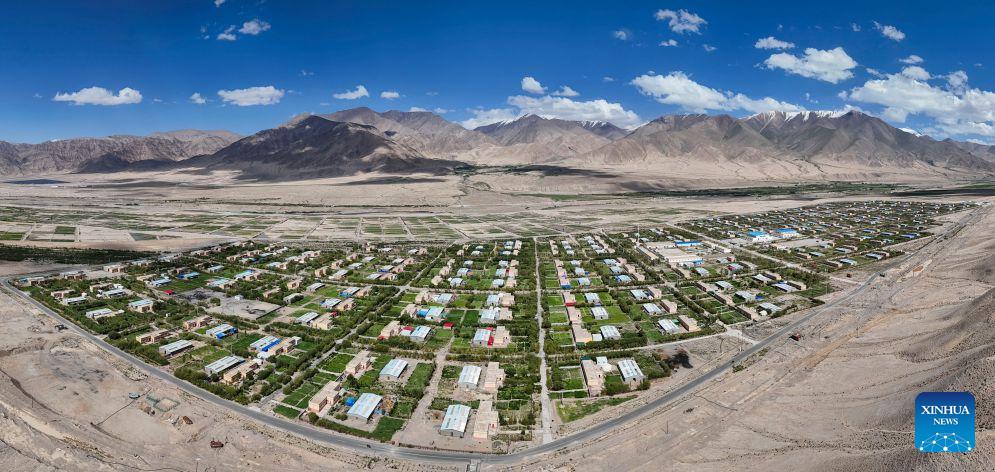
An aerial panoramic photo taken on June 30, 2026 shows a view of the Aimin Village and Fumin Village of Taxkorgan Tajik Autonomous County, northwest China's Xinjiang Uygur Autonomous Region. This summer, happiness filled the air around the home of herdsman Duri Jarman. His youngest son Nurkerim tied the knot with his beloved woman. Weddings of the Tajik ethnic group usually last three days. Inscribed on the national intangible cultural heritage list in 2008, the wedding customs of the Tajik ethnic group maintain unique traditions and are always described as festivals of music, dance and food to showcase the resplendent newlyweds and their propitious marriage.
In Aimin Village, this wedding also serves as a vivid epitome of the eight-year transformative leap brought by the poverty alleviation relocation program.
In the winter of 2018, Jarman and his family benefited from the relocation policy for poverty alleviation and settled in Aimin Village. They gradually adapted to the changes, enjoying a new life different from that of their ancestors. Jarman ran a small grocery store with Nurkerim, while his eldest and second sons both landed stable new jobs. Nurkerim also bought a pickup truck to run a transport business. It was this business that brought him together with his wife. For this family, the relocation is not only an opportunity for development, but also a path leading to happiness.
Over the past eight years, Jarman has expanded his courtyard and planted saplings year after year. His small yard, where not a single tree used to grow, is now shaded by lush, thriving woods. As relocation sites of the poverty alleviation relocation program, Aimin Village and neighboring Fumin Village are now home to 321 households, with at least one person employed per household on average. (Xinhua/Hu Huhu)
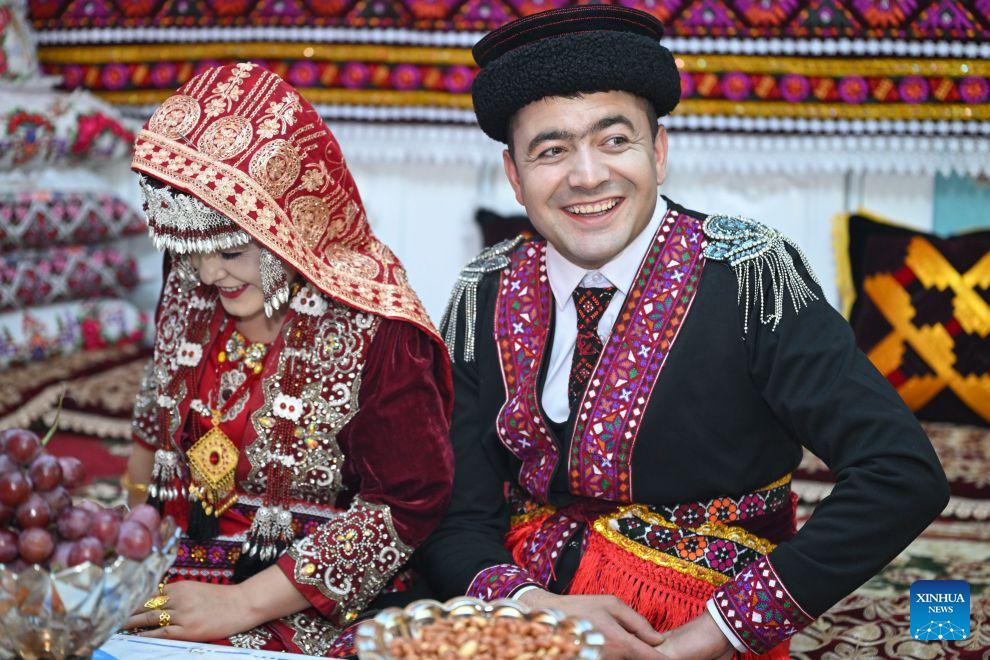
Nurkerim and his bride pose for photos at home in Taxkorgan Tajik Autonomous County, northwest China's Xinjiang Uygur Autonomous Region, June 30, 2026. This summer, happiness filled the air around the home of herdsman Duri Jarman. His youngest son Nurkerim tied the knot with his beloved woman. Weddings of the Tajik ethnic group usually last three days. Inscribed on the national intangible cultural heritage list in 2008, the wedding customs of the Tajik ethnic group maintain unique traditions and are always described as festivals of music, dance and food to showcase the resplendent newlyweds and their propitious marriage.
In Aimin Village, this wedding also serves as a vivid epitome of the eight-year transformative leap brought by the poverty alleviation relocation program.
In the winter of 2018, Jarman and his family benefited from the relocation policy for poverty alleviation and settled in Aimin Village. They gradually adapted to the changes, enjoying a new life different from that of their ancestors. Jarman ran a small grocery store with Nurkerim, while his eldest and second sons both landed stable new jobs. Nurkerim also bought a pickup truck to run a transport business. It was this business that brought him together with his wife. For this family, the relocation is not only an opportunity for development, but also a path leading to happiness.
Over the past eight years, Jarman has expanded his courtyard and planted saplings year after year. His small yard, where not a single tree used to grow, is now shaded by lush, thriving woods. As relocation sites of the poverty alleviation relocation program, Aimin Village and neighboring Fumin Village are now home to 321 households, with at least one person employed per household on average. (Xinhua/Hu Huhu)
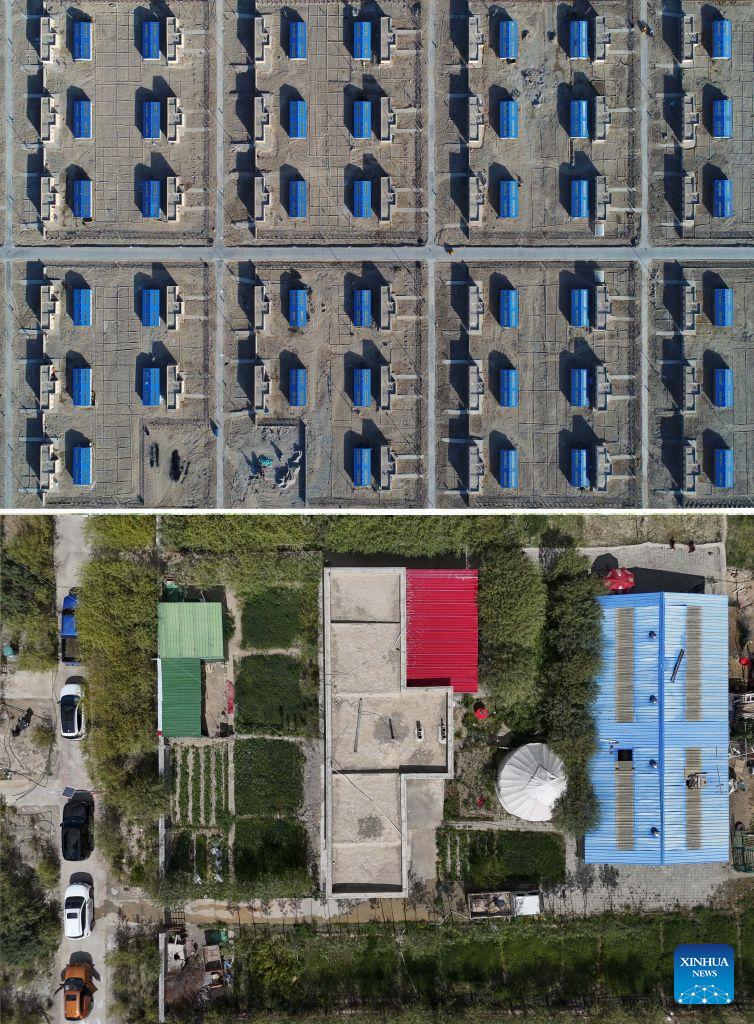
This combo photo shows an aerial view of the village at the relocation site right after Duri Jarman resettled in Taxkorgan Tajik Autonomous County, northwest China's Xinjiang Uygur Autonomous Region, Nov. 19, 2018 (above, drone photo) and an aerial view of the lush courtyard of Duri Jarman in Taxkorgan Tajik Autonomous County, northwest China's Xinjiang Uygur Autonomous Region, June 30, 2026 (below, drone photo). This summer, happiness filled the air around the home of herdsman Duri Jarman. His youngest son Nurkerim tied the knot with his beloved woman. Weddings of the Tajik ethnic group usually last three days. Inscribed on the national intangible cultural heritage list in 2008, the wedding customs of the Tajik ethnic group maintain unique traditions and are always described as festivals of music, dance and food to showcase the resplendent newlyweds and their propitious marriage.
In Aimin Village, this wedding also serves as a vivid epitome of the eight-year transformative leap brought by the poverty alleviation relocation program.
In the winter of 2018, Jarman and his family benefited from the relocation policy for poverty alleviation and settled in Aimin Village. They gradually adapted to the changes, enjoying a new life different from that of their ancestors. Jarman ran a small grocery store with Nurkerim, while his eldest and second sons both landed stable new jobs. Nurkerim also bought a pickup truck to run a transport business. It was this business that brought him together with his wife. For this family, the relocation is not only an opportunity for development, but also a path leading to happiness.
Over the past eight years, Jarman has expanded his courtyard and planted saplings year after year. His small yard, where not a single tree used to grow, is now shaded by lush, thriving woods. As relocation sites of the poverty alleviation relocation program, Aimin Village and neighboring Fumin Village are now home to 321 households, with at least one person employed per household on average. (Xinhua/Hu Huhu)
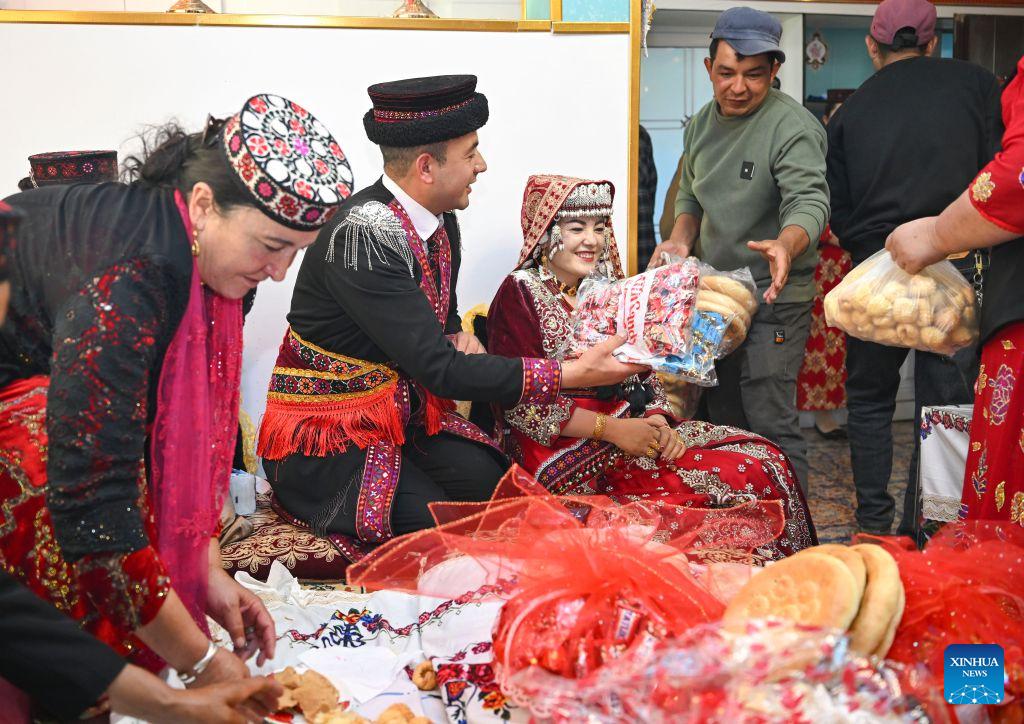
Relatives and friends lay out wedding gifts in front of the newlyweds in Taxkorgan Tajik Autonomous County, northwest China's Xinjiang Uygur Autonomous Region, June 30, 2026. This summer, happiness filled the air around the home of herdsman Duri Jarman. His youngest son Nurkerim tied the knot with his beloved woman. Weddings of the Tajik ethnic group usually last three days. Inscribed on the national intangible cultural heritage list in 2008, the wedding customs of the Tajik ethnic group maintain unique traditions and are always described as festivals of music, dance and food to showcase the resplendent newlyweds and their propitious marriage.
In Aimin Village, this wedding also serves as a vivid epitome of the eight-year transformative leap brought by the poverty alleviation relocation program.
In the winter of 2018, Jarman and his family benefited from the relocation policy for poverty alleviation and settled in Aimin Village. They gradually adapted to the changes, enjoying a new life different from that of their ancestors. Jarman ran a small grocery store with Nurkerim, while his eldest and second sons both landed stable new jobs. Nurkerim also bought a pickup truck to run a transport business. It was this business that brought him together with his wife. For this family, the relocation is not only an opportunity for development, but also a path leading to happiness.
Over the past eight years, Jarman has expanded his courtyard and planted saplings year after year. His small yard, where not a single tree used to grow, is now shaded by lush, thriving woods. As relocation sites of the poverty alleviation relocation program, Aimin Village and neighboring Fumin Village are now home to 321 households, with at least one person employed per household on average. (Xinhua/Hu Huhu)
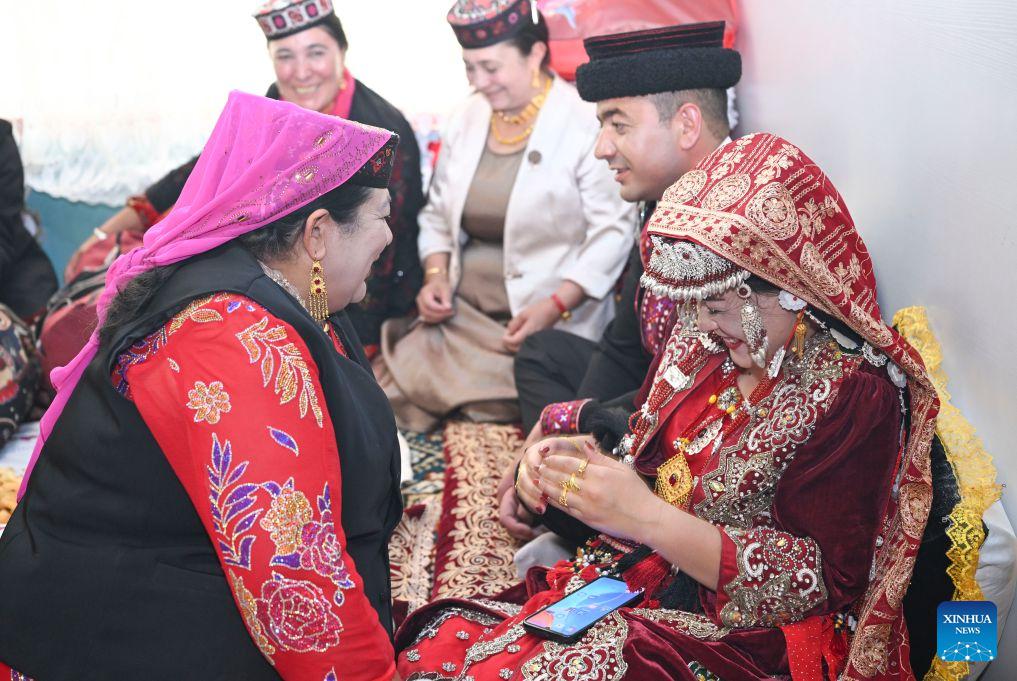
The groom's mother (L) chats with the bride at the wedding in Taxkorgan Tajik Autonomous County, northwest China's Xinjiang Uygur Autonomous Region, June 30, 2026. This summer, happiness filled the air around the home of herdsman Duri Jarman. His youngest son Nurkerim tied the knot with his beloved woman. Weddings of the Tajik ethnic group usually last three days. Inscribed on the national intangible cultural heritage list in 2008, the wedding customs of the Tajik ethnic group maintain unique traditions and are always described as festivals of music, dance and food to showcase the resplendent newlyweds and their propitious marriage.
In Aimin Village, this wedding also serves as a vivid epitome of the eight-year transformative leap brought by the poverty alleviation relocation program.
In the winter of 2018, Jarman and his family benefited from the relocation policy for poverty alleviation and settled in Aimin Village. They gradually adapted to the changes, enjoying a new life different from that of their ancestors. Jarman ran a small grocery store with Nurkerim, while his eldest and second sons both landed stable new jobs. Nurkerim also bought a pickup truck to run a transport business. It was this business that brought him together with his wife. For this family, the relocation is not only an opportunity for development, but also a path leading to happiness.
Over the past eight years, Jarman has expanded his courtyard and planted saplings year after year. His small yard, where not a single tree used to grow, is now shaded by lush, thriving woods. As relocation sites of the poverty alleviation relocation program, Aimin Village and neighboring Fumin Village are now home to 321 households, with at least one person employed per household on average. (Xinhua/Hu Huhu)
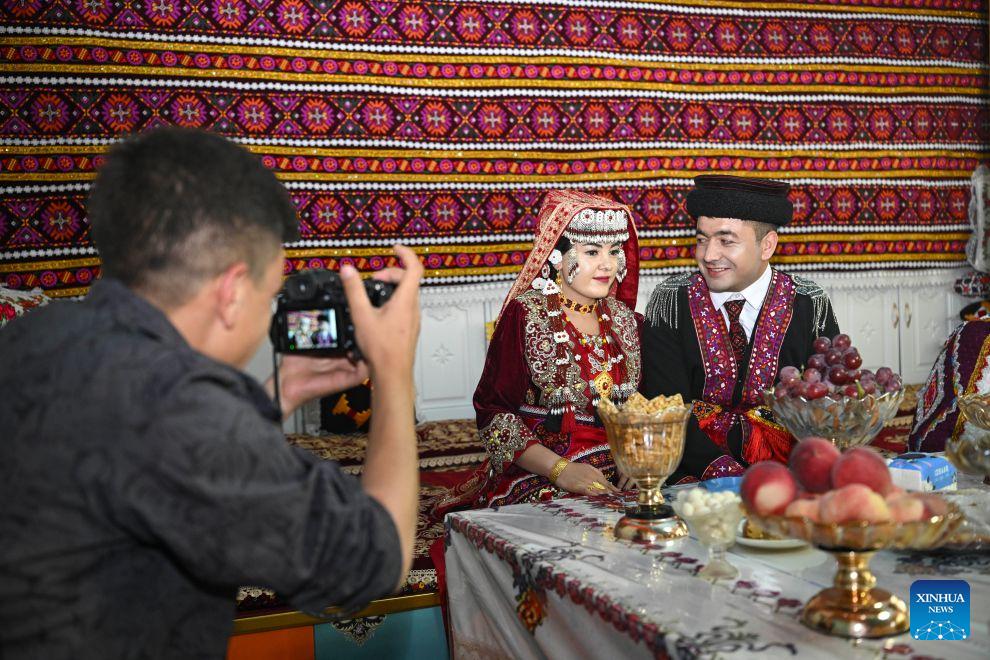
Nurkerim and his bride pose for photos at home in Taxkorgan Tajik Autonomous County, northwest China's Xinjiang Uygur Autonomous Region, June 30, 2026. The room, built by Duri Jarman in 2025, is an extension of the family's relocation house. This summer, happiness filled the air around the home of herdsman Duri Jarman. His youngest son Nurkerim tied the knot with his beloved woman. Weddings of the Tajik ethnic group usually last three days. Inscribed on the national intangible cultural heritage list in 2008, the wedding customs of the Tajik ethnic group maintain unique traditions and are always described as festivals of music, dance and food to showcase the resplendent newlyweds and their propitious marriage.
In Aimin Village, this wedding also serves as a vivid epitome of the eight-year transformative leap brought by the poverty alleviation relocation program.
In the winter of 2018, Jarman and his family benefited from the relocation policy for poverty alleviation and settled in Aimin Village. They gradually adapted to the changes, enjoying a new life different from that of their ancestors. Jarman ran a small grocery store with Nurkerim, while his eldest and second sons both landed stable new jobs. Nurkerim also bought a pickup truck to run a transport business. It was this business that brought him together with his wife. For this family, the relocation is not only an opportunity for development, but also a path leading to happiness.
Over the past eight years, Jarman has expanded his courtyard and planted saplings year after year. His small yard, where not a single tree used to grow, is now shaded by lush, thriving woods. As relocation sites of the poverty alleviation relocation program, Aimin Village and neighboring Fumin Village are now home to 321 households, with at least one person employed per household on average. (Xinhua/Hu Huhu)
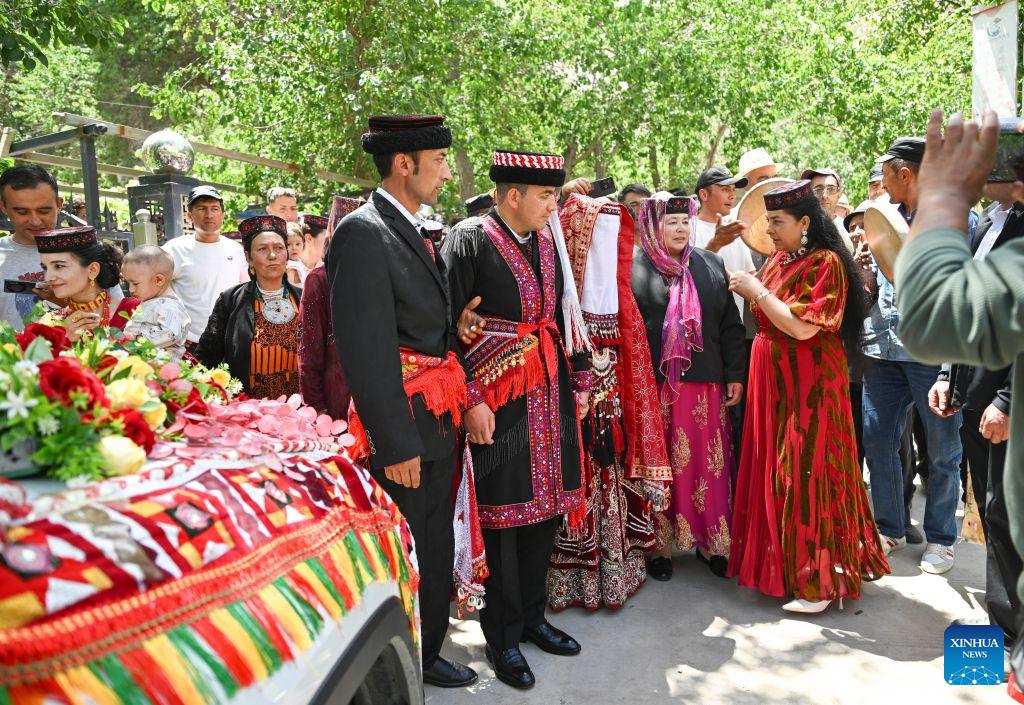
The newlyweds bid farewell to elders from the bride's family before the wedding procession sets off in Taxkorgan Tajik Autonomous County, northwest China's Xinjiang Uygur Autonomous Region, June 28, 2026. This summer, happiness filled the air around the home of herdsman Duri Jarman. His youngest son Nurkerim tied the knot with his beloved woman. Weddings of the Tajik ethnic group usually last three days. Inscribed on the national intangible cultural heritage list in 2008, the wedding customs of the Tajik ethnic group maintain unique traditions and are always described as festivals of music, dance and food to showcase the resplendent newlyweds and their propitious marriage.
In Aimin Village, this wedding also serves as a vivid epitome of the eight-year transformative leap brought by the poverty alleviation relocation program.
In the winter of 2018, Jarman and his family benefited from the relocation policy for poverty alleviation and settled in Aimin Village. They gradually adapted to the changes, enjoying a new life different from that of their ancestors. Jarman ran a small grocery store with Nurkerim, while his eldest and second sons both landed stable new jobs. Nurkerim also bought a pickup truck to run a transport business. It was this business that brought him together with his wife. For this family, the relocation is not only an opportunity for development, but also a path leading to happiness.
Over the past eight years, Jarman has expanded his courtyard and planted saplings year after year. His small yard, where not a single tree used to grow, is now shaded by lush, thriving woods. As relocation sites of the poverty alleviation relocation program, Aimin Village and neighboring Fumin Village are now home to 321 households, with at least one person employed per household on average. (Xinhua/Hu Huhu)
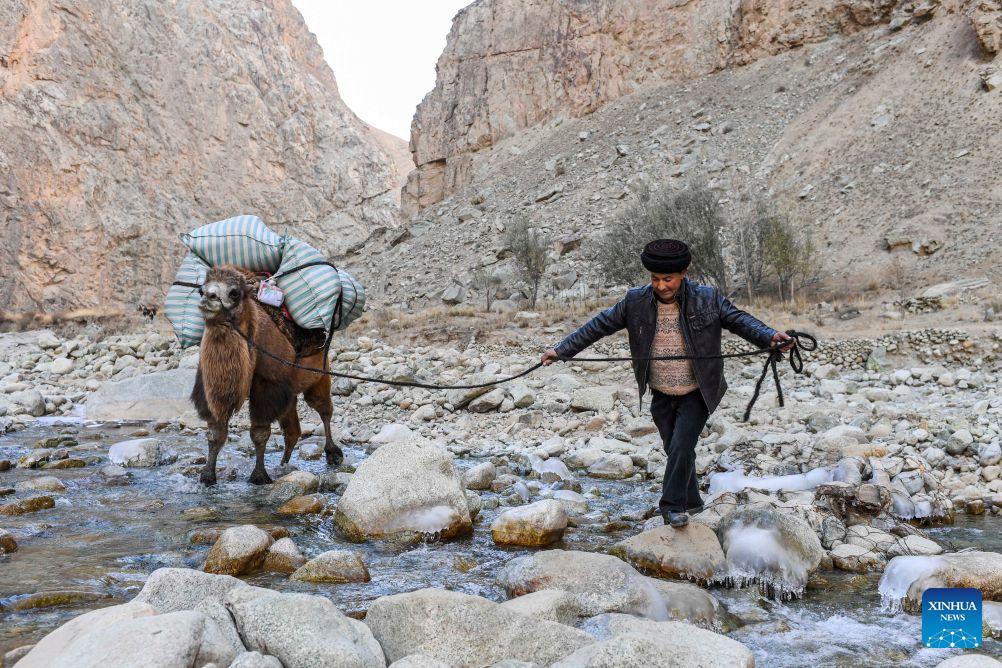
Duri Jarman walks in the mountains while leading a camel loaded with his family's relocation belongings in Taxkorgan Tajik Autonomous County, northwest China's Xinjiang Uygur Autonomous Region, Nov. 17, 2018. Jarman heads to the village committee to transfer to the arranged relocation vehicle, and then travel to the county seat. This summer, happiness filled the air around the home of herdsman Duri Jarman. His youngest son Nurkerim tied the knot with his beloved woman. Weddings of the Tajik ethnic group usually last three days. Inscribed on the national intangible cultural heritage list in 2008, the wedding customs of the Tajik ethnic group maintain unique traditions and are always described as festivals of music, dance and food to showcase the resplendent newlyweds and their propitious marriage.
In Aimin Village, this wedding also serves as a vivid epitome of the eight-year transformative leap brought by the poverty alleviation relocation program.
In the winter of 2018, Jarman and his family benefited from the relocation policy for poverty alleviation and settled in Aimin Village. They gradually adapted to the changes, enjoying a new life different from that of their ancestors. Jarman ran a small grocery store with Nurkerim, while his eldest and second sons both landed stable new jobs. Nurkerim also bought a pickup truck to run a transport business. It was this business that brought him together with his wife. For this family, the relocation is not only an opportunity for development, but also a path leading to happiness.
Over the past eight years, Jarman has expanded his courtyard and planted saplings year after year. His small yard, where not a single tree used to grow, is now shaded by lush, thriving woods. As relocation sites of the poverty alleviation relocation program, Aimin Village and neighboring Fumin Village are now home to 321 households, with at least one person employed per household on average. (Xinhua/Hu Huhu)
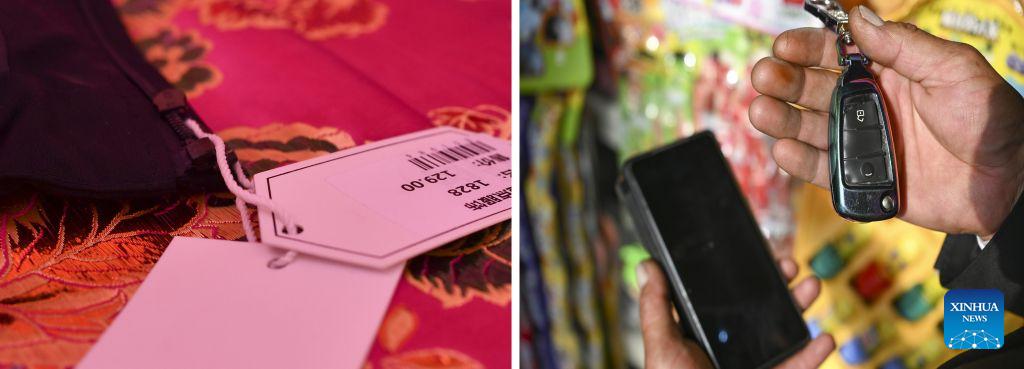
This combo photo shows the clothes Duri Jarman bought for his wife in Taxkorgan Tajik Autonomous County, northwest China's Xinjiang Uygur Autonomous Region, Nov. 25, 2019 (above) and Duri Jarman holding a phone and a truck key inside his grocery store in Taxkorgan Tajik Autonomous County, northwest China's Xinjiang Uygur Autonomous Region, June 29, 2026 (below). This summer, happiness filled the air around the home of herdsman Duri Jarman. His youngest son Nurkerim tied the knot with his beloved woman. Weddings of the Tajik ethnic group usually last three days. Inscribed on the national intangible cultural heritage list in 2008, the wedding customs of the Tajik ethnic group maintain unique traditions and are always described as festivals of music, dance and food to showcase the resplendent newlyweds and their propitious marriage.
In Aimin Village, this wedding also serves as a vivid epitome of the eight-year transformative leap brought by the poverty alleviation relocation program.
In the winter of 2018, Jarman and his family benefited from the relocation policy for poverty alleviation and settled in Aimin Village. They gradually adapted to the changes, enjoying a new life different from that of their ancestors. Jarman ran a small grocery store with Nurkerim, while his eldest and second sons both landed stable new jobs. Nurkerim also bought a pickup truck to run a transport business. It was this business that brought him together with his wife. For this family, the relocation is not only an opportunity for development, but also a path leading to happiness.
Over the past eight years, Jarman has expanded his courtyard and planted saplings year after year. His small yard, where not a single tree used to grow, is now shaded by lush, thriving woods. As relocation sites of the poverty alleviation relocation program, Aimin Village and neighboring Fumin Village are now home to 321 households, with at least one person employed per household on average. (Xinhua/Hu Huhu)
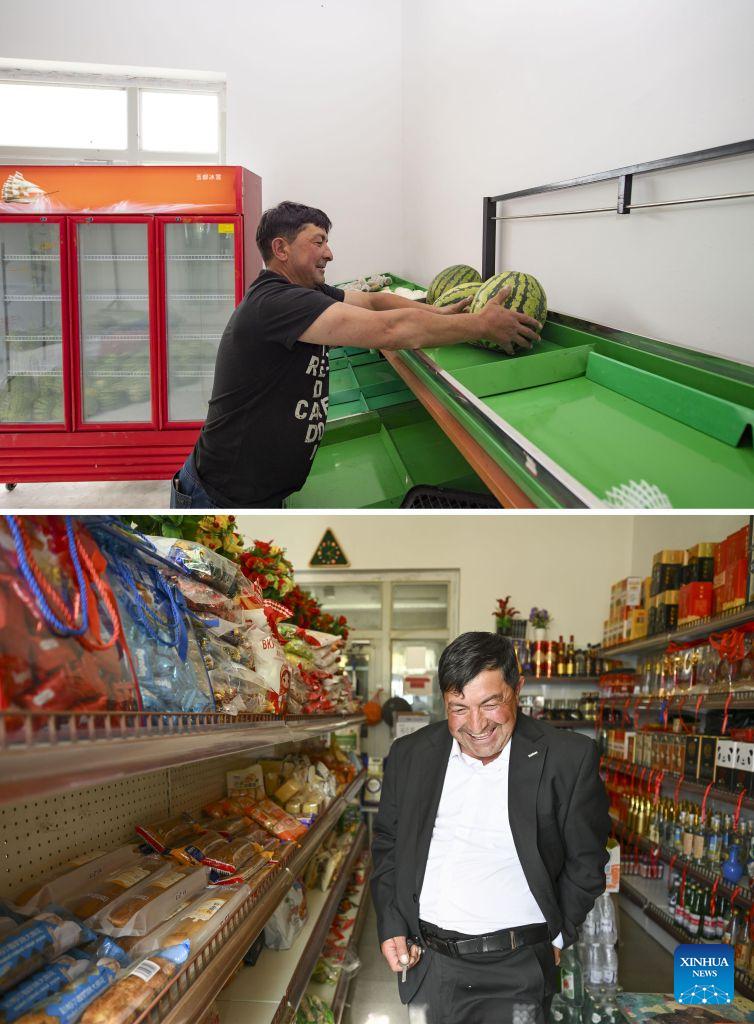
This combo photo shows Duri Jarman arranging watermelons for sale in his newly opened grocery store at the comprehensive market next to his new residence after the relocation in Taxkorgan Tajik Autonomous County, northwest China's Xinjiang Uygur Autonomous Region, June 24, 2020 (above) and Duri Jarman walking inside his grocery store, with shelves fully stocked with a wide variety of goods, in Taxkorgan Tajik Autonomous County, northwest China's Xinjiang Uygur Autonomous Region, June 29, 2026 (below). This summer, happiness filled the air around the home of herdsman Duri Jarman. His youngest son Nurkerim tied the knot with his beloved woman. Weddings of the Tajik ethnic group usually last three days. Inscribed on the national intangible cultural heritage list in 2008, the wedding customs of the Tajik ethnic group maintain unique traditions and are always described as festivals of music, dance and food to showcase the resplendent newlyweds and their propitious marriage.
In Aimin Village, this wedding also serves as a vivid epitome of the eight-year transformative leap brought by the poverty alleviation relocation program.
In the winter of 2018, Jarman and his family benefited from the relocation policy for poverty alleviation and settled in Aimin Village. They gradually adapted to the changes, enjoying a new life different from that of their ancestors. Jarman ran a small grocery store with Nurkerim, while his eldest and second sons both landed stable new jobs. Nurkerim also bought a pickup truck to run a transport business. It was this business that brought him together with his wife. For this family, the relocation is not only an opportunity for development, but also a path leading to happiness.
Over the past eight years, Jarman has expanded his courtyard and planted saplings year after year. His small yard, where not a single tree used to grow, is now shaded by lush, thriving woods. As relocation sites of the poverty alleviation relocation program, Aimin Village and neighboring Fumin Village are now home to 321 households, with at least one person employed per household on average. (Xinhua/Hu Huhu)

Duri Jarman (R) greets with a bride's elder in Taxkorgan Tajik Autonomous County, northwest China's Xinjiang Uygur Autonomous Region, June 28, 2026. This summer, happiness filled the air around the home of herdsman Duri Jarman. His youngest son Nurkerim tied the knot with his beloved woman. Weddings of the Tajik ethnic group usually last three days. Inscribed on the national intangible cultural heritage list in 2008, the wedding customs of the Tajik ethnic group maintain unique traditions and are always described as festivals of music, dance and food to showcase the resplendent newlyweds and their propitious marriage.
In Aimin Village, this wedding also serves as a vivid epitome of the eight-year transformative leap brought by the poverty alleviation relocation program.
In the winter of 2018, Jarman and his family benefited from the relocation policy for poverty alleviation and settled in Aimin Village. They gradually adapted to the changes, enjoying a new life different from that of their ancestors. Jarman ran a small grocery store with Nurkerim, while his eldest and second sons both landed stable new jobs. Nurkerim also bought a pickup truck to run a transport business. It was this business that brought him together with his wife. For this family, the relocation is not only an opportunity for development, but also a path leading to happiness.
Over the past eight years, Jarman has expanded his courtyard and planted saplings year after year. His small yard, where not a single tree used to grow, is now shaded by lush, thriving woods. As relocation sites of the poverty alleviation relocation program, Aimin Village and neighboring Fumin Village are now home to 321 households, with at least one person employed per household on average. (Xinhua/Hu Huhu)
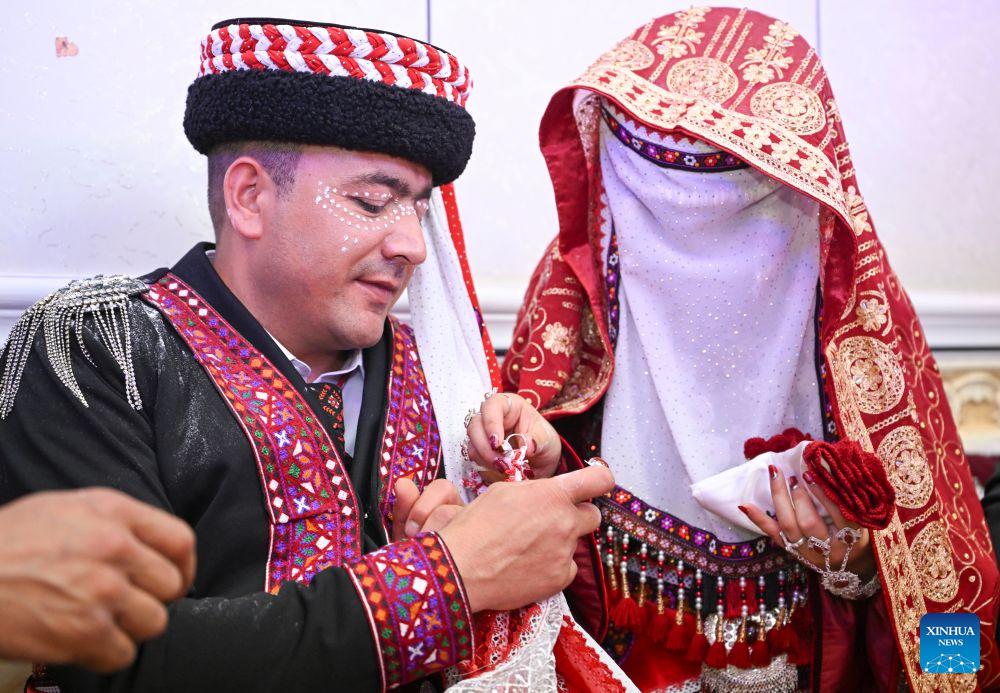
Nurkerim exchanges rings with his bride in Taxkorgan Tajik Autonomous County, northwest China's Xinjiang Uygur Autonomous Region, June 28, 2026. This summer, happiness filled the air around the home of herdsman Duri Jarman. His youngest son Nurkerim tied the knot with his beloved woman. Weddings of the Tajik ethnic group usually last three days. Inscribed on the national intangible cultural heritage list in 2008, the wedding customs of the Tajik ethnic group maintain unique traditions and are always described as festivals of music, dance and food to showcase the resplendent newlyweds and their propitious marriage.
In Aimin Village, this wedding also serves as a vivid epitome of the eight-year transformative leap brought by the poverty alleviation relocation program.
In the winter of 2018, Jarman and his family benefited from the relocation policy for poverty alleviation and settled in Aimin Village. They gradually adapted to the changes, enjoying a new life different from that of their ancestors. Jarman ran a small grocery store with Nurkerim, while his eldest and second sons both landed stable new jobs. Nurkerim also bought a pickup truck to run a transport business. It was this business that brought him together with his wife. For this family, the relocation is not only an opportunity for development, but also a path leading to happiness.
Over the past eight years, Jarman has expanded his courtyard and planted saplings year after year. His small yard, where not a single tree used to grow, is now shaded by lush, thriving woods. As relocation sites of the poverty alleviation relocation program, Aimin Village and neighboring Fumin Village are now home to 321 households, with at least one person employed per household on average. (Xinhua/Hu Huhu)
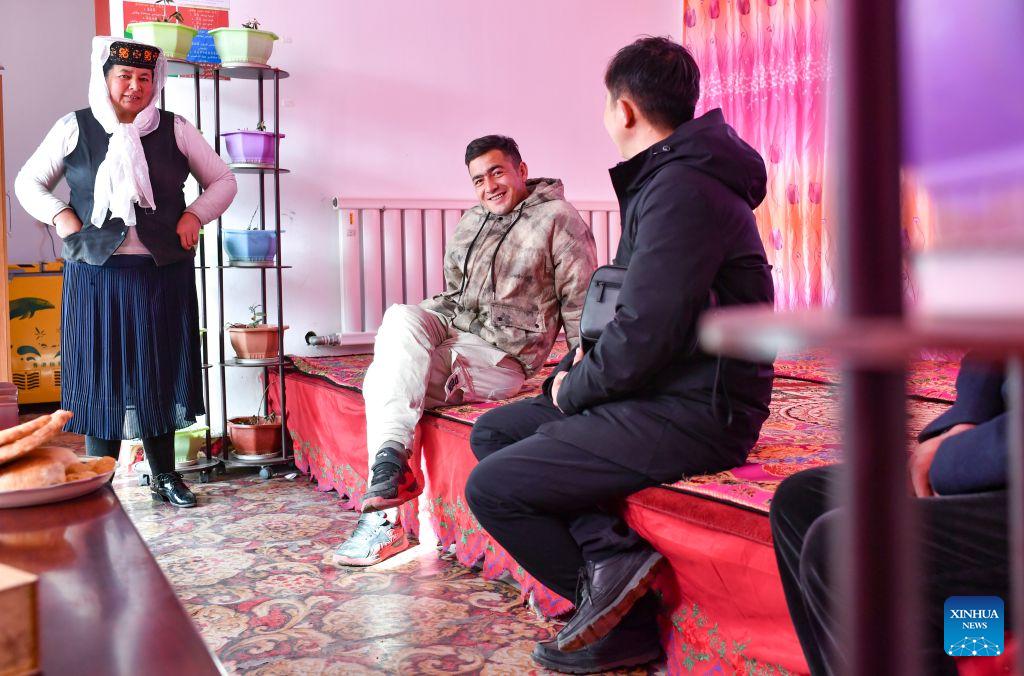
A local poverty alleviation official communicates with Nurkerim (C) to learn about the family's conditions one year after their relocation in Taxkorgan Tajik Autonomous County, northwest China's Xinjiang Uygur Autonomous Region, Nov. 25, 2019. This summer, happiness filled the air around the home of herdsman Duri Jarman. His youngest son Nurkerim tied the knot with his beloved woman. Weddings of the Tajik ethnic group usually last three days. Inscribed on the national intangible cultural heritage list in 2008, the wedding customs of the Tajik ethnic group maintain unique traditions and are always described as festivals of music, dance and food to showcase the resplendent newlyweds and their propitious marriage.
In Aimin Village, this wedding also serves as a vivid epitome of the eight-year transformative leap brought by the poverty alleviation relocation program.
In the winter of 2018, Jarman and his family benefited from the relocation policy for poverty alleviation and settled in Aimin Village. They gradually adapted to the changes, enjoying a new life different from that of their ancestors. Jarman ran a small grocery store with Nurkerim, while his eldest and second sons both landed stable new jobs. Nurkerim also bought a pickup truck to run a transport business. It was this business that brought him together with his wife. For this family, the relocation is not only an opportunity for development, but also a path leading to happiness.
Over the past eight years, Jarman has expanded his courtyard and planted saplings year after year. His small yard, where not a single tree used to grow, is now shaded by lush, thriving woods. As relocation sites of the poverty alleviation relocation program, Aimin Village and neighboring Fumin Village are now home to 321 households, with at least one person employed per household on average. (Xinhua/Hu Huhu)
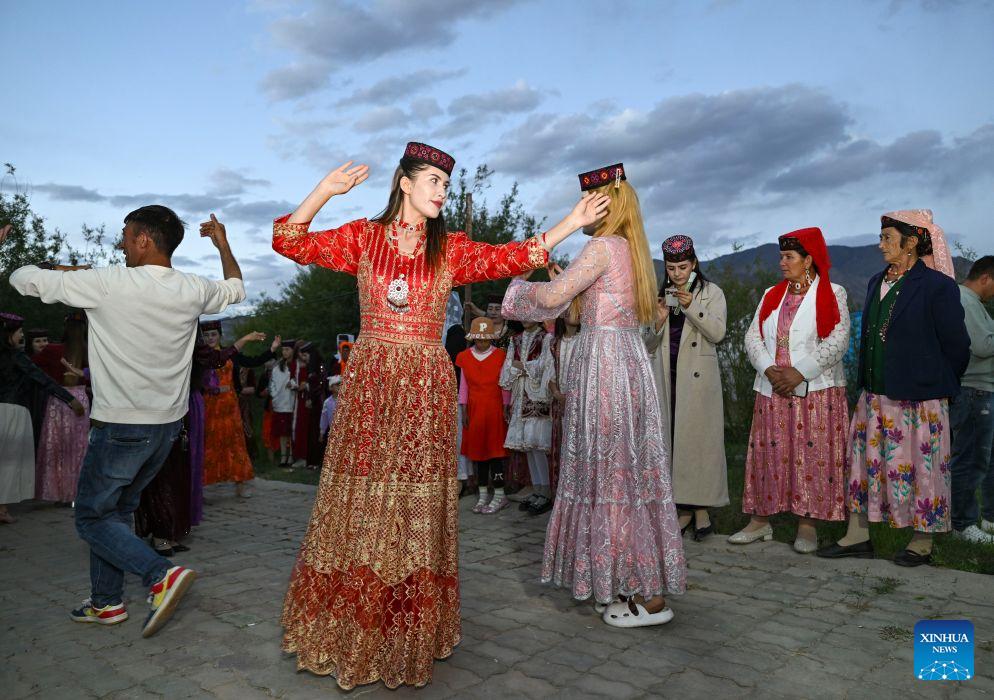
People celebrate the occasion with a dance in front of the groom's house in Taxkorgan Tajik Autonomous County, northwest China's Xinjiang Uygur Autonomous Region, June 27, 2026. This summer, happiness filled the air around the home of herdsman Duri Jarman. His youngest son Nurkerim tied the knot with his beloved woman. Weddings of the Tajik ethnic group usually last three days. Inscribed on the national intangible cultural heritage list in 2008, the wedding customs of the Tajik ethnic group maintain unique traditions and are always described as festivals of music, dance and food to showcase the resplendent newlyweds and their propitious marriage.
In Aimin Village, this wedding also serves as a vivid epitome of the eight-year transformative leap brought by the poverty alleviation relocation program.
In the winter of 2018, Jarman and his family benefited from the relocation policy for poverty alleviation and settled in Aimin Village. They gradually adapted to the changes, enjoying a new life different from that of their ancestors. Jarman ran a small grocery store with Nurkerim, while his eldest and second sons both landed stable new jobs. Nurkerim also bought a pickup truck to run a transport business. It was this business that brought him together with his wife. For this family, the relocation is not only an opportunity for development, but also a path leading to happiness.
Over the past eight years, Jarman has expanded his courtyard and planted saplings year after year. His small yard, where not a single tree used to grow, is now shaded by lush, thriving woods. As relocation sites of the poverty alleviation relocation program, Aimin Village and neighboring Fumin Village are now home to 321 households, with at least one person employed per household on average. (Xinhua/Hu Huhu)
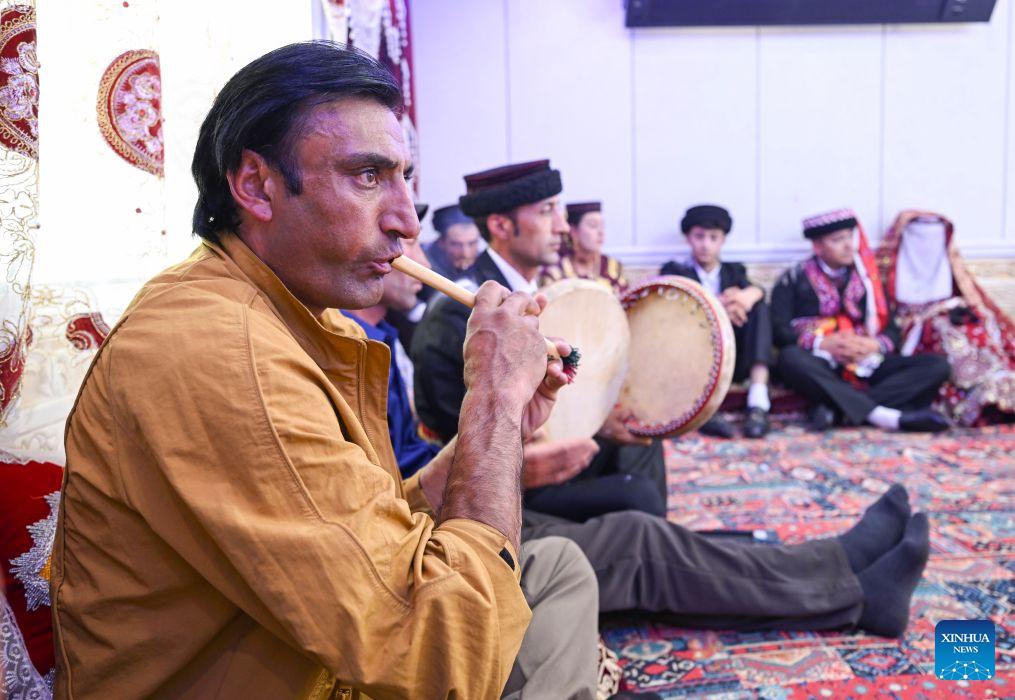
Members of the wedding procession play musical instruments at the bride's home in Taxkorgan Tajik Autonomous County, northwest China's Xinjiang Uygur Autonomous Region, June 28, 2026. This summer, happiness filled the air around the home of herdsman Duri Jarman. His youngest son Nurkerim tied the knot with his beloved woman. Weddings of the Tajik ethnic group usually last three days. Inscribed on the national intangible cultural heritage list in 2008, the wedding customs of the Tajik ethnic group maintain unique traditions and are always described as festivals of music, dance and food to showcase the resplendent newlyweds and their propitious marriage.
In Aimin Village, this wedding also serves as a vivid epitome of the eight-year transformative leap brought by the poverty alleviation relocation program.
In the winter of 2018, Jarman and his family benefited from the relocation policy for poverty alleviation and settled in Aimin Village. They gradually adapted to the changes, enjoying a new life different from that of their ancestors. Jarman ran a small grocery store with Nurkerim, while his eldest and second sons both landed stable new jobs. Nurkerim also bought a pickup truck to run a transport business. It was this business that brought him together with his wife. For this family, the relocation is not only an opportunity for development, but also a path leading to happiness.
Over the past eight years, Jarman has expanded his courtyard and planted saplings year after year. His small yard, where not a single tree used to grow, is now shaded by lush, thriving woods. As relocation sites of the poverty alleviation relocation program, Aimin Village and neighboring Fumin Village are now home to 321 households, with at least one person employed per household on average. (Xinhua/Hu Huhu)
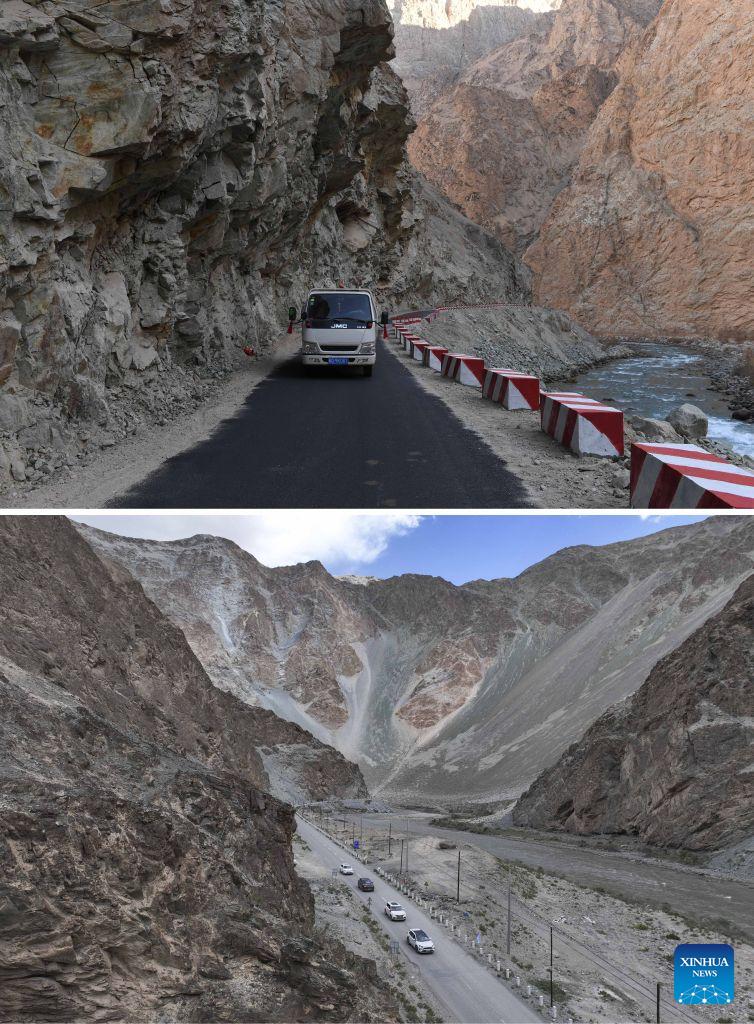
This combo photo shows a truck, transporting the belongings of Duri Jarman and his family for free, heading towards a relocation site in Taxkorgan Tajik Autonomous County, northwest China's Xinjiang Uygur Autonomous Region, Nov. 17, 2018 (above) and an aerial view of the wedding procession of Nurkerim traveling on the same road as they return after picking up the bride in Taxkorgan Tajik Autonomous County, northwest China's Xinjiang Uygur Autonomous Region, June 28, 2026 (below, drone photo). This summer, happiness filled the air around the home of herdsman Duri Jarman. His youngest son Nurkerim tied the knot with his beloved woman. Weddings of the Tajik ethnic group usually last three days. Inscribed on the national intangible cultural heritage list in 2008, the wedding customs of the Tajik ethnic group maintain unique traditions and are always described as festivals of music, dance and food to showcase the resplendent newlyweds and their propitious marriage.
In Aimin Village, this wedding also serves as a vivid epitome of the eight-year transformative leap brought by the poverty alleviation relocation program.
In the winter of 2018, Jarman and his family benefited from the relocation policy for poverty alleviation and settled in Aimin Village. They gradually adapted to the changes, enjoying a new life different from that of their ancestors. Jarman ran a small grocery store with Nurkerim, while his eldest and second sons both landed stable new jobs. Nurkerim also bought a pickup truck to run a transport business. It was this business that brought him together with his wife. For this family, the relocation is not only an opportunity for development, but also a path leading to happiness.
Over the past eight years, Jarman has expanded his courtyard and planted saplings year after year. His small yard, where not a single tree used to grow, is now shaded by lush, thriving woods. As relocation sites of the poverty alleviation relocation program, Aimin Village and neighboring Fumin Village are now home to 321 households, with at least one person employed per household on average. (Xinhua/Hu Huhu)
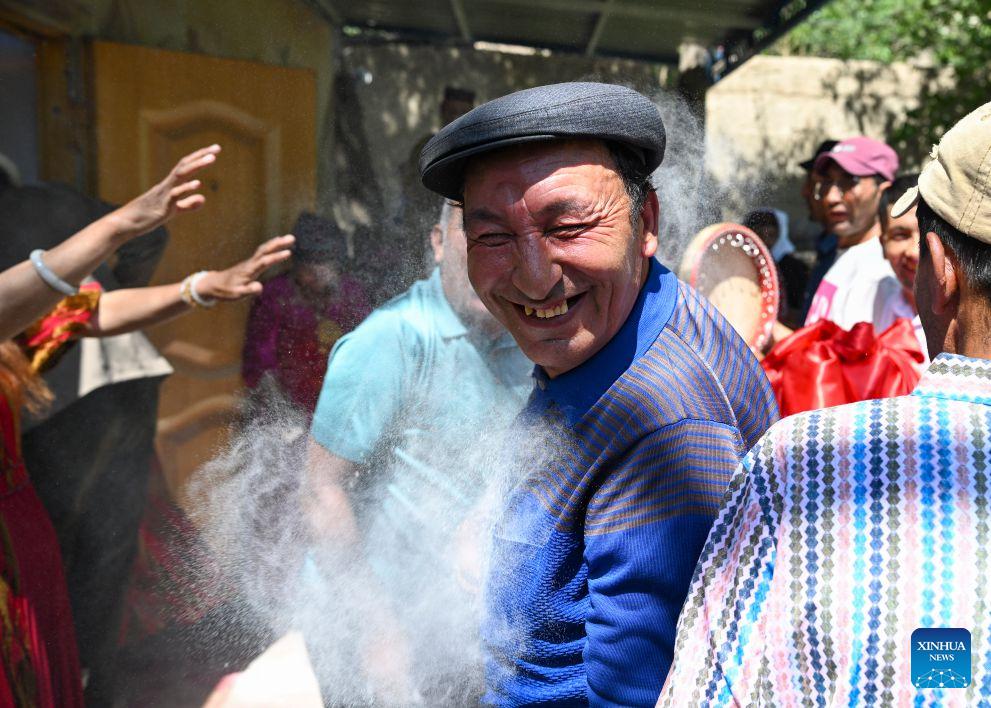
Relatives and friends of the bride sprinkle flour on the right shoulders of the members of the wedding procession as a blessing in Taxkorgan Tajik Autonomous County, northwest China's Xinjiang Uygur Autonomous Region, June 28, 2026. This summer, happiness filled the air around the home of herdsman Duri Jarman. His youngest son Nurkerim tied the knot with his beloved woman. Weddings of the Tajik ethnic group usually last three days. Inscribed on the national intangible cultural heritage list in 2008, the wedding customs of the Tajik ethnic group maintain unique traditions and are always described as festivals of music, dance and food to showcase the resplendent newlyweds and their propitious marriage.
In Aimin Village, this wedding also serves as a vivid epitome of the eight-year transformative leap brought by the poverty alleviation relocation program.
In the winter of 2018, Jarman and his family benefited from the relocation policy for poverty alleviation and settled in Aimin Village. They gradually adapted to the changes, enjoying a new life different from that of their ancestors. Jarman ran a small grocery store with Nurkerim, while his eldest and second sons both landed stable new jobs. Nurkerim also bought a pickup truck to run a transport business. It was this business that brought him together with his wife. For this family, the relocation is not only an opportunity for development, but also a path leading to happiness.
Over the past eight years, Jarman has expanded his courtyard and planted saplings year after year. His small yard, where not a single tree used to grow, is now shaded by lush, thriving woods. As relocation sites of the poverty alleviation relocation program, Aimin Village and neighboring Fumin Village are now home to 321 households, with at least one person employed per household on average. (Xinhua/Hu Huhu)
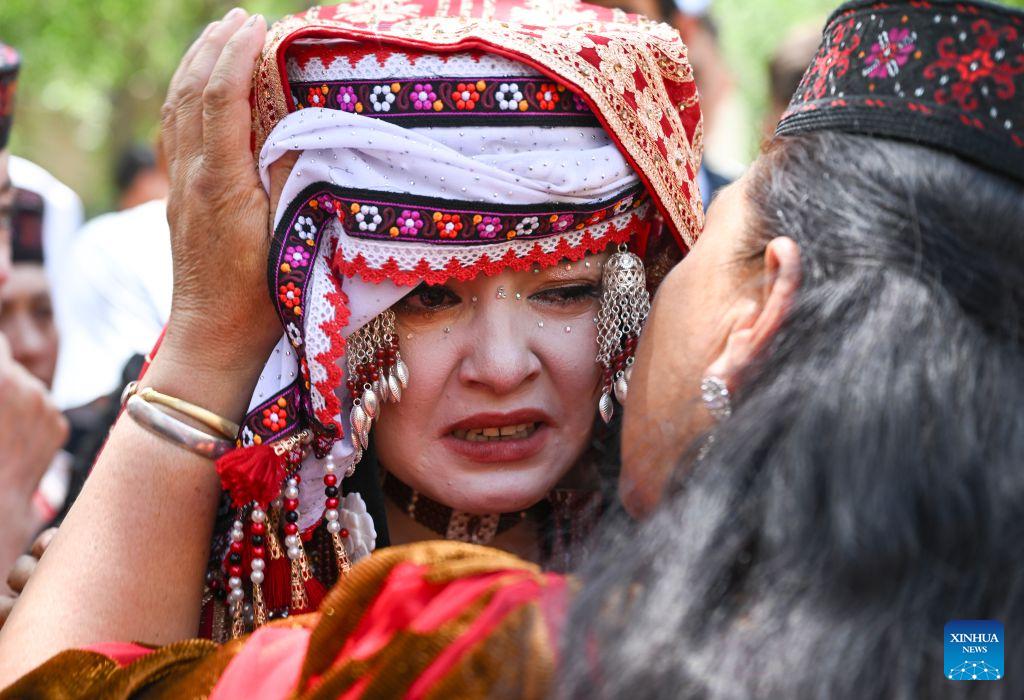
An elder kisses on the bride's cheek and whispers blessings in Taxkorgan Tajik Autonomous County, northwest China's Xinjiang Uygur Autonomous Region, June 28, 2026. This summer, happiness filled the air around the home of herdsman Duri Jarman. His youngest son Nurkerim tied the knot with his beloved woman. Weddings of the Tajik ethnic group usually last three days. Inscribed on the national intangible cultural heritage list in 2008, the wedding customs of the Tajik ethnic group maintain unique traditions and are always described as festivals of music, dance and food to showcase the resplendent newlyweds and their propitious marriage.
In Aimin Village, this wedding also serves as a vivid epitome of the eight-year transformative leap brought by the poverty alleviation relocation program.
In the winter of 2018, Jarman and his family benefited from the relocation policy for poverty alleviation and settled in Aimin Village. They gradually adapted to the changes, enjoying a new life different from that of their ancestors. Jarman ran a small grocery store with Nurkerim, while his eldest and second sons both landed stable new jobs. Nurkerim also bought a pickup truck to run a transport business. It was this business that brought him together with his wife. For this family, the relocation is not only an opportunity for development, but also a path leading to happiness.
Over the past eight years, Jarman has expanded his courtyard and planted saplings year after year. His small yard, where not a single tree used to grow, is now shaded by lush, thriving woods. As relocation sites of the poverty alleviation relocation program, Aimin Village and neighboring Fumin Village are now home to 321 households, with at least one person employed per household on average. (Xinhua/Hu Huhu)
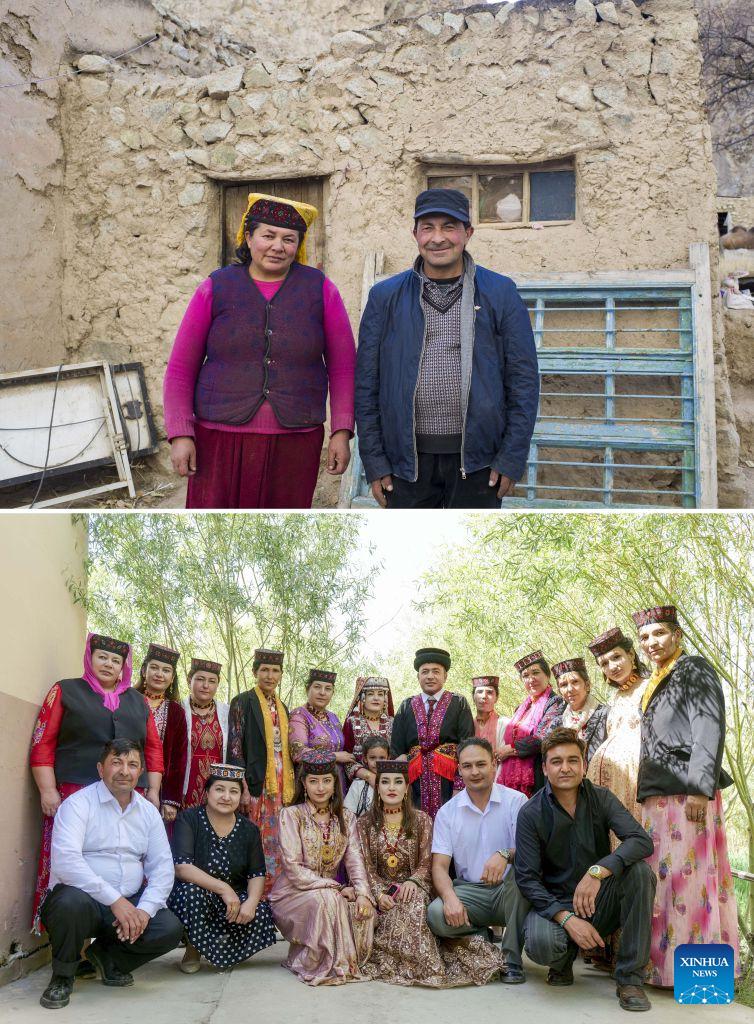
This combo photo shows Duri Jarman and his wife posing for photos in front of his old residence before relocation in Taxkorgan Tajik Autonomous County, northwest China's Xinjiang Uygur Autonomous Region, Nov. 13, 2018 (above, photo by Xinhua photographer Hu Huhu) and Duri Jarman (1st L, front) and his wife (1st L, back) posing for photos with Nurkerim (6th R, back) and his bride (7th R, back) along with other guests attending the wedding in Taxkorgan Tajik Autonomous County, northwest China's Xinjiang Uygur Autonomous Region, June 30, 2026 (below, photo by Yizaraili Feizali). This summer, happiness filled the air around the home of herdsman Duri Jarman. His youngest son Nurkerim tied the knot with his beloved woman. Weddings of the Tajik ethnic group usually last three days. Inscribed on the national intangible cultural heritage list in 2008, the wedding customs of the Tajik ethnic group maintain unique traditions and are always described as festivals of music, dance and food to showcase the resplendent newlyweds and their propitious marriage.
In Aimin Village, this wedding also serves as a vivid epitome of the eight-year transformative leap brought by the poverty alleviation relocation program.
In the winter of 2018, Jarman and his family benefited from the relocation policy for poverty alleviation and settled in Aimin Village. They gradually adapted to the changes, enjoying a new life different from that of their ancestors. Jarman ran a small grocery store with Nurkerim, while his eldest and second sons both landed stable new jobs. Nurkerim also bought a pickup truck to run a transport business. It was this business that brought him together with his wife. For this family, the relocation is not only an opportunity for development, but also a path leading to happiness.
Over the past eight years, Jarman has expanded his courtyard and planted saplings year after year. His small yard, where not a single tree used to grow, is now shaded by lush, thriving woods. As relocation sites of the poverty alleviation relocation program, Aimin Village and neighboring Fumin Village are now home to 321 households, with at least one person employed per household on average. (Xinhua)
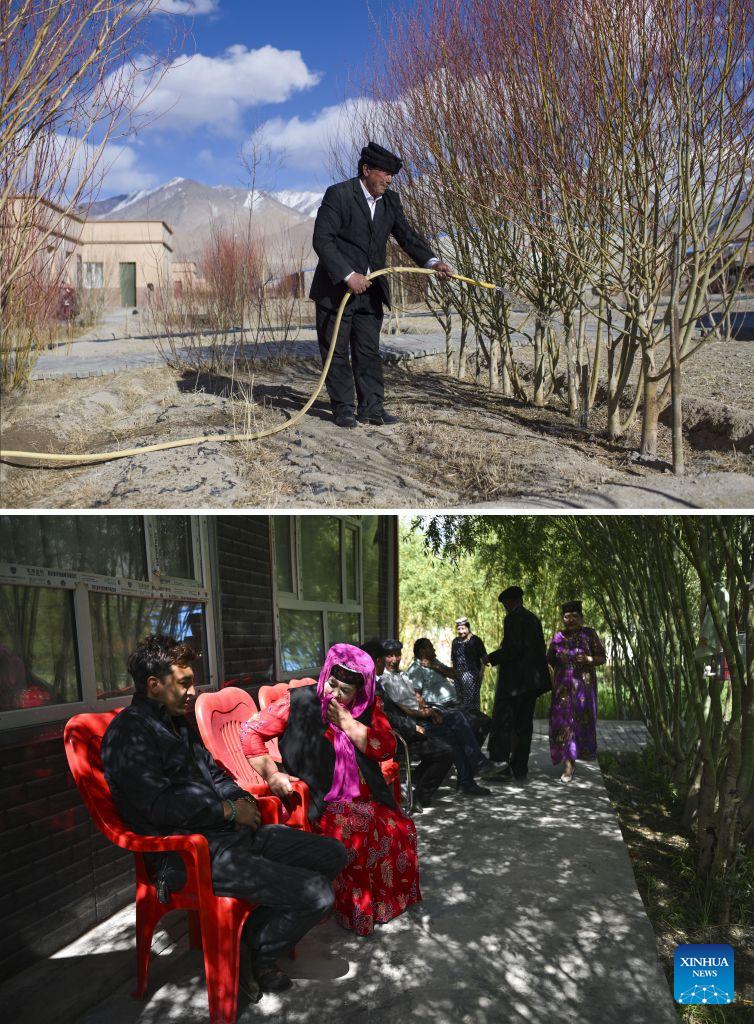
This combo photo shows Duri Jarman watering plateau willows in front of his new residence in Taxkorgan Tajik Autonomous County, northwest China's Xinjiang Uygur Autonomous Region, March 21, 2023 (above) and wife of Duri Jarman (2nd L) chatting with a guest attending her son's wedding under tree shades in Taxkorgan Tajik Autonomous County, northwest China's Xinjiang Uygur Autonomous Region, June 30, 2026 (below). This summer, happiness filled the air around the home of herdsman Duri Jarman. His youngest son Nurkerim tied the knot with his beloved woman. Weddings of the Tajik ethnic group usually last three days. Inscribed on the national intangible cultural heritage list in 2008, the wedding customs of the Tajik ethnic group maintain unique traditions and are always described as festivals of music, dance and food to showcase the resplendent newlyweds and their propitious marriage.
In Aimin Village, this wedding also serves as a vivid epitome of the eight-year transformative leap brought by the poverty alleviation relocation program.
In the winter of 2018, Jarman and his family benefited from the relocation policy for poverty alleviation and settled in Aimin Village. They gradually adapted to the changes, enjoying a new life different from that of their ancestors. Jarman ran a small grocery store with Nurkerim, while his eldest and second sons both landed stable new jobs. Nurkerim also bought a pickup truck to run a transport business. It was this business that brought him together with his wife. For this family, the relocation is not only an opportunity for development, but also a path leading to happiness.
Over the past eight years, Jarman has expanded his courtyard and planted saplings year after year. His small yard, where not a single tree used to grow, is now shaded by lush, thriving woods. As relocation sites of the poverty alleviation relocation program, Aimin Village and neighboring Fumin Village are now home to 321 households, with at least one person employed per household on average. (Xinhua/Hu Huhu)
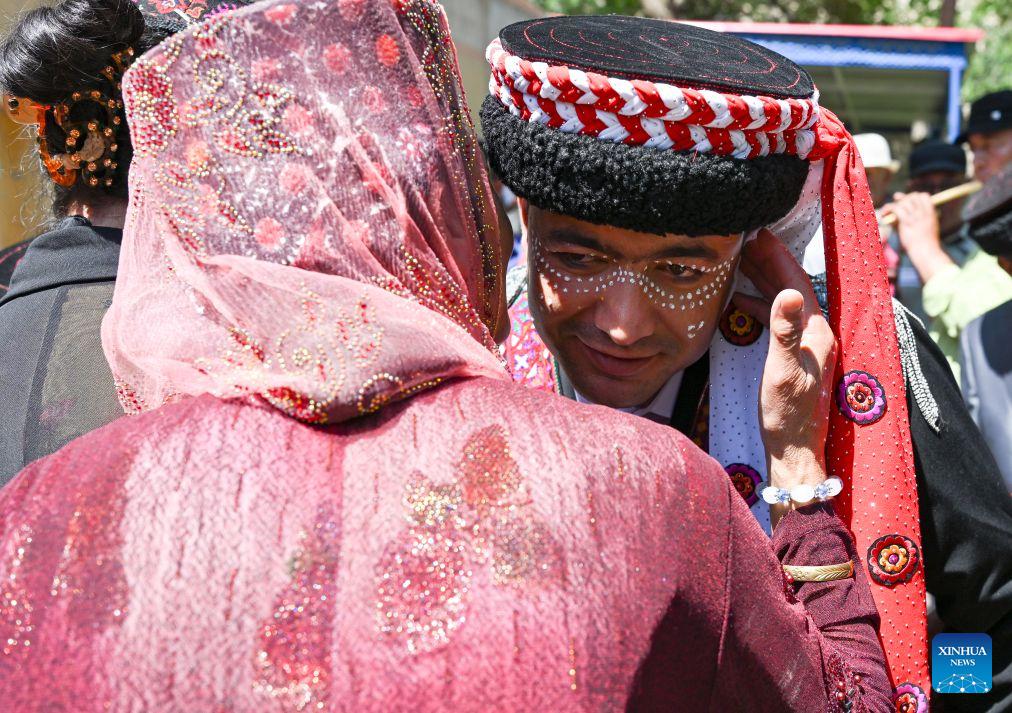
Nurkerim arrives at his bride's home and greets her elders in Taxkorgan Tajik Autonomous County, northwest China's Xinjiang Uygur Autonomous Region, June 28, 2026. This summer, happiness filled the air around the home of herdsman Duri Jarman. His youngest son Nurkerim tied the knot with his beloved woman. Weddings of the Tajik ethnic group usually last three days. Inscribed on the national intangible cultural heritage list in 2008, the wedding customs of the Tajik ethnic group maintain unique traditions and are always described as festivals of music, dance and food to showcase the resplendent newlyweds and their propitious marriage.
In Aimin Village, this wedding also serves as a vivid epitome of the eight-year transformative leap brought by the poverty alleviation relocation program.
In the winter of 2018, Jarman and his family benefited from the relocation policy for poverty alleviation and settled in Aimin Village. They gradually adapted to the changes, enjoying a new life different from that of their ancestors. Jarman ran a small grocery store with Nurkerim, while his eldest and second sons both landed stable new jobs. Nurkerim also bought a pickup truck to run a transport business. It was this business that brought him together with his wife. For this family, the relocation is not only an opportunity for development, but also a path leading to happiness.
Over the past eight years, Jarman has expanded his courtyard and planted saplings year after year. His small yard, where not a single tree used to grow, is now shaded by lush, thriving woods. As relocation sites of the poverty alleviation relocation program, Aimin Village and neighboring Fumin Village are now home to 321 households, with at least one person employed per household on average. (Xinhua/Hu Huhu)
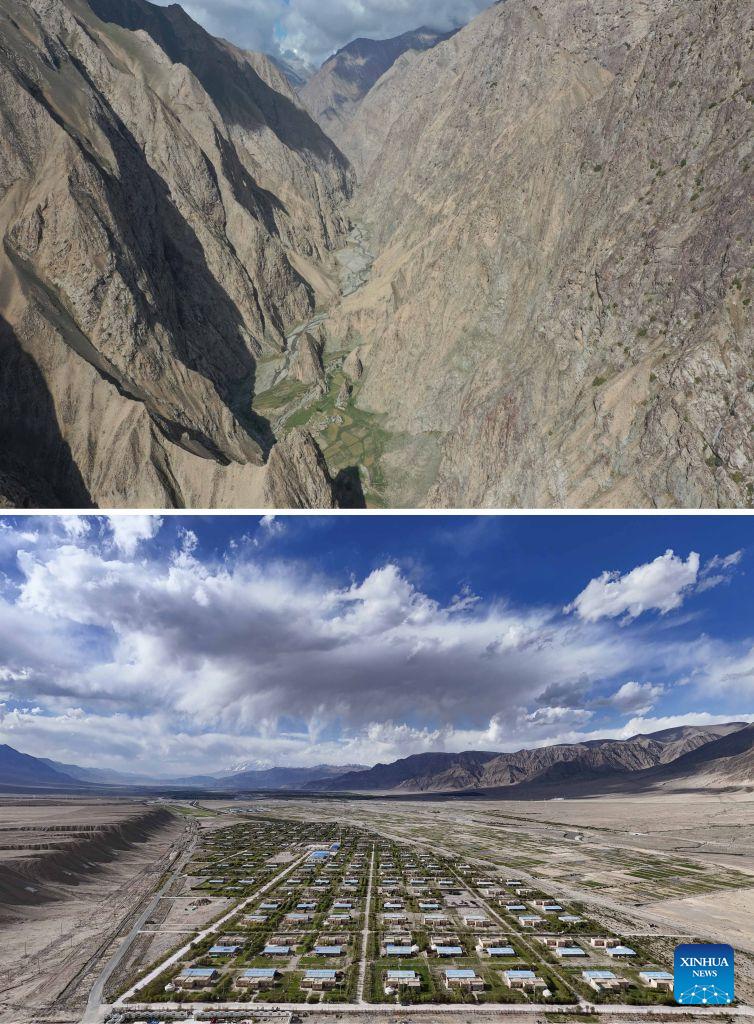
This combo photo shows an aerial view of the valley where Duri Jarman and his family resided before relocation in Taxkorgan Tajik Autonomous County, northwest China's Xinjiang Uygur Autonomous Region, June 20, 2019 (above, drone photo) and an aerial view of the village where Duri Jarman and his family live in Taxkorgan Tajik Autonomous County, northwest China's Xinjiang Uygur Autonomous Region, June 26, 2026 (below, drone photo). This summer, happiness filled the air around the home of herdsman Duri Jarman. His youngest son Nurkerim tied the knot with his beloved woman. Weddings of the Tajik ethnic group usually last three days. Inscribed on the national intangible cultural heritage list in 2008, the wedding customs of the Tajik ethnic group maintain unique traditions and are always described as festivals of music, dance and food to showcase the resplendent newlyweds and their propitious marriage.
In Aimin Village, this wedding also serves as a vivid epitome of the eight-year transformative leap brought by the poverty alleviation relocation program.
In the winter of 2018, Jarman and his family benefited from the relocation policy for poverty alleviation and settled in Aimin Village. They gradually adapted to the changes, enjoying a new life different from that of their ancestors. Jarman ran a small grocery store with Nurkerim, while his eldest and second sons both landed stable new jobs. Nurkerim also bought a pickup truck to run a transport business. It was this business that brought him together with his wife. For this family, the relocation is not only an opportunity for development, but also a path leading to happiness.
Over the past eight years, Jarman has expanded his courtyard and planted saplings year after year. His small yard, where not a single tree used to grow, is now shaded by lush, thriving woods. As relocation sites of the poverty alleviation relocation program, Aimin Village and neighboring Fumin Village are now home to 321 households, with at least one person employed per household on average. (Xinhua/Hu Huhu)
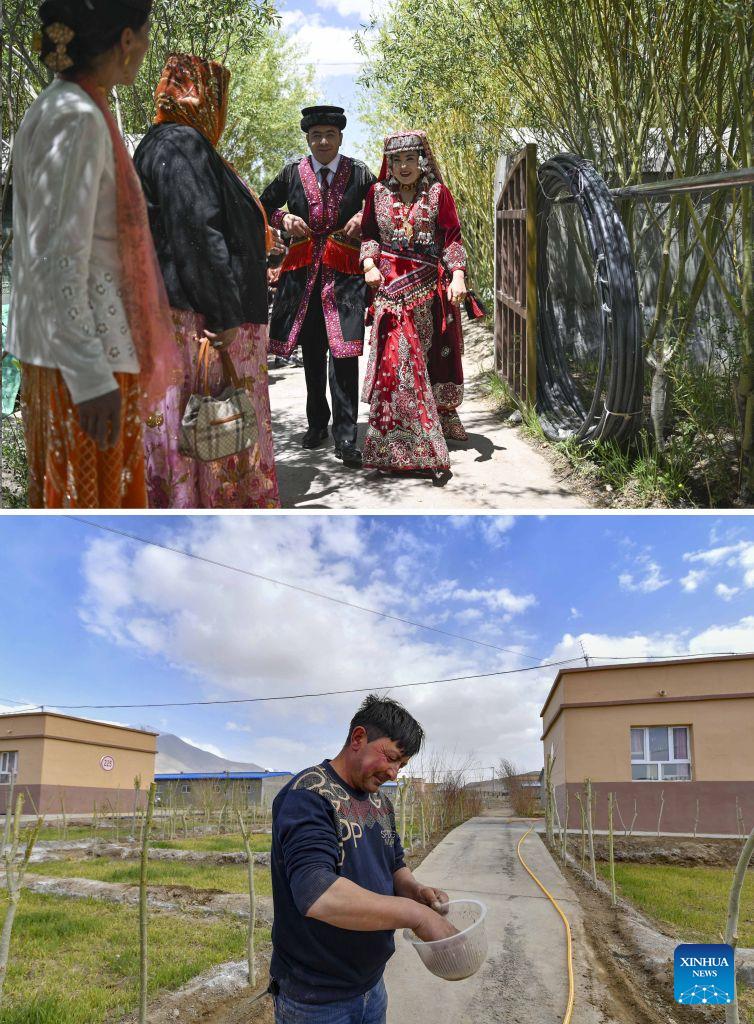
This combo photo shows Nurkerim and his bride walking towards their home under tree shades in Taxkorgan Tajik Autonomous County, northwest China's Xinjiang Uygur Autonomous Region, June 30, 2026 (above) and Duri Jarman sowing grass seeds in the courtyard, with newly planted plateau willows behind him, in Taxkorgan Tajik Autonomous County, northwest China's Xinjiang Uygur Autonomous Region, June 3, 2020 (below). This summer, happiness filled the air around the home of herdsman Duri Jarman. His youngest son Nurkerim tied the knot with his beloved woman. Weddings of the Tajik ethnic group usually last three days. Inscribed on the national intangible cultural heritage list in 2008, the wedding customs of the Tajik ethnic group maintain unique traditions and are always described as festivals of music, dance and food to showcase the resplendent newlyweds and their propitious marriage.
In Aimin Village, this wedding also serves as a vivid epitome of the eight-year transformative leap brought by the poverty alleviation relocation program.
In the winter of 2018, Jarman and his family benefited from the relocation policy for poverty alleviation and settled in Aimin Village. They gradually adapted to the changes, enjoying a new life different from that of their ancestors. Jarman ran a small grocery store with Nurkerim, while his eldest and second sons both landed stable new jobs. Nurkerim also bought a pickup truck to run a transport business. It was this business that brought him together with his wife. For this family, the relocation is not only an opportunity for development, but also a path leading to happiness.
Over the past eight years, Jarman has expanded his courtyard and planted saplings year after year. His small yard, where not a single tree used to grow, is now shaded by lush, thriving woods. As relocation sites of the poverty alleviation relocation program, Aimin Village and neighboring Fumin Village are now home to 321 households, with at least one person employed per household on average. (Xinhua/Hu Huhu)
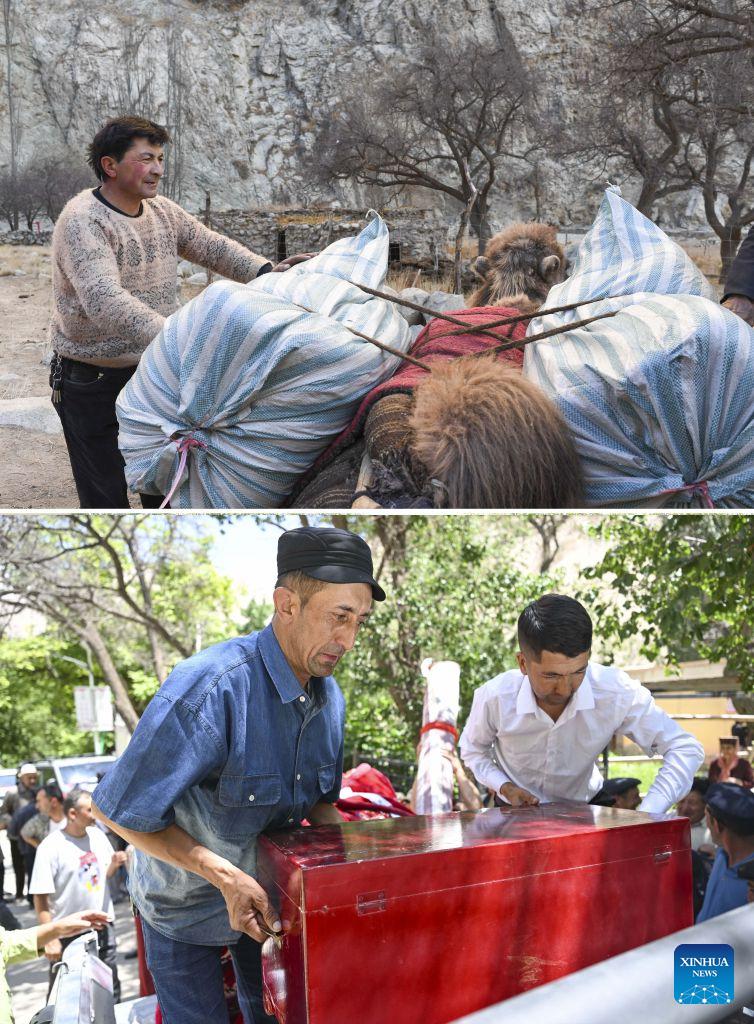
This combo photo shows Duri Jarman packing his belongings beside his old residence in the valley on the plateau in Taxkorgan Tajik Autonomous County, northwest China's Xinjiang Uygur Autonomous Region, Nov. 17, 2018 (above) and members of the wedding procession loading the bride's dowry onto a truck in Taxkorgan Tajik Autonomous County, northwest China's Xinjiang Uygur Autonomous Region, June 28, 2026 (below). This summer, happiness filled the air around the home of herdsman Duri Jarman. His youngest son Nurkerim tied the knot with his beloved woman. Weddings of the Tajik ethnic group usually last three days. Inscribed on the national intangible cultural heritage list in 2008, the wedding customs of the Tajik ethnic group maintain unique traditions and are always described as festivals of music, dance and food to showcase the resplendent newlyweds and their propitious marriage.
In Aimin Village, this wedding also serves as a vivid epitome of the eight-year transformative leap brought by the poverty alleviation relocation program.
In the winter of 2018, Jarman and his family benefited from the relocation policy for poverty alleviation and settled in Aimin Village. They gradually adapted to the changes, enjoying a new life different from that of their ancestors. Jarman ran a small grocery store with Nurkerim, while his eldest and second sons both landed stable new jobs. Nurkerim also bought a pickup truck to run a transport business. It was this business that brought him together with his wife. For this family, the relocation is not only an opportunity for development, but also a path leading to happiness.
Over the past eight years, Jarman has expanded his courtyard and planted saplings year after year. His small yard, where not a single tree used to grow, is now shaded by lush, thriving woods. As relocation sites of the poverty alleviation relocation program, Aimin Village and neighboring Fumin Village are now home to 321 households, with at least one person employed per household on average. (Xinhua/Hu Huhu)
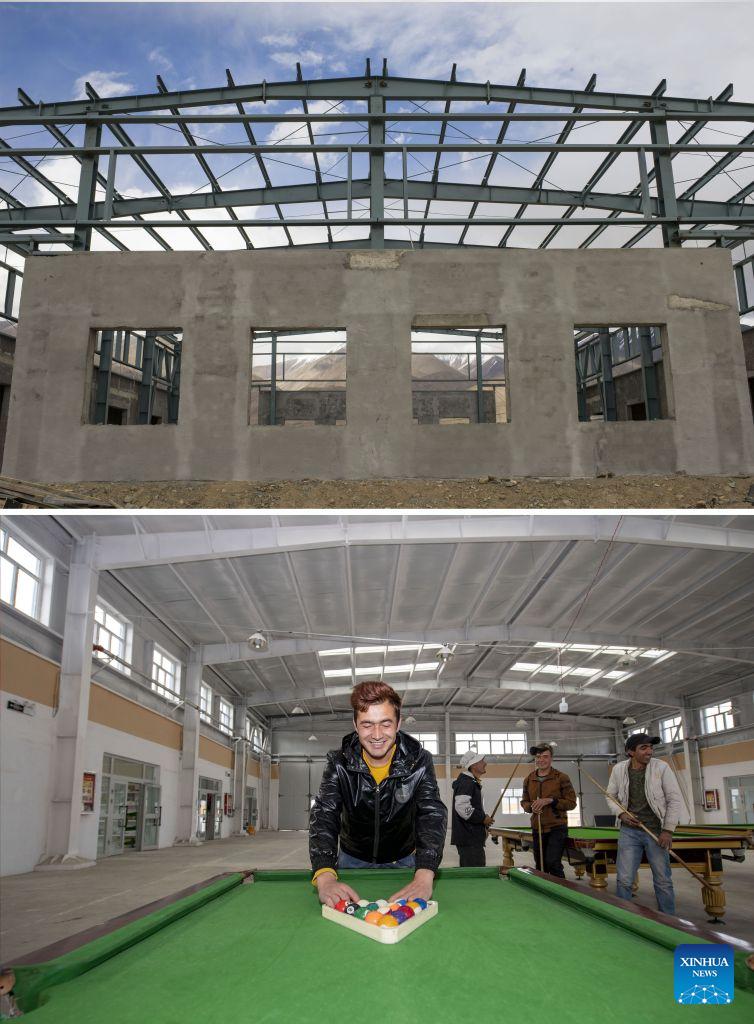
This combo photo shows a scene at an unfinished comprehensive market in the new village in Taxkorgan Tajik Autonomous County, northwest China's Xinjiang Uygur Autonomous Region, June 26, 2019 (above) and Nurkerim arranging a billiard table, which he transported from Kashgar to attract customers, inside the comprehensive market in Taxkorgan Tajik Autonomous County, northwest China's Xinjiang Uygur Autonomous Region, June 2, 2020 (below). This summer, happiness filled the air around the home of herdsman Duri Jarman. His youngest son Nurkerim tied the knot with his beloved woman. Weddings of the Tajik ethnic group usually last three days. Inscribed on the national intangible cultural heritage list in 2008, the wedding customs of the Tajik ethnic group maintain unique traditions and are always described as festivals of music, dance and food to showcase the resplendent newlyweds and their propitious marriage.
In Aimin Village, this wedding also serves as a vivid epitome of the eight-year transformative leap brought by the poverty alleviation relocation program.
In the winter of 2018, Jarman and his family benefited from the relocation policy for poverty alleviation and settled in Aimin Village. They gradually adapted to the changes, enjoying a new life different from that of their ancestors. Jarman ran a small grocery store with Nurkerim, while his eldest and second sons both landed stable new jobs. Nurkerim also bought a pickup truck to run a transport business. It was this business that brought him together with his wife. For this family, the relocation is not only an opportunity for development, but also a path leading to happiness.
Over the past eight years, Jarman has expanded his courtyard and planted saplings year after year. His small yard, where not a single tree used to grow, is now shaded by lush, thriving woods. As relocation sites of the poverty alleviation relocation program, Aimin Village and neighboring Fumin Village are now home to 321 households, with at least one person employed per household on average. (Xinhua/Hu Huhu)