


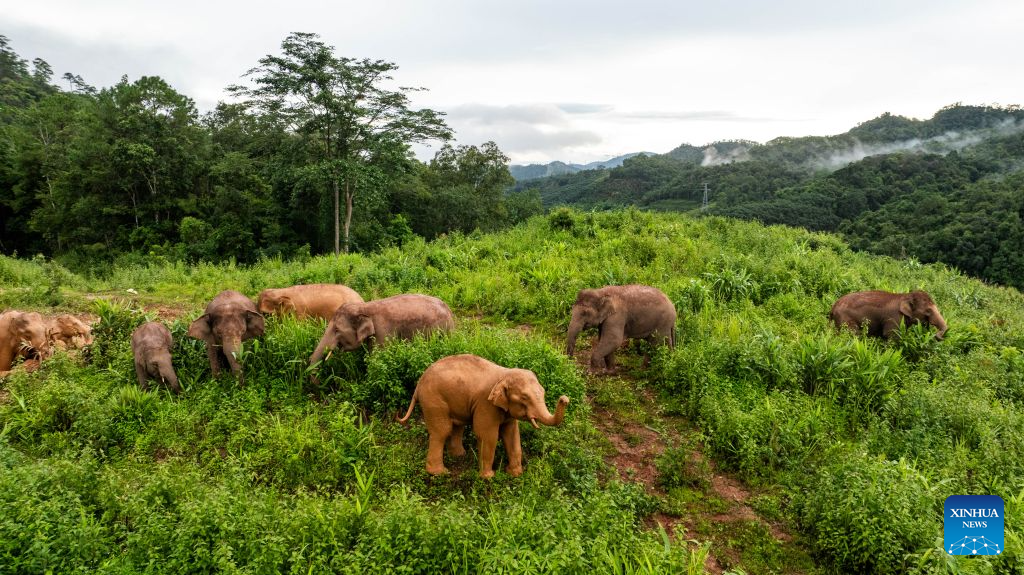
A drone photo taken on Aug. 8, 2024 shows a herd of elephants in Dadugang Township of Jinghong City, Xishuangbanna Dai Autonomous Prefecture, southwest China's Yunnan Province. The "short-nose family" of wild Asian elephants captured worldwide attention in 2021 after roaming more than 1,400 kilometers across Yunnan Province. It returned to its traditional habitat with 14 members. Embracing two calves born this year, members of the family have since grown to 21.
Yunnan has developed a comprehensive approach to Asian elephant conservation that combines habitat restoration, connected habitats, scientific monitoring and early warning, community participation and cross-border cooperation. The province is also home to the Xishuangbanna Asian Elephant Breeding and Rescue Center, which has rescued and rehabilitated more than 30 wild Asian elephants since its establishment in 2009.
China has established 11 nature reserves covering a total of 5,098 square kilometers across wild Asian elephant habitats. The country's wild Asian elephant population has risen from about 150 in the 1980s to nearly 400 today. (Xinhua/Hu Chao)
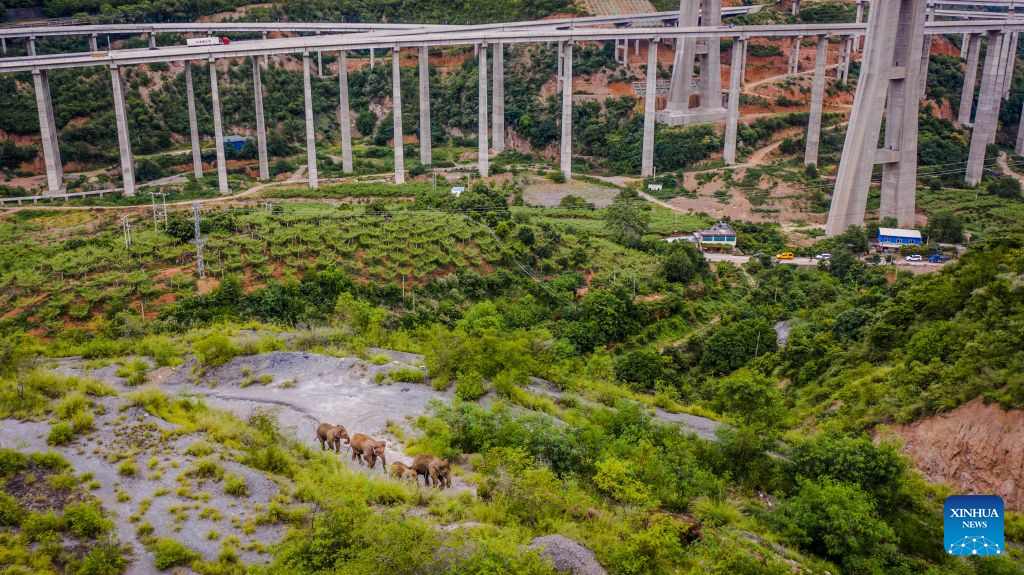
An aerial drone photo taken on Aug. 9, 2021 shows a herd of elephants in Yuanjiang County of Yuxi City, southwest China's Yunnan Province. The "short-nose family" of wild Asian elephants captured worldwide attention in 2021 after roaming more than 1,400 kilometers across Yunnan Province. It returned to its traditional habitat with 14 members. Embracing two calves born this year, members of the family have since grown to 21.
Yunnan has developed a comprehensive approach to Asian elephant conservation that combines habitat restoration, connected habitats, scientific monitoring and early warning, community participation and cross-border cooperation. The province is also home to the Xishuangbanna Asian Elephant Breeding and Rescue Center, which has rescued and rehabilitated more than 30 wild Asian elephants since its establishment in 2009.
China has established 11 nature reserves covering a total of 5,098 square kilometers across wild Asian elephant habitats. The country's wild Asian elephant population has risen from about 150 in the 1980s to nearly 400 today. (Xinhua/Hu Chao)
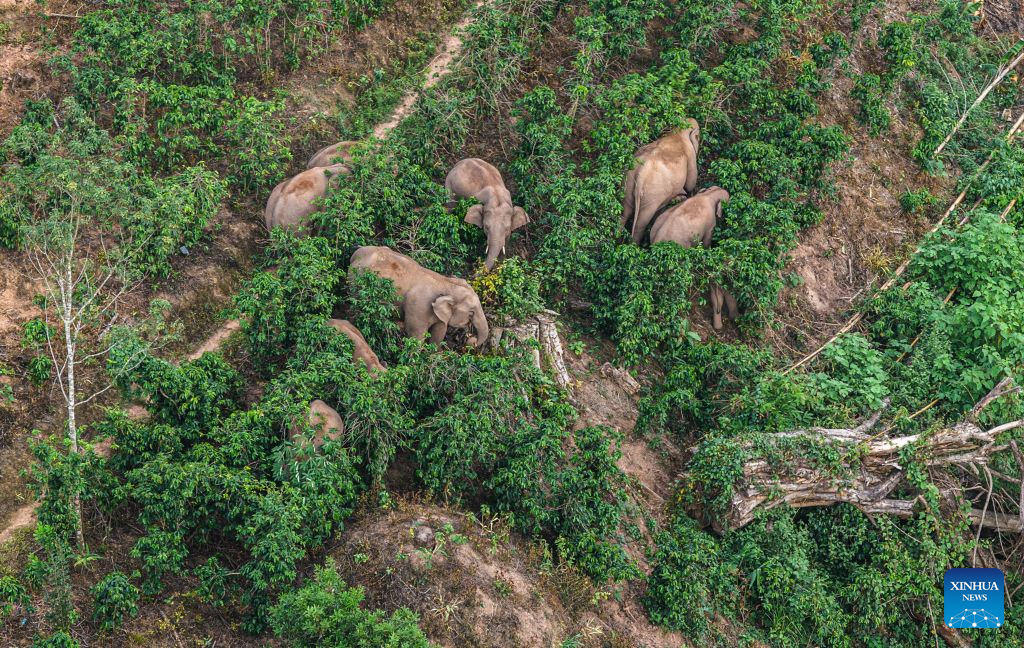
An aerial drone photo taken on May 27, 2026 shows a herd of elephants in Dadugang Township of Jinghong City, Xishuangbanna Dai Autonomous Prefecture, southwest China's Yunnan Province. The "short-nose family" of wild Asian elephants captured worldwide attention in 2021 after roaming more than 1,400 kilometers across Yunnan Province. It returned to its traditional habitat with 14 members. Embracing two calves born this year, members of the family have since grown to 21.
Yunnan has developed a comprehensive approach to Asian elephant conservation that combines habitat restoration, connected habitats, scientific monitoring and early warning, community participation and cross-border cooperation. The province is also home to the Xishuangbanna Asian Elephant Breeding and Rescue Center, which has rescued and rehabilitated more than 30 wild Asian elephants since its establishment in 2009.
China has established 11 nature reserves covering a total of 5,098 square kilometers across wild Asian elephant habitats. The country's wild Asian elephant population has risen from about 150 in the 1980s to nearly 400 today. (Xinhua/Zhang Keren)
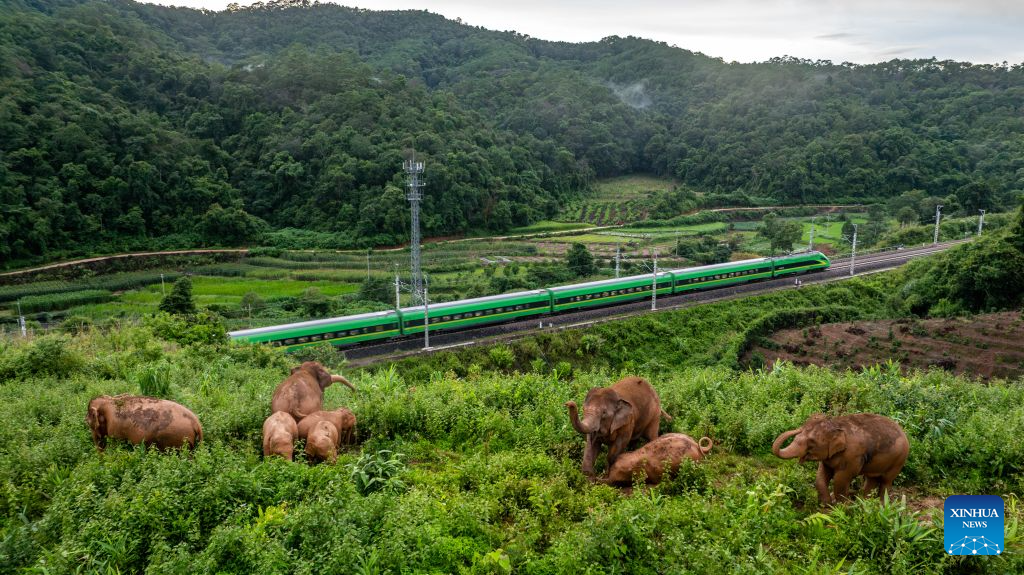
A drone photo taken on Aug. 8, 2024 shows a herd of elephants in Dadugang Township of Jinghong City, Xishuangbanna Dai Autonomous Prefecture, southwest China's Yunnan Province. The "short-nose family" of wild Asian elephants captured worldwide attention in 2021 after roaming more than 1,400 kilometers across Yunnan Province. It returned to its traditional habitat with 14 members. Embracing two calves born this year, members of the family have since grown to 21.
Yunnan has developed a comprehensive approach to Asian elephant conservation that combines habitat restoration, connected habitats, scientific monitoring and early warning, community participation and cross-border cooperation. The province is also home to the Xishuangbanna Asian Elephant Breeding and Rescue Center, which has rescued and rehabilitated more than 30 wild Asian elephants since its establishment in 2009.
China has established 11 nature reserves covering a total of 5,098 square kilometers across wild Asian elephant habitats. The country's wild Asian elephant population has risen from about 150 in the 1980s to nearly 400 today. (Xinhua/Hu Chao)
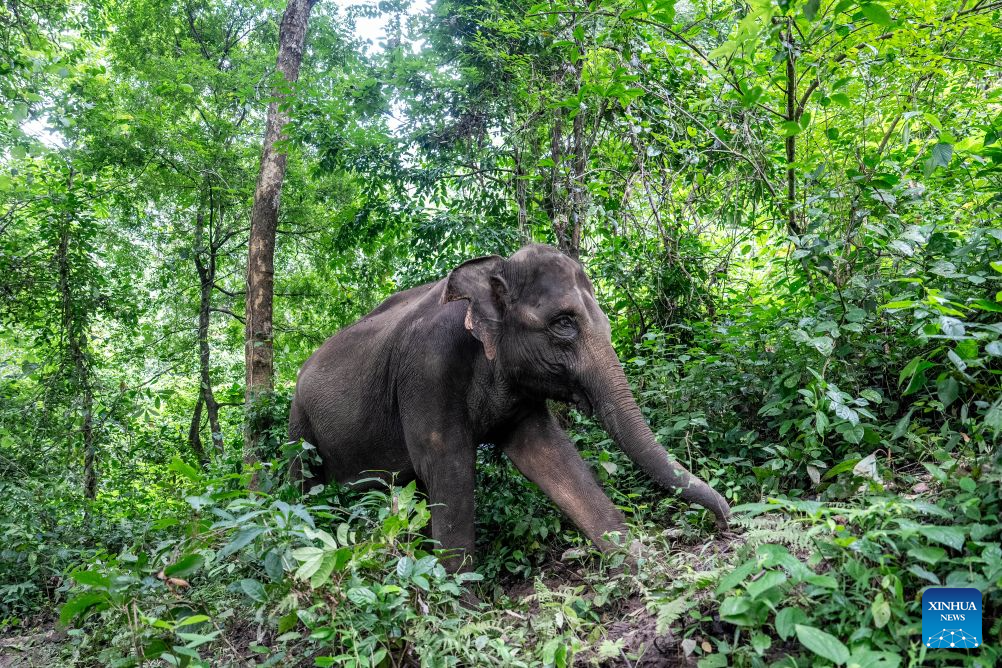
"Yangniu," a rescued Asian elephant, plays at the Asian Elephant Breeding and Rescue Center in Xishuangbanna Dai Autonomous Prefecture, southwest China's Yunnan Province, Aug. 12, 2026. The "short-nose family" of wild Asian elephants captured worldwide attention in 2021 after roaming more than 1,400 kilometers across Yunnan Province. It returned to its traditional habitat with 14 members. Embracing two calves born this year, members of the family have since grown to 21.
Yunnan has developed a comprehensive approach to Asian elephant conservation that combines habitat restoration, connected habitats, scientific monitoring and early warning, community participation and cross-border cooperation. The province is also home to the Xishuangbanna Asian Elephant Breeding and Rescue Center, which has rescued and rehabilitated more than 30 wild Asian elephants since its establishment in 2009.
China has established 11 nature reserves covering a total of 5,098 square kilometers across wild Asian elephant habitats. The country's wild Asian elephant population has risen from about 150 in the 1980s to nearly 400 today. (Xinhua/Hu Chao)
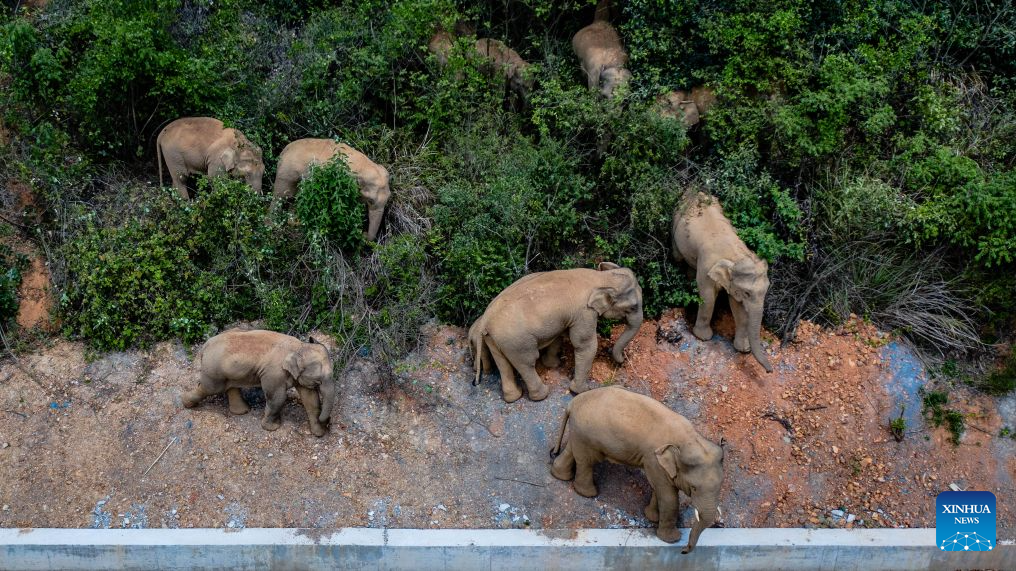
An aerial drone photo taken on May 28, 2021 shows a herd of elephants in Eshan County of Yuxi City, southwest China's Yunnan Province. The "short-nose family" of wild Asian elephants captured worldwide attention in 2021 after roaming more than 1,400 kilometers across Yunnan Province. It returned to its traditional habitat with 14 members. Embracing two calves born this year, members of the family have since grown to 21.
Yunnan has developed a comprehensive approach to Asian elephant conservation that combines habitat restoration, connected habitats, scientific monitoring and early warning, community participation and cross-border cooperation. The province is also home to the Xishuangbanna Asian Elephant Breeding and Rescue Center, which has rescued and rehabilitated more than 30 wild Asian elephants since its establishment in 2009.
China has established 11 nature reserves covering a total of 5,098 square kilometers across wild Asian elephant habitats. The country's wild Asian elephant population has risen from about 150 in the 1980s to nearly 400 today. (Xinhua/Hu Chao)
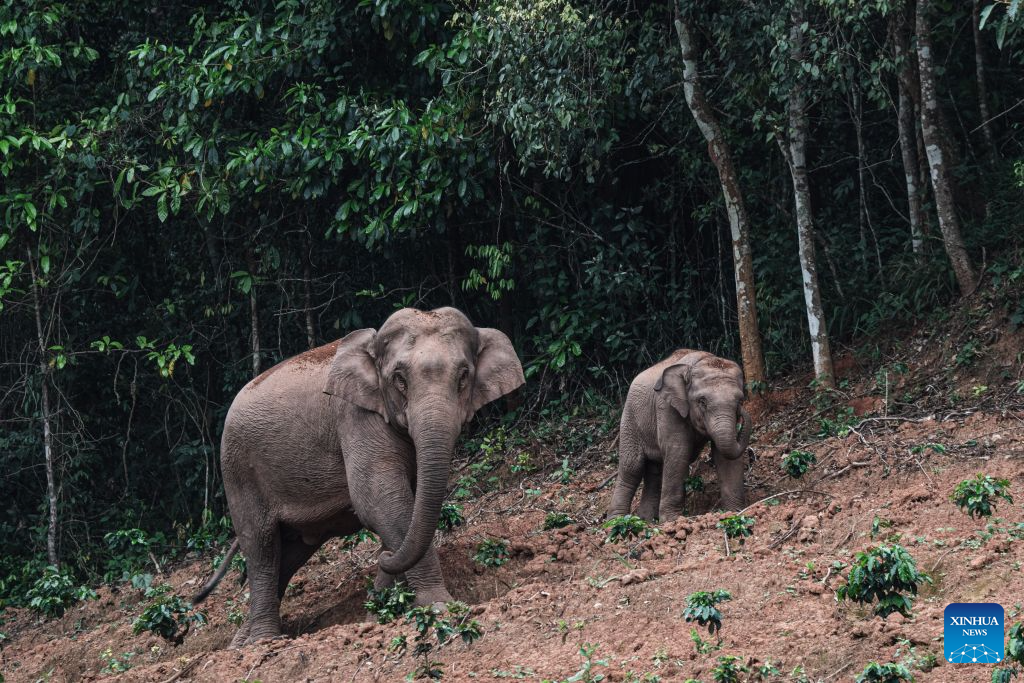
This photo taken on May 27, 2026 shows elephants in Dadugang Township of Jinghong City, Xishuangbanna Dai Autonomous Prefecture, southwest China's Yunnan Province. The "short-nose family" of wild Asian elephants captured worldwide attention in 2021 after roaming more than 1,400 kilometers across Yunnan Province. It returned to its traditional habitat with 14 members. Embracing two calves born this year, members of the family have since grown to 21.
Yunnan has developed a comprehensive approach to Asian elephant conservation that combines habitat restoration, connected habitats, scientific monitoring and early warning, community participation and cross-border cooperation. The province is also home to the Xishuangbanna Asian Elephant Breeding and Rescue Center, which has rescued and rehabilitated more than 30 wild Asian elephants since its establishment in 2009.
China has established 11 nature reserves covering a total of 5,098 square kilometers across wild Asian elephant habitats. The country's wild Asian elephant population has risen from about 150 in the 1980s to nearly 400 today. (Xinhua/Wang Guansen)
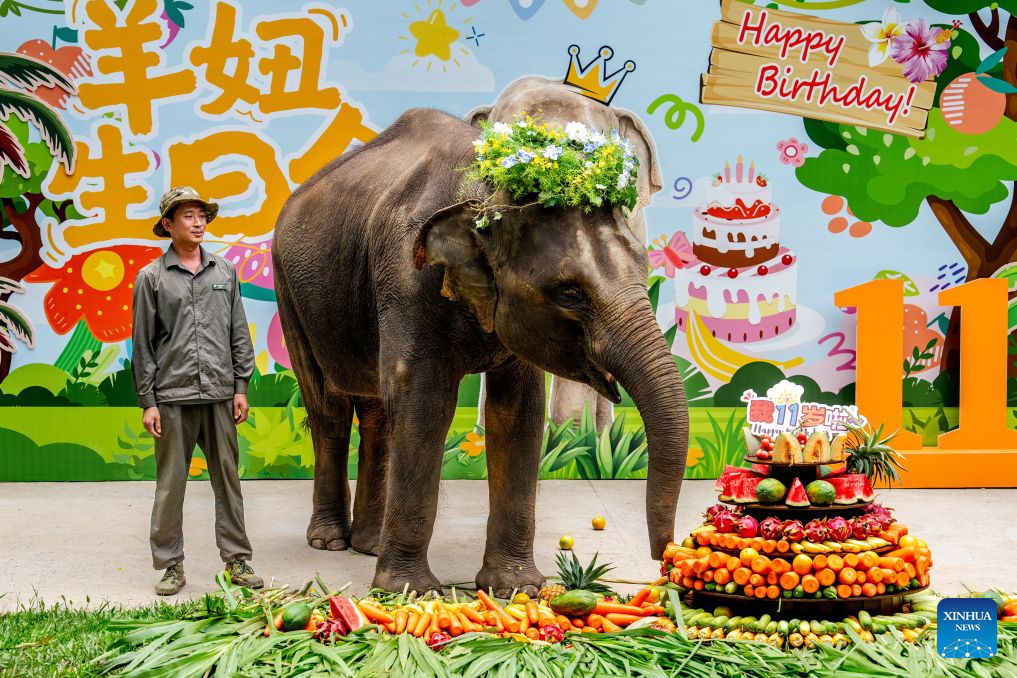
"Yangniu," a rescued Asian elephant, is seen at its birthday party at the Asian Elephant Breeding and Rescue Center in Xishuangbanna Dai Autonomous Prefecture, southwest China's Yunnan Province, Aug. 12, 2026. The "short-nose family" of wild Asian elephants captured worldwide attention in 2021 after roaming more than 1,400 kilometers across Yunnan Province. It returned to its traditional habitat with 14 members. Embracing two calves born this year, members of the family have since grown to 21.
Yunnan has developed a comprehensive approach to Asian elephant conservation that combines habitat restoration, connected habitats, scientific monitoring and early warning, community participation and cross-border cooperation. The province is also home to the Xishuangbanna Asian Elephant Breeding and Rescue Center, which has rescued and rehabilitated more than 30 wild Asian elephants since its establishment in 2009.
China has established 11 nature reserves covering a total of 5,098 square kilometers across wild Asian elephant habitats. The country's wild Asian elephant population has risen from about 150 in the 1980s to nearly 400 today. (Xinhua/Hu Chao)
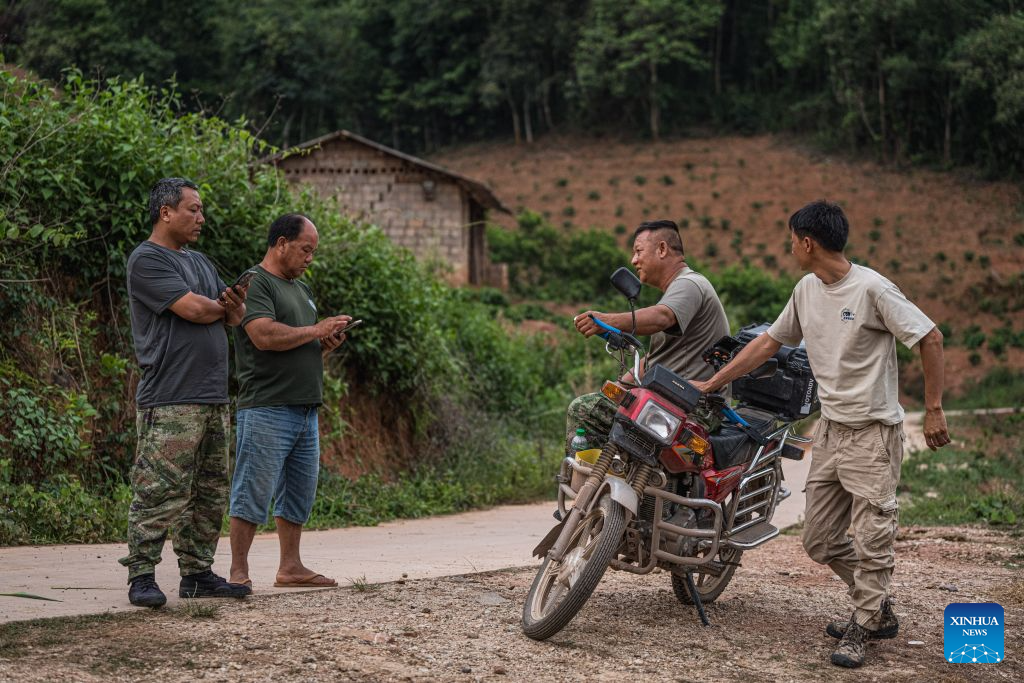
Peng Jinfu (1st L), an Asian elephant monitor, communicates with his colleagues in Jinghong City, Xishuangbanna Dai Autonomous Prefecture, southwest China's Yunnan Province, May 27, 2026. The "short-nose family" of wild Asian elephants captured worldwide attention in 2021 after roaming more than 1,400 kilometers across Yunnan Province. It returned to its traditional habitat with 14 members. Embracing two calves born this year, members of the family have since grown to 21.
Yunnan has developed a comprehensive approach to Asian elephant conservation that combines habitat restoration, connected habitats, scientific monitoring and early warning, community participation and cross-border cooperation. The province is also home to the Xishuangbanna Asian Elephant Breeding and Rescue Center, which has rescued and rehabilitated more than 30 wild Asian elephants since its establishment in 2009.
China has established 11 nature reserves covering a total of 5,098 square kilometers across wild Asian elephant habitats. The country's wild Asian elephant population has risen from about 150 in the 1980s to nearly 400 today. (Xinhua/Wang Guansen)