


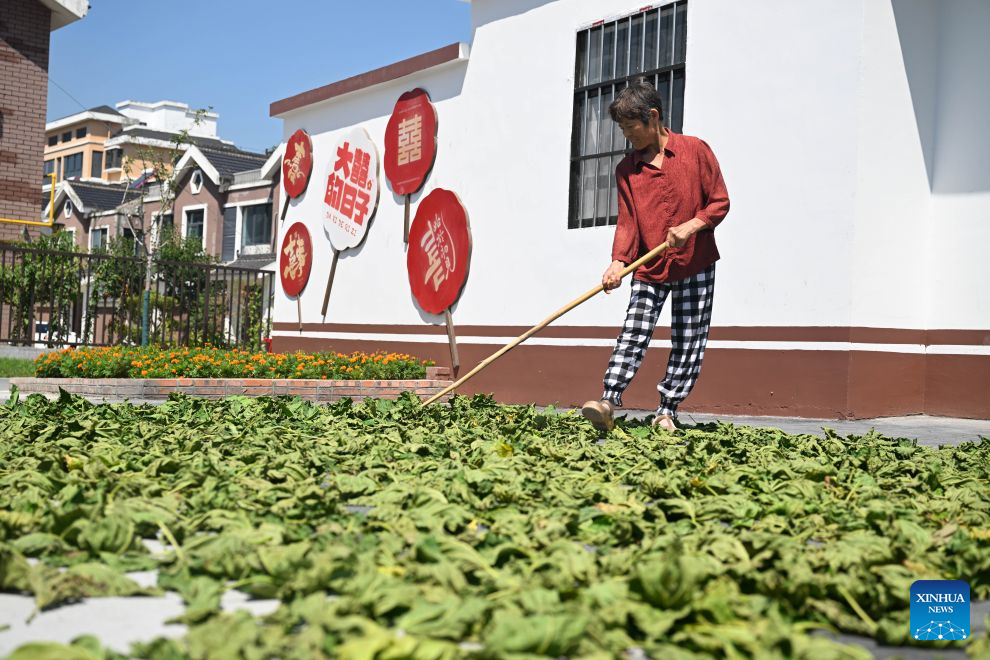
A villager dries mulberry leaves in front of her house in Cansang Village of Suqian City, east China's Jiangsu Province, Aug. 26, 2026. Cansang Village, with 2,600 mu (about 173 hectares) of mulberry plantations, has focused on the entire industrial chain of mulberry cultivation, silkworm breeding and related processing. By revitalizing idle resources, the village has developed mulberry plantation adoption, study tours and tourism featuring intangible cultural heritage, and also established four functional zones including agricultural area, sericulture-related production area, residential area, and business integration area. The industry has improved both the rural environment and the villagers' income. (Xinhua/Ji Chunpeng)
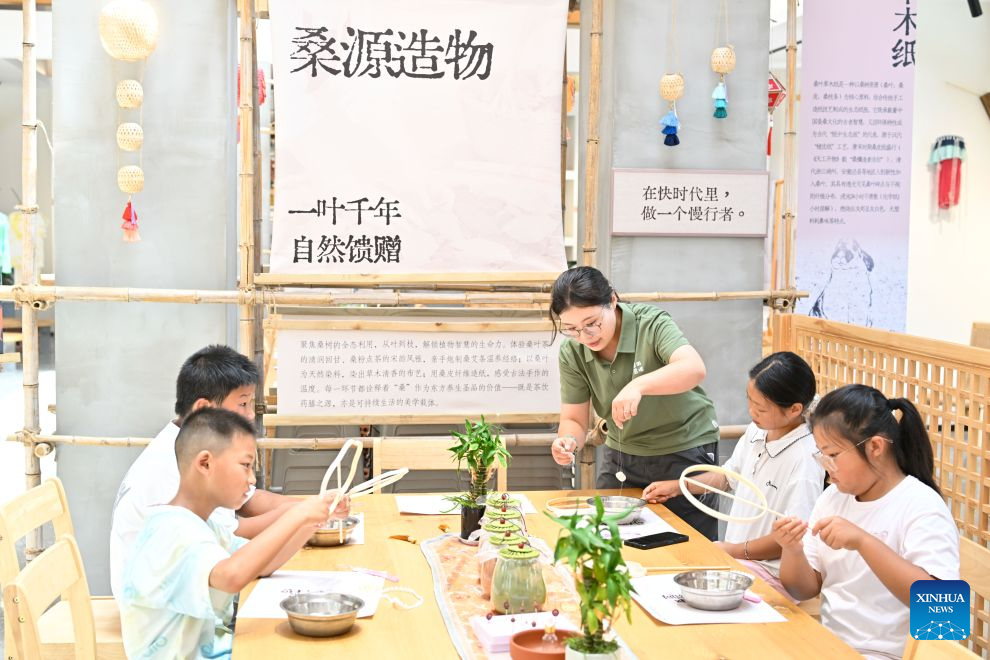
Children make silk fans under the guidance of a staff member at a study tour base in Cansang Village of Suqian City, east China's Jiangsu Province, Aug. 26, 2026. Cansang Village, with 2,600 mu (about 173 hectares) of mulberry plantations, has focused on the entire industrial chain of mulberry cultivation, silkworm breeding and related processing. By revitalizing idle resources, the village has developed mulberry plantation adoption, study tours and tourism featuring intangible cultural heritage, and also established four functional zones including agricultural area, sericulture-related production area, residential area, and business integration area. The industry has improved both the rural environment and the villagers' income. (Xinhua/Ji Chunpeng)
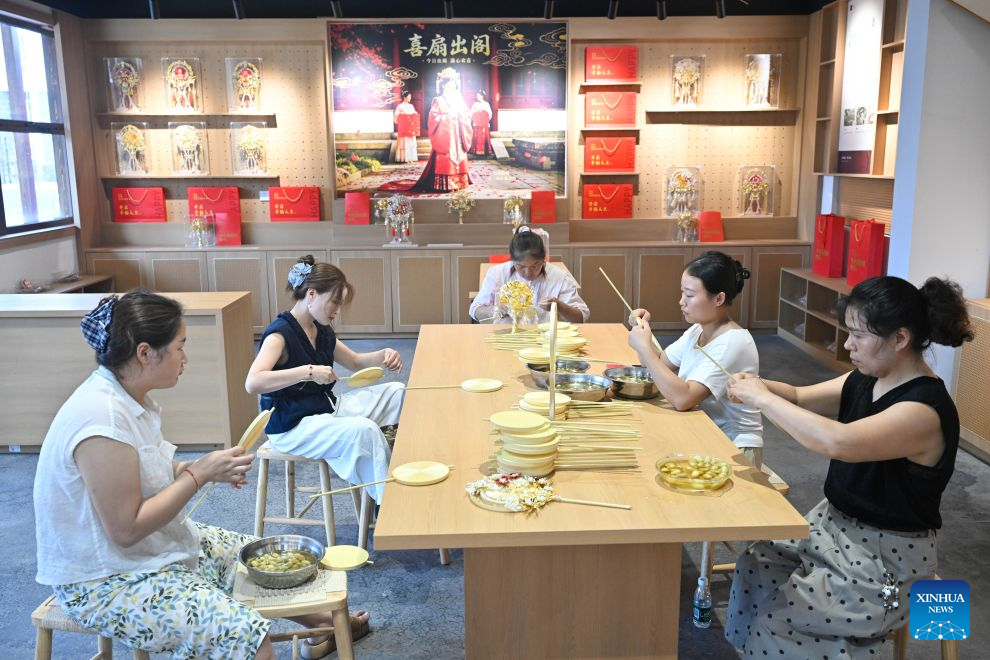
People make silk fans at a workshop in Cansang Village of Suqian City, east China's Jiangsu Province, Aug. 26, 2026. Cansang Village, with 2,600 mu (about 173 hectares) of mulberry plantations, has focused on the entire industrial chain of mulberry cultivation, silkworm breeding and related processing. By revitalizing idle resources, the village has developed mulberry plantation adoption, study tours and tourism featuring intangible cultural heritage, and also established four functional zones including agricultural area, sericulture-related production area, residential area, and business integration area. The industry has improved both the rural environment and the villagers' income. (Xinhua/Ji Chunpeng)
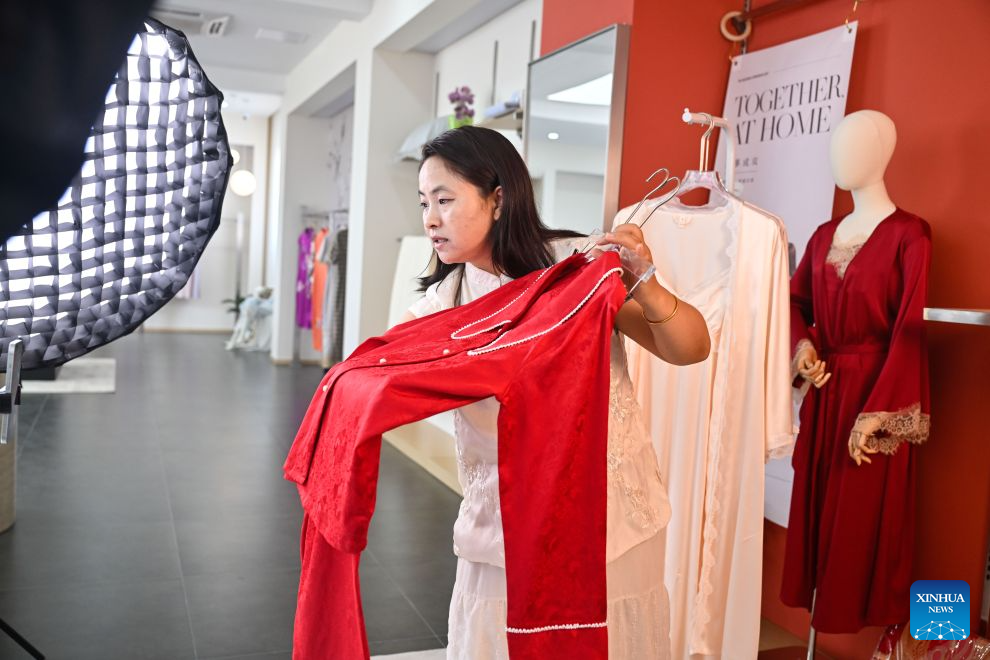
A staff member promotes silk garments via livestreaming at a showroom of a clothing factory in Cansang Village of Suqian City, east China's Jiangsu Province, Aug. 26, 2026. Cansang Village, with 2,600 mu (about 173 hectares) of mulberry plantations, has focused on the entire industrial chain of mulberry cultivation, silkworm breeding and related processing. By revitalizing idle resources, the village has developed mulberry plantation adoption, study tours and tourism featuring intangible cultural heritage, and also established four functional zones including agricultural area, sericulture-related production area, residential area, and business integration area. The industry has improved both the rural environment and the villagers' income. (Xinhua/Ji Chunpeng)
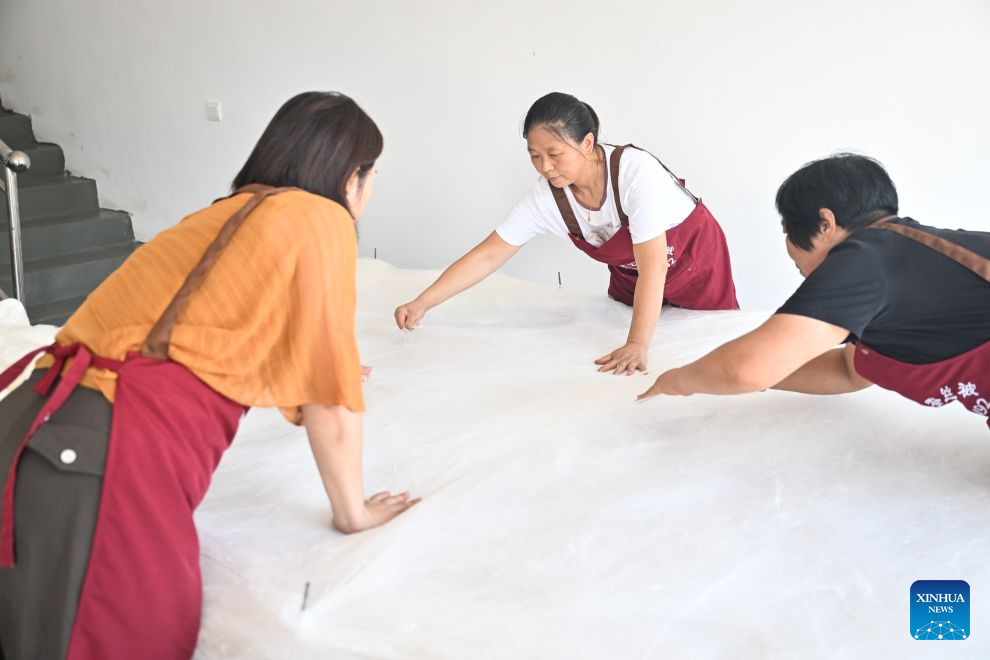
Villager Hu Dongjie (C) makes a silk quilt at her home in Cansang Village of Suqian City, east China's Jiangsu Province, Aug. 26, 2026. Cansang Village, with 2,600 mu (about 173 hectares) of mulberry plantations, has focused on the entire industrial chain of mulberry cultivation, silkworm breeding and related processing. By revitalizing idle resources, the village has developed mulberry plantation adoption, study tours and tourism featuring intangible cultural heritage, and also established four functional zones including agricultural area, sericulture-related production area, residential area, and business integration area. The industry has improved both the rural environment and the villagers' income. (Xinhua/Ji Chunpeng)
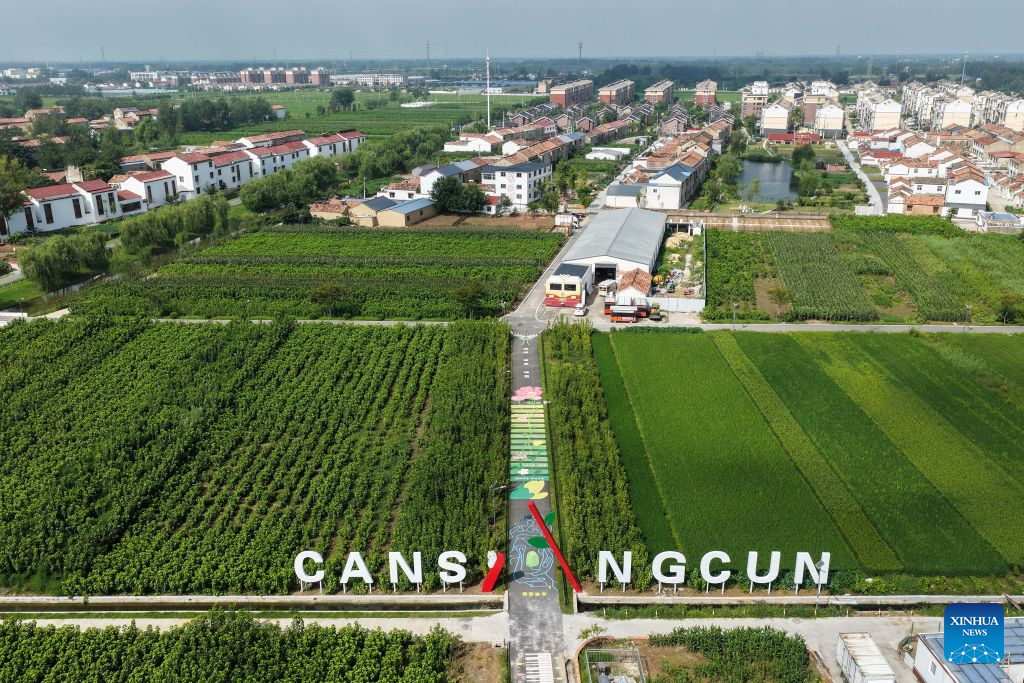
An aerial drone photo taken on Aug. 26, 2026 shows a view of Cansang Village in Suqian City, east China's Jiangsu Province. Cansang Village, with 2,600 mu (about 173 hectares) of mulberry plantations, has focused on the entire industrial chain of mulberry cultivation, silkworm breeding and related processing. By revitalizing idle resources, the village has developed mulberry plantation adoption, study tours and tourism featuring intangible cultural heritage, and also established four functional zones including agricultural area, sericulture-related production area, residential area, and business integration area. The industry has improved both the rural environment and the villagers' income. (Xinhua/Ji Chunpeng)
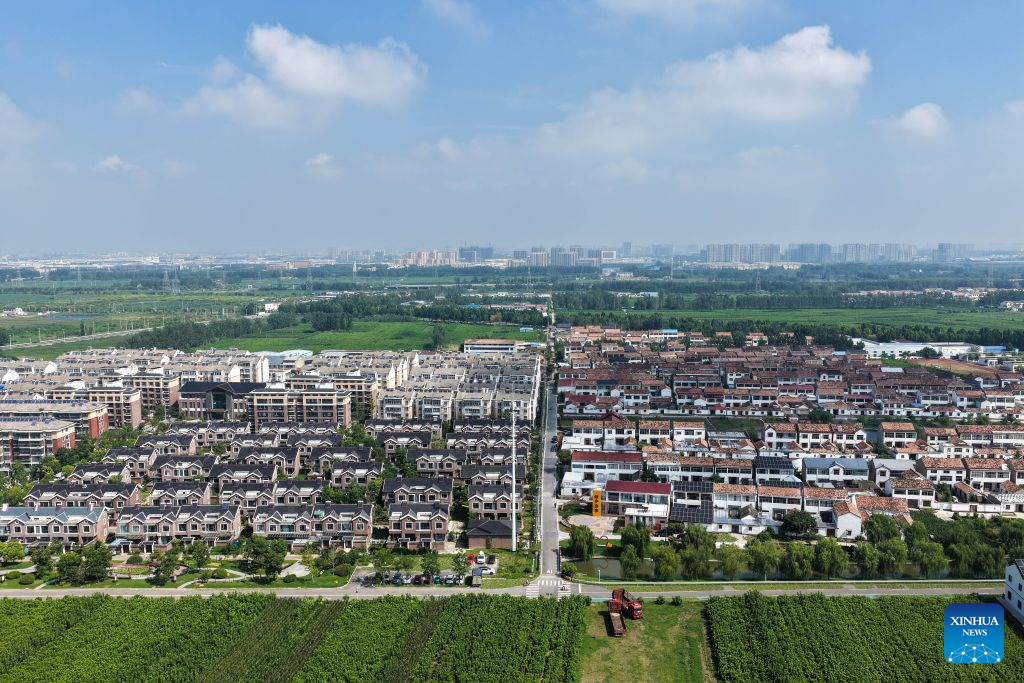
An aerial drone photo taken on Aug. 26, 2026 shows a view of Cansang Village in Suqian City, east China's Jiangsu Province. Cansang Village, with 2,600 mu (about 173 hectares) of mulberry plantations, has focused on the entire industrial chain of mulberry cultivation, silkworm breeding and related processing. By revitalizing idle resources, the village has developed mulberry plantation adoption, study tours and tourism featuring intangible cultural heritage, and also established four functional zones including agricultural area, sericulture-related production area, residential area, and business integration area. The industry has improved both the rural environment and the villagers' income. (Xinhua/Ji Chunpeng)
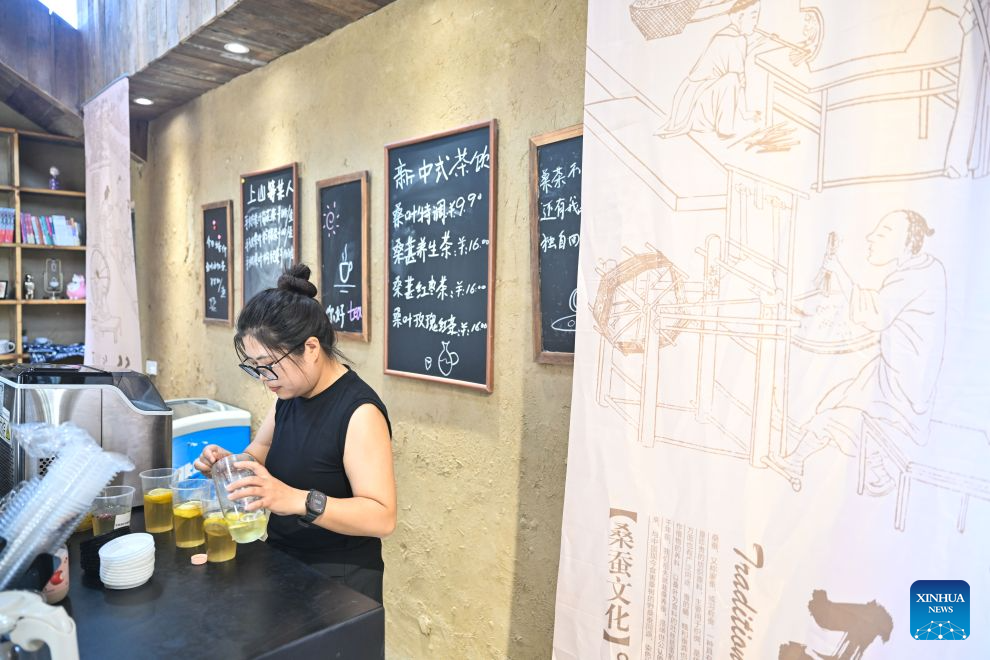
The owner of a tea house makes mulberry leaf lemon tea in Cansang Village of Suqian City, east China's Jiangsu Province, Aug. 26, 2026. Cansang Village, with 2,600 mu (about 173 hectares) of mulberry plantations, has focused on the entire industrial chain of mulberry cultivation, silkworm breeding and related processing. By revitalizing idle resources, the village has developed mulberry plantation adoption, study tours and tourism featuring intangible cultural heritage, and also established four functional zones including agricultural area, sericulture-related production area, residential area, and business integration area. The industry has improved both the rural environment and the villagers' income. (Xinhua/Ji Chunpeng)
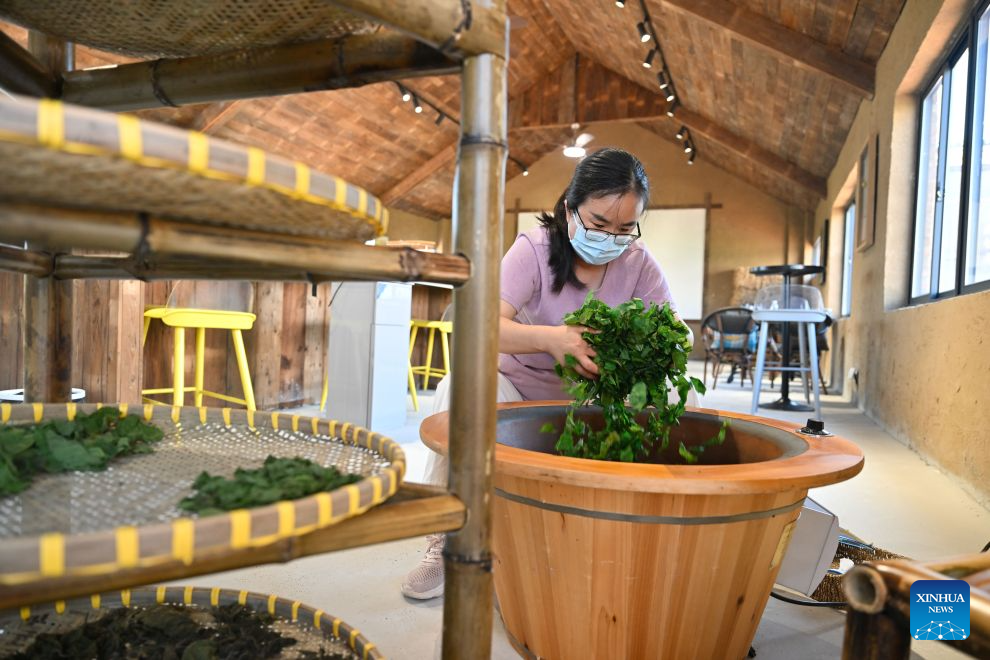
A woman processes mulberry leaf tea at a tea house in Cansang Village of Suqian City, east China's Jiangsu Province, Aug. 26, 2026. Cansang Village, with 2,600 mu (about 173 hectares) of mulberry plantations, has focused on the entire industrial chain of mulberry cultivation, silkworm breeding and related processing. By revitalizing idle resources, the village has developed mulberry plantation adoption, study tours and tourism featuring intangible cultural heritage, and also established four functional zones including agricultural area, sericulture-related production area, residential area, and business integration area. The industry has improved both the rural environment and the villagers' income. (Xinhua/Ji Chunpeng)
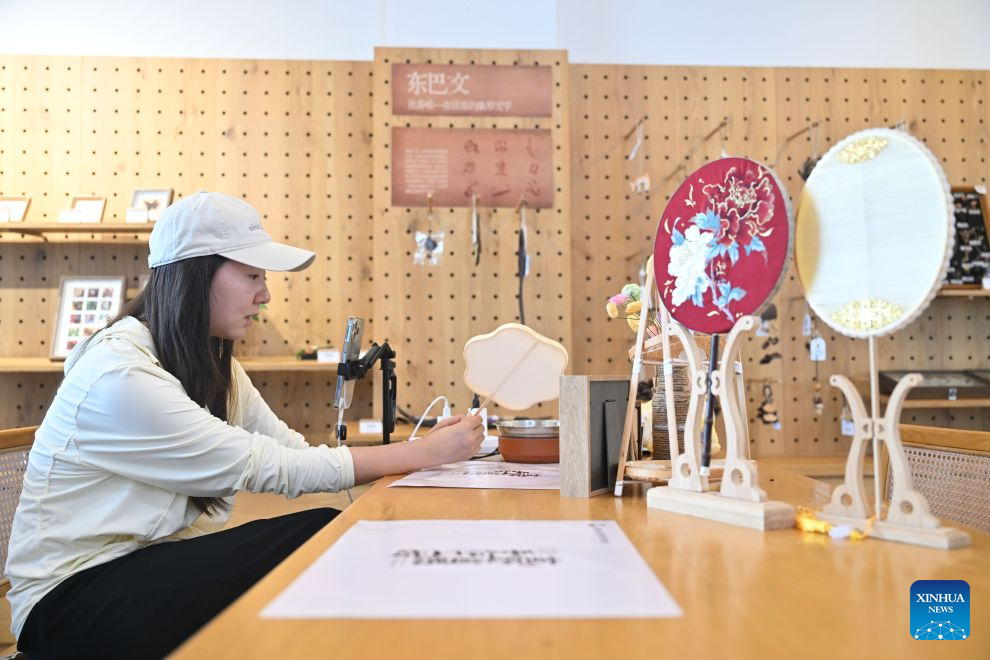
A staff member promotes silk fans via livestreaming at a study tour base in Cansang Village of Suqian City, east China's Jiangsu Province, Aug. 26, 2026. Cansang Village, with 2,600 mu (about 173 hectares) of mulberry plantations, has focused on the entire industrial chain of mulberry cultivation, silkworm breeding and related processing. By revitalizing idle resources, the village has developed mulberry plantation adoption, study tours and tourism featuring intangible cultural heritage, and also established four functional zones including agricultural area, sericulture-related production area, residential area, and business integration area. The industry has improved both the rural environment and the villagers' income. (Xinhua/Ji Chunpeng)
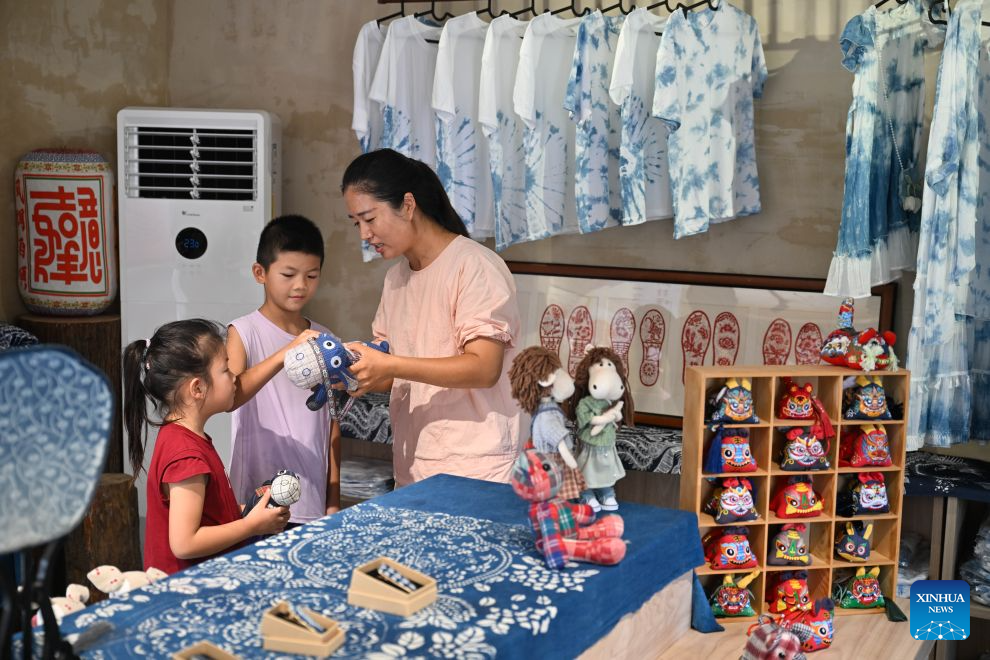
A staff member introduces a doll to children in Cansang Village of Suqian City, east China's Jiangsu Province, Aug. 26, 2026. Cansang Village, with 2,600 mu (about 173 hectares) of mulberry plantations, has focused on the entire industrial chain of mulberry cultivation, silkworm breeding and related processing. By revitalizing idle resources, the village has developed mulberry plantation adoption, study tours and tourism featuring intangible cultural heritage, and also established four functional zones including agricultural area, sericulture-related production area, residential area, and business integration area. The industry has improved both the rural environment and the villagers' income. (Xinhua/Ji Chunpeng)
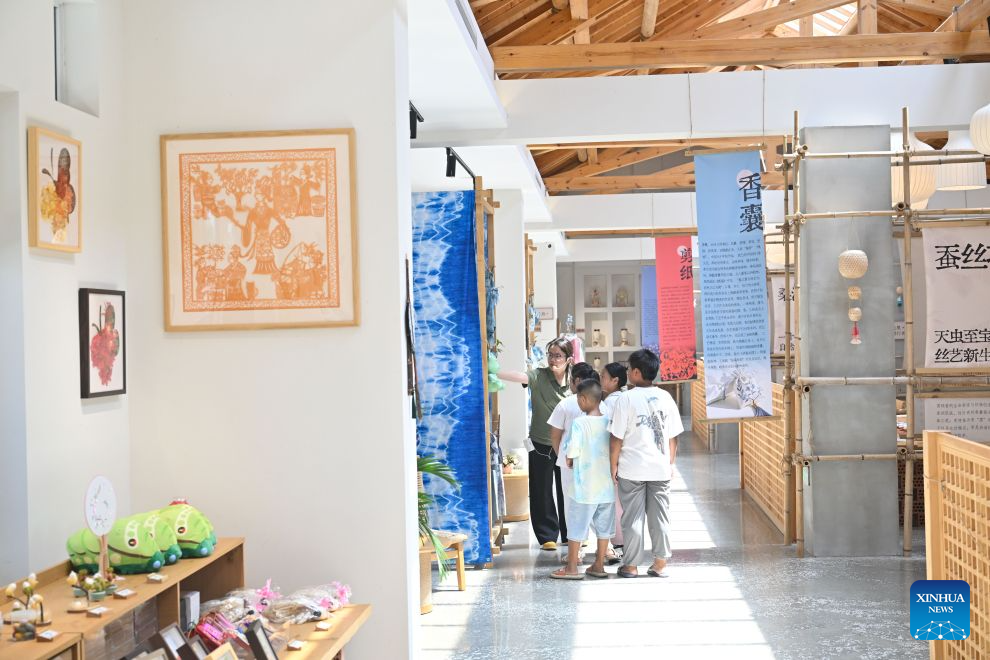
Children visit a study tour base in Cansang Village of Suqian City, east China's Jiangsu Province, Aug. 26, 2026. Cansang Village, with 2,600 mu (about 173 hectares) of mulberry plantations, has focused on the entire industrial chain of mulberry cultivation, silkworm breeding and related processing. By revitalizing idle resources, the village has developed mulberry plantation adoption, study tours and tourism featuring intangible cultural heritage, and also established four functional zones including agricultural area, sericulture-related production area, residential area, and business integration area. The industry has improved both the rural environment and the villagers' income. (Xinhua/Ji Chunpeng)
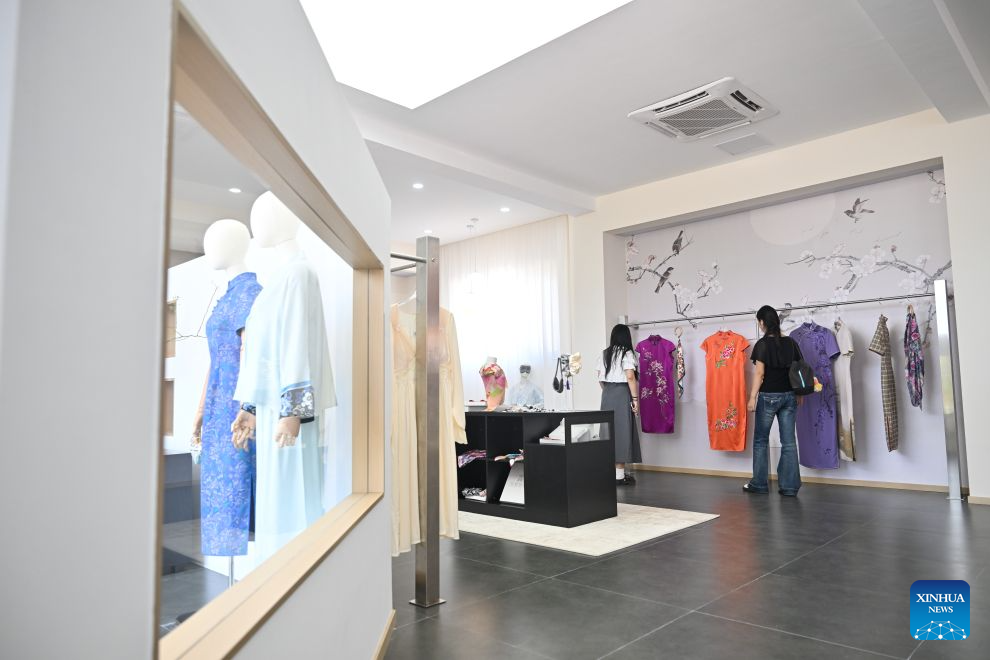
People look at silk garments at a showroom of a clothing factory in Cansang Village of Suqian City, east China's Jiangsu Province, Aug. 26, 2026. Cansang Village, with 2,600 mu (about 173 hectares) of mulberry plantations, has focused on the entire industrial chain of mulberry cultivation, silkworm breeding and related processing. By revitalizing idle resources, the village has developed mulberry plantation adoption, study tours and tourism featuring intangible cultural heritage, and also established four functional zones including agricultural area, sericulture-related production area, residential area, and business integration area. The industry has improved both the rural environment and the villagers' income. (Xinhua/Ji Chunpeng)
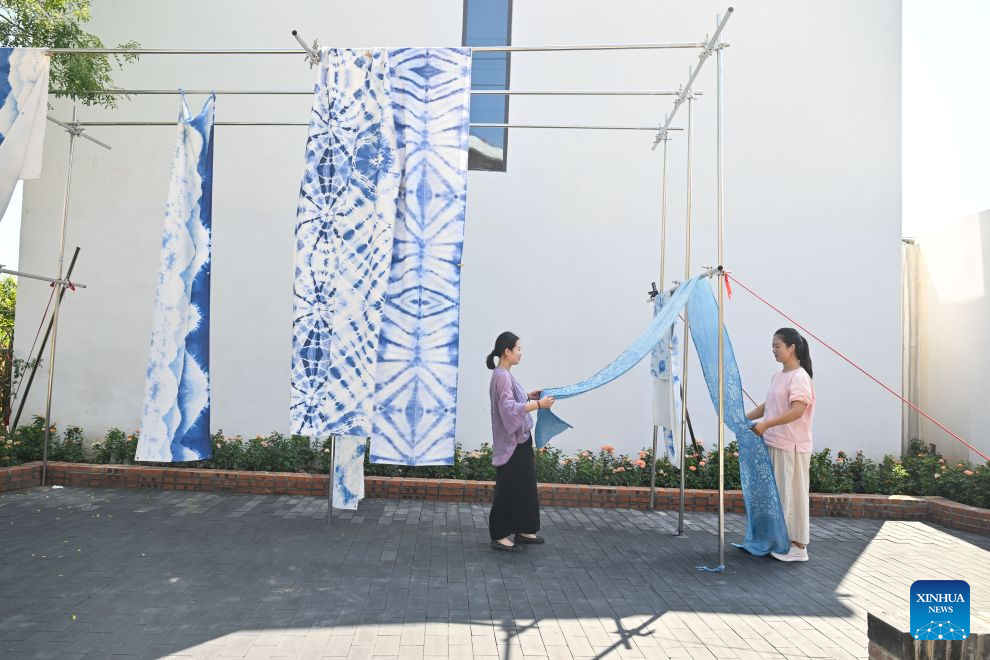
Staff members work with a piece of silk fabric in Cansang Village of Suqian City, east China's Jiangsu Province, Aug. 26, 2026. Cansang Village, with 2,600 mu (about 173 hectares) of mulberry plantations, has focused on the entire industrial chain of mulberry cultivation, silkworm breeding and related processing. By revitalizing idle resources, the village has developed mulberry plantation adoption, study tours and tourism featuring intangible cultural heritage, and also established four functional zones including agricultural area, sericulture-related production area, residential area, and business integration area. The industry has improved both the rural environment and the villagers' income. (Xinhua/Ji Chunpeng)