


For sports lovers around the world, the Olympic Games always ignite a huge buzz of excitement and unparalleled passion – not only due to their quadrennial rarity but also because of their power to make people of all ages and backgrounds connected and inspired.
It's almost that time again.
Here are a few things to watch when this year's biggest multi-sports event gets going in Paris between July 26 and August 11:
An opening ceremony beyond the stadium
Since the first modern Olympics in Athens, opening ceremonies have always been held in stadiums. However, Paris 2024 will do things differently.
For the first time in Olympic history, the opening ceremony won't take place in a primary athletics stadium. Instead, organizers plan to set the stage on the Seine River, which flows through the host city.
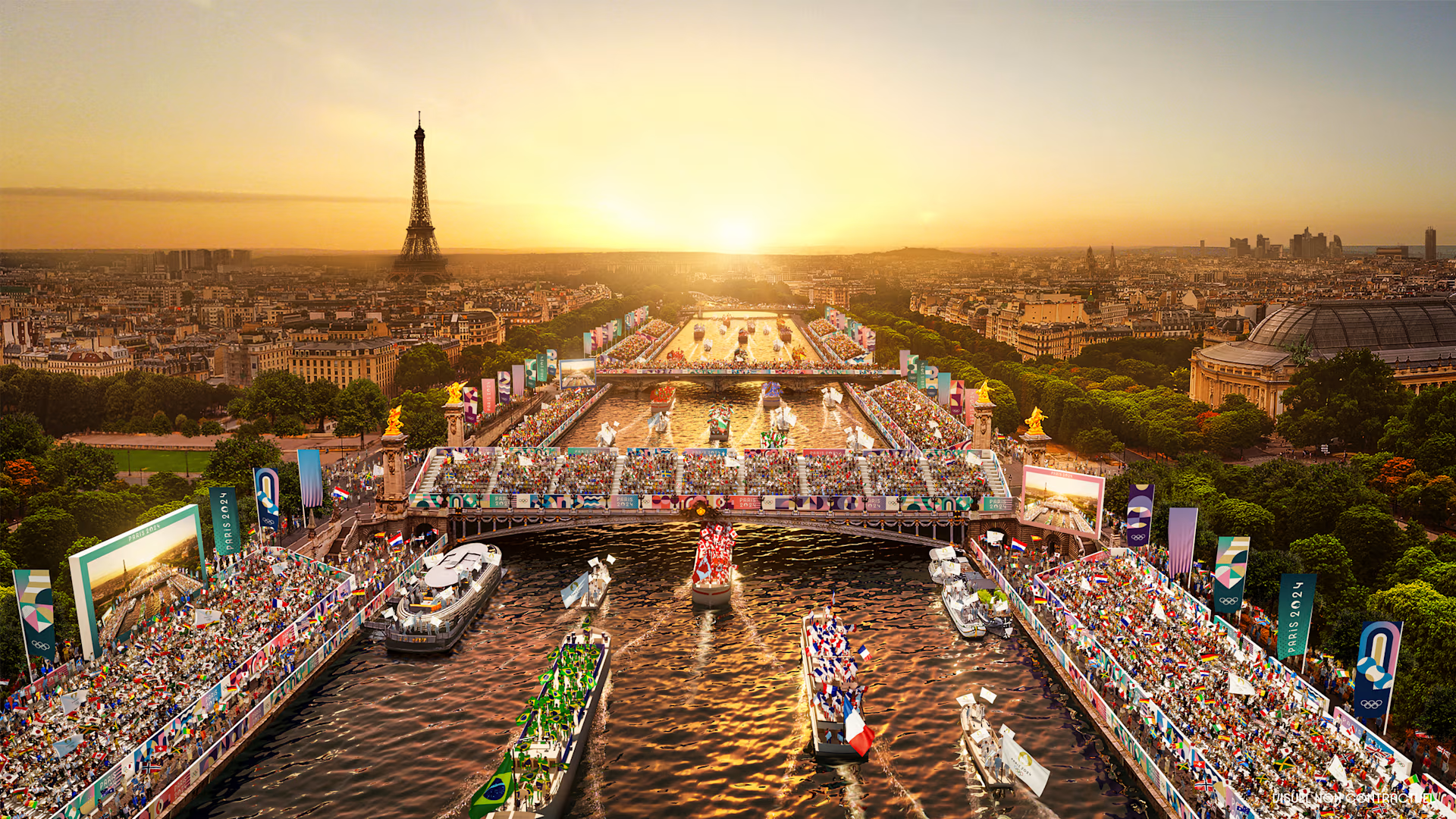
Photo: Paris 2024 Organizing Committee for the Olympic and Paralympic Games
The opening ceremony will feature dozens of boats carrying thousands of athletes and performers on a six-kilometer floating parade on the Seine in front of hundreds of thousands of spectators.
The parade will conclude its route in front of the Trocadero, where the remaining official protocol will occur. This includes lighting the Olympic cauldron and officially opening the Paris 2024 Summer Olympic Games.
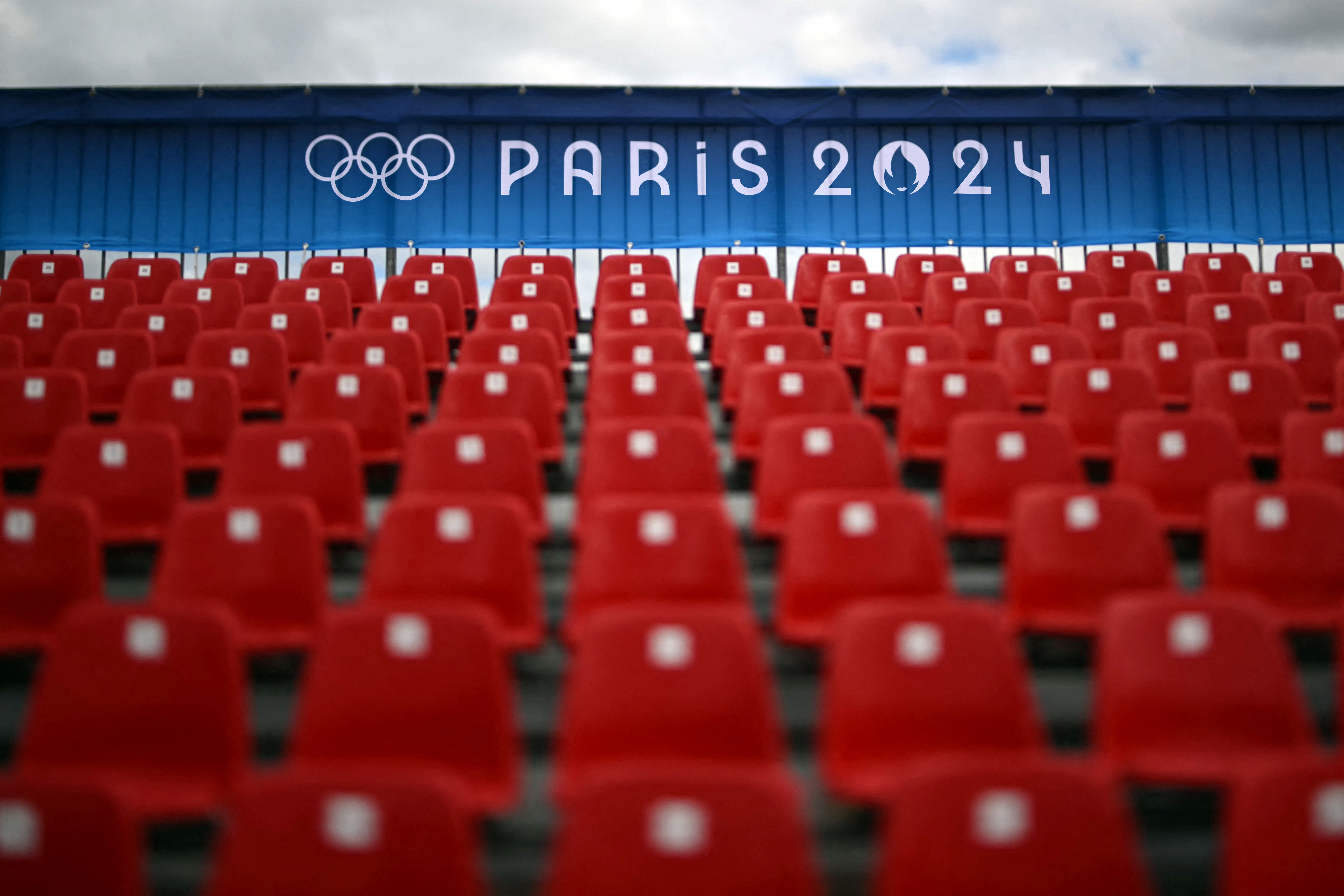
The Paris 2024 logo is seen on the stands from where spectators will watch the opening ceremony of the Paris 2024 Olympic Games, in Paris, on July 23, 2024. (Photo: AFP)
This outdoor concept will make the opening ceremony of Paris Games the largest in terms of audience and geographic coverage, enabling up to 500,000 people to watch the ceremony in person from stands, on the river banks and from the overlooking apartments.
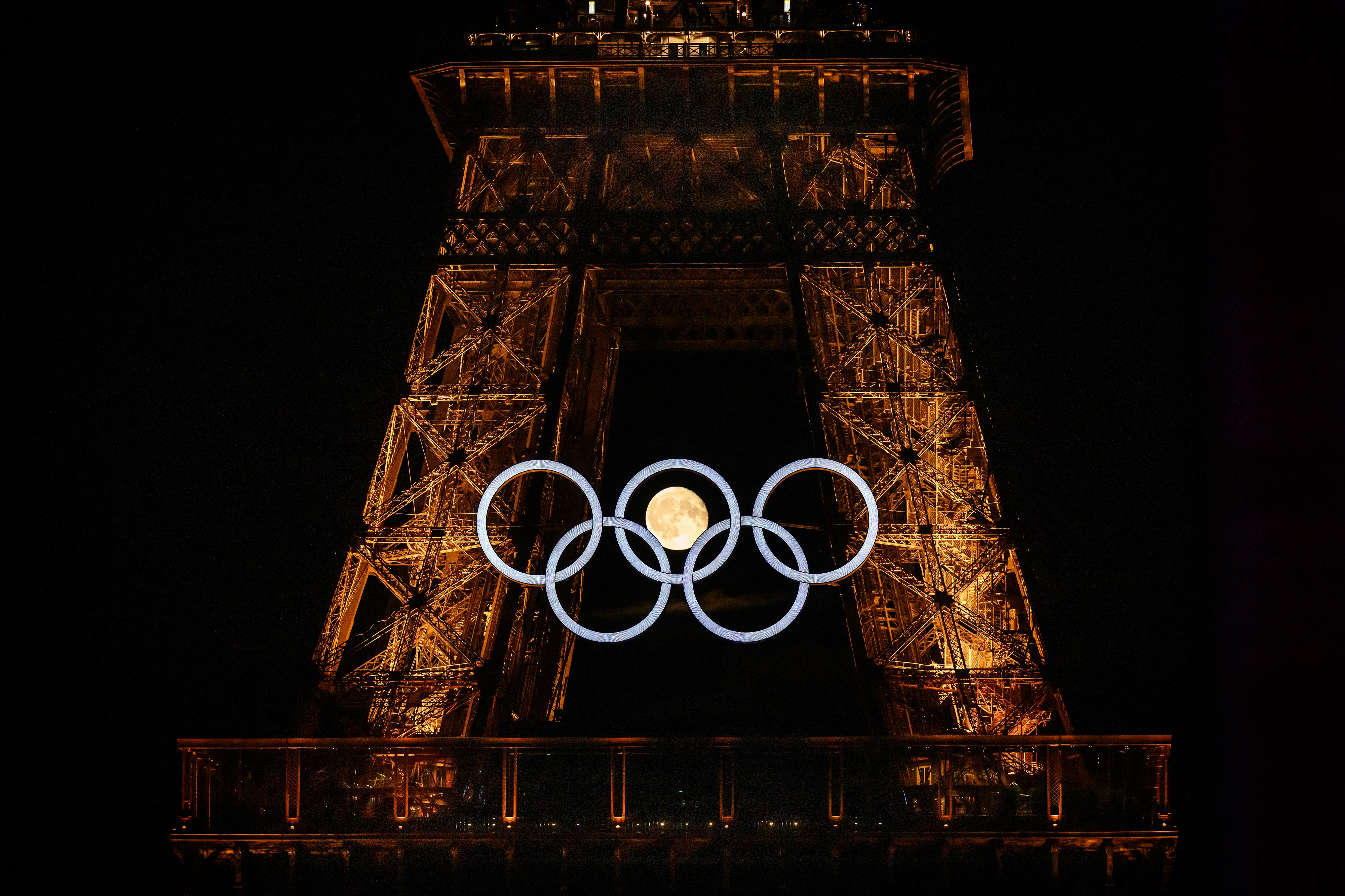
The moon rises behind the Olympic rings displayed on the Eiffel Tower in Paris on July 22, 2024, ahead of the Paris 2024 Olympic Games. (Photo: AFP)
Organizers have promised to deliver a show like no other, one that will be daring and joyful.
Fusion of sports, fashion and urban landmarks
The 2024 Olympic Games will also break tradition by locating competition venues near world-famous landmarks. When Olympic activity explodes across Paris, the city will resemble a giant playground with historical sites that provide a remarkable backdrop.
From the Palace of Versailles to the Place de La Concorde to the Invalides and, of course, the iconic Eiffel Tower, organizers have ensured that the host city's most famous landmarks will take center stage during the Olympics.
That means there will be athletes running against a backdrop of Versailles, beach volleyballers jumping, serving and spiking balls at the foot of the Eiffel Tower, elite archers shooting arrows at the Esplanade des Invalides, and world-class swimmers in the Seine reviving an old-school urban tradition banned since 1923, provided water quality meets standards.
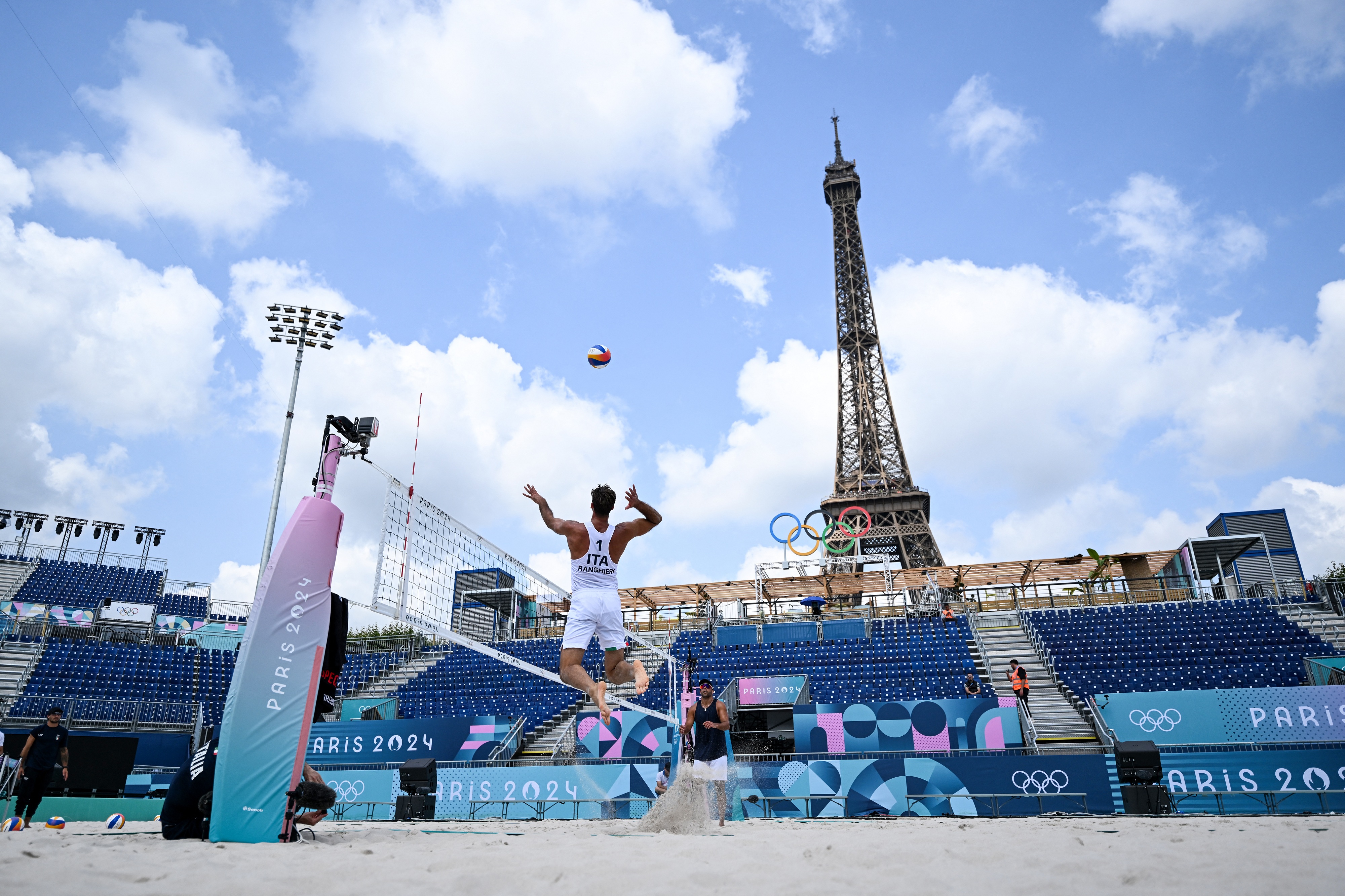
Italy's beach volleyballer Alex Ranghieri practices at Eiffel Tower Stadium in Paris, on July 24, 2024, ahead of the Paris 2024 Olympic Games. (Photo: AFP)
Existing sports infrastructure, including the Roland Garros tennis stadium and Stade de France, the national football stadium, will also be used during the Games.
Paris also adds French flair to the Olympics with striking colors and fashion design. For example, the athletics tracks of the Stade de France will be made purple, a color choice reminiscent of lavender, in a departure from traditional red-brick clay color or blue.
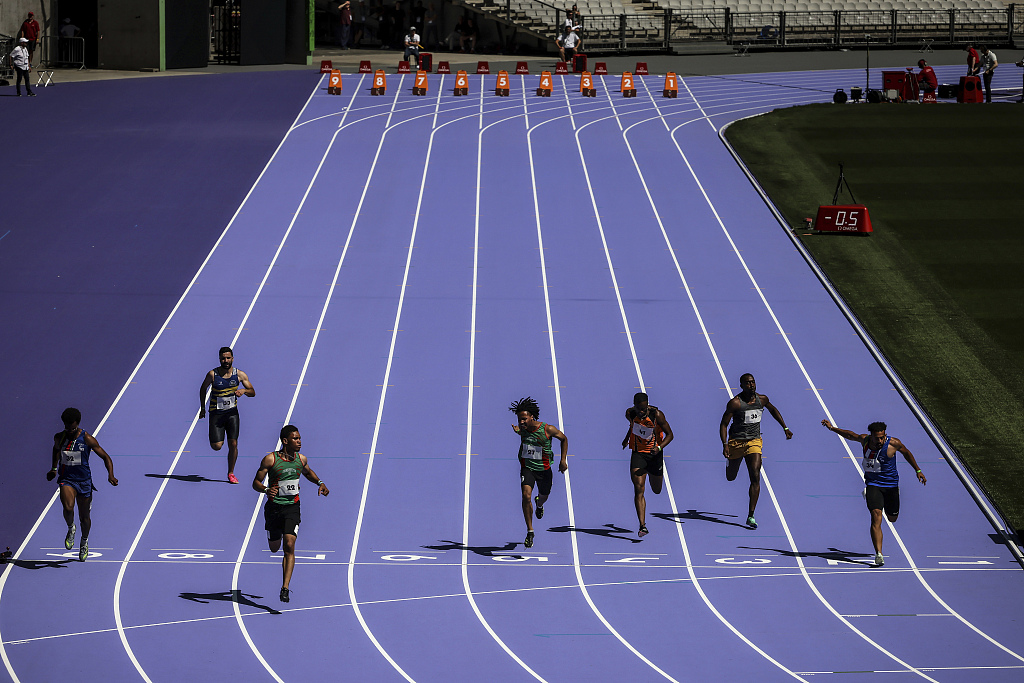
Sprinters run in an operational athletics test at the Stade de France in Paris, France, June 25, 2024. (Photo: CFP)
The medals of the Paris Olympics are noteworthy and deserve attention. Notably, each medal is adorned with original iron from the Eiffel Tower. The designers aim to involve every athlete in a quest to capture the essence of the Games' identity, symbolizing the connection between the iconic monument of Paris and even France as a whole with the prestigious medal.
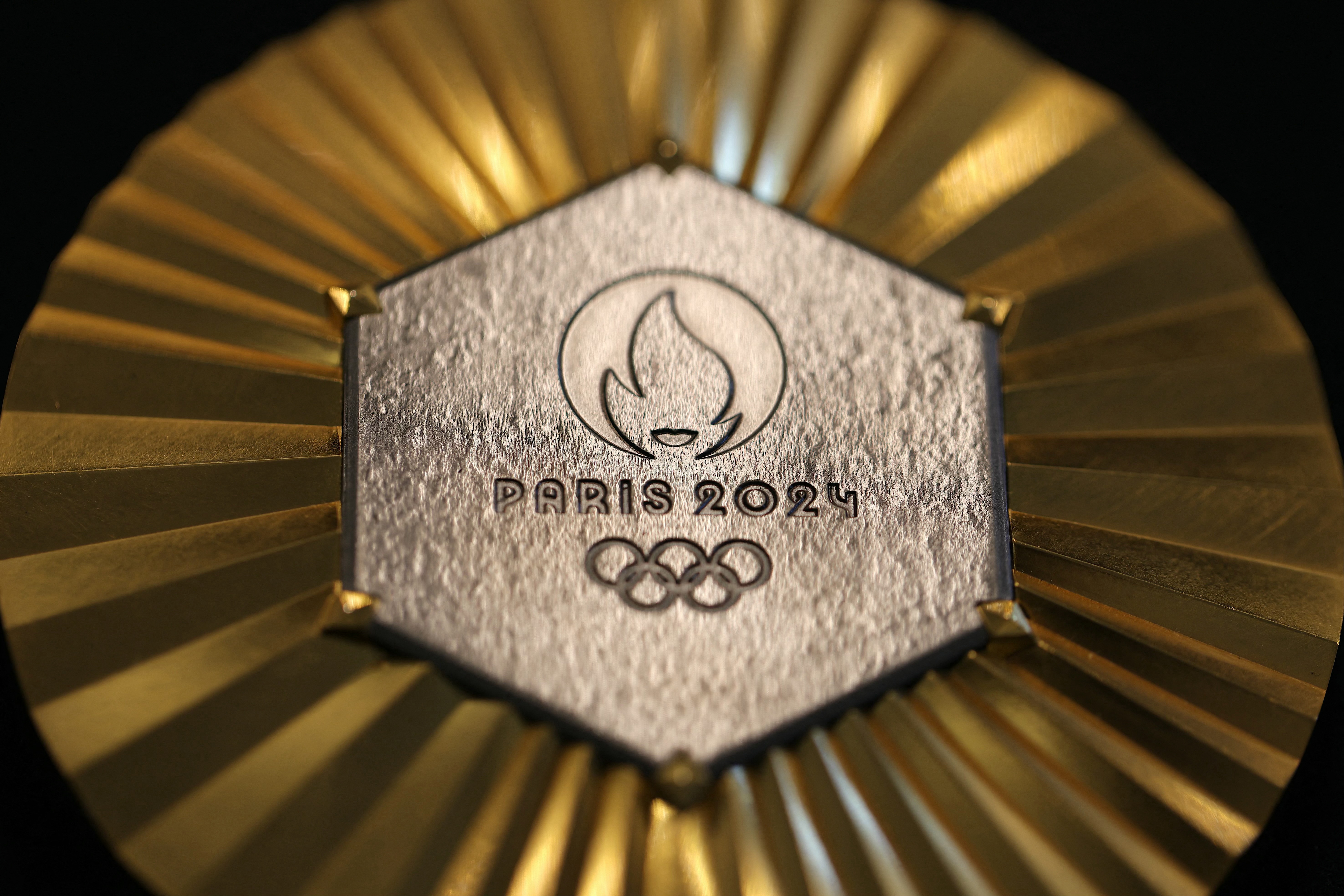
This photograph taken on January 30, 2024 in Paris shows the upcoming Paris 2024 Olympics gold medal designed by French luxury jewellery house Chaumet. (Photo: AFP)
Hosted in the city known as "the capital of fashion," the 2024 Games has also set a stage where local luxury and fashion brands are hoping to triumph. Inspired by the Olympic spirit, they hope to harness the huge international reach of the Olympics on home turf.
Full gender parity
When you look closely at the logo of Paris 2024, what do you see?
Marianne: The iconic image of the French woman chosen to be the first feminine face of the Olympic and Paralympic Games may be part of the organizers' broader initiatives to enhance women's roles and opportunities in sports.
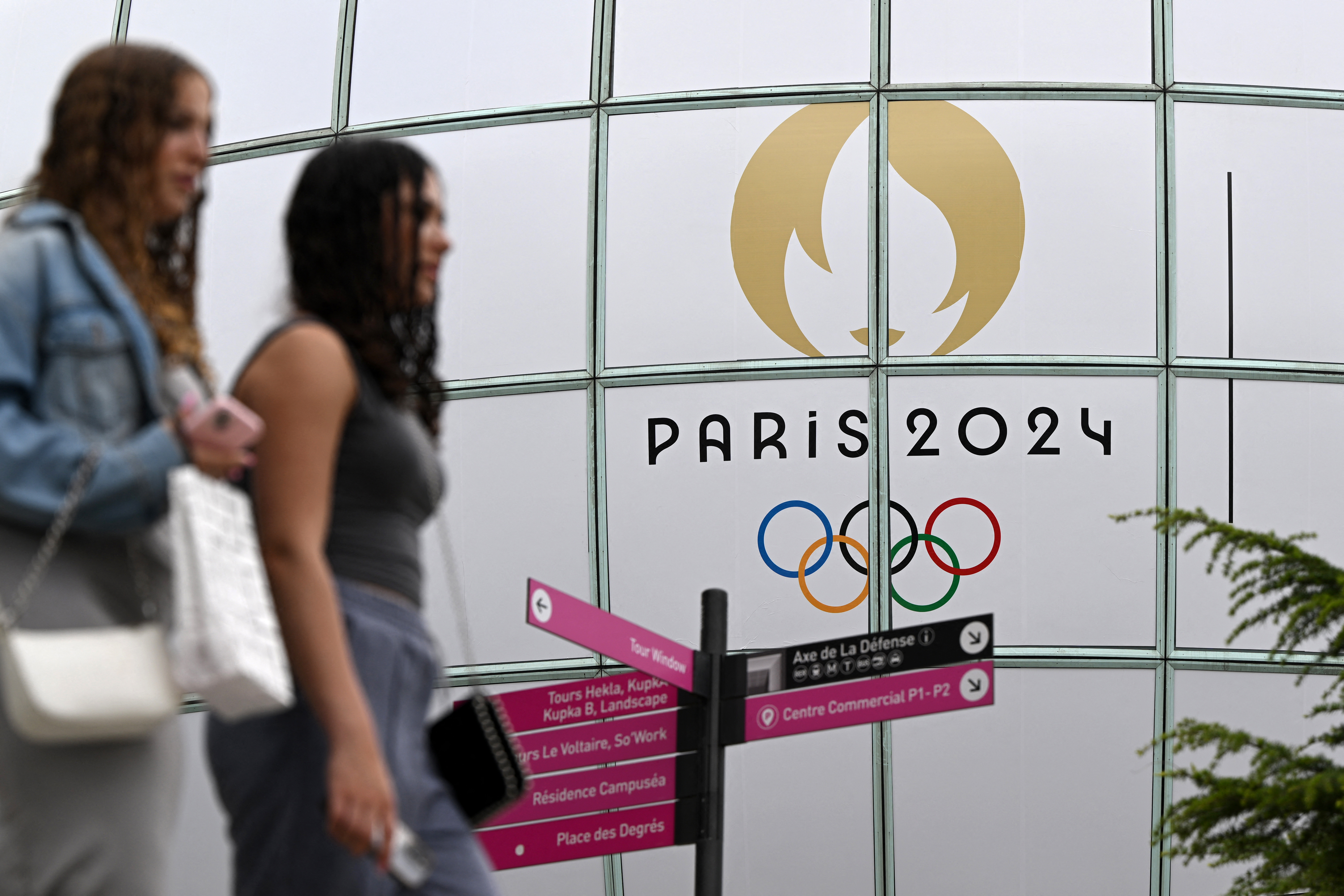
People walk past the logo of Paris 2024 Olympic Games at the La Defense business district, west of Paris on July 22, 2024, ahead of the Paris 2024 Olympic Games. (Photo: AFP)
The percentage of female participants at the Olympic Games has steadily increased over the years. Starting at just 2.2 percent during the inaugural participation of women in the Paris 1900 Games, the number has gradually risen. This increase accelerated significantly, reaching 22.9 percent at Los Angeles 1984, 42.4 percent at Beijing 2008, and 47.8 percent at Tokyo 2020.
At Paris 2024, female athletes will have as many places as male athletes in the world's largest sporting event.
Source: International Olympic Committee
This 50:50 allocation means the upcoming Paris 2024 will be the first Olympics ever to achieve numerical gender parity – equal representation for both women and men – on the field of play.
With 28 out of 32 sports fully gender-equal, Paris 2024 offers a more gender-balanced competition schedule, including 152 women's events, 157 men's and 20 mixed-gender events. As a result, more than half of all the medal events at Paris 2024 will be open to female athletes, a significant step towards achieving gender parity and equal opportunities for women in the Olympic Games.
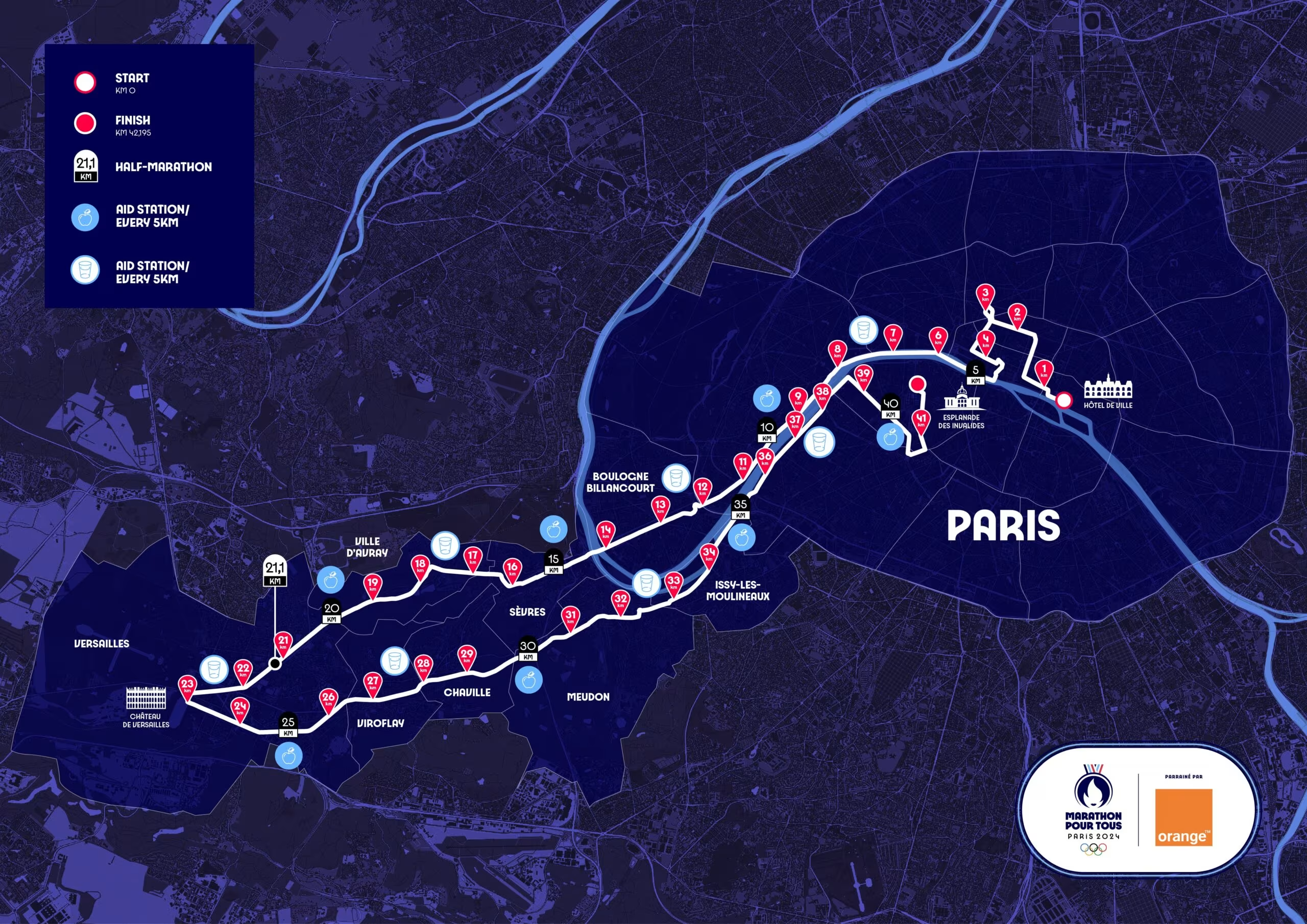
The route for the 42.195km version of the Mass Participation Marathon will be the same as the Olympic marathon. (Photo: Paris 2024 Organizing Committee for the Olympic and Paralympic Games)
During the Olympics, Paris will host a mass participation marathon event. The organizers aim to give as many people as possible the opportunity to experience the essence of the Games by following in the footsteps of the Olympic athletes on the Olympic marathon route. This intention is reflected in the "Games Wide Open" slogan of Paris 2024, emphasizing inclusivity and inviting individuals from diverse backgrounds to participate in the Olympic adventure.
A century of Olympic legacy
The Summer Olympic Games were previously held in Paris in 1900 and 1924. Exactly a century later, they are returning to the hometown of Pierre de Coubertin, the founder of the modern Olympic Games.
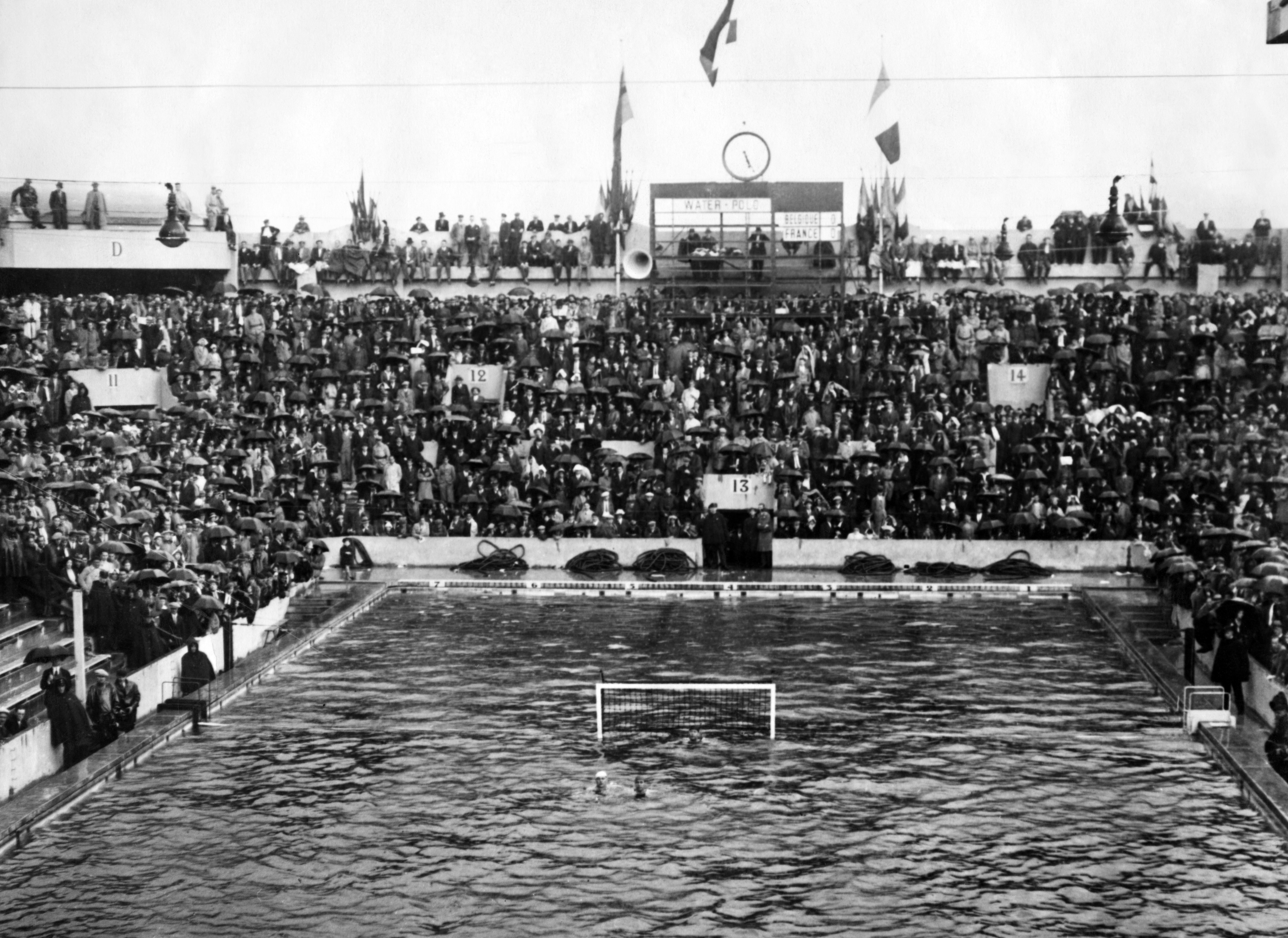
Photo taken on July 17, 1924 shows the water polo tournament between France and Belgium during the 1924 Summer Olympics at the Piscine des Tourelles in Paris. (Photo: AFP)
The 1924 Games shaped Paris and the course of Olympic history and initiated many Olympic traditions and innovations that still stand today.
Among the most significant firsts was the introduction of an Olympic Village, a concept that has since evolved into an athlete-centric housing model used in all subsequent Games.
Its modern-day successor, the Paris 2024 Olympic Village, is set to revolutionize athlete accommodation once again. The village's construction reflects the organizers' ambition of halving the Games' carbon footprint compared with the average for London 2012 and Rio 2016. Solutions for low-carbon construction include cooling floors, green spaces and geothermal energy.
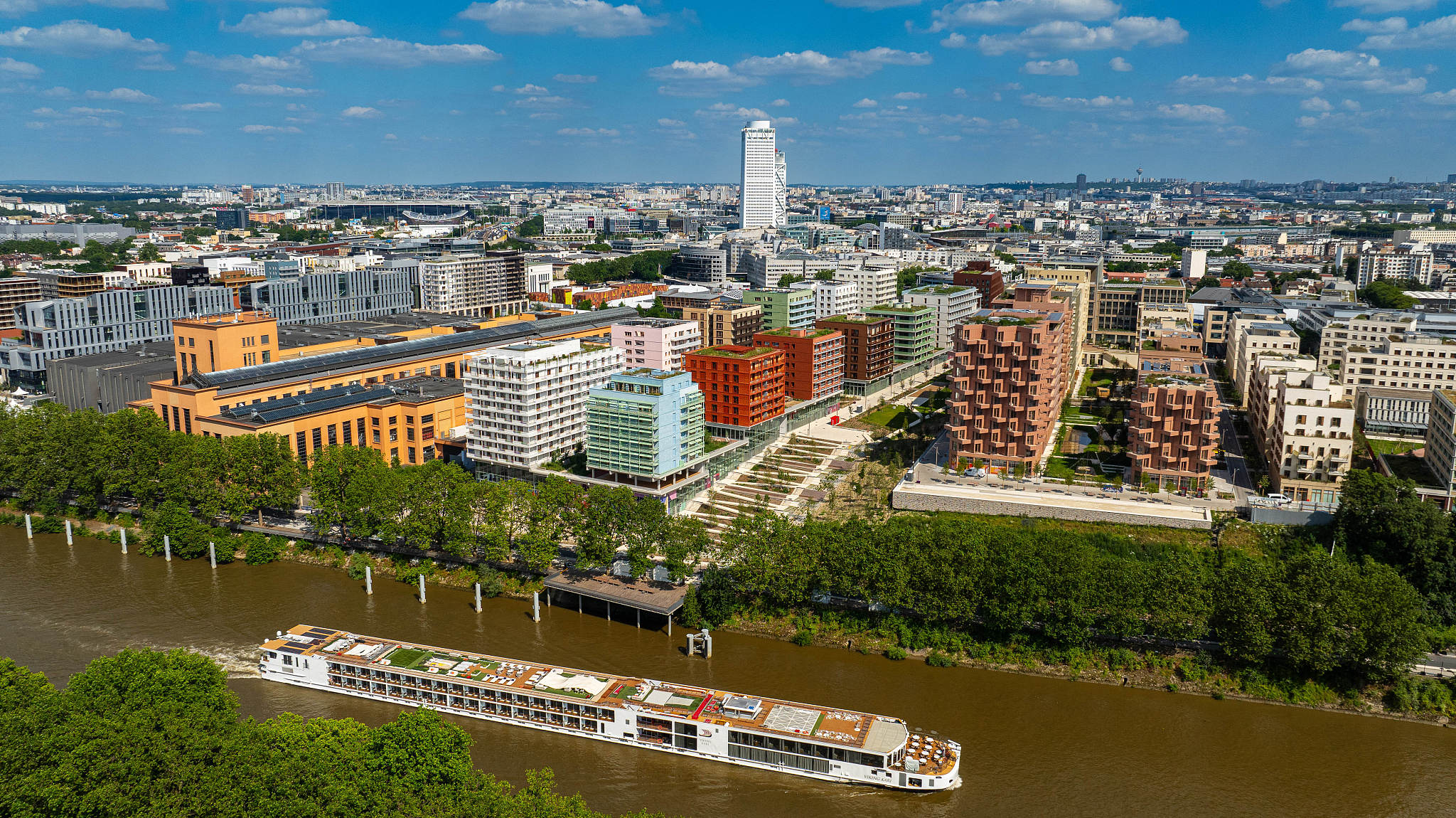
An aerial view of the Olympic Village of the 2024 Summer Games in Paris, France. (Photo: CFP)
Besides offering state-of-the-art housing for athletes during the Games, the village will be one of the main physical legacies after the Games. By 2025, it will be transformed into a sustainable city district with housing, offices and shops, where almost 12,000 people will live and work.
The 1924 Games also introduced the flag protocol during the closing ceremony. The practice involves the ceremonial lowering of the Olympic flag, signifying the end of the Games and the passing of the Olympic spirit to the next host city.
In preparation for the 1924 Games, Paris also undertook significant urban development projects. The refurbishment of three railway lines and the construction of the Gare du Stade station significantly enhanced the city's infrastructure. These improvements facilitated the Games and provided long-term benefits for city's transport network.
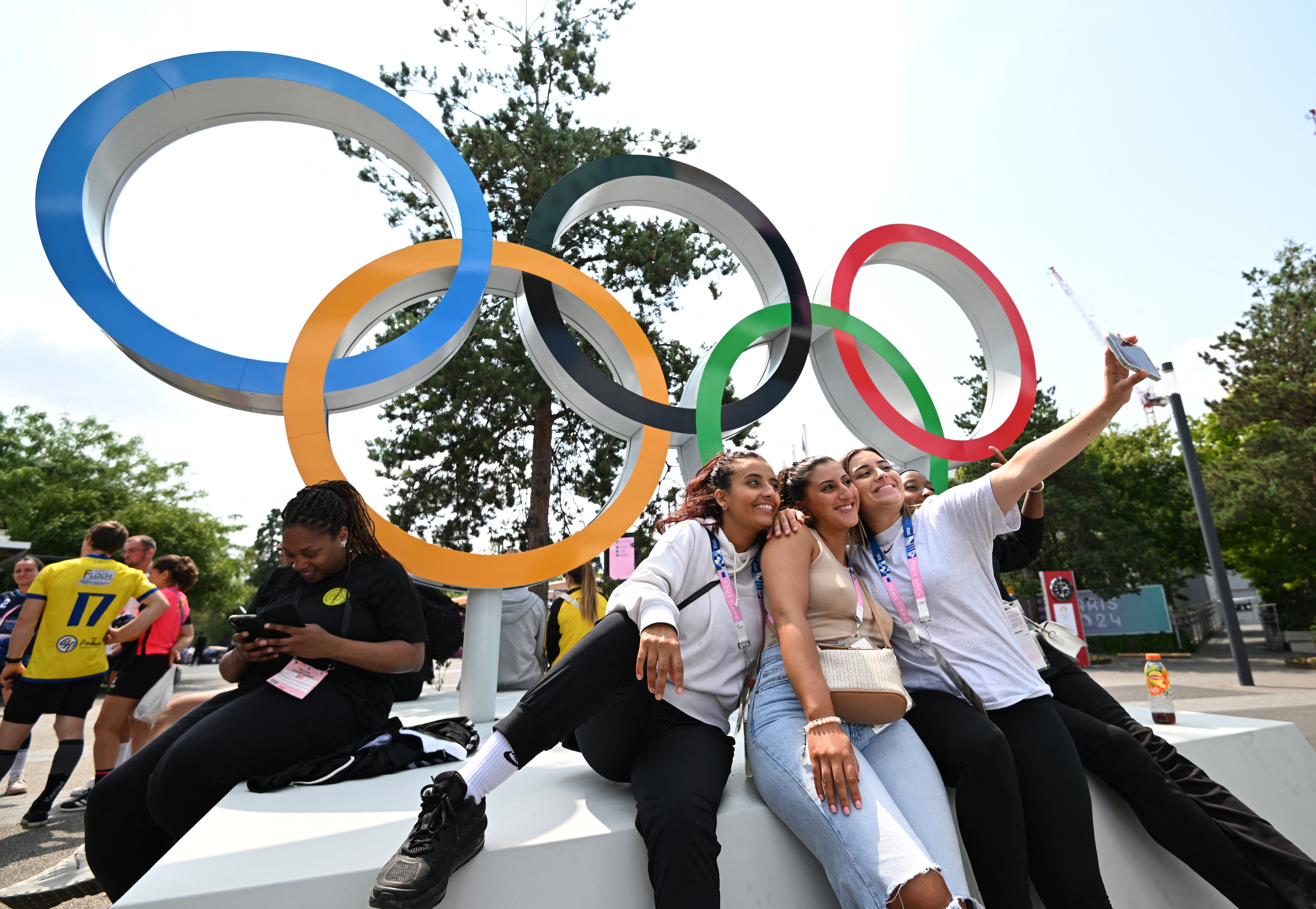
Visitors take a selfie in front of the Olympic rings outside the South Paris Arena in Paris on July 24, 2024, ahead of the Paris 2024 Olympic Games. (Photo: AFP)
Paris 2024 has placed legacy and sustainability at the core of its project, aligning with Olympic Agenda 2020, the strategic road map for the future of the Olympic Movement. Consequently, it is intriguing to contemplate the lasting impact that the 2024 Games can have. However, it may take several years to assess this legacy's extent fully.
(With inputs from International Olympic Committee and Paris 2024)