


Across China, a form of "spatial alchemy" is transforming overlooked and underutilized urban areas into vibrant sports facilities. This phenomenon ranges from the sound of rackets echoing within office buildings, to former coal depots repurposed as sports venues, and abandoned mining pits equipped with smart running trails.
These innovative approaches to urban development, which maximize limited resources and directly address public demand, offer valuable lessons.
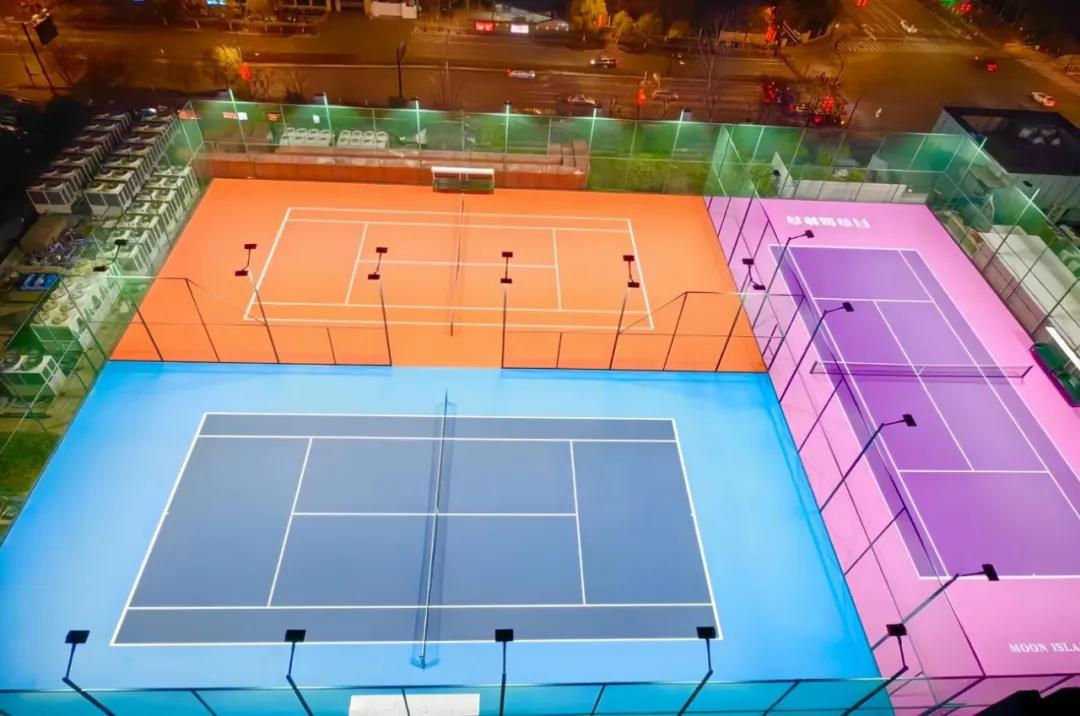
Photo shows tennis courts on the rooftop of the Jinjiang Times Building in Hangzhou, east China's Zhejiang province. (Photo: People's Daily/Dou Hanyang)
Hangzhou, Zhejiang: Multifunctional Sports Venue on an Office Rooftop
At lunchtime, Hangzhou office worker Lu Jian slung his racket over his shoulder and headed straight for the Jinjiang Times Building. Taking an elevator to the fifth floor, he arrived at a bustling multifunctional sports venue.
The space features one dry curling court, three tennis courts, and two pickleball courts, all featuring anti-slip flooring.
The Jinjiang Times Building is located in Wangjiang, an area largely composed of resettlement communities. Previously, inadequate supporting facilities meant residents and workers in the neighborhood had very limited access to professional sports venues.
By mobilizing social resources and implementing a public-private partnership model, the local authorities enabled a company to lease and renovate the building's fifth floor. An investment of 5 million yuan (approximately $717,731) transformed the space into a professional sports facility.
Such transformations are becoming increasingly common in Wangjiang. Space beneath an overpass has been converted into a sports park, while the rooftop of a residential community's underground garage now features badminton courts and table tennis tables.
In recent years, the neighborhood has consistently worked to activate urban sports spaces, establishing 10-minute fitness accessibility and steadily improving residents' fitness experience.
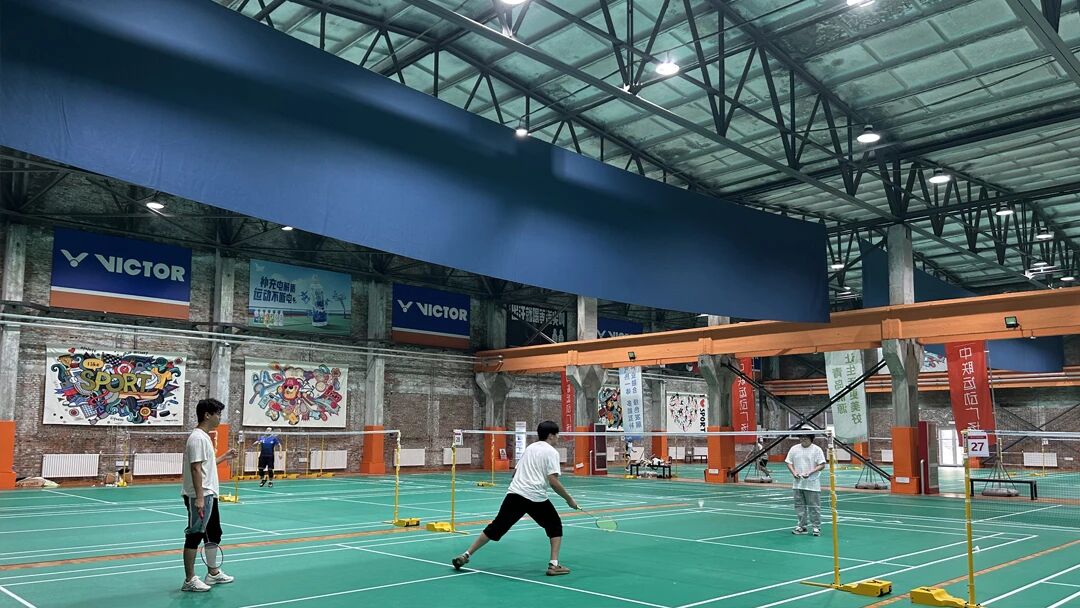
Citizens play badminton at the Zhonglian LOHAS Park in Shibei district of Qingdao, east China's Shandong province. (Photo provided by Zhonglian Jianye Group)
Qingdao, Shandong: An Idle Coal Depot Reborn as a Sports, Culture and Commerce Hub
Stepping into the Zhonglian LOHAS Park in Shibei district of Qingdao, one is greeted by a lively scene.
"The facilities are new and the atmosphere is great. Breaking a sweat here really refreshes both body and mind," said Zhou Miao, 40, who works nearby and plays badminton with colleagues in the park almost every day.
This 11,000-square-meter park was once a coal storage yard for Qingdao Energy. As the city advanced its "coal-to-gas" initiative, the yard fell idle.
Urban renewal efforts changed its fate. In 2023, Qingdao Energy partnered with Zhonglian Jianye Group, entrusting them to renovate and operate the site.
"We surveyed the area and spotted a huge gap between the large demand of residents for cultural and sports activities and the lack of sports facilities," said Zhou Hua, chairman of Zhonglian Jianye Group. The renovation transformed the coal depot into a two-story, open-style complex integrating culture, sports, and commerce.
In November 2023, the Zhonglian LOHAS Park was put into operation. It houses nearly 30 multifunctional sports fields and gathers over 20 commercial brands.
With booking rates exceeding 80 percent for its badminton, basketball, table tennis, and billiards facilities, the complex now receives over 1 million visits per year. What was once an industrial rust belt has been successfully turned into a trendy sports space that attracts more than 2,500 visitors per day.
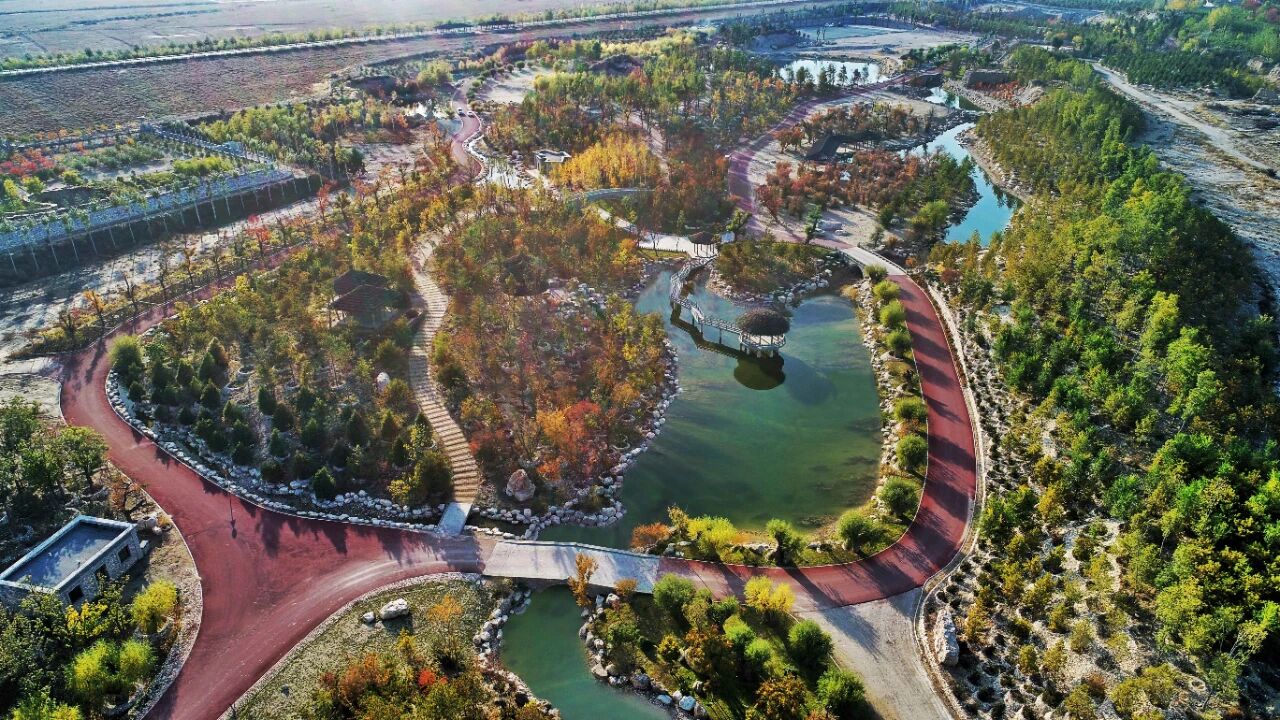
Photo shows the Helan Mountains Sports and Leisure Park in Yinchuan, northwest China's Ningxia Hui autonomous region. (Photo/Gu Feiyang)
Yinchuan, Ningxia: An Abandoned Mining Pit Transformed into a Sports Park
Viewed from above, the Helan Mountains Sports and Leisure Park in Yinchuan, Ningxia Hui autonomous region, looks like a gem set within landscaped grounds, where lakes, waterfalls and pavilions blend seamlessly with running tracks, basketball courts and other fitness facilities.
Spanning 80 hectares, the park was, a decade ago, a subsidence pit left by sand and gravel mining. "I used to come here as a child. Back then there wasn't a single tree -- just howling winds," recalled Jia Jincai, publicity manager of Chateau Zhihui Yuanshi Co., Ltd.
In 2016, the company undertook the pit's ecological restoration. "Planting trees in a gravel pit was extremely difficult. Water was scarce, and newly planted trees often died," Jia said. "But we persevered." They developed a science-based approach: first planting drought-resistant shelterbelts to stabilize the soil and conserve moisture; then, as conditions improved, introducing diverse landscape species. Today, over 100 tree types thrive.
"With the ecology restored, we made use of the pit's original terrain to build a modern sports park integrating ecological protection, fitness and leisure," Jia explained.
In 2023, the park also completed a smart fitness trail, equipped with one event command and control center and nine full-scenario intelligent data collection points.
"Last year, we hosted a half-marathon where more than 60 percent of runners were from outside the region," Jia said. Many participants also visited the vineyard, creating a virtuous cycle in which sporting events boost tourism and tourism supports local industries. "The park restored the ecology, provided public exercise space, and generated economic benefits -- a true triple win."