


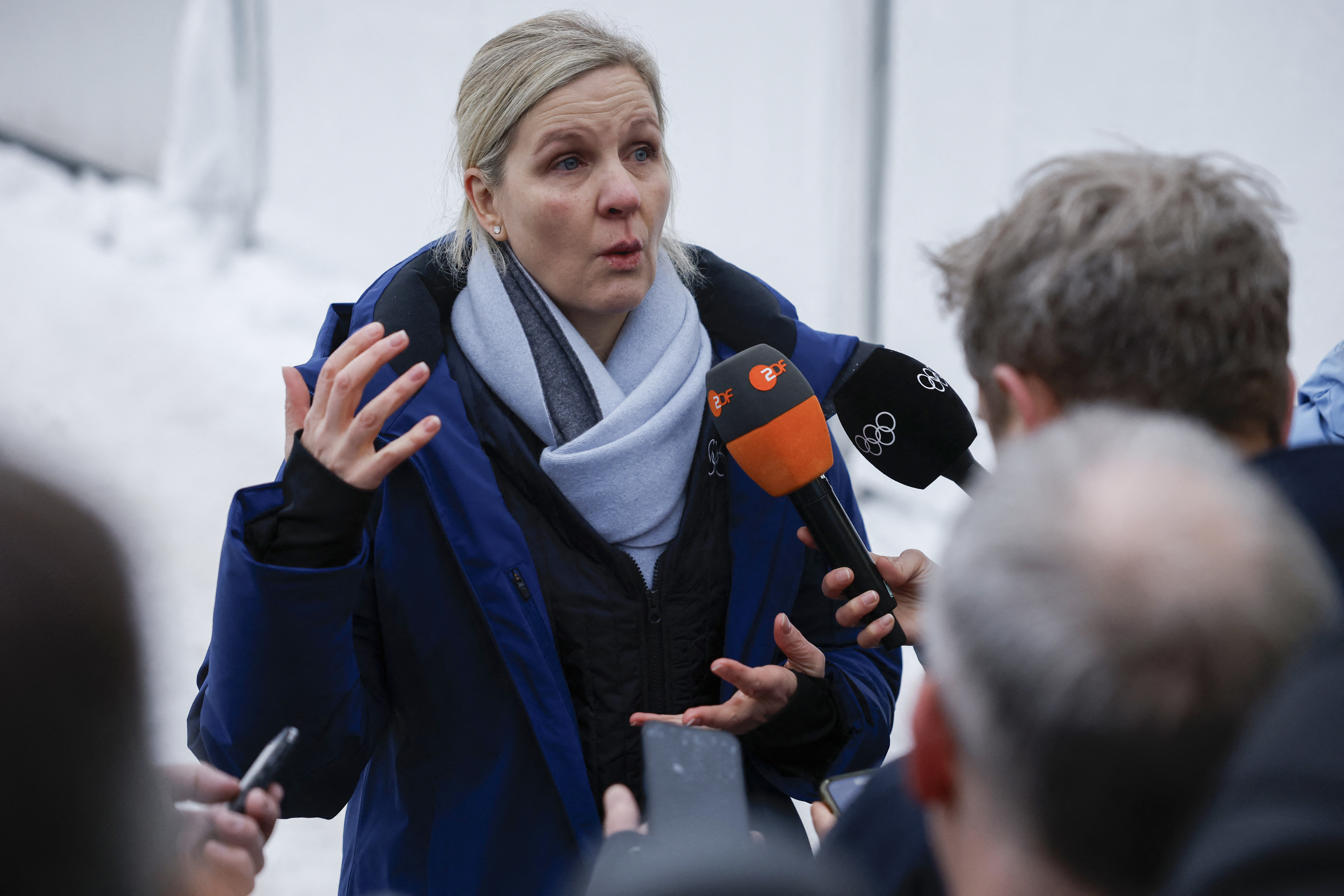
President of the International Olympic Committee (IOC) Kirsty Coventry speaks to the press after Ukraine's Vladyslav Heraskevych was disqualified from the Milano Cortina 2026 Winter Olympic Games in Cortina d'Ampezzo on February 12, 2026. (Photo: AFP)
International Olympic Committee (IOC) President Kirsty Coventry said on Thursday that the decision not to allow Ukrainian skeleton athlete Vladyslav Heraskevych to compete with his "helmet of memory" was based strictly on Olympic rules prohibiting any form of messaging on the field of play.
Coventry met with Heraskevych and his father earlier in the day, describing the discussion as emotional but respectful.
She said the messaging itself was not in dispute, but regulations - developed following athlete consultations in 2020 and 2021 - clearly prohibit any messaging on the field of play, the podium and in the Olympic village in order to maintain neutrality and protect athletes from potential pressure.
"It is not about whether the message is political or not. It is about applying the rules equally to any form of messaging," Coventry said, adding that while the helmet was allowed in training and alternative solutions were proposed for before and after the race, no compromise was reached.
Coventry also stressed the IOC had provided more than 10 million U.S. dollars in recent years to support Ukrainian sport and athletes.