


The International Ski and Snowboard Federation (FIS) on Sunday responded to freeski skier Gu Ailing's concerns regarding what she described as an unfair halfpipe training schedule at the Milan-Cortina Winter Olympics.
FIS Communication Director Bruno Sassi replied Sunday morning to email questions from Xinhua. Regarding Gu's statement that her halfpipe training time would be reduced due to an overlap with the women's big air final, Sassi said FIS has not reduced athletes' training opportunities. He also noted that Gu was selected as one of five female athletes scheduled to participate in a halfpipe testing session on Sunday.
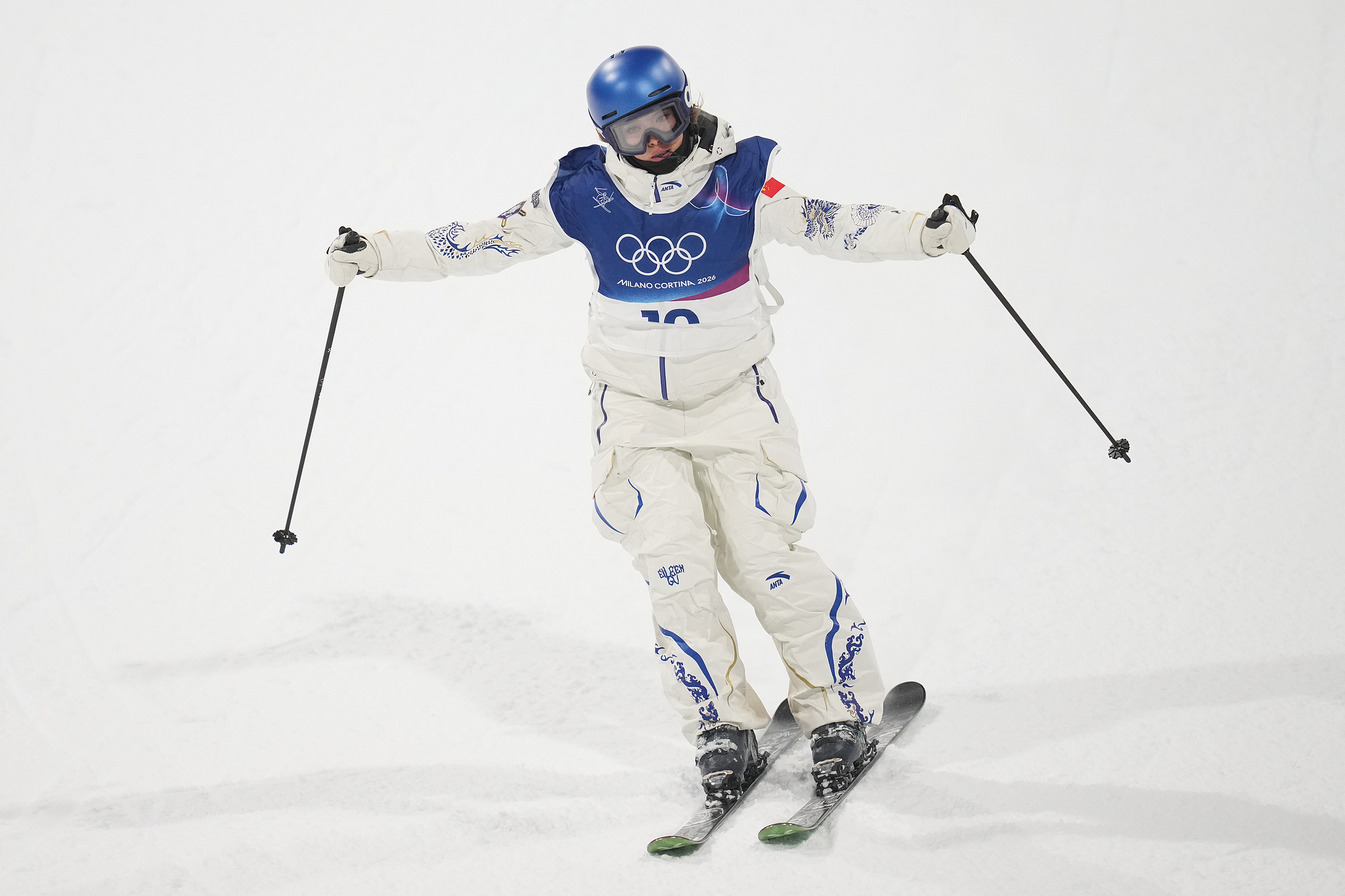
Gu Ailing of China competes in the women's freestyle skiing big air qualification round at the 2026 Milano Cortina Winter Olympics in Livigno, Italy, February 14, 2026. (Photo: VCG)
"In the way of background information, we would like to highlight the fact that there have been three training sessions leading up to the qualifications, which is more than the two we normally have in the World Cup," Sassi wrote.
"This is just to highlight the fact that FIS is not stripping off training opportunities for the athletes - on the contrary," he added.
"Additionally, as one of the household names of the sport, Ailing Gu has been handpicked as one of the athletes - five men and five women - invited to a one-hour halfpipe testing session today, 15 February."
"They have been chosen based on their ability to give constructive feedback about the construction, shape, and rideability of the pipe," Sassi said, indicating that the invitation was extended for testing purposes.
Addressing Gu's remarks that she experienced similar scheduling conflicts at both the current Olympics and the Beijing 2022 Winter Games, Sassi provided an official explanation on behalf of FIS.
"Constructing the Olympic competition program is a complex process requiring extensive cooperation between the IOC and the International Federations representing the thousands of athletes at these Games. Every effort has been made to facilitate the best possible training and competition schedule for athletes across the myriad FIS-governed events, but as we have already seen at these Games, for athletes who choose to compete in multiple disciplines and/or multiple events, conflicts can sometimes be inevitable," he wrote.
On Saturday, after advancing to the women's big air final, Gu - who is competing in slopestyle, big air and halfpipe - said the big air final fully overlaps with the first day of halfpipe training, resulting in the loss of training time.
Gu said each halfpipe athlete is allocated nine hours of training, divided into three sessions, and that the overlap would cost her one-third of that time. She said she had communicated with FIS about the matter, seeking individual training time or the possibility of training alongside snowboarders, but her proposal was not adopted.
"I'm upset with FIS, not upset, I'm disappointed in FIS," Gu said. "I think the Olympics should epitomize aspiration, and I think being able to do something that is beyond the ordinary should be celebrated, instead of punished."