


Chinese motorcycle brand ZXMOTO made history at the World Superbike Championship (WSBK), winning both Supersport (SSP) races at the Portugal round on March 28 and 29.
It marked the first time a Chinese-made motorcycle has won at a top-tier international event, breaking decades of dominance by European, American and Japanese brands in the category.
"I've waited 20 years for this moment," said Zhang Xue, founder of Chongqing-based ZXMOTO.
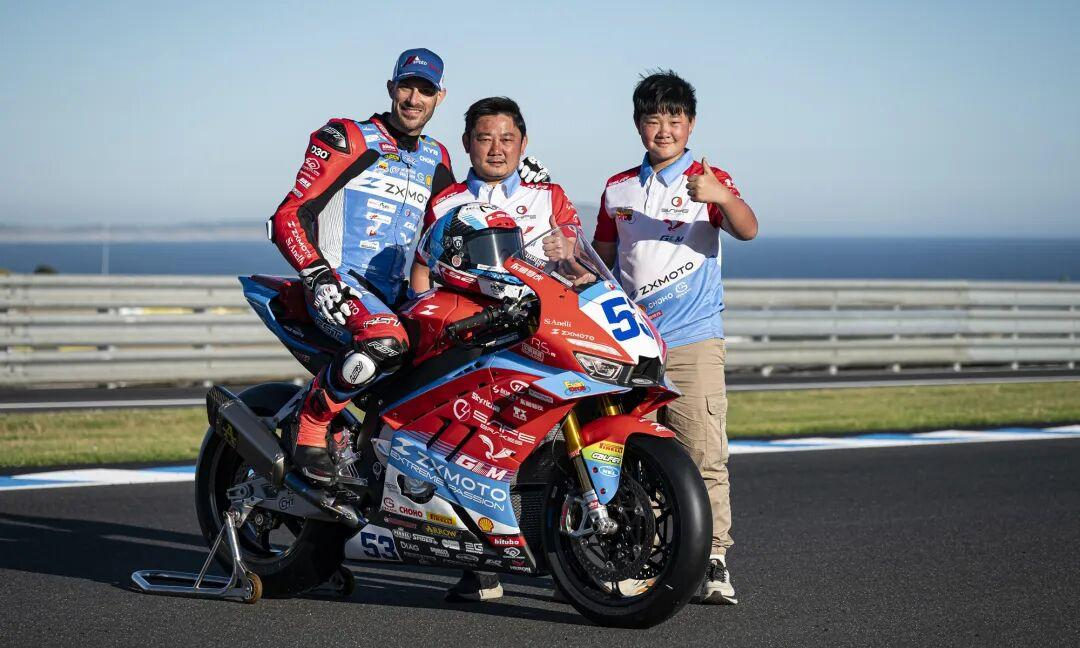
Zhang Xue (middle) poses for a picture with a rider (left) before the Australian round of the World Superbike Championship. (Photos provided by ZXMOTO)
The winning machine, the 820RR-RS, was derived from the production 820RR model launched just days earlier on March 21. In the opening race, the rider surged to victory with a lead of nearly four seconds, highlighting the bike's competitive edge.
While the result surprised many, for Zhang it was the culmination of a two-decade pursuit.
His journey began far from the track. Twenty years ago, he was an apprentice in a small repair shop in rural Xiangxi, Hunan province, working long hours among engine oil and spare parts. At a time when Chinese motorcycles were often overlooked, he held onto an ambitious goal: to build a world-class, high-performance bike.
A turning point came at age 19, when Zhang rode an aging secondhand motorcycle, older than himself, more than 100 kilometers through cold rain and winding mountain roads to catch up with a media crew, hoping to be noticed by a professional racing team. The gamble paid off, opening the door to a career in motorsports.
"That was the most important bike in my life. It's where my dream started," he said.
Over the years, Zhang rose from repair apprentice to award winner in national motorcycle maintenance competitions. But he wanted more than to fix bikes — he wanted to build championship machines.
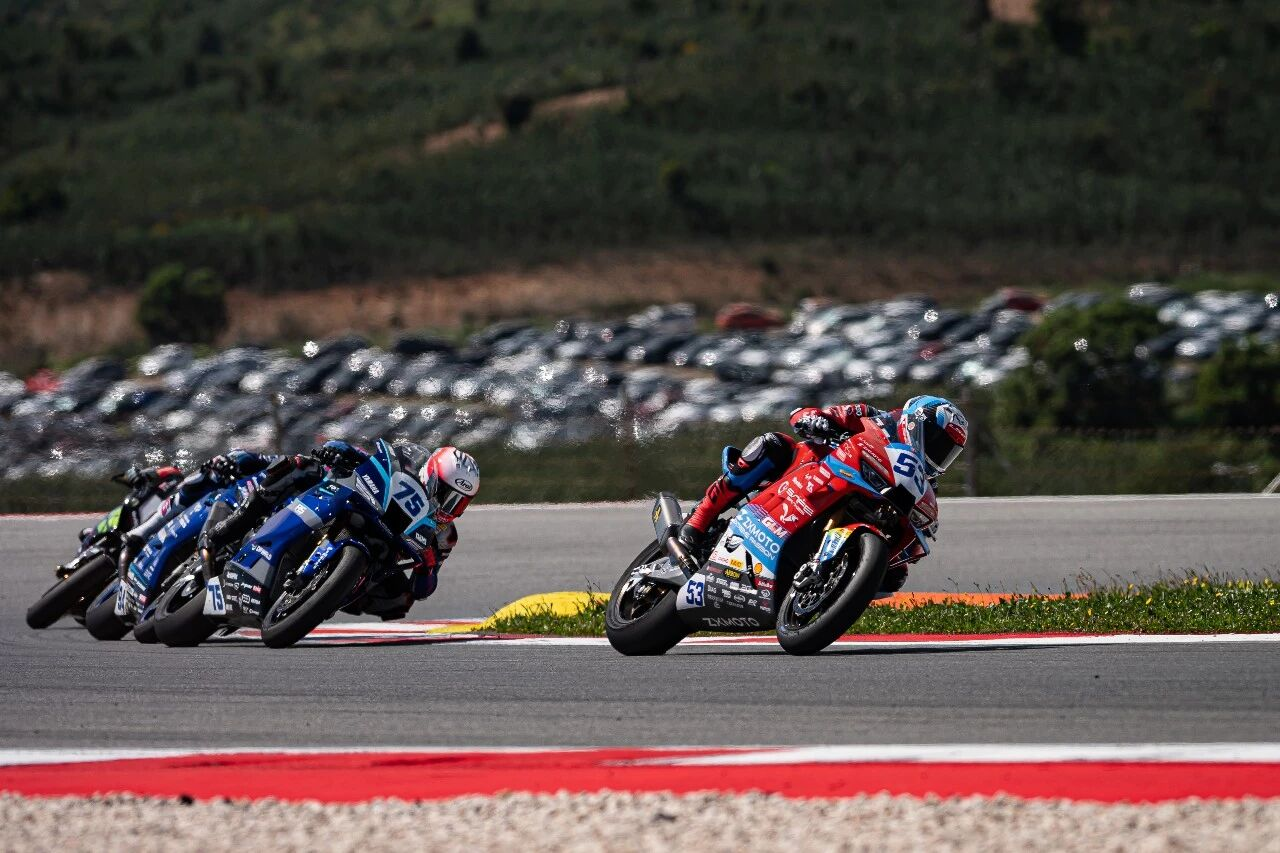
French rider Valentin Debise rides a ZXMOTO 820RR-RS at the Portugal round of the World Superbike Championship.
"Why are all the bikes on the track foreign brands? Can't we build our own?" he recalled asking himself.
In 2013, Zhang moved to Chongqing with just 20,000 yuan (about $2,700), drawn by its reputation as China's motorcycle hub.
Chongqing is home to 51 major motorcycle manufacturers and more than 410 parts suppliers, with over 80 percent of components sourced locally, from engines and frames to electronic control systems.
"This industrial ecosystem allows teams like Zhang's to develop high-performance bikes at relatively controlled costs," said Zhang Lipeng, deputy director of the Tianjin Internal Combustion Engine Research Institute.
Starting with modifications, Zhang gradually built a team, established a brand and moved into independent research and development, investing all his savings into the venture.
Under WSBK rules, race bikes must be based on production models with limited modifications, meaning track performance largely reflects the capabilities of the commercial version.
Lightweight design proved key. Zhang said his team cut the bike's weight by about 10 percent compared with rivals. The production 820RR weighs 193 kilograms, while the race version was reduced to 175 kilograms.
That engineering edge has translated into commercial success. In 2025, ZXMOTO sold more than 25,000 units, with output value reaching 745 million yuan and R&D investment nearing 70 million yuan. Its products are now exported to markets including Italy, Spain, the UK, the United Arab Emirates and Russia.
Looking ahead, Zhang identified Europe and North America as key targets for expansion.
According to Zhang Lipeng, high-performance motorcycles require the integration of multiple systems, including powertrains, frame rigidity, suspension geometry, aerodynamics and electronic controls. With thousands of precision components, manufacturing demands are extremely high.
Before 2015, key technologies such as electronic fuel injection relied heavily on foreign suppliers, he said, but domestic firms have since made steady progress.
ZXMOTO's breakthrough reflects not only Zhang's persistence, but also the maturation of China's motorcycle industry after more than 40 years of development. Technologies once dominated by foreign companies, including electronic control and tuning systems, are now reaching mid-to-high international levels.
"I hope Chinese motorcycle manufacturers can work together to secure a true place for domestic brands on the global stage," Zhang said.