


Hungarian chess great Judit Polgar: Make your own moves
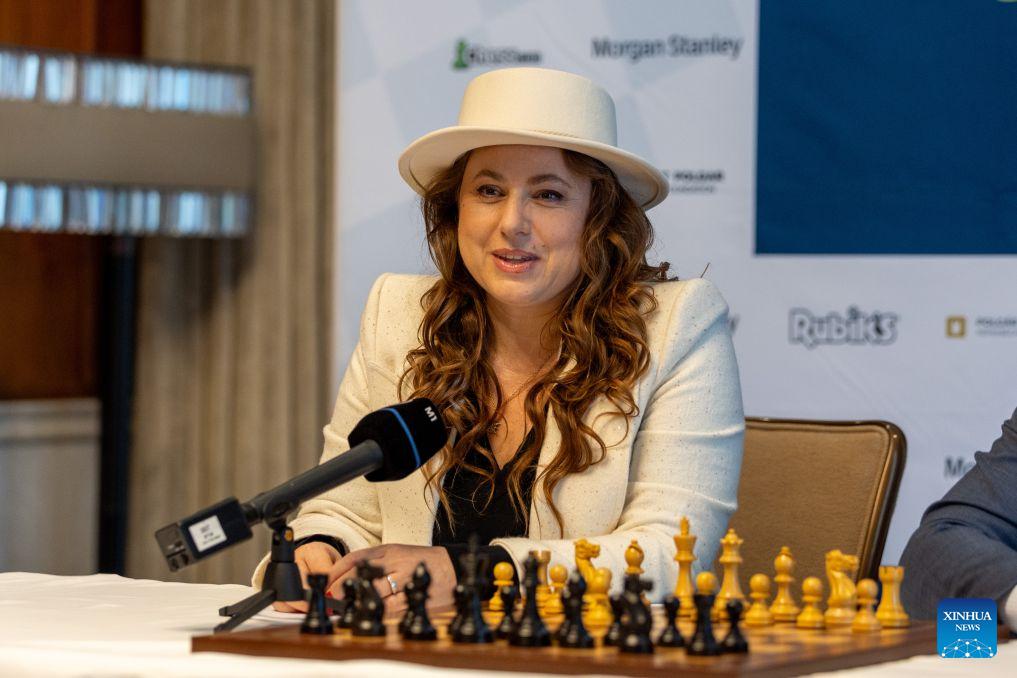
Hungarian chess legend Judit Polgar speaks during a press conference for the 12th Judit Polgar Global Chess Festival in Budapest, capital of Hungary, Sept. 17, 2026. (Photo: Xinhua/Hu Zhixuan)
BUDAPEST, Sept. 17 (Xinhua) -- For Judit Polgar, one of the greatest female chess players in history, the game has always been about making decisions and taking responsibility for them.
Across more than two decades at the highest level, the Hungarian grandmaster studied opponents, prepared with computers and faced some of the strongest players of her generation. But once she sat down at the board, nobody else could make the move for her.
"In chess, you are responsible for every move," Polgar told Xinhua on Thursday at a press conference for the 12th Judit Polgar Global Chess Festival in Budapest. "You make mistakes, but you also learn that mistakes can be corrected."
The youngest of the famous Polgar sisters, she helped Hungary win the Women's Chess Olympiad at 12 and became a grandmaster at 15 years and four months, breaking Bobby Fischer's then-record as the youngest titleholder.
She later reached the world's top 10 and built her career largely in open competition, defeating a number of leading male players, including world champions.
For Polgar, elite chess demanded far more than calculation. "What does my opponent want to do? What do I want to do? If I make this move, how will my opponent react?" she said.
A wrong move cannot be taken back. The player must accept the new position, reassess the situation and decide what comes next.
That experience also shaped her attitude toward technology. Polgar was part of a generation of top players that saw computer analysis become an important part of professional preparation. She used engines to study positions and review games, but also learned not to rely on them blindly.
"There was a period when I trusted it, and then I trusted it too much," she said. "I paid a price for that, and even lost games."
The lesson remains relevant today: technology can help, but it cannot replace human judgment.
That idea was also reflected at Thursday's press conference, where a magician used a card trick to introduce a discussion about artificial intelligence.
"Magic is a carefully constructed illusion, and sometimes AI can feel like that too," Polgar said.
An answer may look convincing, she added, but people still need to question, verify and understand how it was reached.
Since retiring from competitive chess in 2014, Polgar has devoted more time to education and promoting the game among young people. She believes chess can help develop concentration, problem-solving skills, emotional control and the ability to take responsibility for decisions.
"The process of finding the solution and eventually reaching the answer is the most important thing," she said.
The 12th Judit Polgar Global Chess Festival will be held on Sept. 26 at the Hungarian National Gallery in Budapest, with "critical thinking in the age of artificial intelligence" among its main themes.
For Polgar, the link between chess and the AI era goes back to what she learned as a competitor: players may prepare with coaches, databases and powerful engines, but when the clock is running and the position is on the board, responsibility lies with the player.
"Technology may offer more answers than ever before, but you still have to make your own moves," Polgar said.
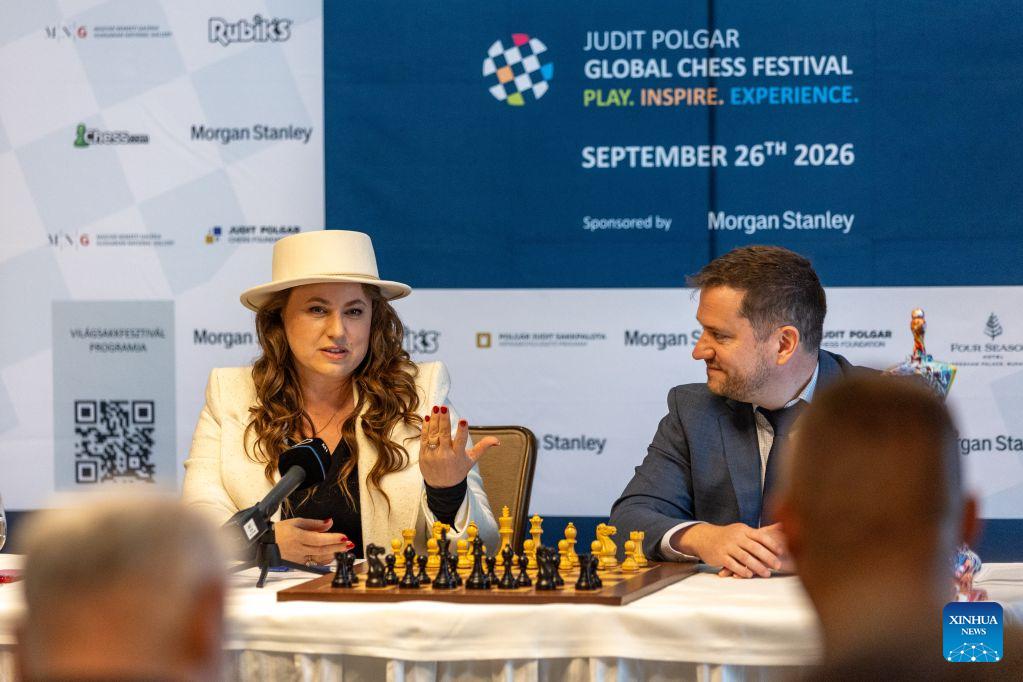
Hungarian chess legend Judit Polgar (L) speaks during a press conference for the 12th Judit Polgar Global Chess Festival in Budapest, capital of Hungary, Sept. 17, 2026. (Photo: Xinhua/Hu Zhixuan)
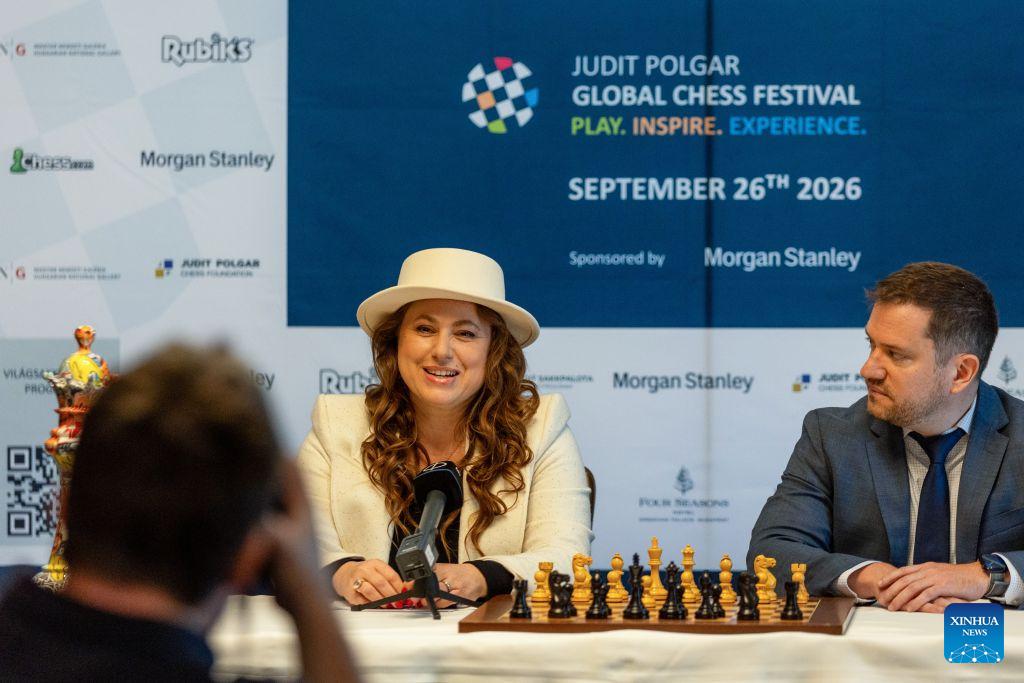
Hungarian chess legend Judit Polgar (L) speaks during a press conference for the 12th Judit Polgar Global Chess Festival in Budapest, capital of Hungary, Sept. 17, 2026. (Photo: Xinhua/Hu Zhixuan)