


OCA explains absence of traditional athletes' village at Aichi-Nagoya Asian Games
NAGOYA, Japan, Sept. 18 (Xinhua) -- The Olympic Council of Asia (OCA) on Friday explained the decision not to build a traditional athletes' village for the Aichi-Nagoya Asian Games, saying that while such a facility would be preferable, organizers also needed flexibility.
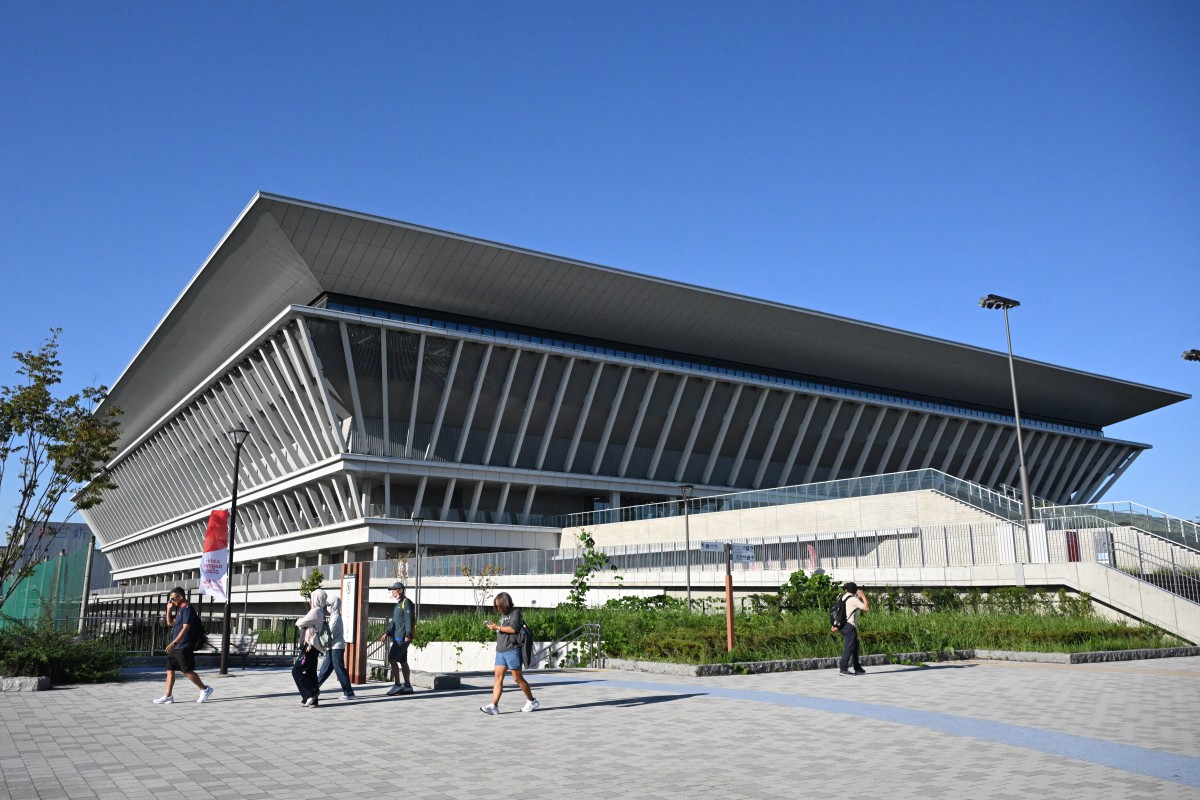
A general view shows the exterior of the Tokyo Aquatics Centre ahead of the 2026 Asian Games in Tokyo on September 17, 2026. (File photo: AFP)
"We wish that we have an athlete village, number one. But, number two, we also have to be flexible," OCA Director General Husain A H Z Al-Musallam said at a press conference.
He said organizers needed to consider the circumstances of the host country and plans for facilities after the Games, rather than automatically constructing a dedicated village.
Nagoya is instead using existing hotels and other accommodation, along with temporary container-style housing at Garden Pier and a cruise ship at Kinjo Pier. The arrangement was adopted after organizers decided against building a purpose-built athletes' village, with the cruise ship serving as floating accommodation.
"Every host, we have to look to what is the actual situation inside the host country. What is their plan for after the Games?" Al-Musallam said, noting that the approach could differ from one Games to another.
He cited previous Asian Games as examples of how dedicated athletes' villages can be repurposed after an event. The village built for the 2006 Doha Asian Games, he said, was converted into a medical center, while the athletes' village for the Hangzhou Asian Games was later sold to the public.
He pointed to Nagoya's existing residential infrastructure, saying the priority was to provide athletes with suitable accommodation rather than follow a fixed model.
Mohammad Tayyab Ikram, chairman of the Aichi-Nagoya 2026 Asian Games Coordination Committee, said organizers did not want to leave a "white elephant" after the Games.
"It was not easy discussions, but it was also not a compromise because then we found very unique alternatives," Ikram said, defending the use of container accommodation.
"We are gathering for sport," Al-Musallam said, stressing that athletes should be able to compete in a safe and suitable environment.
On preparations for a possible typhoon affecting the region next Monday, Ikram said disaster management, particularly typhoon preparedness, had been discussed at coordination meetings throughout the past three to four years. He said every competition and non-competition venue had its own emergency plan, with large shelters prepared near Garden Pier, where some 3,000 to 4,000 athletes are staying, as well as for those accommodated on the cruise ship.
Al-Musallam also said six nations had expressed interest in hosting the 23rd Asian Games, including India and the Philippines. The OCA Executive Board will establish an evaluation committee to visit the interested countries next year before drawing up a shortlist and conducting a further evaluation closer to those Games.