


Asian Games | Mishap, lodging complaints cast shadow on Games opening
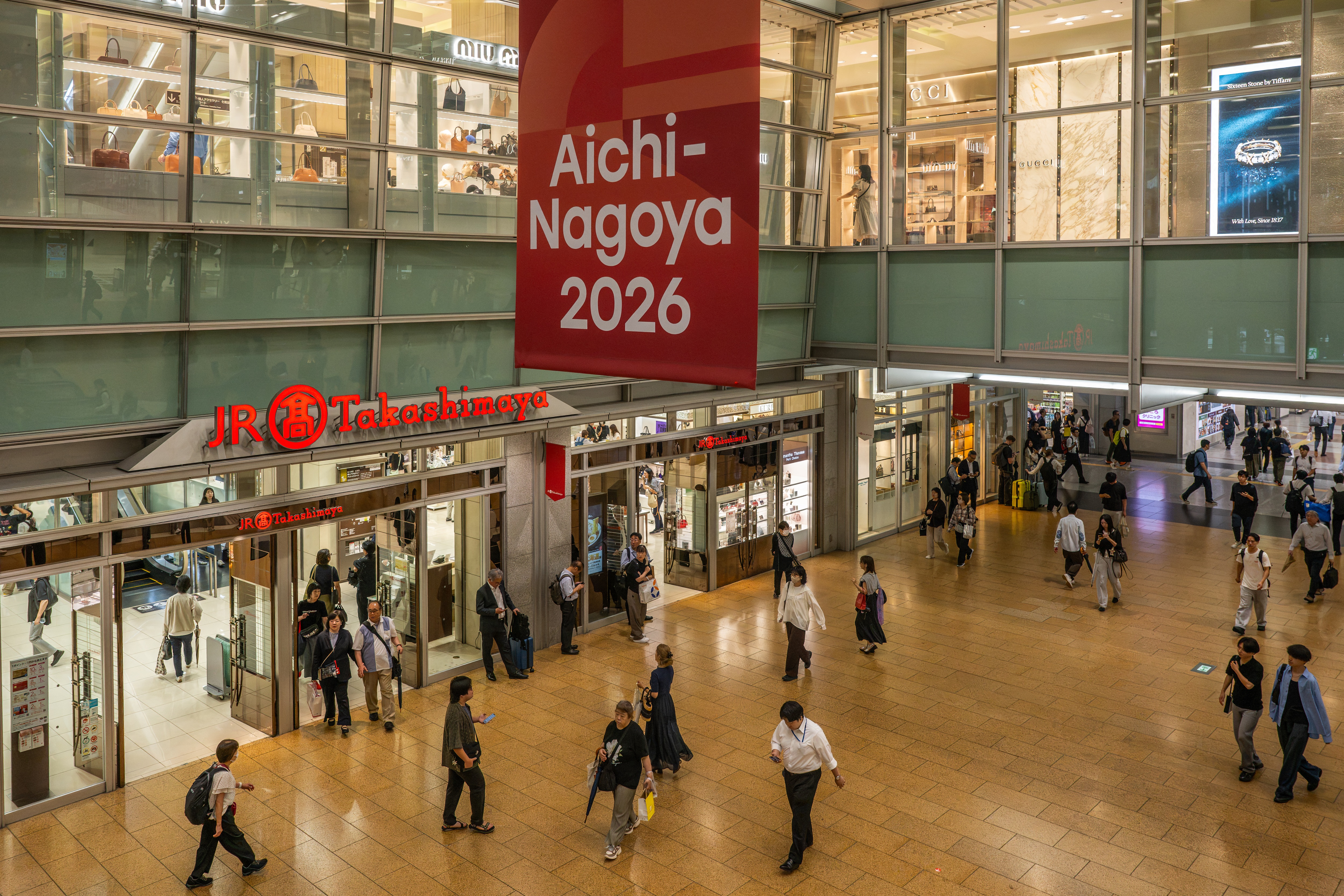
People walk under a banner promoting the 2026 Asian Games at the train station in Nagoya, Aichi Prefecture on September 16, 2026. (Photo: AFP)
The Aichi-Nagoya Asian Games set to open on Saturday are overshadowed amid a series of organizational issues and mishaps as the latest occurred to the men's field hockey match between South Korea and Bangladesh on Friday.
The organizers mistakenly played the DPR Korean national anthem ahead of the kickoff of South Korea's hockey match against Bangladesh at the Kakamigahara Green Stadium.
As the South Korean players lined up for the pre-match ceremony, the DPR Korean anthem was played instead of their national anthem. The players looked at each other in confusion, with some standing at attention, some running their hands through their hair and others placing their right hands over their hearts.
Organizers later corrected the mistake and played the South Korean anthem. However, the referee instructed players from both teams to shake hands and prepare for the match while the anthem was still playing, according to South Korea's Yonhap News Agency.
A stadium announcer apologized for the mistake, but South Korean coach Min Tae-seok expressed strong dissatisfaction.
"This is a really serious problem. When we protested, they said, 'We're sorry. It wasn't that it wasn't prepared, there was a mistake on the part of those responsible for playing it'," he said. "But this is something that simply should never happen."
A South Korean Olympic committee official said the organization was looking into the incident.
The anthem mishap came after other issues the had happened during the build-up to the Games.
Accommodation has been a major focus of attention, with the Games not providing a traditional athletes' village. Instead, athletes and officials are staying in hotels, temporary container-style accommodation and a cruise ship at Nagoya Port.
Some teams have criticized the quality of their accommodation, including beds that were too short. There have also been complaints about a shortage of rooms.
The Olympic Council of Asia (OCA) defended the decision not to build a traditional athletes' village, saying organizers needed to take into account the circumstances of the host country and the use of facilities after the Games.
"We wish that we have an athlete village, number one. But, number two, we also have to be flexible," OCA Director General Husain AHZ Al-Musallam said at a press conference on Friday.
He said the approach could vary from one Asian Games to another, citing previous Games where athletes' villages were converted to other uses or sold after the event.
Mohammad Tayyab Ikram, chairman of the Aichi-Nagoya 2026 Asian Games Coordination Committee, said organizers did not want to leave a "white elephant" after the Games.
Complaints also came from transportation for some delegations.
Chinese gymnast Zhang Boheng, who won two silver medals at the Paris Olympics and two world championship titles, said he and some teammates were left waiting for six hours after arriving here on Wednesday. He said the delay was caused by registration and paperwork before they headed to the cruise ship, while heavy rain later prevented them from boarding.
Indian delegation also reported long queues and delays in obtaining athlete accreditation at the airport, while some South Korean athletes reportedly waited for more than five hours after arriving on Thursday.
Weather has added another uncertainty to Games preparations. On Friday, Ikram said organizers had been preparing for a possible typhoon expected to affect the region on Monday.
He said disaster management, particularly typhoon preparedness, had been discussed at coordination meetings over the past three to four years. Every competition and non-competition venue had its own emergency plan, while large shelters had been prepared near Garden Pier, where 3,000 to 4,000 Games participants are staying, as well as for those accommodated on the cruise ship.
A controversy arose after South Korea's Olympic committee filed a complaint with Games organizers over the appearance of a person dressed as Japanese warlord Toyotomi Hideyoshi at the welcoming ceremony.
Hideyoshi led Japan's invasions of Korea in 1592-1598, making the appearance a sensitive issue in South Korea. Korean Sport & Olympic Committee President Ryu Seung-min sent a letter to the local organizing committee and the OCA expressing regret and calling for measures to prevent a recurrence.
Some sports have already begun competitions ahead of Saturday's opening ceremony of the Games, which will run through Oct. 4.