


The successful launch of the first lab module for China's space station, via a Long March-5B Y3 rocket on Sunday, underlined how far the country has come in making its space dream a reality.

A Long March 5B Y3 carrier rocket, carrying Wentian lab module blasted off from the Wenchang Spacecraft Launch Site on the coast of the southern island province of Hainan on Sunday, July 24, 2022. (Photo: Lu Dong/People's Daily)
One of the three modules needed to build China's space station, the Wentian lab module will function both as a backup of the core module and as a powerful scientific experiment lab that can support experiments in life sciences, ecology and biotechnology, as well as comparative studies of biological growth mechanisms under varying gravity conditions.
It is another major step in China's plan to finish the construction of its space station by the end of this year and establish a permanent human presence in space.
China has come a long way in its race to catch up with the US and Russia, whose astronauts and cosmonauts already have decades of experience in space exploration.
Here is a glimpse into China's space program over the past decades, and where it is heading:
-Starting from scratch-
China was once a nobody in space tech. The country's space dream is lifted up by its proprietary Long March carrier rocket family, a series named after the Chinese Red Army's 1934-36 Long March during the Chinese Civil War, in which perseverant soldiers sought to break the siege of opposing forces by traversing raging rivers, frigid mountains and arid grassland.
In the same unyielding and enterprising spirit of the legendary Long March, China kicked off its own space exploration endeavor, overcoming difficulties that could hardly be envisioned, soon after the Soviet Union launched Sputnik in 1957.
For a newly founded nation that had not shook off impoverishment and weakness yet, developing aerospace technology seemed to be nothing but an impossible dream.
Chinese space pioneers recalled that the country was dealing with a weak industrial foundation and humble scientific research conditions. Worse still, China faced blockades from technologically advanced countries at that time, necessitating self-reliance in science innovation and technological advancement.
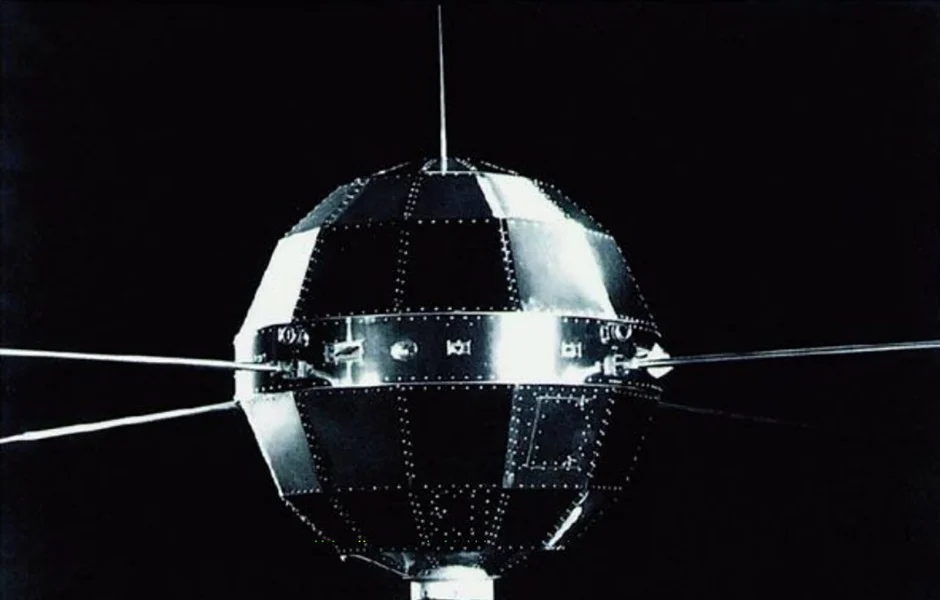
Since 2016, China has set April 24 as the country's Space Day to mark the launch of Dongfanghong-1 into space on April 24, 1970. (Photo: China Academy of Space Technology)
It took more than a decade for China to finish making its space debut as the country sent its first man-made satellite, Dongfanghong-1, into space via a Long March rocket on April 24, 1970, becoming the fifth nation to achieve independent launch capability.
-Sending astronauts aloft-
The first crewed spaceflight took decades longer.
Back in 1992 when manned space mission sounded like a flight of fancy to many, China has been committed to developing human spaceflight launch capabilities and a Shenzhou spacecraft series capable of making it safely back through the Earth atmosphere, with a three-step strategy as the guideline for its manned space program.
The first step was to send astronauts into space and bring them back safely.
Ever since Shenzhou-1, its first uncrewed experimental space mission, China has achieved steady progress in launching space flights and eventually hit a milestone with the success of the Shenzhou-5 in October 2003.
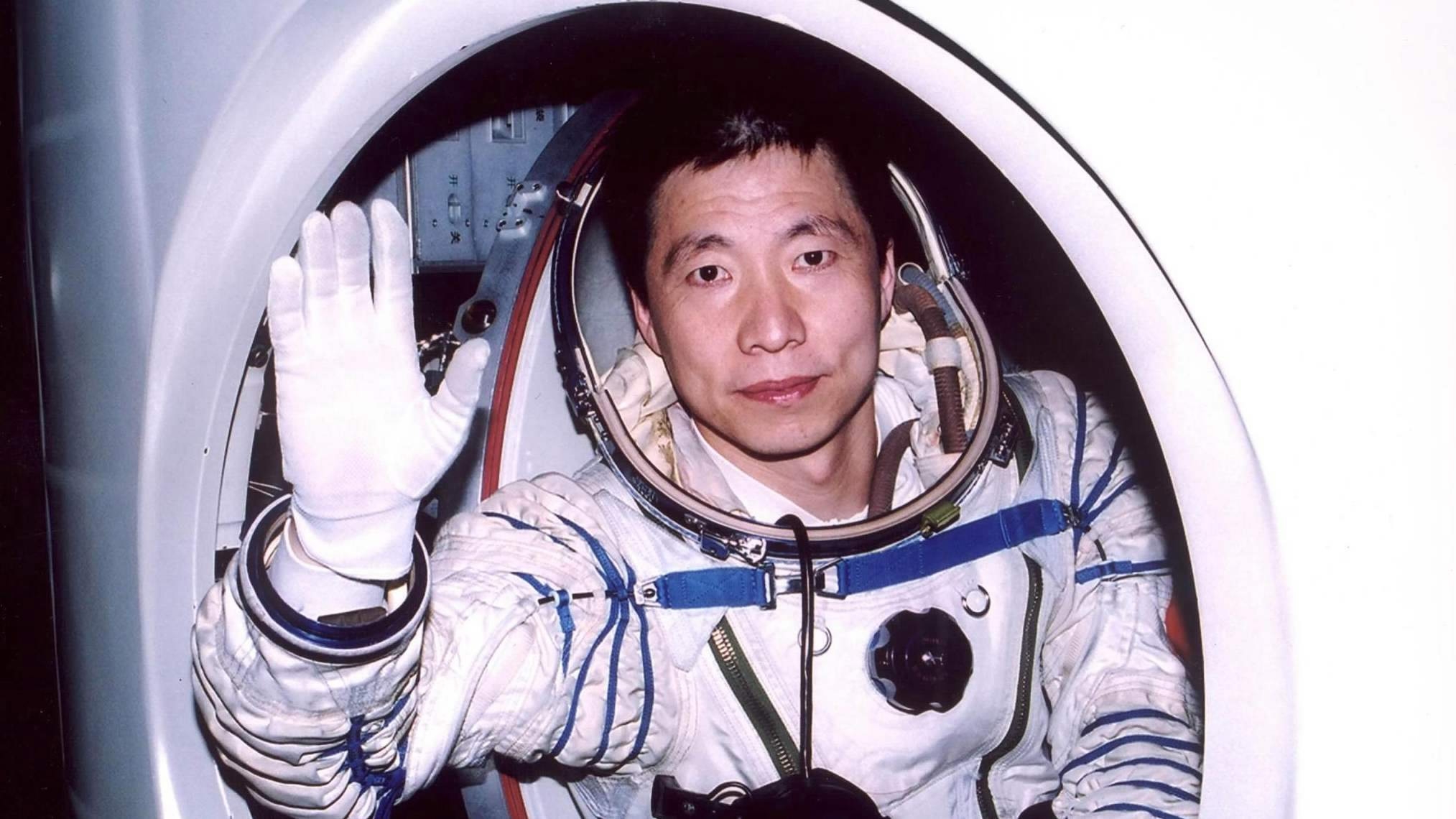
Yang Liwei is the first Chinese astronaut to go into space. (Photo: VCG)
Aboard the Shenzhou-5, the first Chinese astronaut Yang Liwei experienced 21 hours of space travel in the orbit around our home planet before he was brought back safely. Yang's return made China the third country to send a man into space after the Soviet Union and the US.
-Growing space presence-
The second step was to develop advanced space flight techniques and technologies including extra-vehicular activity and orbital docking, which involved key missions such as the launch of Tiangong-1, the country's first prototype module intended to lay the groundwork for a permanent station.
In the missions that followed Shenzhou-5, China stayed well on track in space exploration as the country witnessed its first space walk by Shenzhou-6 astronaut Zhai Zhigang, its first automatic rendezvous and docking between Tiangong-1 and the Shenzhou-8 spacecraft, as well as its first manned rendezvous and docking between the Tiangong-1 and the Shenzhou-9 spacecraft.
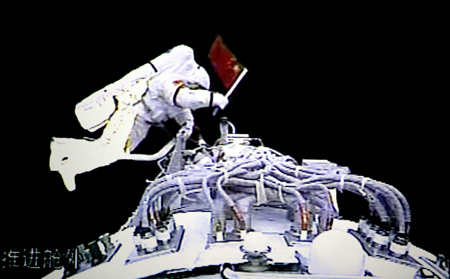
In this video grab taken on Saturday, September 27, 2008 from China Central Television, Chinese astronaut Zhai Zhigang waves a Chinese national flag as he conducts the nation's first spacewalk. (Photo: Xinhua)
China's growing presence in space came with the launch of Tiangong-2, an improved version of its predecessor that is considered the country's first space lab, in September 2016.
The Tiangong-2 later accommodated two Shenzhou-11 astronauts for 30 days.
-'Heavenly Palace'-
A palace in the sky is no longer just a romantic fantasy of the ancient Chinese.
One of the notable achievements for the country's space exploration is the formal construction of the China Space Station Tiangong, or "Heavenly Palace." This is a key step towards building the country's long-term human presence in space and a finishing touch on its decades-old manned space program.
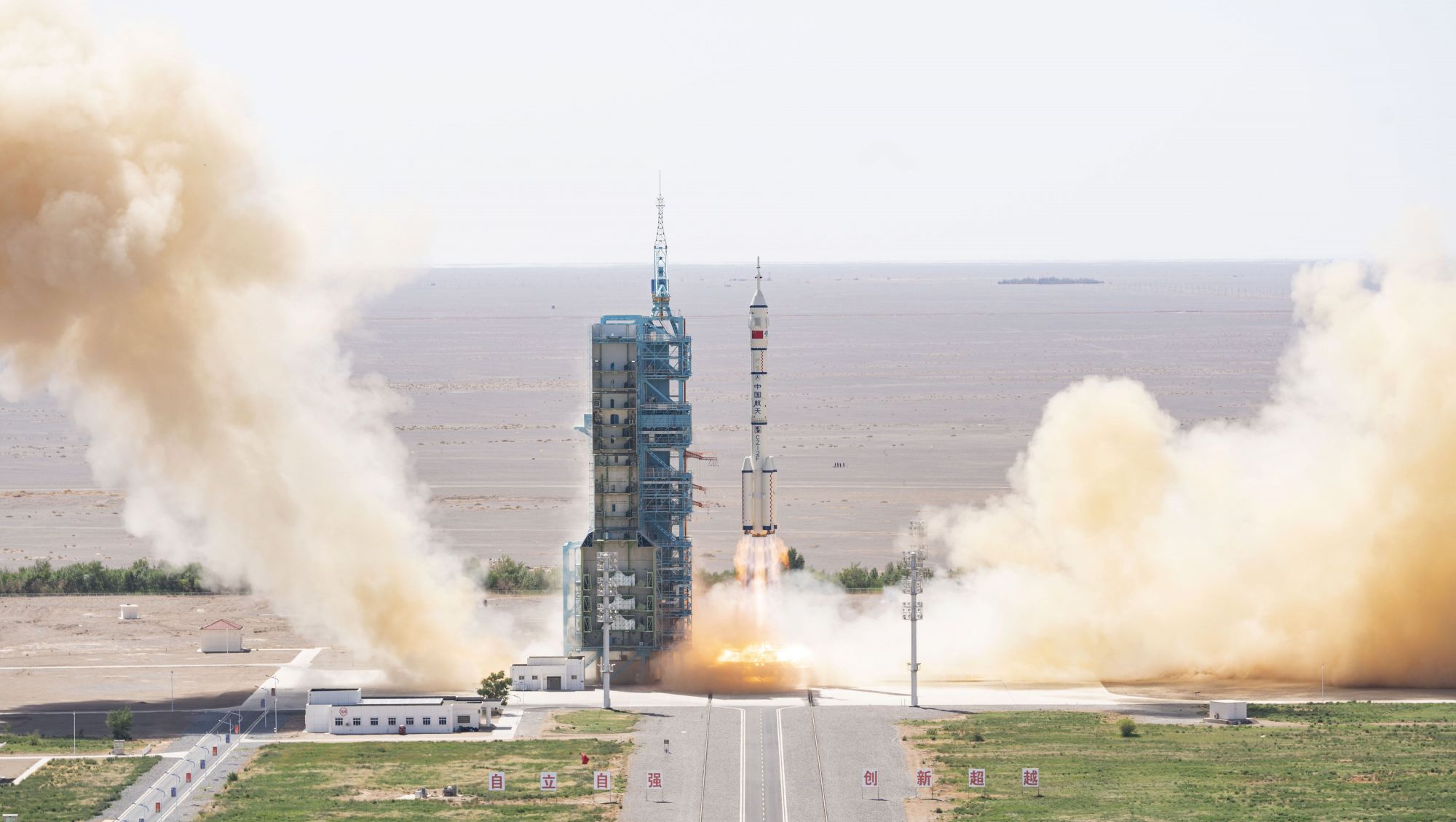
The crewed spaceship Shenzhou-14 is launched from the Jiuquan Satellite Launch Center in northwest China, June 5, 2022. Shenzhou-14 mission represents China's latest effort to send Chinese astronauts, or taikonauts, into space. (Photo: Xinhua)
While China is barred from participating in the International Space Station program, the country does not intend to replicate the exclusion. China has said its space station is open to international cooperation and looks to deliver scientific outcomes together with international astronauts in the future.
The Chinese space station is scheduled to be fully operationally by the end of this year. Once completed, the orbital outpost will be constantly crewed by rotating teams of three astronauts, who will conduct scientific experiments and help test new technologies.
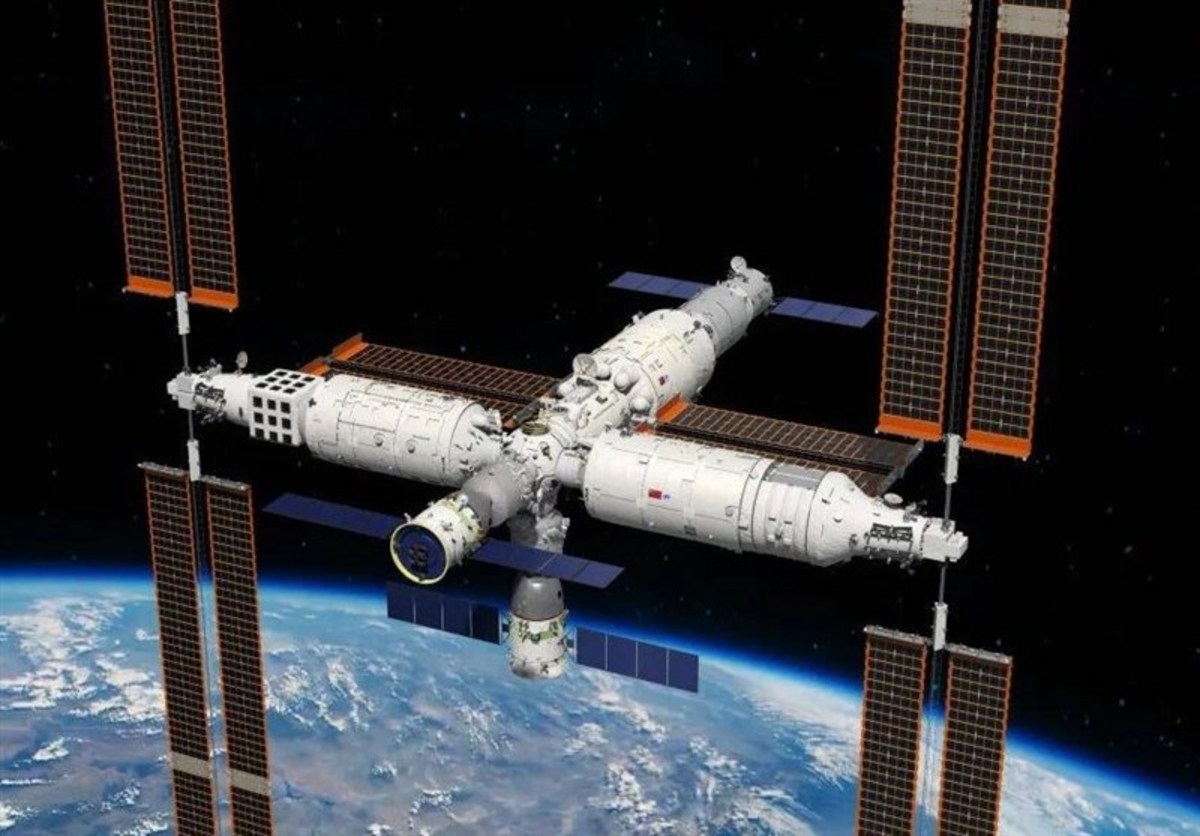
A schematic of the basic three-module structure of China's space station Tiangong. (Photo: CMG)
Its first module, the Tianhe core module, was launched in April 2021, followed by multiple crewed and uncrewed missions. The second laboratory module Mengtian will be launched in the coming months.
-Moon, Mars and more-
China's space ambitions do not end in orbit.
For centuries, Chinese people have drawn all kinds of inspirations from the Moon and sought to discover unknown facets of the closest celestial body to our home planet.
The country's lunar exploration program, also known as the Chang'e project after the goddess of the moon in Chinese folklore, came in 2004, with the ultimate objective to pave the way for a crewed mission to the Moon.
China's efforts to understand more about the origins and foundation of the Moon are starting to pay off. It may have been a latecomer to the Moon, but when the country's Chang'e-5 capsule came back to Earth last December, it retrieved the first lunar rocks and soil collected by any country since the 1970s, from a previously unexplored area.
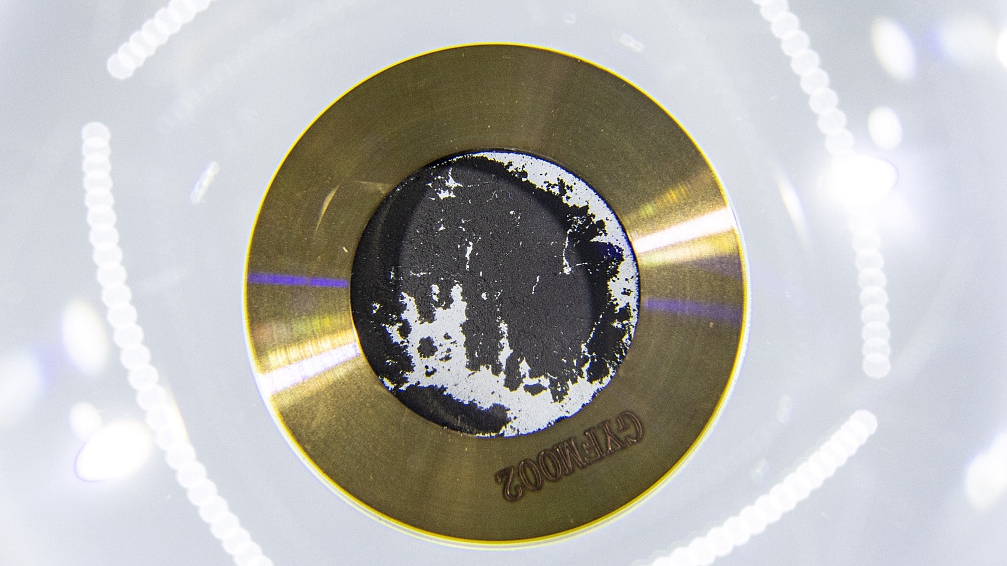
Lunar sample brought back by China's Chang'e-5 probe is seen at an exhibition during the 2021 China Space Conference in Nanjing, east China's Jiangsu Province, April 24, 2021. (Photo: CFP)
Besides the Moon, Chinese scientists have reached further away. In another major first for the country, China kicked off its planetary exploration program by dispatching the Tianwen-1 probe to the Mars in July 2020.
Carrying a rover designed to travel on the Martian surface and collect scientific data, the Tianwen-1 spacecraft touched down on Mars after a ten month space odyssey, making China the third nation to make a soft landing on and establish communication from the Red Planet.
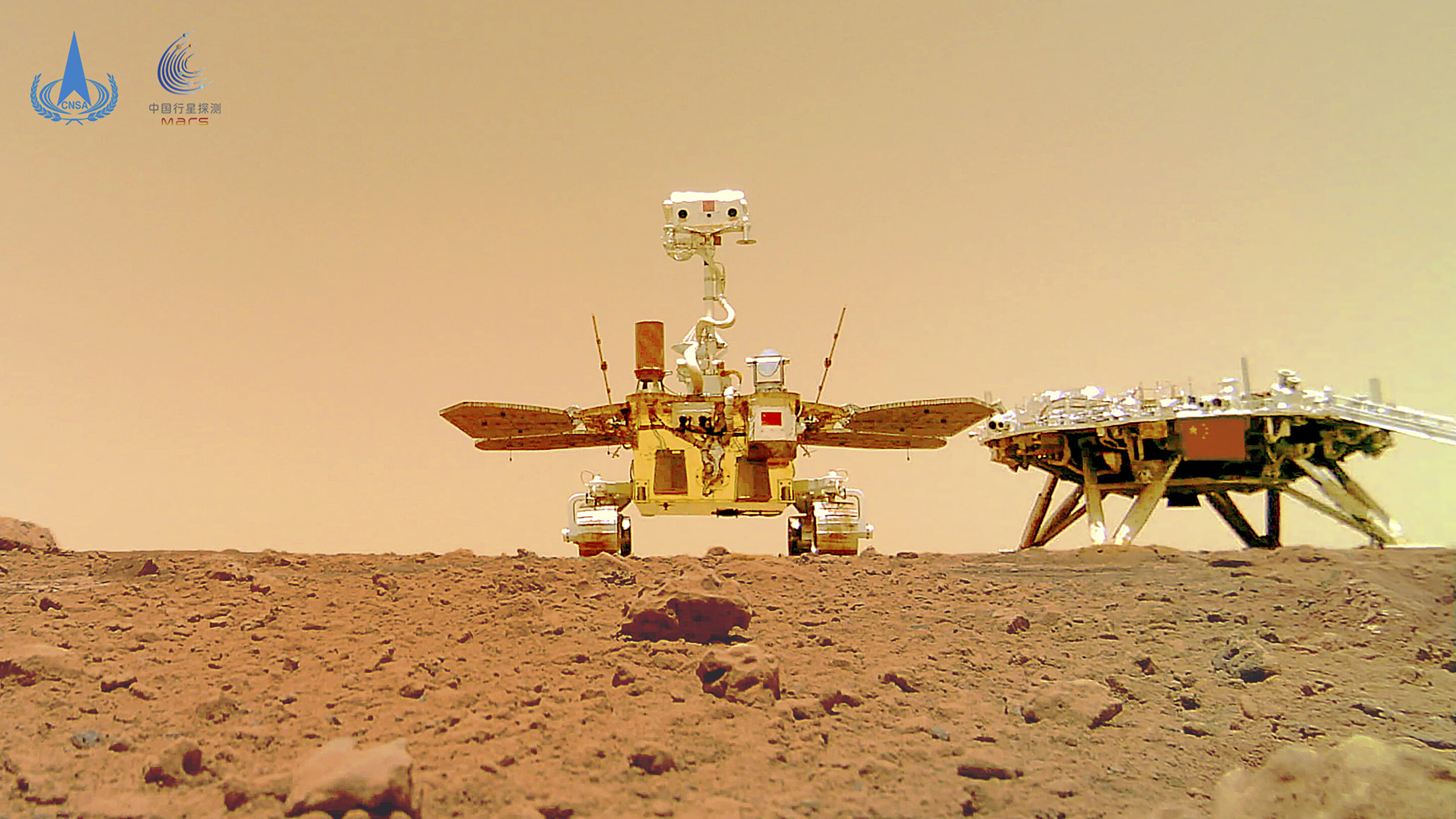
A selfie of China's first Mars rover Zhurong with the landing platform. (Photo: China National Space Administration)
Strides were also made as the country angles to get closer to the Sun. China sent a solar telescope into space last October, allowing the country to obtain important observational data. Another upcoming mission, called the Advanced Space-based Solar Observatory, is scheduled to launch into space by the end of this year and will perform 24-hour continuous observation of our star from a Sun-synchronous orbit of 720 kilometers above Earth for at least four years.
Very possibly, China will reach out to newer horizons through its space exploration missions. But before that, its own space telescope is in the pipeline.
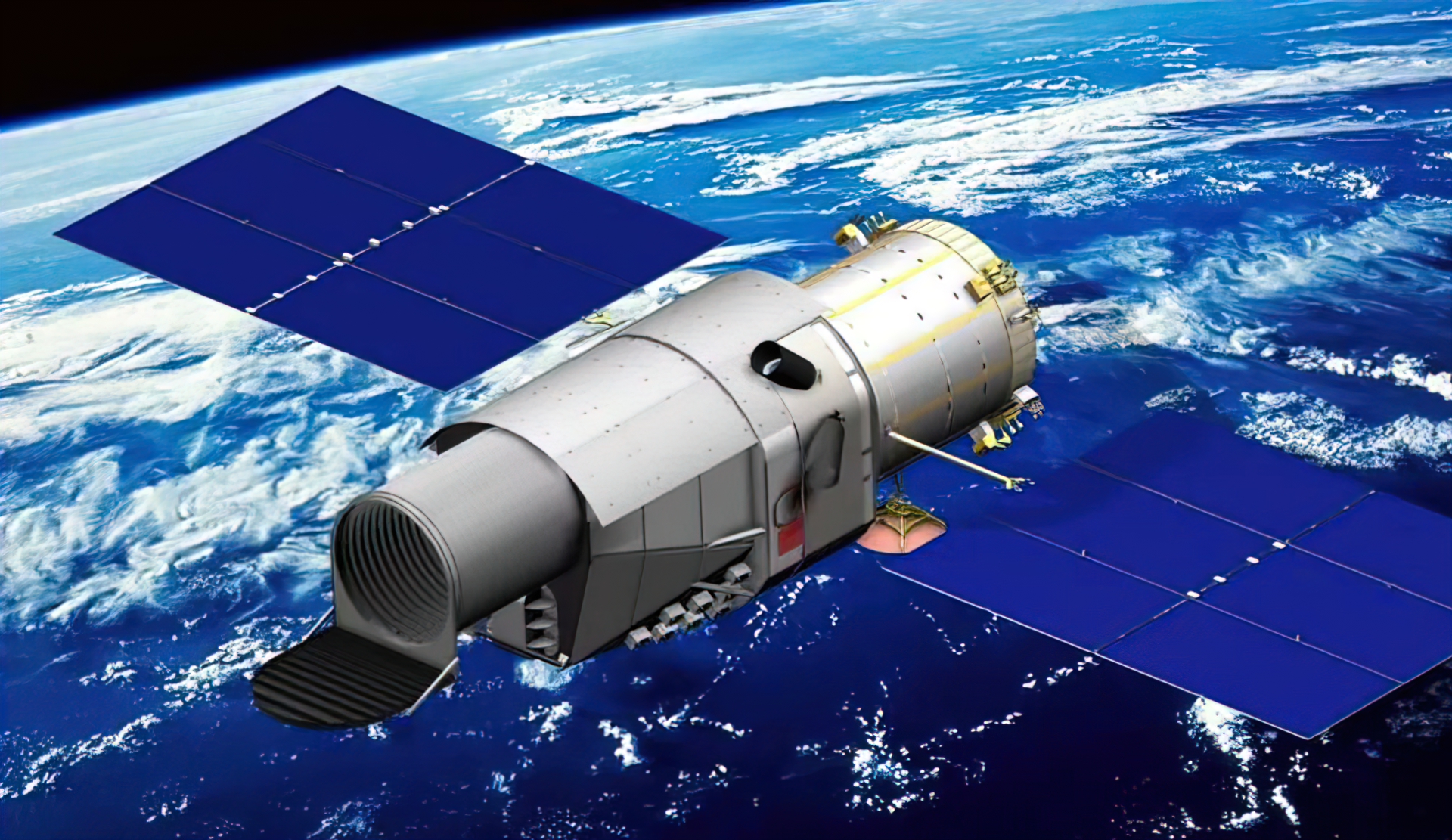
China's flagship Xuntian telescope is expected to offer fresh knowledge about distant galaxies, mysterious dark matter and dark energy, and the past and future evolutions of the universe. (Photo: China National Space Administration)
Slated to be sent into space next year, the country's first space-based optical observatory Xuntian will come with a field of view 350 times that of NASA's Hubble Space Telescope.
It will fly with the country's space station and show astronomers new cosmic views that lie light years beyond, trying to unravel mysteries of stars, galaxies and universe.