


Building a modern industrial system and achieving an overall leap in the upgrading of the industrial system is a major strategic task during the 15th Five-Year Plan period (2026-20230). To this end, China has charted a clear pathway toward high-quality economic development by advancing the systemic upgrading of the entire industrial system through industrial coordination, regional collaboration, and innovation integration. These arrangements reflect a systemic and holistic perspective in formulating development policies, as well as the scientific soundness of strategic decision-making in responding effectively to technological change and intensifying global competition.
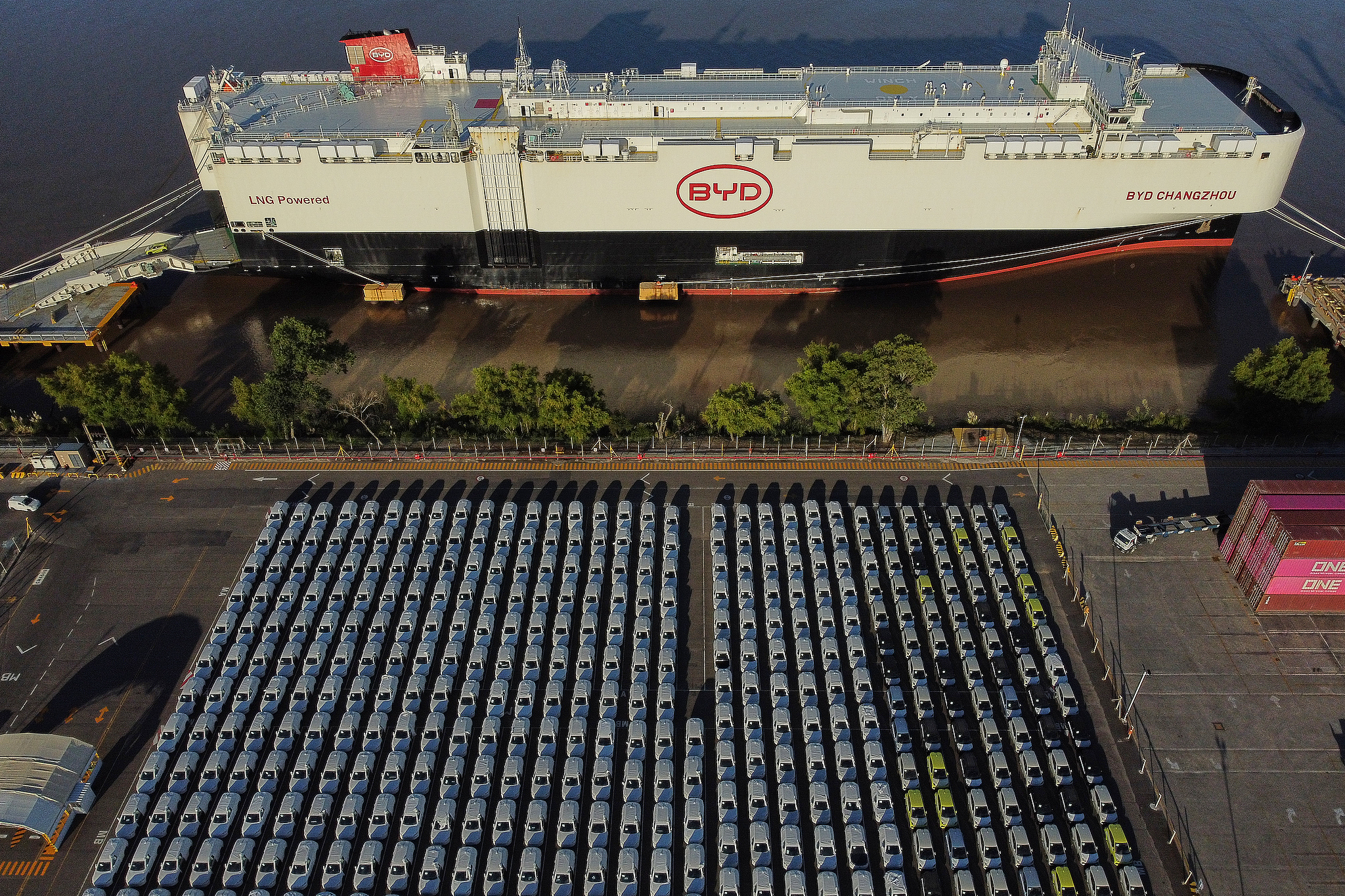
An aerial view of electric vehicles unloaded from BYD Changzhou at the Port Terminal of Zarate in Zarate, Argentina, Jan. 20, 2026. /VCG
China's approach to upgrading its industrial system as a whole embodies a development philosophy that is both systemic and comprehensive
On the one hand, as industrial boundaries become blurred and industrial networks continue to expand, industrial synergy has become increasingly imperative. Each industry constitutes an integral component of the broader social system, while different industrial systems and regional industrial structures are deeply interdependent. According to the bucket effect, in long-term competition, shortcomings within the broad industrial system can undermine overall advantages and competitiveness. If coordinated development across industries and regions cannot be achieved, these weaknesses are likely to be amplified in the era of artificial intelligence, where new technologies tightly connect diverse sectors. For example, the development of the AI industry may be constrained by regional energy supply capacity and the stability of energy systems. Therefore, it is vital to promote an overall upgrading of the industrial system from a systemic and holistic perspective.
On the other hand, only by upgrading the industrial system as a whole can China effectively break free from "involution" and develop a healthy industrial ecosystem. Involution is essentially the outcome of decision-making that lacks a systemic and holistic perspective. Through an industrial development approach grounded in such a perspective, it is possible to forge effective linkages along industrial value chains, allowing upstream and downstream industries to complement one another and fully play their respective strengths. It also helps avoid excessive competition, fostering a stable and well-functioning ecosystem of competition and cooperation. Only in this way can regions capitalize on their comparative advantages and adopt measures that suit their local conditions, thereby preventing homogenized development and resource misallocation, strengthening regional collaboration, and creating an open and inclusive business environment.

Chinese Unitree Robotics demonstrates two humanoid robots at the Consumer Electronics Show at the Las Vegas Convention Center in Las Vegas, Nevada, USA, Jan. 6, 2026. /VCG
Policies aimed at systemic upgrading of the industrial system demonstrate both scientific soundness and practical feasibility of strategic responses to contemporary challenges
On the one hand, upgrading the industrial system as a whole is a rational strategy for addressing geopolitical shocks. In the face of global economic disruptions triggered by geopolitical tensions, as well as the challenges of decoupling and supply-chain fragmentation arising from countries' efforts to enhance supply-chain and industrial-chain resilience, it is essential to leverage new technologies and emerging industries, such as artificial intelligence, to drive the transformation and upgrading of traditional sectors, including manufacturing and agriculture. Achieving an overall leap toward a modern industrial system is the only way to consolidate China's advantages in its industrial and supply chains and enhance their resilience.
On the other hand, coordinated industrial development is essential for the deep integration of technological innovation and industrial innovation. New technologies such as artificial intelligence can be applied to reshape virtually all industries, triggering increasingly profound industrial transformations. They will also create new value and competitive advantages for manufacturing, particularly traditional manufacturing, thereby accelerating industrial transformation and upgrading. At the same time, manufacturing will serve as a fundamental guarantee for the development of new technologies and emerging business forms, offering application scenarios and data foundations for technologies such as artificial intelligence, and functioning as the supply-chain backbone for the industrialization and scaling of technological innovation. For example, some Chinese smart products were well received at this year's Consumer Electronics Show in Las Vegas, which can be attributed to China's globally leading electronic hardware manufacturing capabilities and supply chains. Manufacturing strength thus underpins the rapid development of new technologies and business forms, wile emerging technologies and industries, in turn, drive manufacturing transformation and the reshaping of competitive advantages. The two are mutually reinforcing and indispensable.
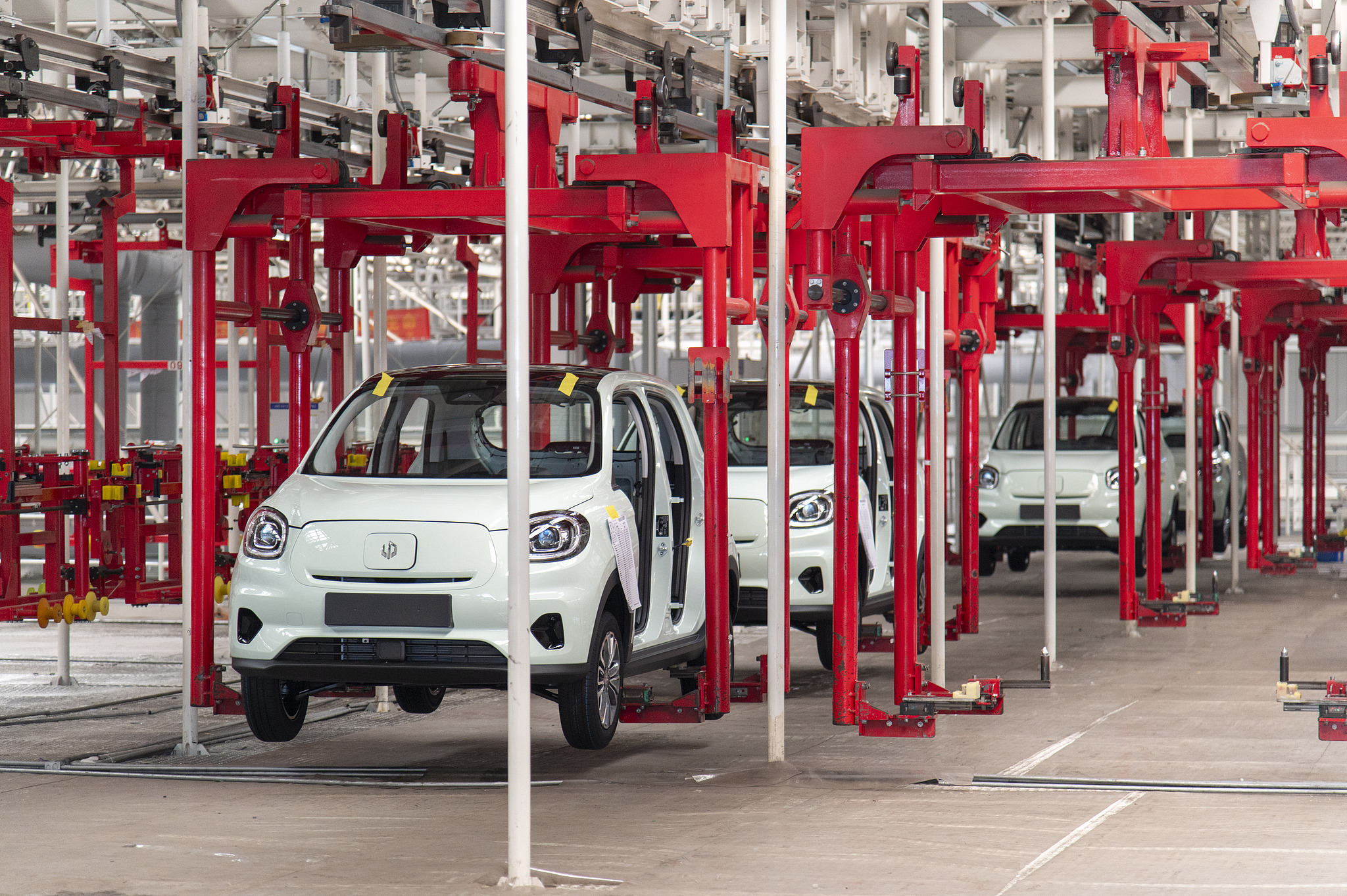
Assembly line of a new energy vehicle manufacturer, Jan. 13, 2026. /VCG
In short, industrial coordination strengthens the foundations of manufacturing advantages and expediates the development of new technologies and business forms. Regional collaboration enables regions to leverage their distinct, local strengths, enhance industrial competitiveness, and build a large, integrated market with strong synergies. Meanwhile, innovation integration makes industries more intelligent, environmentally friendly, and converged, facilitating deep integration of technological and industrial innovation.
The systemic upgrading of the entire industrial system will not only provide an effective response to industrial transformation driven by new technologies such as artificial intelligence and to challenges arising from shifts in the international economic environment, but also help preserve China's resilient manufacturing supply-chain advantages and large-market strengths, foster new quality productive forces, and consolidate the long-term competitiveness of the Chinese economy.