


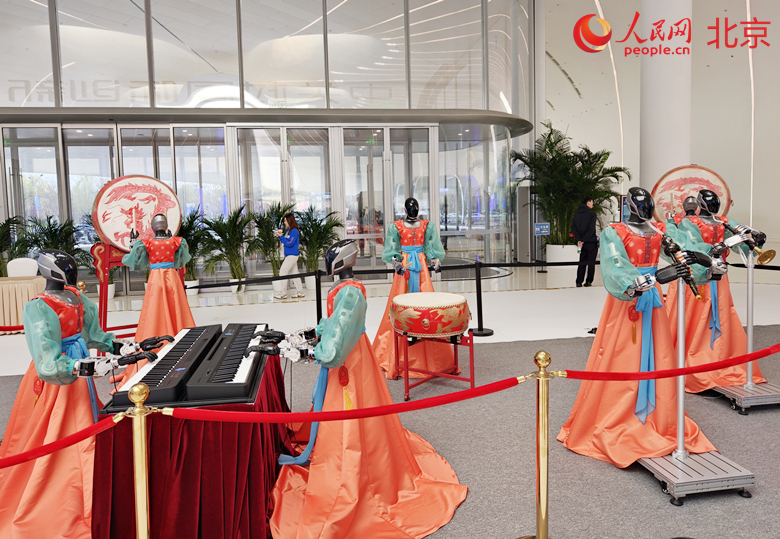
Robots wearing traditional Chinese-style clothing stage a performance at the 2026 Zhongguancun Forum in Beijing. (People's Daily Online/Li Bo)
Robots stole the show at the 2026 Zhongguancun Forum, which ran from March 25 to 29 in Beijing under the theme "Full Integration Between Technological and Industrial Innovation."
The robots, dressed in traditional Chinese-style attire and performing music and dance, perfectly blended cutting-edge technology with Chinese culture. They drew crowds of visitors eager to admire them and take photos. But how did they put on the clothes?
"It's the first time I've designed clothing for robots," said Diao Jie, an associate professor at the Beijing Institute of Fashion Technology (BIFT).
To outfit the robot performers, Diao joined forces with young faculty member Song Yanjie and a team of graduate students from BIFT. They made repeated visits to companies to learn about the robots' capabilities and functional needs.
"We wanted to highlight China's technological prowess while also showcasing its cultural soft power, turning the robots into eye-catching ambassadors for Chinese culture," she explained.
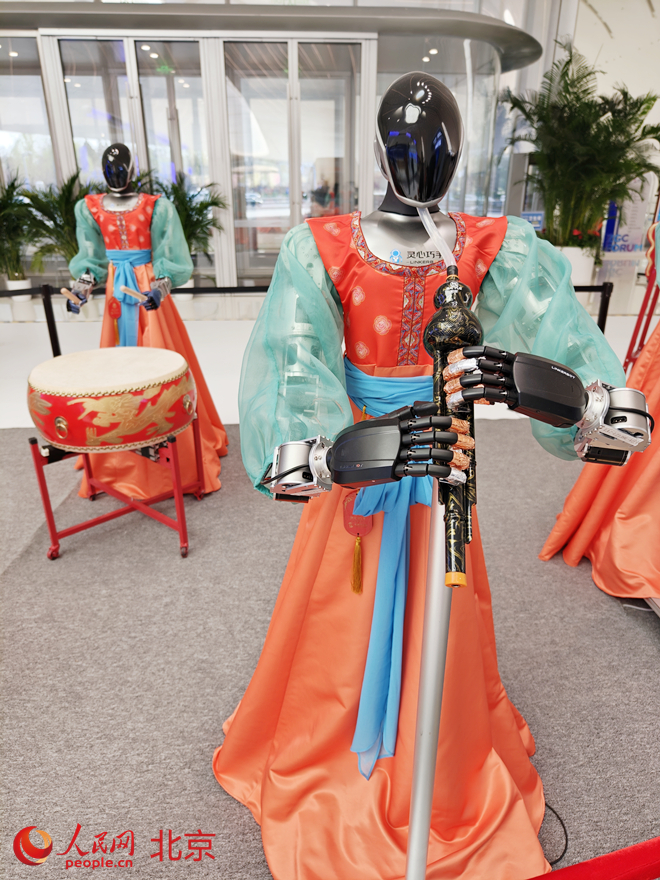
Robots wearing traditional Chinese-style clothing stage a performance at the 2026 Zhongguancun Forum in Beijing. (People's Daily Online/Li Bo)
The robot band performing at the forum had to move their arms frequently while playing instruments, so the designers took inspiration from the Tang Dynasty (618-907) short-sleeved ruqun, a type of Hanfu. Its compact cut allows easy movement. The patterns were inspired by Beijing's city flower, the Chinese rose.
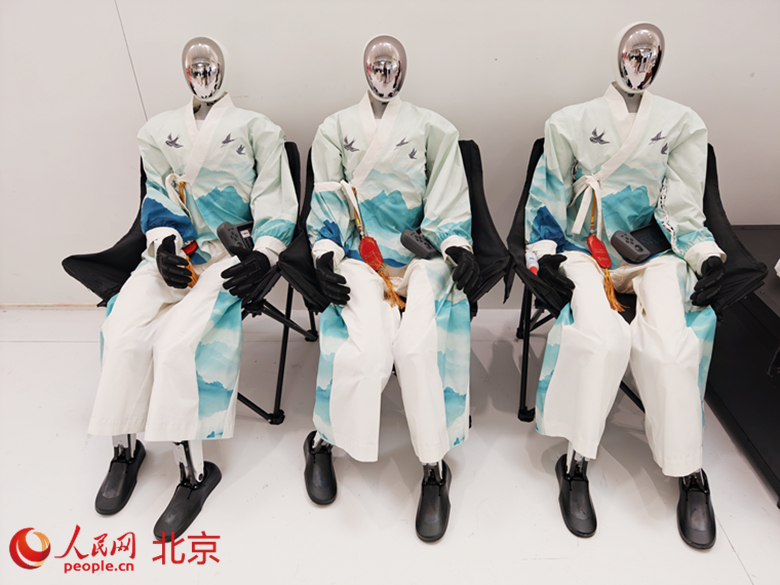
Photo shows dancing robots in traditional Chinese-style clothing at the 2026 Zhongguancun Forum in Beijing. (People's Daily Online/Li Bo)
Inspired by the Northern Song Dynasty (960-1127) painting "A Thousand Miles of Rivers and Mountains," the dancing robots' costumes gave traditional style a modern twist. Cross-collar cropped tops paired with wide-leg trousers combined classic elegance with the freedom of movement needed for the stage.
Designing the look was just the start; getting the robots into well-fitting outfits proved just as challenging.
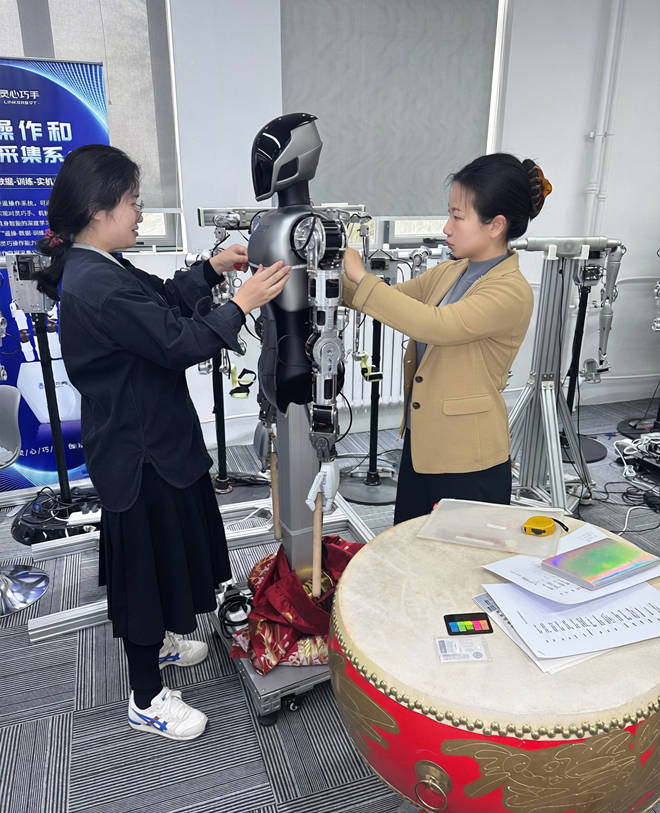
Diao Jie (right) and a colleague take measurements of a robot before designing its outfit. (Photo courtesy of the interviewee)
Early on, the team carried out extensive measurements. Unlike the human body, robots have torsos shaped more like inverted trapezoids or cylinders, with protruding screws on their limbs. That meant mapping every dimension with precision, while tracking joint ranges and heat vent locations to build a full structural profile for each model.
From there, the team took a modular approach. By combining hook-and-loop fasteners, magnetic clasps and elastic straps, they created outfits that fit securely yet can be quickly removed for maintenance.
Because the robots performed large, fast movements, the clothing had to flex without compromising safety. For the dancing robots, high-stretch fabrics with extra ease ensured the outfits wouldn't tear or restrict motion during kicks and sweeping arm movements.
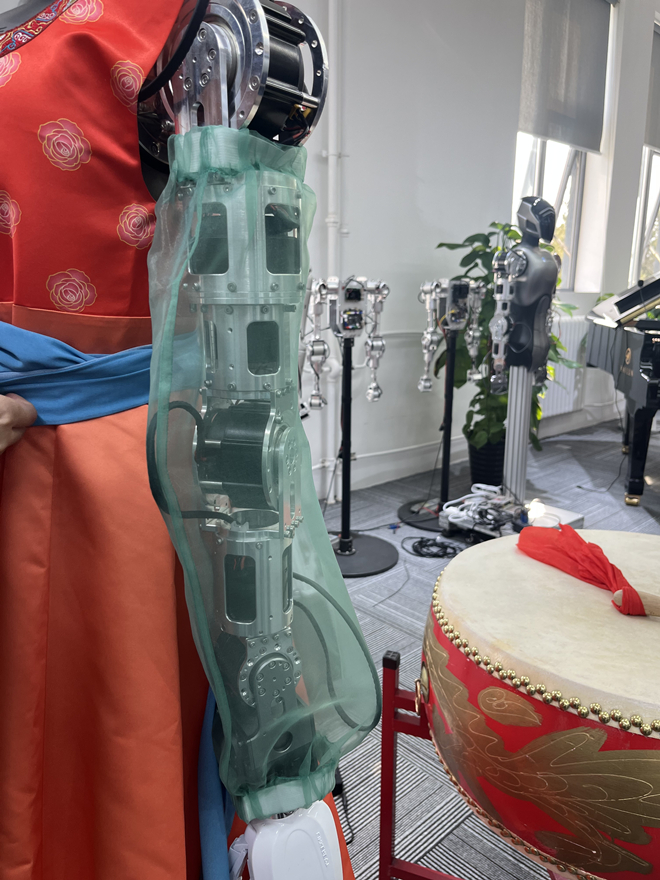
A robot tries on a sleeve cover. (Photo courtesy of the interviewee)
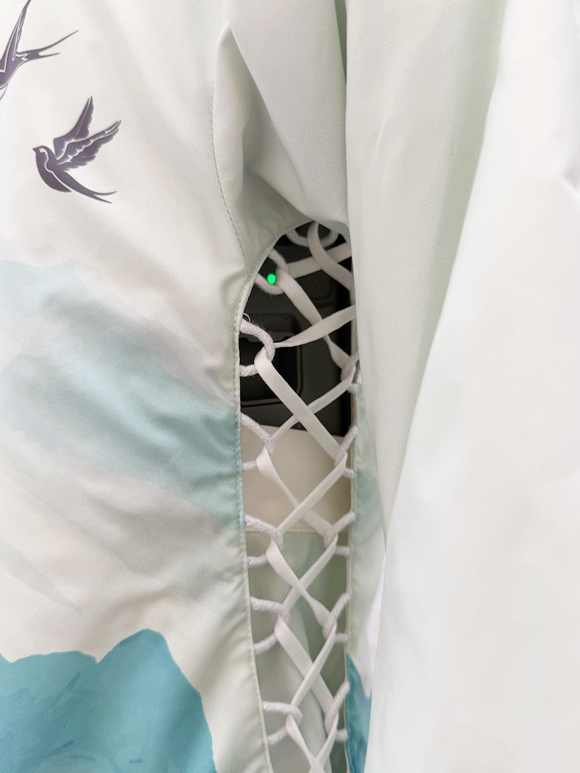
The sides of the dancing robot's outfit feature laced cutout panels that improve ventilation. (Photo courtesy of the interviewee)
Heat posed another challenge. To address this, the designers incorporated ventilation at critical points such as the underarms and joints, using cutouts and adjustable openings. Laced side panels enhanced breathability while maintaining the traditional aesthetic.