


At 3:00 pm in New York, an engineer named Mike at a US startup received a new assignment. He turned to an AI assistant powered by a Chinese large language model. After entering a few key requirements, a well-structured project plan appeared on his screen within seconds. With the help of this "smart assistant," a task that once took half a day was completed in under 30 minutes.
Across global markets, a growing number of users are turning to Chinese large AI models to boost productivity. Each interaction consumes digital units known as tokens, the basic building blocks AI systems use to process language. Typically, one Chinese character corresponds to one token, while an English word generally uses one to two tokens, including punctuation.
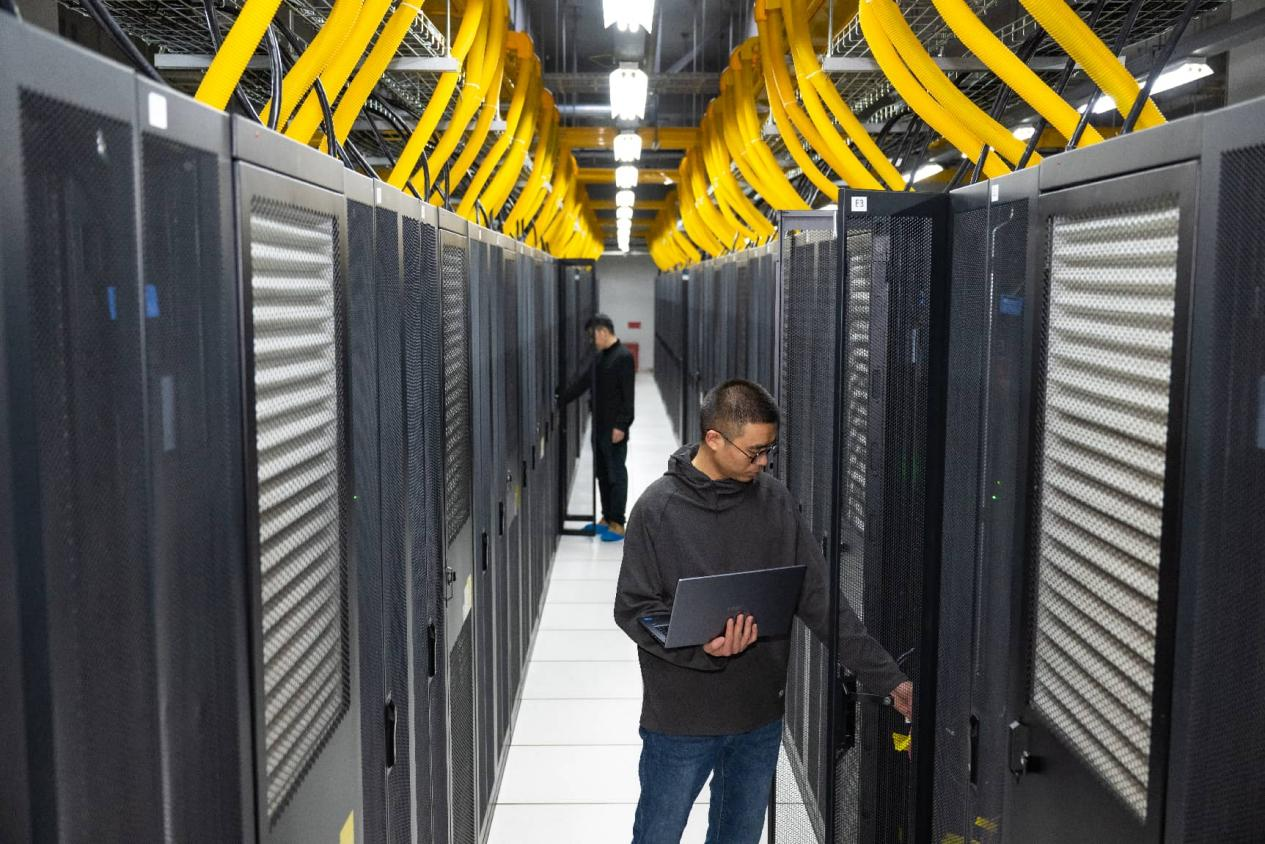
Engineers inspect an internet data center at an international computing facility in Changji, Northwest China's Xinjiang Uygur Autonomous Region. (Photo: People's Daily)
Because large models can only process limited text per session, most AI services charge based on token usage: higher consumption leads to higher costs. In March this year, China’s daily token usage exceeded 140 trillion, a thousand-fold increase over two years. Industry data shows Chinese large AI models now rank among the global leaders in total token consumption.
Yan Yijun, vice president of Shanghai-based AI foundation model company MiniMax, explained: "Users have clear expectations. First, the model must be intelligent, user-friendly, responsive and capable of solving complex problems. Second, pricing must be reasonable and commercially sustainable."
Token consumption reflects real-world usage, indicating how deeply, frequently, and extensively large AI models are integrated into applications. "Chinese large AI models enjoy high-frequency use by global users. This is a form of recognition from users worldwide," Yan added.
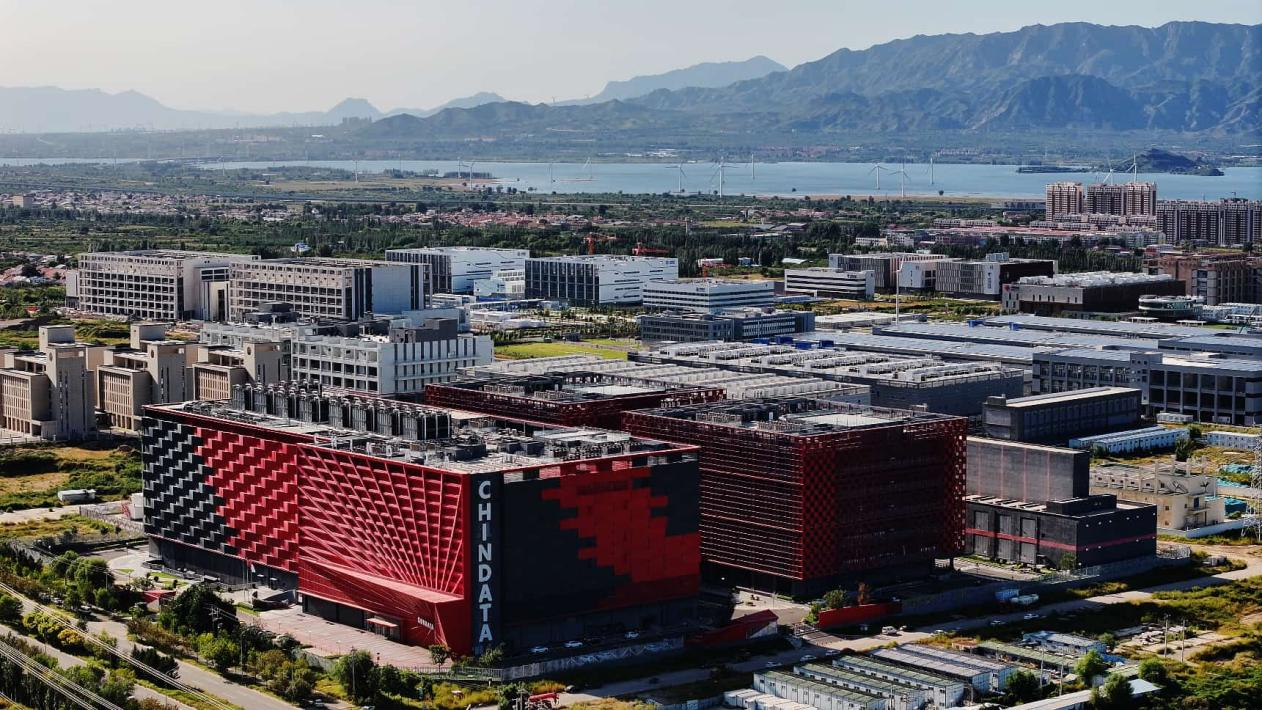
Pictured is a big data industrial park in Zhangjiakou, North China's Hebei Province. (Photo: People's Daily)
For developers, balancing higher performance with lower cost is challenging. Improvements in model capability often come with exponential growth in parameters, which increases token consumption. The more tokens used, the higher the operating costs for companies and usage costs for users.
Yan cited the MiniMax M2.5 model as a solution: "We use algorithmic innovations to create efficient reasoning paths, reducing token consumption at the source while increasing each token's value." Priced at $1 per hour, the model outputs 100 tokens per second. Estimates suggest Chinese models deliver comparable performance at roughly one-tenth the cost of US alternatives.
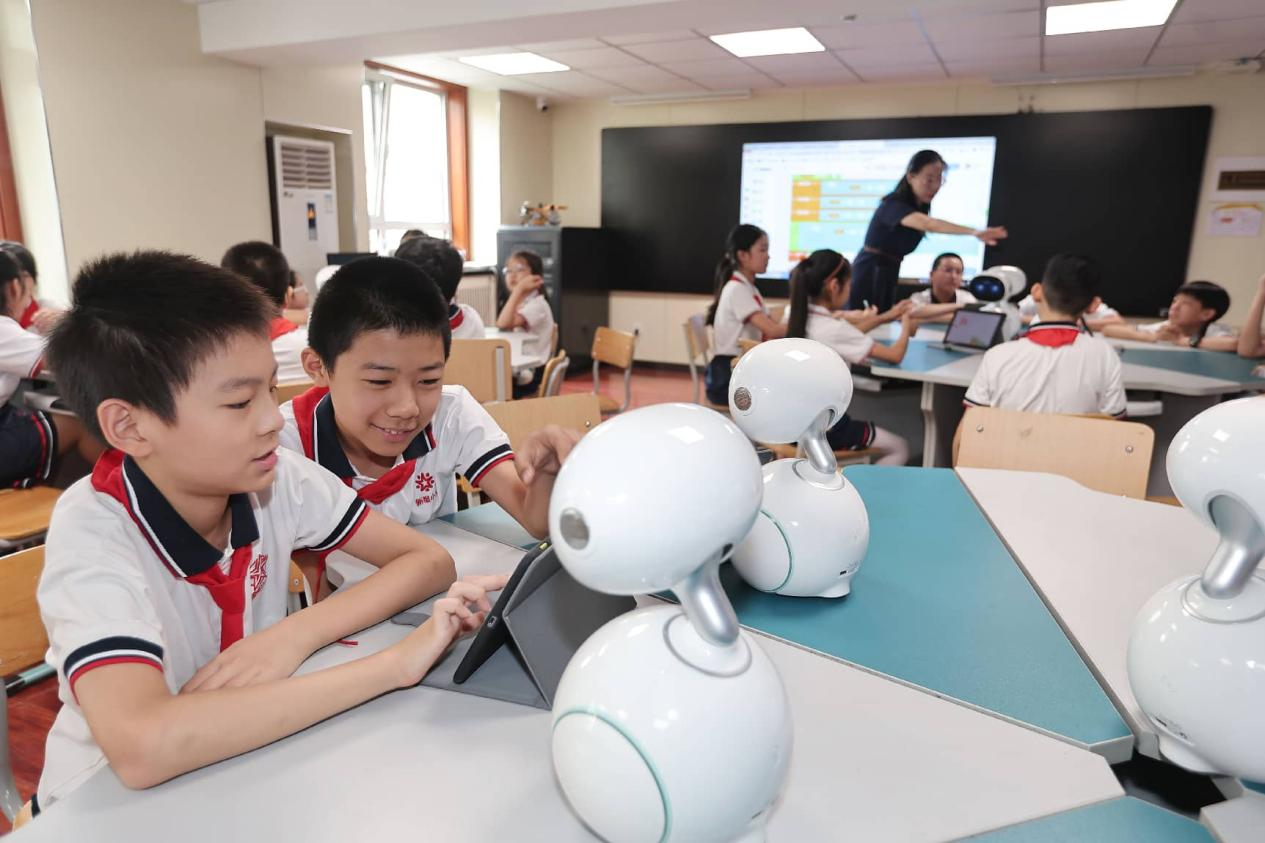
Students attend a class on basic AI knowledge at an elementary school in North China's Tianjin. (Photo: People's Daily)
"The decline in costs reflects not only technological progress by Chinese AI companies, but also China's strengths in power supply and industrial chains," said Li Zhiqing, a professor at the School of Economics, Fudan University.
China's diverse application scenarios also serve as AI testing grounds. By December 2025, generative AI users in China had reached 602 million, up 141.7 percent from a year earlier. This rapidly expanding user base is accelerating AI's transition from novelty to everyday tool, extending its use beyond internet applications into office collaboration, industrial design, and more.
At the same time, growing adoption provides continuous feedback, enhancing models' ability to handle complex tasks and opening new avenues for development.
"Ultimately, AI development depends on electricity," Li noted. "An AI server consumes five to eight times more power than a traditional server. Training a large model requires hundreds of millions of kilowatt-hours of electricity, while daily operations can exceed 500,000 kilowatt-hours. Power costs are therefore a key factor shaping the global distribution of computing capacity."
Here, China excels. With the world's largest power supply system, supported by ultra-high-voltage transmission networks and large-scale integration of renewable energy, China has established a stable and cost-effective foundation for computing power.
Today, abundant and affordable green energy, from wind farms in western deserts to solar installations on the Qinghai-Tibet Plateau, is fed into the grid and efficiently transmitted to eastern computing hubs through independently developed multi-level intelligent dispatch systems.
"In addition, China's well-developed AI supply chain further reduces industry costs," Li said. Strong coordination across sectors, from AI chips, servers, computing infrastructure and cross-border networks to edge computing and international settlement, has created a comprehensive full-chain advantage.
Li offered a comparison: traditionally, one kilowatt-hour of electricity generates one to two times its value in output. But in the case of tokens, the value can increase dozens or even hundreds of times. "China is now transforming its strengths in energy and manufacturing into digital value for the global market," he said.