


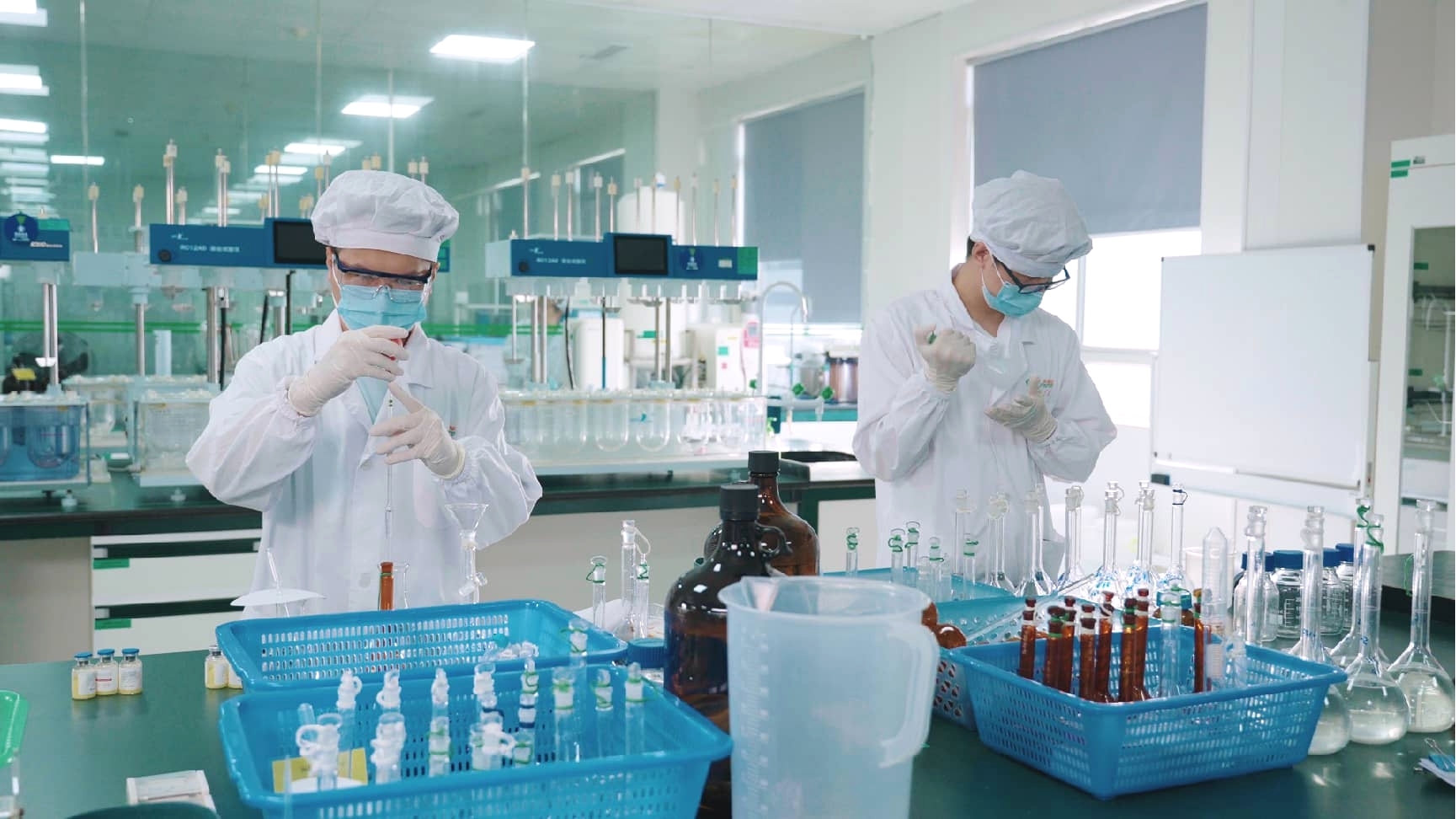
Experiments are conducted in a laboratory of pharmaceutical company Simcere in Haikou, south China's Hainan province. (Photo: Huangfu Wanli)
Latest figures released by China's National Medical Products Administration show that China has approved 19 innovative drugs for market launch so far this year, 15 of which are homegrown.
In the first quarter alone, overseas licensing deals for Chinese innovative drugs exceeded $60 billion, nearly half of the more than $130 billion recorded for all of 2025, setting a new historical high.
Behind the rapid growth in overseas licensing transactions lies increasing international recognition of China's capabilities and quality in innovative drug research and development.
How do these new medicines perform in real clinical settings? And how can the country accelerate pharmaceutical innovation while upholding rigorous quality standards? To find answers, People's Daily had field interviews.
An elderly woman surnamed Zhang from Taizhou, east China's Jiangsu province, suffered a sudden stroke. Doctors discovered extensive blockage in blood vessels in her brain, and her condition was complicated enough to require immediate transfer to Suzhou, a larger city in the province, for thrombectomy surgery.
Every minute after the onset of acute ischemic stroke leads to the loss of roughly 1.9 million brain cells. The golden time for thrombectomy is the first 4.5 hours after the onset, while the journey between Taizhou and Suzhou lasts about two hours.
To save critical time during transportation and prevent the patient's condition from deteriorating, Li Jingwei, president of the Affiliated Suzhou Hospital of Nanjing University Medical School, recommended a combined approach: providing thrombolysis during transit alongside edaravone-dexborneol sublingual tablets for neuroprotection.
"The surgery was a complete success. After discharge, she kept taking the medication for anti-inflammatory and antioxidant care," Li said. "She recently returned for follow-up examinations and has recovered remarkably well."
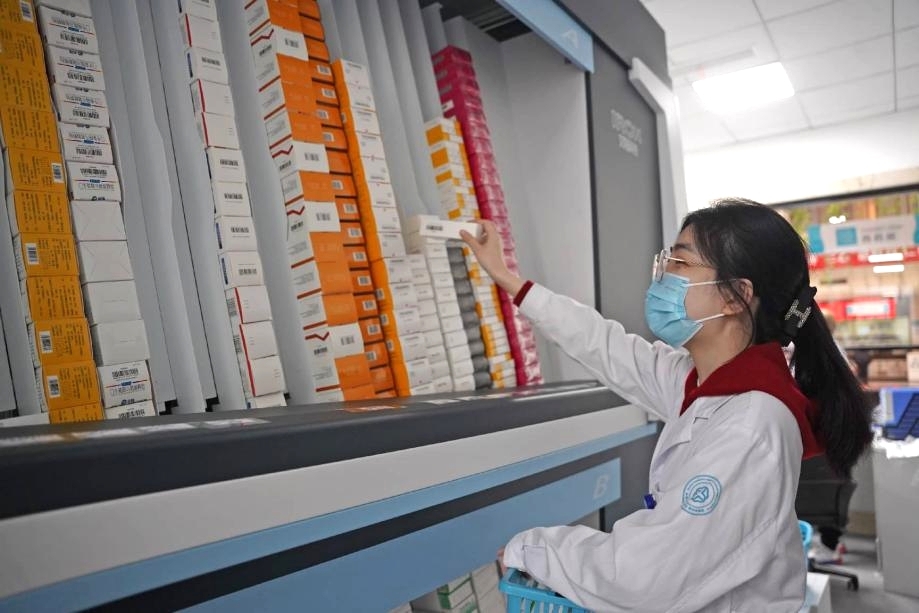
A pharmacist takes medicines from an automated medicine distributor at a hospital in Yuhuan, east China's Zhejiang province. (Photo: Duan Junli)
In the past, mortality rates for this type of patient were extremely high, Li told People's Daily, adding that nowadays, this innovative drug is playing an important role in improving recovery.
Stroke remains the leading cause of death and disability among Chinese residents. More than 60 percent of stroke patients in China suffer from ischemic stroke, yet treatment options have long remained limited.
Approved for market launch in December 2024, the edaravone and dexborneol sublingual tablets were developed by pharmaceutical company Simcere and are primarily used for neuroprotective treatment during the acute phase of ischemic stroke, helping improve rescue success rates and patient prognosis.
A 76-year-old resident surnamed Chen in Guangzhou, south China's Guangdong province has long suffered from hypertension and diabetes. He recently developed a high fever and severe cough. Doctors at Nanfang Hospital under Southern Medical University diagnosed him with influenza A.
Chen's family members said that conventional flu medications previously caused either severe gastrointestinal reactions or unsatisfactory results.
Peng Jie, chief physician in infectious diseases, quickly decided to prescribe an innovative drug targeting the PB2 subunit of the influenza A virus, onradivir tablets.
"He took the medicine in the morning, and his fever broke by evening," said a family member.
Influenza A has repeatedly triggered global public health crises, while drug resistance to conventional treatments continues to grow. Clinical demand for more effective, lower-resistance treatment options has therefore become increasingly urgent.
Developed over a decade by multiple institutions in Guangdong, onradivir tablets were approved for sale in May 2025.
"Clinical data for the drug has been impressive," Peng said. "It offers strong safety performance, and there's no need to adjust dosage for patients with mild to moderate kidney impairment, which provides additional protection for high-risk groups."
In recent years, China's innovative drug industry has made rapid progress, providing more treatment options for patients suffering from major diseases such as stroke and malignant tumors.
During the 14th Five-Year Plan period (2021-2025), China approved 230 innovative drugs, representing substantial growth. Among them, 76 innovative drugs were approved in 2025 alone, with more than 80 percent developed domestically. Advanced therapies, including targeted therapies, immunotherapies and antibody-drug conjugates, have continued to emerge.
On Feb. 5 this year, serplulimab injection, an anti-tumor drug independently developed in China, was licensed to Japan's Eisai Co., Ltd. In December 2025, an oral small-molecule glucagon-like peptide-1 receptor agonist and products containing the active ingredient were licensed to Pfizer. Both innovative drugs were developed by Chinese pharmaceutical company Fosun Pharma.
Since 2019, Fosun Pharma has received approval for more than 10 innovative drugs. The company has also strengthened overseas licensing efforts, sealing seven licensing and co-development agreements in 2025 with a potential total value exceeding $4 billion.
"Strong innovation results come from sustained strategic investment," said Wang Xingli, co-president of Fosun Pharma.
In 2025, the company invested 4.30 billion yuan ($634.68 million) in innovative drug-related research and development (R&D), up 15.98 percent year-on-year and accounting for more than 80 percent of pharmaceutical R&D expenditure.
Developing innovative drugs is widely known to be costly and risky. On average, bringing a new innovative drug to market requires around 1 billion yuan in investment, approximately 10 years of development and carries only around a 10 percent success rate.
In recent years, innovative pharmaceutical companies have continued increasing R&D investment. Financial reports from listed innovative drug companies show that R&D expenditure typically accounts for more than 15 percent of revenue and exceeds 25 percent in some companies.
To further promote innovative drug development and market entry, the National Medical Products Administration has continued advancing reforms to the drug review and approval system.
During the 14th Five-Year Plan period, 369 applications were included in the breakthrough therapy program, 143 drug registration applications received conditional approval, and 554 applications were fast-tracked via priority review channels.