


LOS ANGELES, July 25 (Xinhua) -- SpaceX launched the 13th flight test of its giant Starship system on Friday, achieving several major milestones, including the first deployment of next-generation Starlink V3 satellites and an in-space engine relight test.
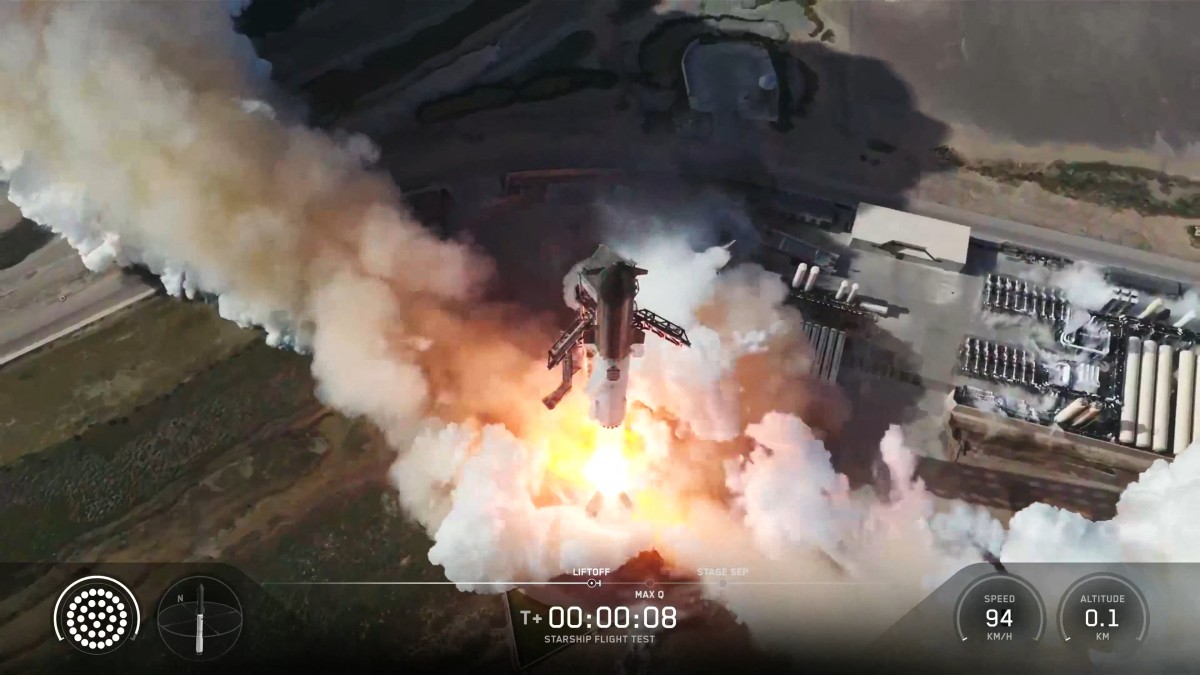
This still image taken from a SpaceX broadcast shows the SpaceX Starship launching from SpaceX Starbase in Starbase, Texas, on July 24, 2026. (Photo: AFP)
Starship lifted off from the company's Starbase facility in the U.S. state of Texas at about 5:51 p.m. Central Time (2251 GMT). Shortly after launch, SpaceX confirmed stage separation.
The Super Heavy booster completed a boostback burn test before attempting a landing burn. Some engines successfully reignited during the landing burn attempt, but the booster ended with a hard splashdown in the Gulf of Mexico, according to SpaceX.
The Starship upper stage completed its ascent burn and later deployed all 20 next-generation Starlink V3 satellites on a planned velocity and trajectory, which burned up upon reentry.
Engineers successfully communicated with the satellites and collected key telemetry data, SpaceX said, adding that the test would provide critical data as it prepares to expand the Starlink constellation.
During the flight, Starship successfully reignited one Raptor engine in space, demonstrating a capability needed for future orbital missions. It also performed a dynamic banking maneuver to simulate the trajectory for future return missions to Starbase.
About one hour and five minutes after liftoff, Starship completed the flight test with a soft splashdown in the Indian Ocean, coming to rest intact and providing the first key views of an intact heat shield, according to SpaceX.
The mission continued testing the upgraded Version 3 Starship and Super Heavy vehicles, which debuted during the previous flight test in May.
The launch was originally scheduled for July 16 but was delayed twice due to technical issues and weather conditions.