


As robots gradually enter real-world scenarios to help solve tangible operational and production challenges, these "niche" machines developed for specific settings in China come in diverse forms, each excelling in its own way. Some achieve visual recognition accuracy surpassing human eyesight, while others can sense the gentle touch of a butterfly landing on their palm.
Industrial precision
Fabric inspection has long been a bottleneck in the garment industry. Traditionally, workers inspected material manually under intense lighting, and prolonged visual strain often caused fatigue and reduced accuracy.
Now, that situation has changed. At a garment workshop operated by HLA (Hailan Home) in East China's Jiangsu Province, industrial cameras scan unfolded fabric while an AI-powered machine vision system captures images and identifies defects. It can precisely locate even minor flaws. Since deploying the system, the workshop's quality inspection pass rate has risen from 95 percent to more than 97 percent. The system operates around the clock, saving the company about 3 million yuan (about $445,000) in annual labor costs.
Robots can now do more than "see"—they can also "feel." Developed by BrainCo Technology in East China's Zhejiang Province, a tactile dexterous hand can be integrated with various humanoid robots and industrial robotic arms. Its fingertip sensors precisely detect pressure, friction, force direction and subtle surface texture variations, helping automate the identification and handling of flexible materials.
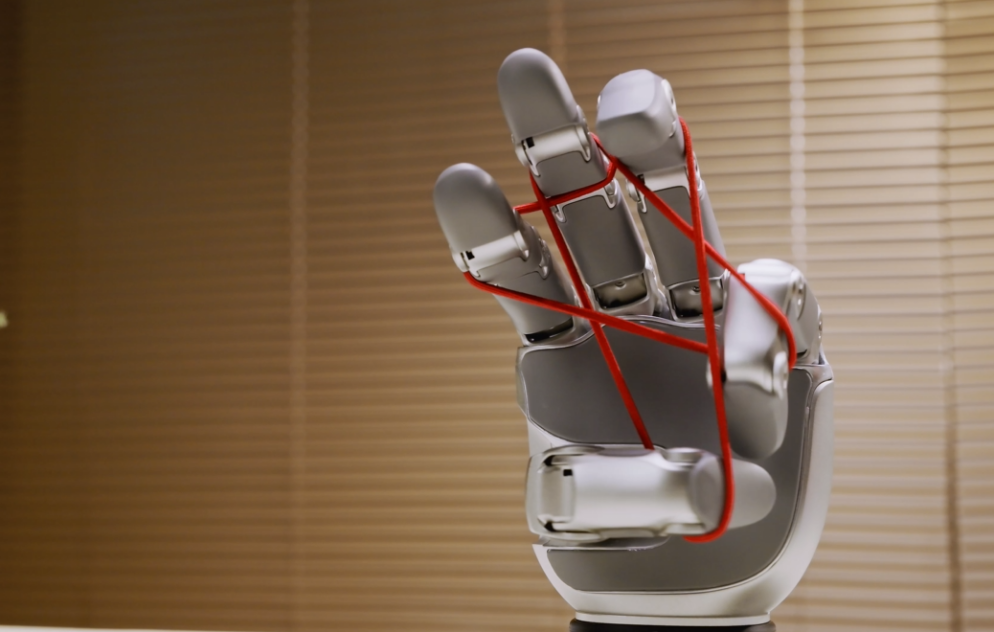
A tactile dexterous hand developed by BrainCo Technology. (Photo: Courtesy of BrainCo Technology)
Everyday automation
Beyond specialized factory roles, an increasing number of practical robots are entering daily life across China, serving as "new colleagues" in various industries.
Robot baristas have become a common sight in commercial areas nationwide. A robotic arm developed by Shenzhen-based RobotAnno in South China's Guangdong Province uses motion-capture technology to replicate professional latte-art techniques. It can craft a fresh cup of ground coffee with intricate latte art in about 90 seconds.
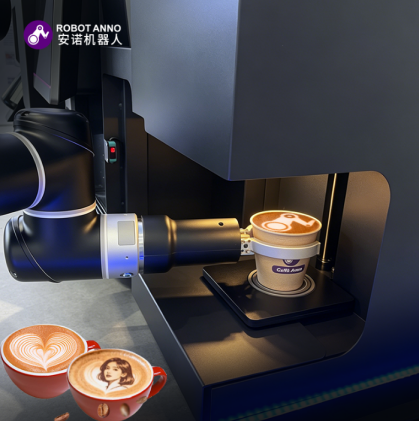
A robotic arm developed by RobotAnno crafts a cup of coffee. (Photo: Courtesy of RobotAnno)
Robots are also proving their worth in retail. In early 2026, Dobot Technology's Atom humanoid robot completed a fully autonomous popcorn-selling trial at a Shenzhen cinema. Operating in an open shopping mall area, the robot delivered popcorn while interacting naturally with customers. During the trial, it ran continuously for 14 hours in a single day, generating over 20,000 yuan in sales.
In agriculture, the Nanjing Institute of Agricultural Mechanization under the Ministry of Agriculture and Rural Affairs recently deployed a high-speed asparagus harvesting robot for field trials. With multiple robotic arms operating in sync, the machine can harvest up to 2,500 asparagus spears per hour with high precision.
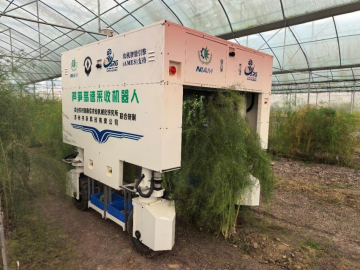
An automated harvesting robot picks asparagus during field trials at a farm. (Photo: Courtesy of the Nanjing Institute of Agricultural Mechanization)
In medicine, surgical procedures demand extreme precision. In neurosurgery, even a sub-millimeter deviation can lead to severe consequences. Offering exceptional stability and accuracy, surgical robots are becoming reliable assistants to doctors. Sinovation Medical Technology's SR series neurosurgical robots are now used routinely at Beijing Tiantan Hospital. The system achieves sub-millimeter positioning accuracy of 0.3 millimeters and completes 3D brain modeling for a patient within 15 seconds.
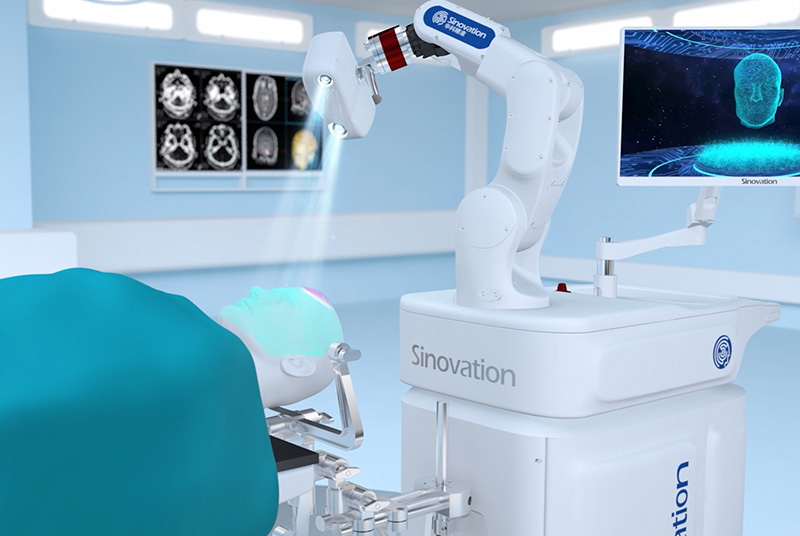
Sinovation Medical Technology's SR series neurosurgical robot. (Photo: Courtesy of Sinovation Medical Technology)
Robots are also tackling high-risk tasks such as high-altitude infrastructure inspections. China's ICIR cable-climbing robot is designed specifically to inspect stay cables on cable-stayed bridges. It can steadily climb cables at high elevations and complete a full inspection of a 150-meter-long cable in just over 20 minutes, detecting minor surface cracks with an accuracy exceeding 98 percent.
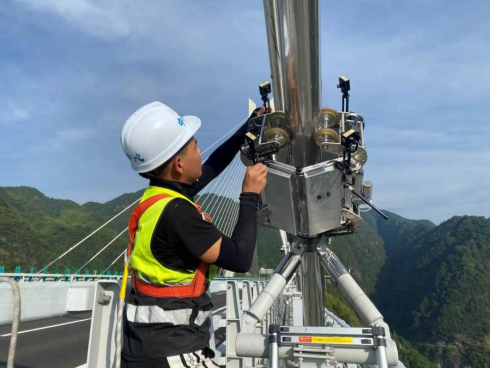
Engineers mount China's ICIR rope-climbing robot onto a bridge stay cable. (Photo: Xinhua)
In the past, bridge inspectors had to hang from safety ropes at extreme heights; now, robotic systems are taking over these hazardous duties.
(Compiled by Ge Weiqin)