


Artificial intelligence (AI) has emerged as a key topic at the Third APEC Senior Officials' Meeting (SOM3), taking place in Dalian, Liaoning Province, from August 17 to 28, 2026. As the technology evolves at breakneck speed, delegates are emphasizing the urgent need to balance AI-driven innovation with robust risk management, laying the groundwork for a potential joint declaration at the upcoming APEC Economic Leaders' Meeting in Shenzhen this November.
Speaking on the sidelines of the meeting, Nicolas Miailhe – AI Lead and Board Member at the France-Pacific Territories Economic Cooperation Committee (FPTPEC) – underscored the critical nature of these discussions. FPTPEC is the sole European representative within the Pacific Economic Cooperation Council (PECC). Miailhe expressed optimism that the growing momentum surrounding AI will culminate in a pivotal leaders-level declaration in Shenzhen.
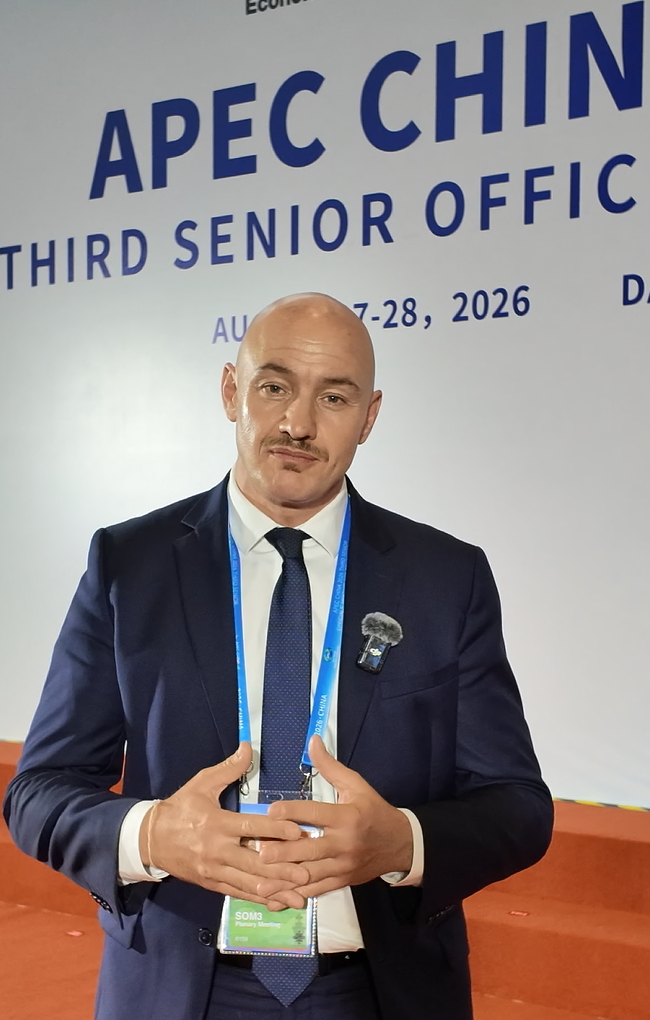
Nicolas Miailhe, AI Lead and Board Member at the France-Pacific Territories Economic Cooperation Committee (FPTPEC), speaks on the sidelines of the Third APEC Senior Officials' Meeting (SOM3) in Dalian, Liaoning Province, on August 27, 2026. (Photos: People's Daily)
"AI is moving very fast. Actually, the frontier of models and agents is shifting every 72 days," Miailhe noted, adding that the autonomous capabilities of advanced AI agents tend to double every three to six months. "The advances are so fast that we need to prepare society for that, in terms of generating innovation and managing all the risks, including cyber risks and online scams."
China's ascent to global AI leadership
When evaluating China's AI industry, Miailhe highlighted the country's rapid progress.
"I think Chinese AI has unquestionably reached global leadership status," he said, pointing out that Chinese AI models are now utilized worldwide, including in the US and Europe. He observed that China has successfully transitioned from "catching up" to maintaining a dominant position in both AI and robotics today. He argued that this reality makes the anticipated Shenzhen Declaration an essential signal to the Asia-Pacific region and the broader global community.
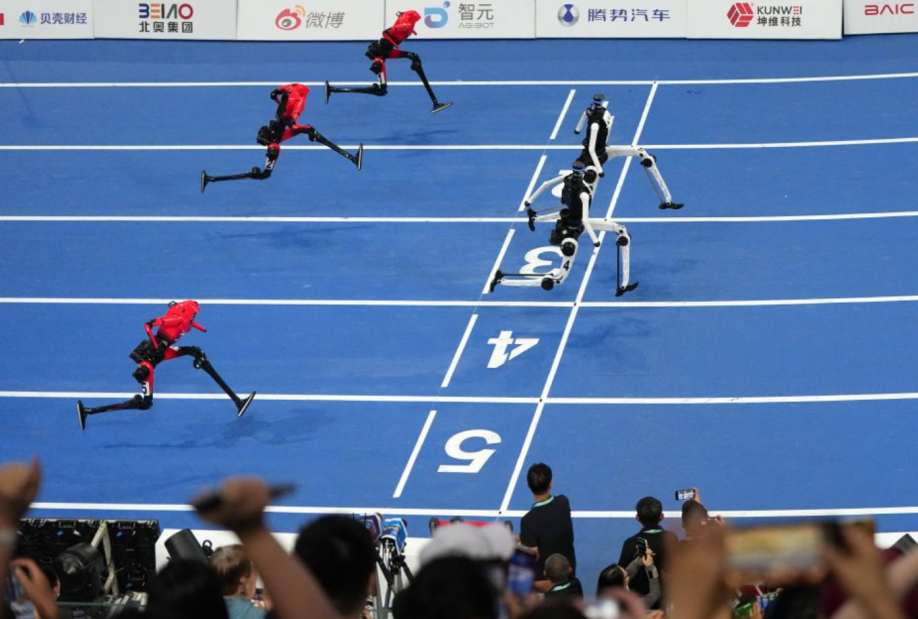
Humanoid robots compete during the 2nd World Humanoid Robot Games in Beijing on August 26, 2026. The high-profile event showcased China's advancing capabilities in robotics and AI applications.
Cross-regional insights on AI governance
To prevent systemic risks from widespread AI adoption, Miailhe suggested that APEC economies establish robust crisis preparedness and prevention mechanisms.
Developing a "common language and a common set of protocols" would be vital for accelerating response times as these technologies are deployed across major industries, including trade and transportation, he said.
As a representative from France, Miailhe highlighted the European Union's risk-based classification system as a valuable blueprint for APEC members.
Not all applications carried the same risks, he said.
"If you're using AI to recruit someone, the risk of discrimination is high," he said. "If you're deploying AI in an aircraft, the safety risk is high.
"If you're using it for simpler media applications, the risk is lower."
Tailoring disclosure and security protocols to match a specific application's risk level is a crucial step toward good governance in his opinion.
Looking at Beijing, China has "very strict AI regulations," he said.
It was important for all sides to collaborate and share understanding of that regulation, he noted.

An interior view shows the Dalian International Conference Center, the venue for the Third APEC Senior Officials' Meeting (SOM3), in Dalian, Liaoning Province, on August 27, 2026. The gathering brought together delegates to negotiate regional economic policies and technological governance strategies.
Taming the 'black boxes'
Addressing growing concerns about technology's impact on younger generations – drawing parallels to countries moving to restrict teenagers' social media use – Miailhe advocated for "common-sense regulation" applied prudently to AI.
He warned against complacency, describing current AI algorithms as "powerful but unexplainable black boxes" that even their creators do not fully understand.
"As we are deploying these powerful but unexplainable black boxes at the core of the economy, we need to be careful in how we're doing that. Otherwise, we risk incidents, accidents, and misuse," Miailhe cautioned. While acknowledging that most users have good intentions, he underscored the need to safeguard these foundational technologies from criminals and abusers.
"That's something that we've seen in social media," he concluded. "As we're deploying more and more of these algorithms, we need to be careful about, and cognizant of the malicious uses of these systems."