


Non-consumer BDS terminals rise 27 pct to nearly 42 million in China
BEIJING, Nov. 17 (Xinhua) -- The number of non-consumer terminals equipped with the BeiDou Navigation Satellite System (BDS) reached nearly 42 million units in China as of the first half of 2026, up 27 percent year on year, according to a report published on Tuesday.
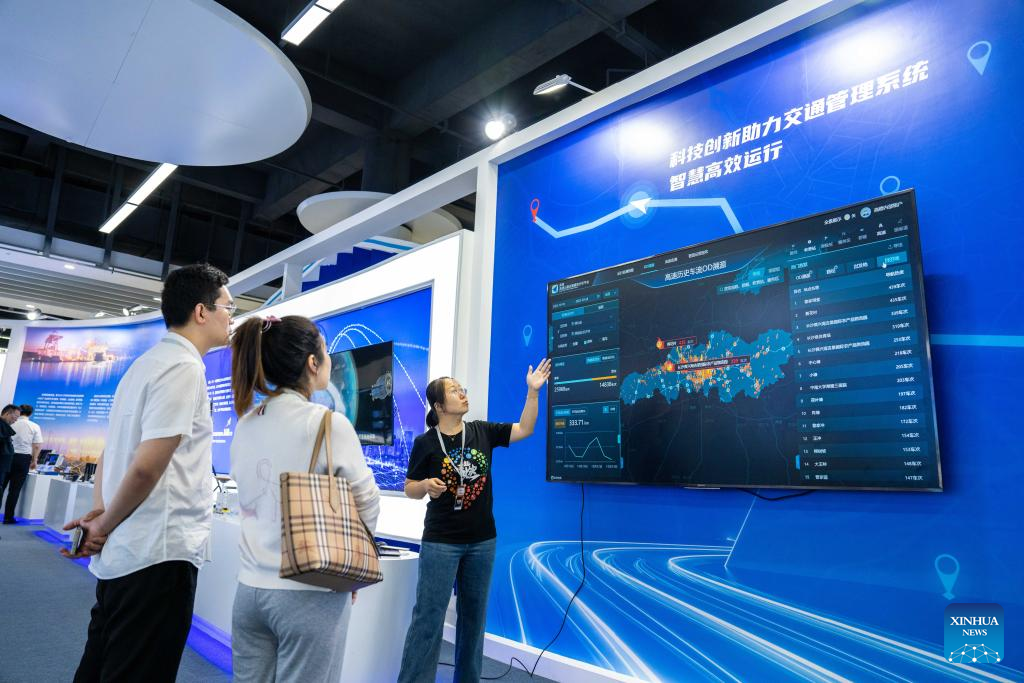
Visitors learn about the application of China's BeiDou Navigation Satellite System (BDS) on transportation management during the second International Summit on BDS Applications in Zhuzhou, central China's Hunan Province, Oct. 26, 2023. (File photo: Xinhua)
The report, released by the Global Navigation Satellite System and Location-Based Services Association of China at a forum in Beijing, also showed that the penetration rate of BDS in integrated applications exceeded 90 percent in the country.
Transportation sector remains the primary sector for BDS applications, followed by sectors such as telecommunications, natural resources, emergency management and agriculture. Meanwhile, industries such as finance, healthcare, and oil and petrochemicals have seen rapid growth in this regard.
In the consumer market, domestic smartphone shipments totaled 124 million units in the first half of 2026, with over 98 percent supporting BeiDou positioning. Roughly 10 million passenger vehicles equipped with BDS terminals were shipped, and sales of electric bicycles with BeiDou positioning functions reached 26 million units during the period.
The report said that BeiDou's international expansion is moving beyond simple hardware exports toward a combination of hardware, software, solutions and localized operations. Exported products show a trend of lower volume but higher prices, with the share of high value-added products continuing to rise.
Zhang Huifeng, president of the association, noted that with the penetration rate of BDS already high in traditional sectors and existing markets becoming saturated, the industry needs to explore new application scenarios and tap into new growth areas.
The BDS will provide global users with more stable and reliable positioning, navigation and timing services, upgrading from a navigation system into a unified spatiotemporal foundation for the digital and real economies, he added.