


China's homegrown large models power the global open-source ecosystem
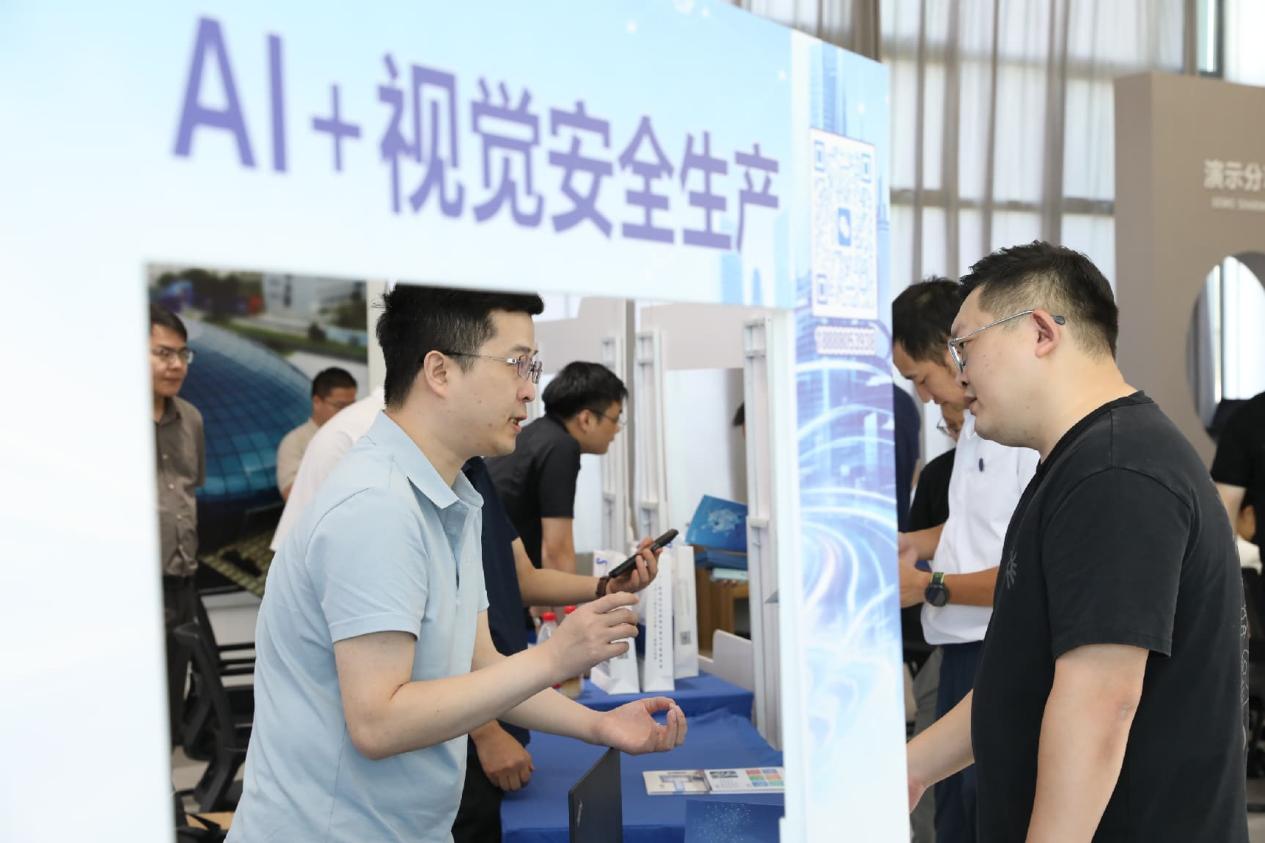
A staff member communicates with industrial artificial intelligence (AI) suppliers at an industrial AI application fair held in Hai'an, east China's Jiangsu province, on July 30, 2026. (Photo/Gu Binbin)
Recently, Chinese artificial intelligence (AI) startup Moonshot AI released the full model weights of Kimi K3.1 Pro. This open-source model, the largest in the world by parameter scale, has sparked widespread discussion across the tech community.
Since the beginning of this year, a growing number of Chinese technology companies have launched open-source AI models, achieving continuous breakthroughs in both parameter count and technical depth.
Unlike in traditional software, "open source" in the context of AI models primarily refers to "open weights." Simply put, if an AI model is a brain holding vast stores of information, "weights" are the hundreds of billions of parameter values wired inside it. These parameters encode the linguistic patterns, reasoning abilities, and knowledge the model acquires through training.
Open-weight models allow users to download the model, run inference on their own computers or servers, and even fine-tune it for specific tasks.
For businesses and developers, this means they can obtain a highly intelligent base model without spending vast sums of money to train one from scratch.
Open-weight models also allow deployment on local servers or private cloud platforms, which is crucial for users with stringent data privacy requirements. Furthermore, an increasingly rich array of open-source models enables developing countries to access frontier capabilities at low cost.
Embracing open source does not mean sacrificing commercial returns. Through cloud-based inference services, AI agent platforms, and model fine-tuning, enterprises can still build sustainable business models.
At present, China's daily token usage has surpassed 500 trillion. Domestic e-commerce platforms have launched token top-up centers. During livestreaming sessions on the "Double 11" shopping festival, tokens became a hot commodity.
"The measurable, priceable, and tradable attributes of tokens are gradually being tapped. Token usage is becoming a key indicator for observing AI activity, the depth of industrial penetration, and the level of intelligent development," said Wang Jingtao, deputy director of the Cyberspace Administration of China.
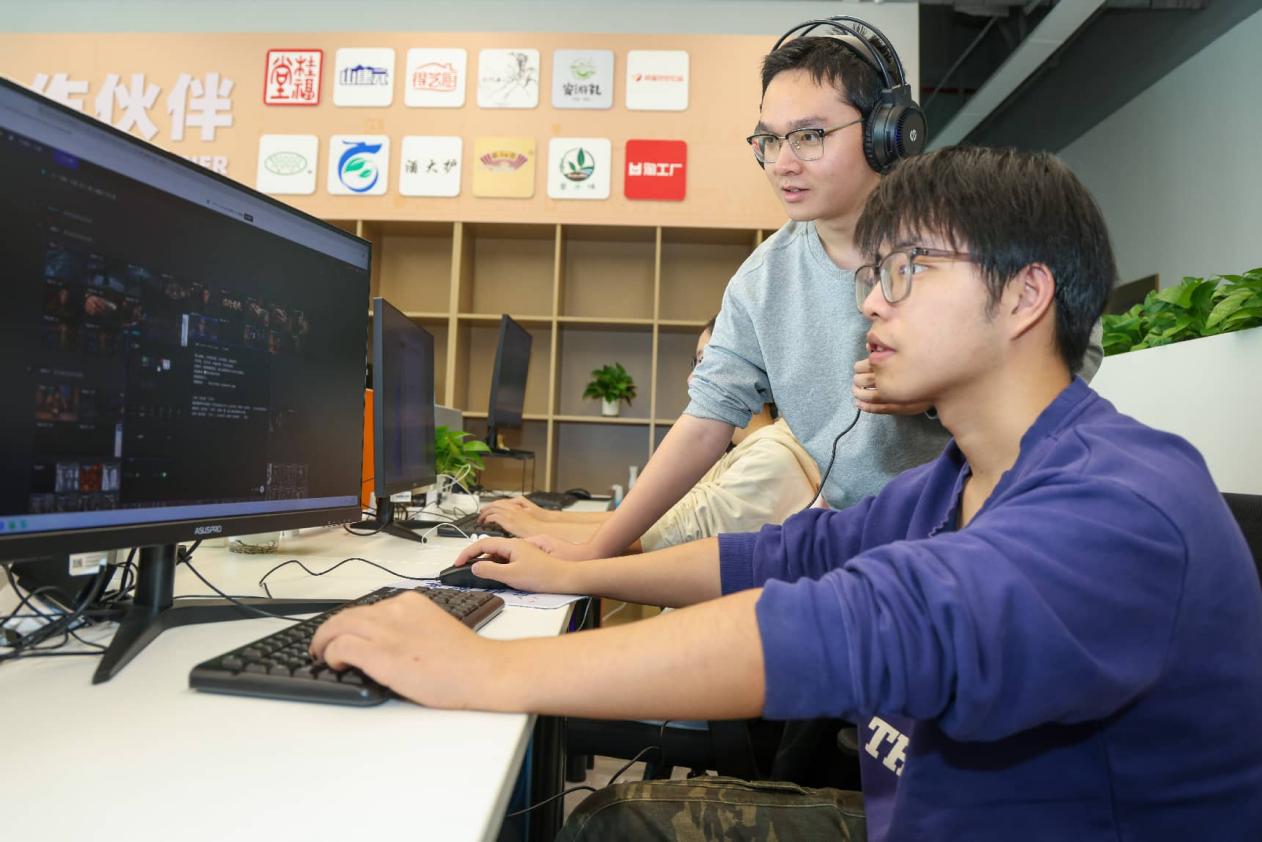
Staff members produce short dramas using AI at a digital talent base in Pan'an county, Jinhua, east China's Zhejiang province. (Photo/Chen Qiang)
On highly market-oriented model aggregation platforms, the performance of Chinese open-source models is equally prominent.
From Nov. 9 to 15, weekly usage of Chinese AI models on the global open-source model aggregation platform OpenRouter reached 119.1 trillion tokens, holding the No. 1 spot globally for 29 consecutive weeks.
Data from China's Ministry of Industry and Information Technology shows that Chinese open-source large models have been downloaded more than 10 billion times globally.
The growing competitiveness of homegrown open-source models stems not only from their wide-ranging applications, but also from rapid architectural innovation and continuous technological breakthroughs.
Early last year, Chinese AI tech firm DeepSeek released a series of models that not only achieved performance breakthroughs, but also introduced innovations in the Mixture-of-Experts (MoE) architecture, drastically cutting inference costs and computing demands. This architecture subsequently became a shared focus of exploration across the global AI community.
Kimi K3, released by Moonshot AI this year, introduced innovations such as a proprietary hybrid linear attention mechanism, making ultra-long text processing more economical and ultra-large model training more stable.
Yang Zhilin, founder and CEO of Moonshot AI, noted that Chinese open-source models are becoming evaluation benchmarks for global developers and important research samples for overseas institutions.
Driven by continuous technological advances, homegrown open-source models are finding their way into a growing range of real-world applications.
Late at night on a production line at BOE Technology Group Co., Ltd., display panels move smoothly through successive manufacturing stages. An AI system detects a microscopic defect in real time, immediately generates a repair plan, and coordinates with equipment to complete the fix. This creates a closed-loop quality management system that automates the entire workflow, from defect detection and analysis to execution.
"We independently developed the BOE Blue Whale Display Large Model on top of domestic open-source models, integrating industrial manufacturing expertise with production-line data. Spanning R&D, design, manufacturing, and quality management, it is driving the rollout of multiple AI applications across BOE factories nationwide," said Jiang Xingqun, senior vice president at BOE.
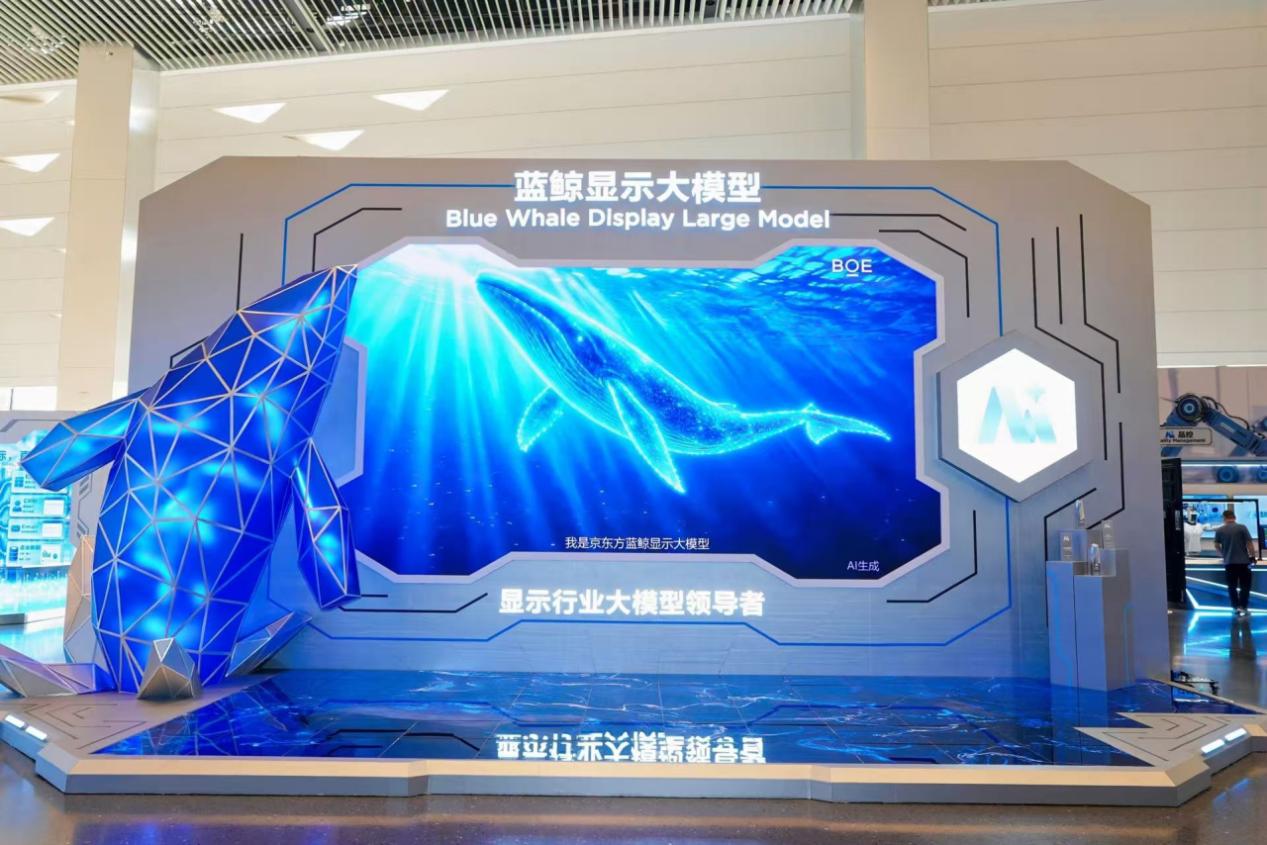
The Blue Whale Display Large Model is displayed at the BOE Innovation Partner Conference 2026, on Sept. 22, 2026. (Photo courtesy of BOE Technology Group Co., Ltd.)
Chinese open-source models are also transforming workflows for international users and cost structures for overseas enterprises.
Late last year, a multilingual large model named Qwen-SEA-LION-v4 was released in Singapore. Built on Alibaba's open-source Qwen foundation model, it focuses on Southeast Asia's complex linguistic environment and has been well received by local users. Leveraging the Qwen open-source model's support for 119 languages, it was pre-trained on 36 trillion tokens.
According to Leslie Teo, senior director of AI Products at AI Singapore, the collaboration with Alibaba on Qwen-SEA-LION-v4 is an important milestone in advancing AI inclusivity and making it more representative of Southeast Asia.
"The vision of inclusive AI must be built on a solid open-source foundation," said Zhang Yunquan, a researcher at the Institute of Computing Technology, Chinese Academy of Sciences. Through advances in technology, standards, and public goods, China is translating the vision of inclusivity into tangible action, Zhang added.