


First foreign astronaut in China's manned space program flies to Tiangong space station
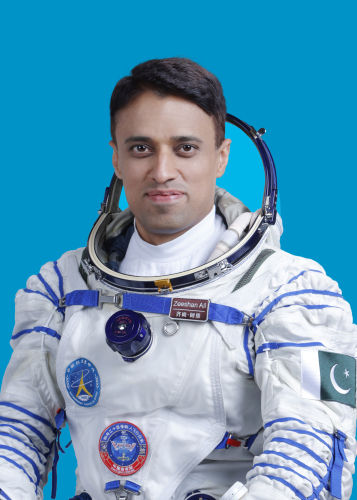
Photo shows Pakistani astronaut Muhammad Zeeshan Ali. (Photo from the official website of China Manned Space)
China launched the Shenzhou-24 crewed spaceship on Nov. 25, sending three astronauts, including a Pakistani payload specialist, to its orbiting Tiangong space station.
The joint flight has drawn global attention. As the first foreign astronaut in China's manned space program, Pakistani astronaut Muhammad Zeeshan Ali served as a payload specialist on the mission. This flight represents a major milestone in China's efforts to build a community with a shared future in outer space and writes a new chapter in space exploration.
The mission also marks a long-cherished dream finally coming true for 250 million Pakistanis. It represents another step forward for China's manned space program and a monumental first step in Pakistan's space history. Pakistani Prime Minister Shehbaz Sharif described the mission as a defining moment in Pakistan's journey toward space exploration.
In space cooperation, polar expeditions, and deep-sea scientific research, should humanity choose competition or cooperation? The precious ticket to space for the Pakistani astronaut offers China's answer to the world.
China's space station opens its doors to the entire world. It is hoped that more international astronauts will follow suit, join the cause of space exploration, and work together for the well-being of all humanity, Ali said.
Since the Soviet cosmonaut ushered in the era of human spaceflight in 1961, astronauts from dozens of countries have traveled to space, yet only a handful of nations possess the full capability to independently conduct manned launches. For the vast majority of developing countries, constraints in technology, funding, and infrastructure create a nearly insurmountable gap on the path to space.
China-Pakistan cooperation in manned spaceflight has forged a model that the international community can draw upon. The two countries have already successfully launched nine satellites together, completing missions in communications, Earth observation, remote sensing, and lunar exploration, laying a solid foundation in the aerospace sector.
Pakistan-China space cooperation fully shows that cutting-edge technology can indeed become a shared asset benefiting all of humanity. It sets a replicable benchmark for the Global South to participate in frontier scientific exploration, said Sultan M. Hali, a Pakistani political and strategic analyst.
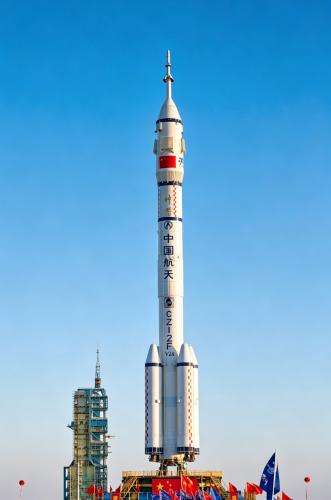
The combination of the Shenzhou-24 crewed spacecraft and a Long March-2F carrier rocket is transferred to the launch area on Nov. 17, 2026. (Photo from the official website of China Manned Space)
The vast universe knows no borders and outer space is the common domain of humankind. Exploring the cosmos is a dream shared by all people. Advancing the aerospace cause is not a race to see who can go faster, but a test of whether we can go further together.
Breaking down barriers to cooperation requires vision and magnanimity. As the ancient Chinese saying goes, "Looking up, I see the immensity of the cosmos; bowing my head, I look at the multitude of the world."
As crewed spaceflight and deep-space exploration accelerate, growing emphasis must be placed on ensuring equitable access to scientific and technological advancements for developing nations.
China welcomes its international counterparts to join in the flight missions of the country's space station. This stance reflects the responsibility of a major country.
Expanding the boundaries of cooperation requires capability. China's space station is open to all United Nations members, with scientific research projects from 17 countries already selected. The BeiDou Navigation Satellite System serves more than 140 countries and regions worldwide.
Meanwhile, China's lunar research samples are open and shared with global scientific institutions. The country has jointly developed Earth-resource satellites with Brazil, using the data to protect the Amazon rainforest ecosystem. China has assisted Egypt in building capabilities for satellite assembly, integration, and testing.
As China's space resources and technological capabilities continue to grow, it consistently shares the fruits of its development with other nations.
The stars and the sea are the common wealth of all humanity. Humanity's march toward scientific and technological progress is, ultimately, a long journey taken hand in hand. As humankind enters an era of more advanced technology, ensuring that public technological goods benefit more developing countries is a pressing imperative in global governance.
Space exploration is for a better future for all humanity and represents a vivid practice of building a community with a shared future for mankind, Ali said, adding that he looks forward to gazing down at Earth from space, searching for the lights of his homeland, and recording the experience to share with everyone.