


The "Becoming Chinese" TikTok trend—where Gen Z users adopt habits like drinking hot water, wearing indoor slippers and eating home-cooked meals—has gone global just as the Year of the Horse gallops in.
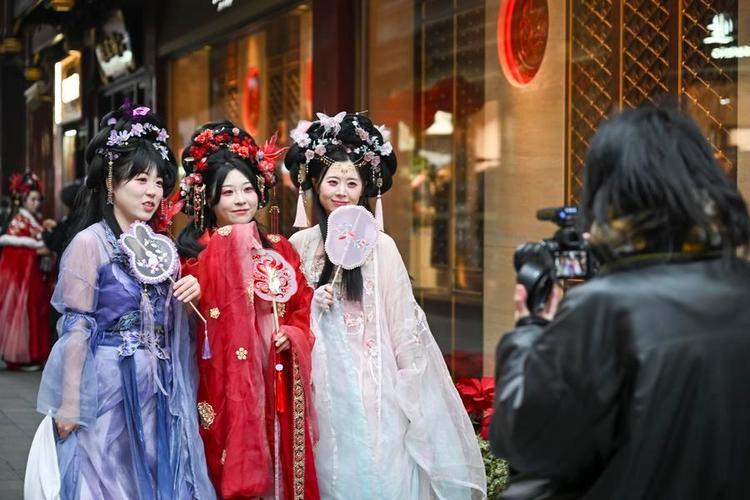
South Korean tourists dressed in Hanfu, a traditional Chinese attire, pose for photos in Yuyuan Garden in Shanghai, East China, Jan. 6, 2026. (Photo: Xinhua)
"China is pleased to see more foreign friends willing and able to feel China's development and experience the daily life of Chinese people," said Ministry of Foreign Affairs spokesperson Lin Jian at a February 6 press briefing, commenting on the viral online trend.
"Becoming Chinese" goes far beyond casual sightseeing, representing a lifestyle immersion in which international visitors actively participate in China's daily rhythms.
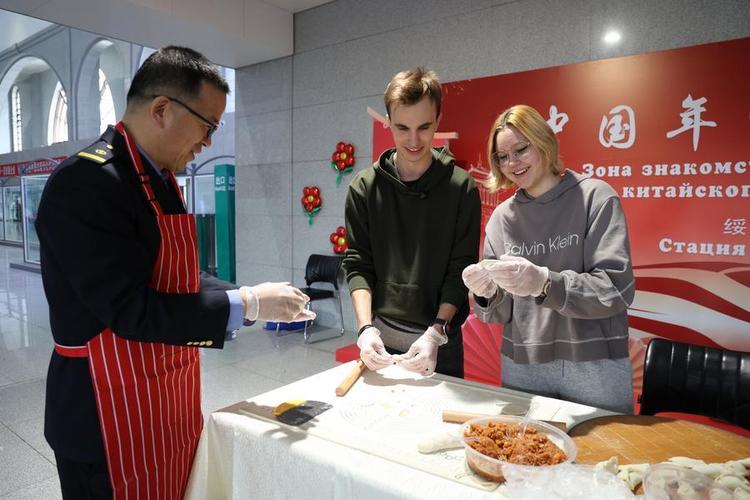
Foreign tourists experience making dumplings at the Suifenhe Railway Station in Suifenhe City, Northeast China's Heilongjiang Province, Feb. 10, 2026. (Photo: Xinhua)
British vlogger Luke Johnston documented his Spring Festival in Urumqi, Xinjiang Uygur Autonomous Region, joining residents for spectacular drone light shows and rubbing New Year paintings. His vlog, posted on TikTok and YouTube, gained millions of views.
"This isn't just travel," Johnston said. "It's living a real, warm Chinese New Year."
Foreign visitors dive into celebrations nationwide: exploring temple fairs in Beijing (savoring candied hawthorns, twirling pinwheels); wearing hanfu as they wander through Shanghai's Yuyuan Garden heritage markets; admiring fish lanterns in Tianjin; learning to dot lion dance puppet eyes in Foshan, Guangdong Province; making sweet glutinous rice balls in Guangzhou; steaming New Year cakes in Fuling, Chongqing.
Visitors master everyday gestures too: perfecting chopsticks, writing the "fu" (fortune) character, saying "gong xi fa cai" for red envelopes and calling themselves "lao biao" ("fellow villagers") online.
One foreigner said, "In China, I feel accepted, treated with kindness and blessed."
Analysts identify three drivers:
First, China's inclusive visa policies enable access. Citizens of 50 countries enjoy visa-free entry; 65 ports offer 240-hour transit visas; and over 13,000 tax-refund stores serve shoppers. Border authorities processed 17.8 million trips in Spring Festival (1.3 million foreigners, up 21.8 percent daily), with 460,000 visa-free (up 28.5 percent year-on-year).

Dutch tourists David (L, front) and Pim (R, front) pose for photos with Chinese tourists at the Tiantan (Temple of Heaven) Park in Beijing, capital of China, Jan. 7, 2026. (Photo: Xinhua)
Second, seamless digital payments solve a pain point. Foreigners can use Alipay/WeChat Pay with a passport, overseas number or international cards (Visa/Mastercard)—no Chinese bank needed—covering street vendors, taxis, transit and hotels.
Unlike five to 10 years ago, when visitors needed Chinese help for payments, they now navigate independently.

Italian tourist Chiara Manuzzi (R, front) inquires about tax refund policies at a shopping mall in Beijing, capital of China, Jan. 6, 2026. (Photo: Xinhua)
Third, China's tech strength shines. The National Bureau of Statistics reports 143,608 industrial robots produced in January-February 2026 (up 31.1 percent year-on-year).
Kung fu humanoid robots on the Spring Festival Gala went viral. Visitors met robot performers at temple fairs in Beijing and Xi'an (and other cities), as well as drone shows and AI lanterns.
High-speed rail, 5G and smart services together blend millennia-old heritage with modern dynamism in a vibrant, organized society.
China proves heritage and progress thrive together. This may well explain the rise of the "Becoming Chinese" trend.