What constitutes a correct understanding of governance performance, and how can it be put into practice? Looking back, examples such as a well, a bicycle and an ancient residence illustrate Xi Jinping's efforts to define and apply a people-centered approach to performance evaluation during his time in local governance.
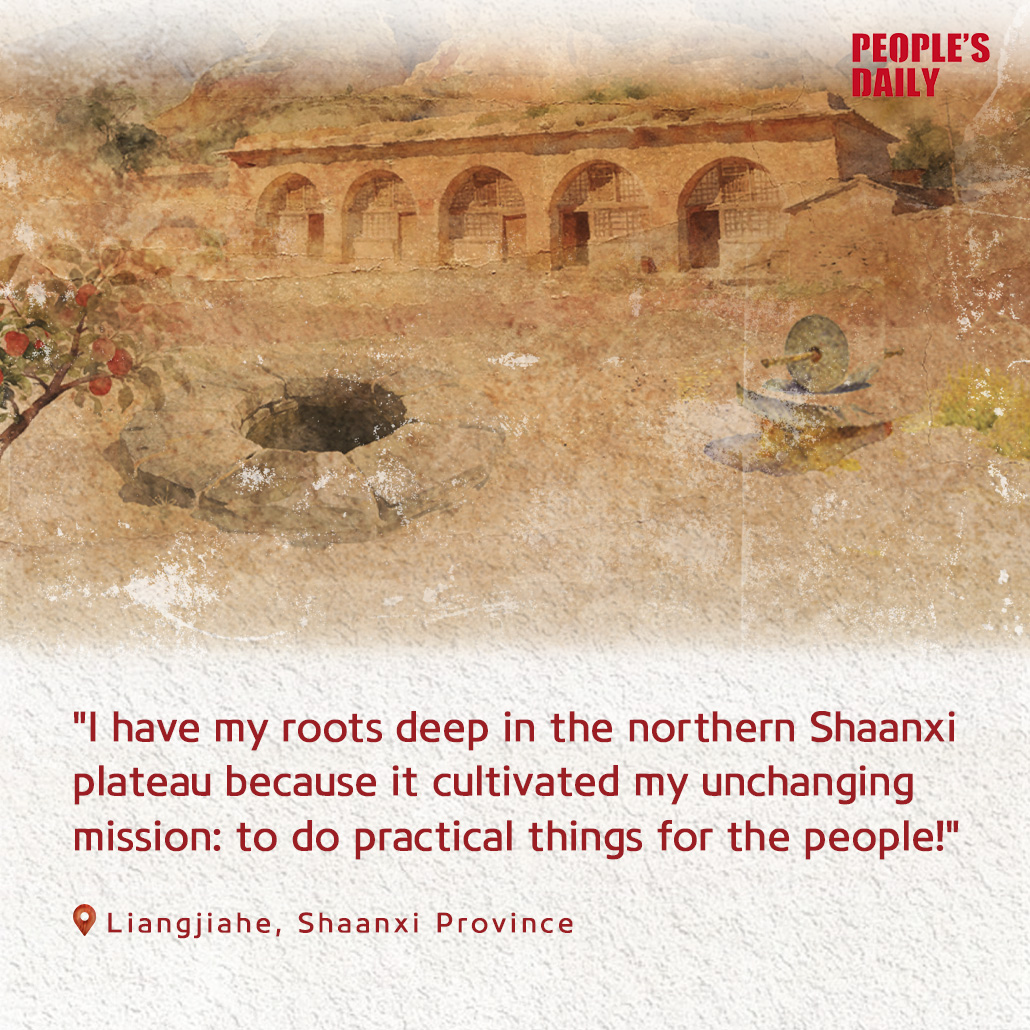
From 1969 to 1975, Xi Jinping lived and worked in Liangjiahe village as an educated youth in Shaanxi Province. It was there that he joined the Communist Party of China (CPC) and, in 1974, was elected Party chief of Liangjiahe village. Xi led a series of initiatives, including digging a well that still provides drinking water today.
He wrote in an article: "As a public servant of the people, I have my roots deep in the northern Shaanxi plateau because it cultivated my unchanging mission: to do practical things for the people!"
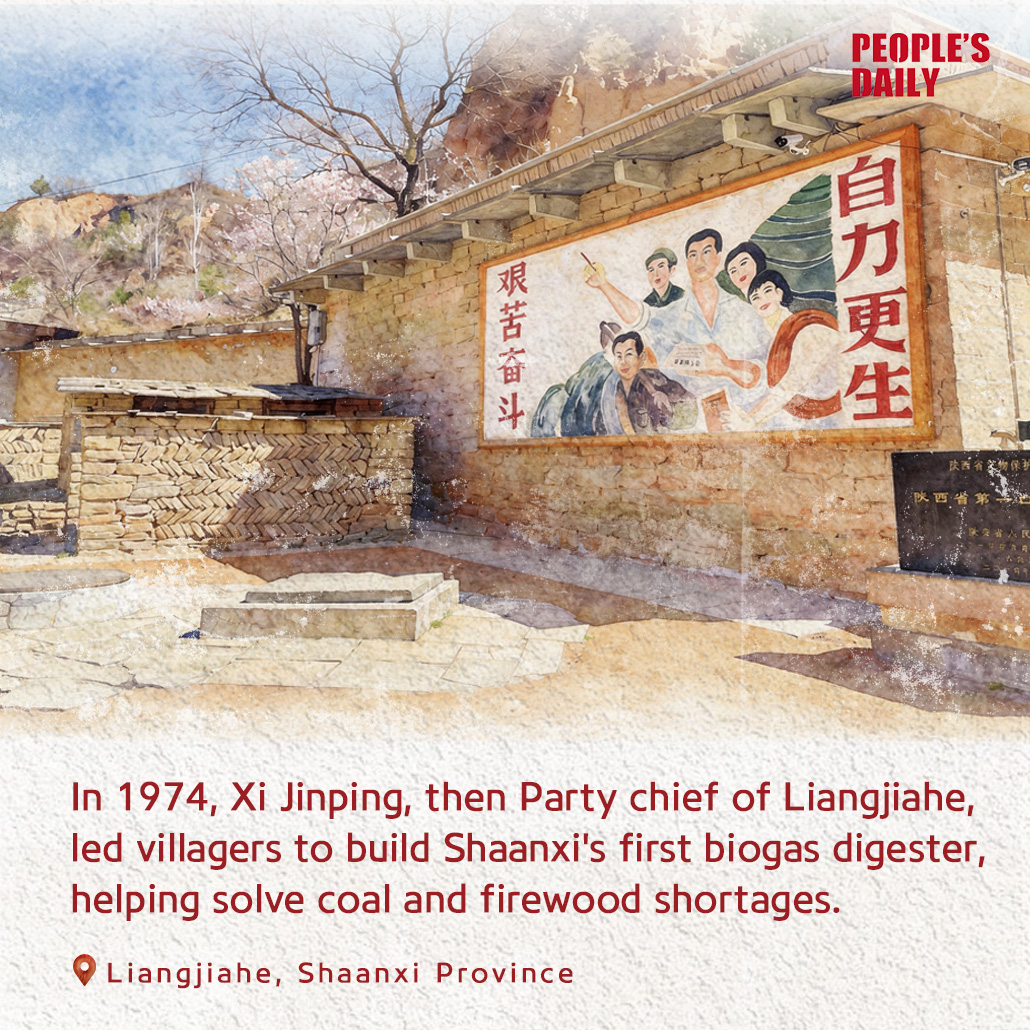
Communists must bear in mind that working for the people's well-being is their greatest political achievement. On January 8, 1974, People's Daily published a report on the large-scale promotion of biogas in Sichuan Province. After reading it, Xi Jinping made a special trip to Sichuan to learn from their experience. That July, he led Liangjiahe villagers to build Shaanxi's first biogas digester.
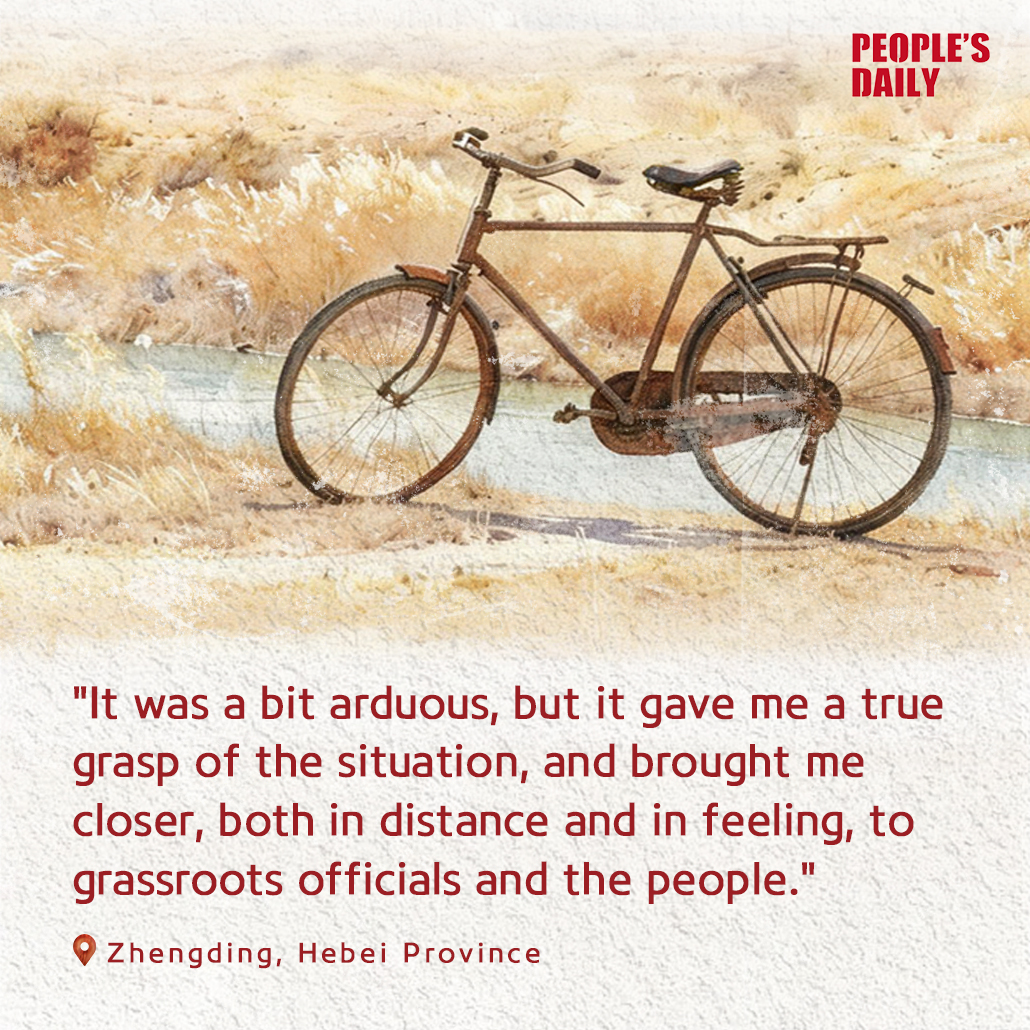
When working in Zhengding county, Hebei Province, from 1982 to 1985, Xi Jinping often rode an old bicycle conducting fact-finding missions. He visited all 25 communes and over 220 production teams in the county.
Recalling these field visits in January 2015, he said, "It was a bit arduous, but it gave me a true grasp of the situation, and brought me closer, both in distance and in feeling, to grassroots officials and the people."
In October 1984, then secretary of the CPC Zhengding County Committee, Xi Jinping led his staff to the main street, set up tables and benches, and distributed public opinion surveys. Investigation and research are treasured traditions of the CPC and fundamental skills for effective governance.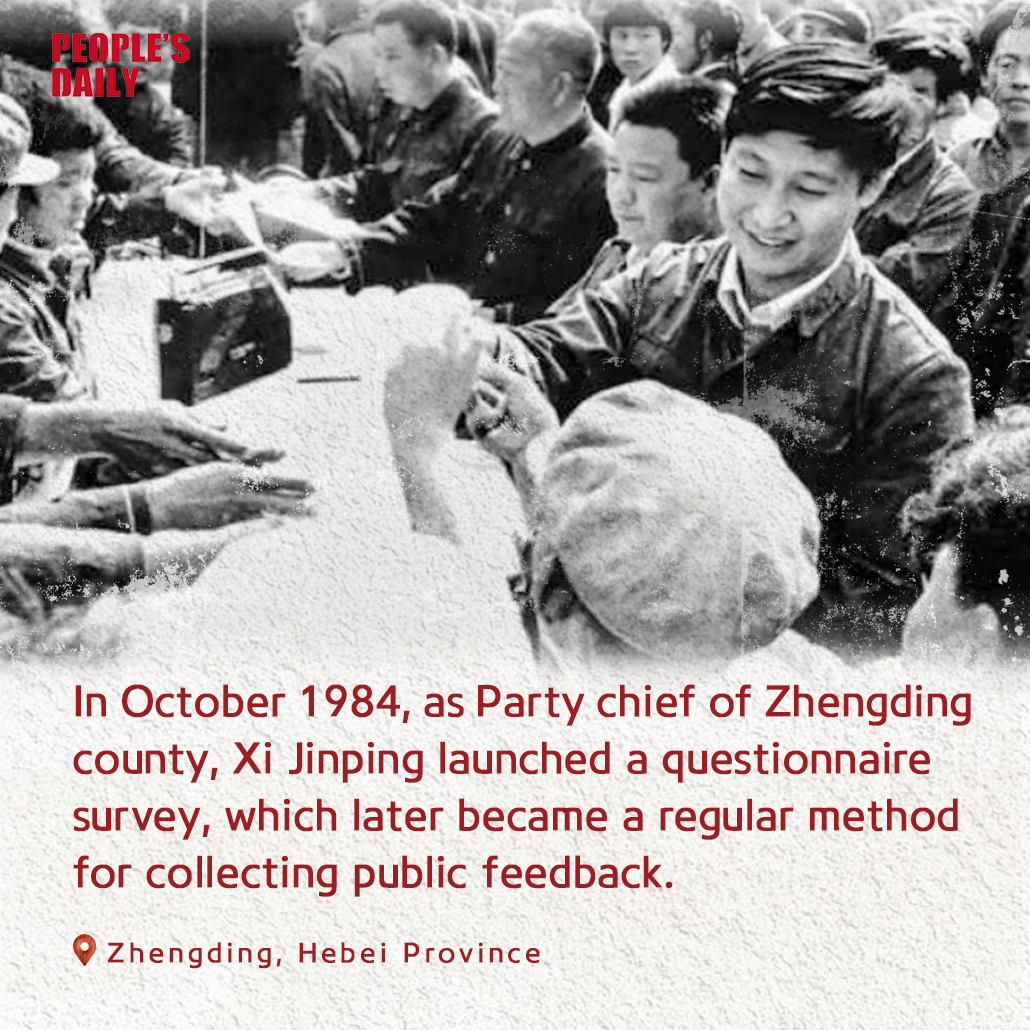
During the urban development boom of the 1980s and 1990s, the former residence of Lin Juemin, a renowned revolutionary hero, in Fuzhou's Sanfang Qixiang (Three Lanes and Seven Alleys) faced demolition. Upon learning this, Xi Jinping immediately halted the plan. In March 1991, he held a site meeting on cultural heritage, preserving the ancient city's cultural roots.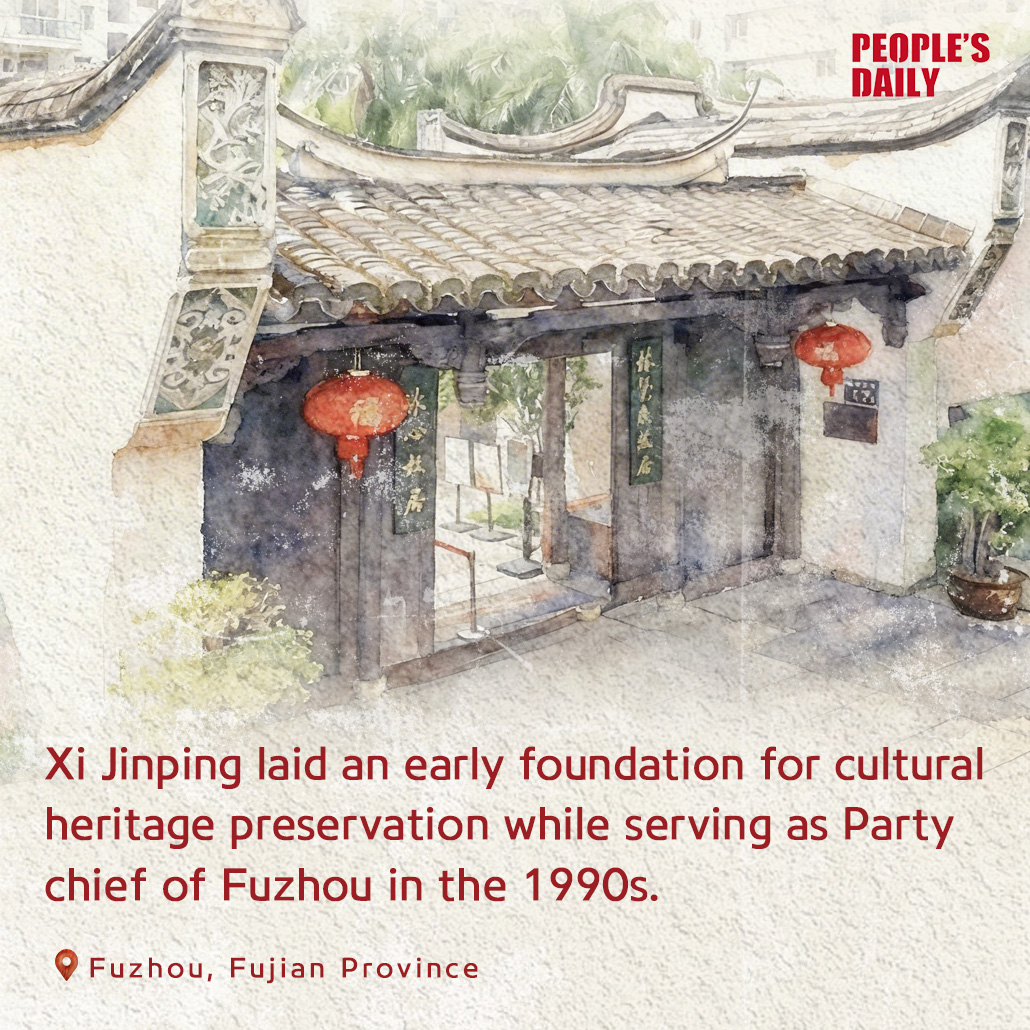
In the early 2000s, the West Lake in Hangzhou, Zhejiang Province, faced shrinking water area, deteriorating water quality, damaged landscapes, and encroached public spaces. Xi Jinping, then Party chief of Zhejiang Province, conducted multiple surveys and set principles for its comprehensive restoration. Over 180 historical and cultural sites were restored, and the lake's area gradually recovered.
In June 2011, the West Lake Cultural Landscape was inscribed on the World Heritage List.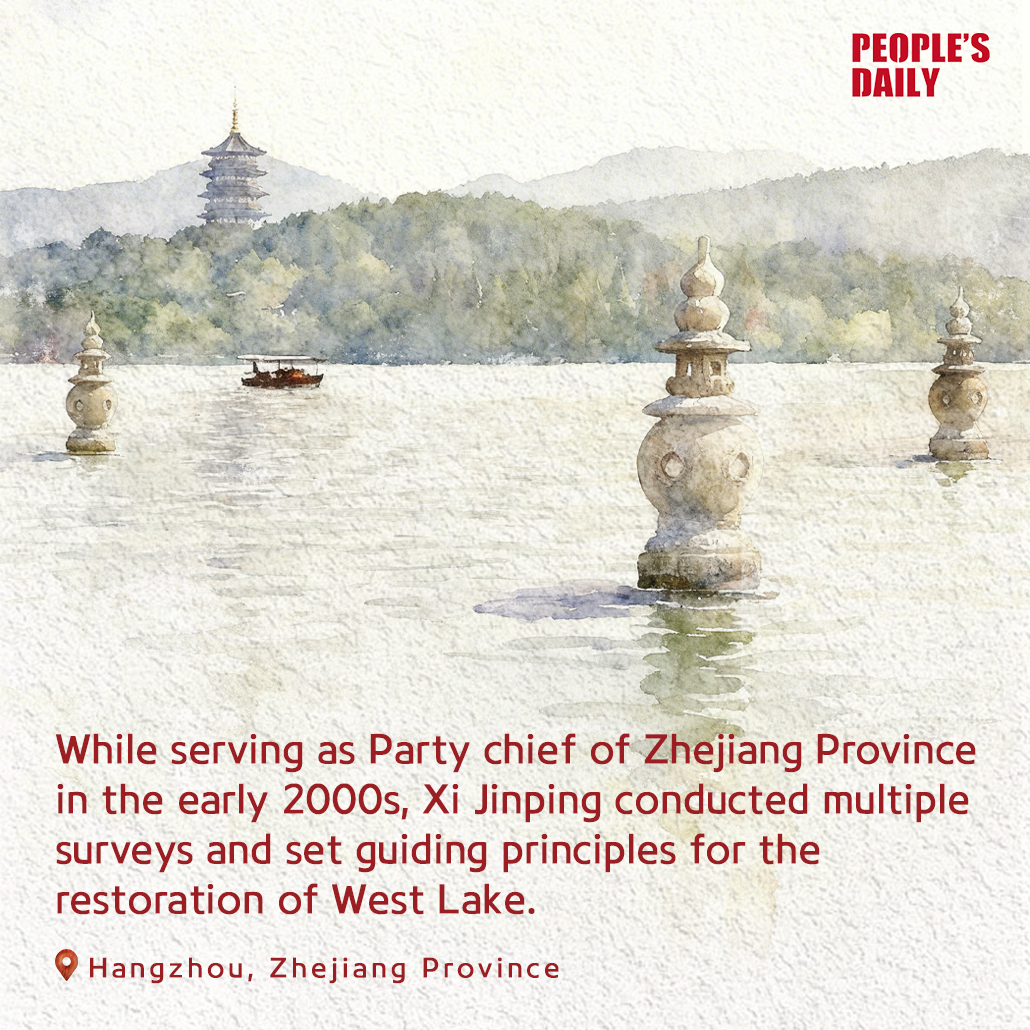
For generations, residents in some of Shanghai's old alleys relied on chamber pots, a basic hardship that drew Xi Jinping's attention when serving as Party chief of Shanghai in 2007. During grassroots visits, he often spoke of renovating old neighborhoods. After sustained efforts, by September 2025, Shanghai had essentially completed its citywide program to eliminate "bucket toilets."