


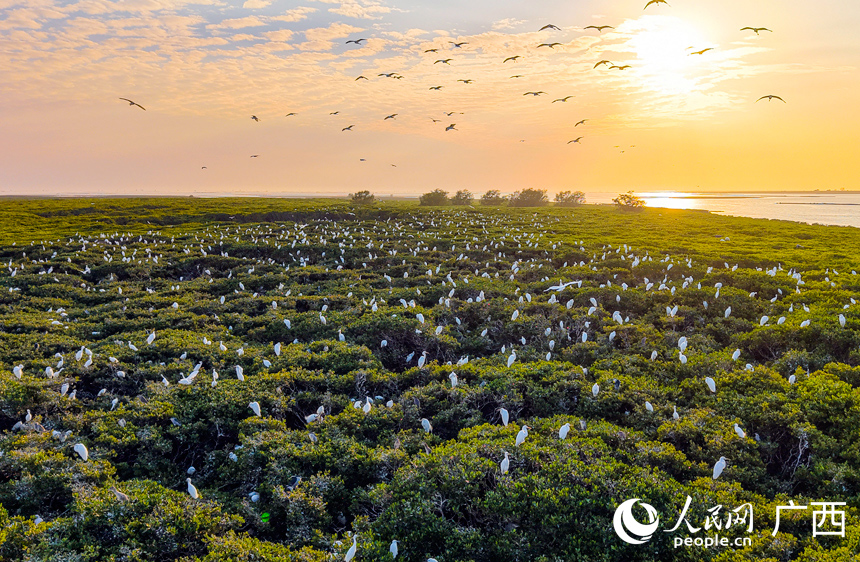
A large flock of migratory birds, including egrets, spotted doves, and pied avocets, are seen in the mangrove forests of Qixing Island, Shagang township, Hepu county, south China's Guangxi Zhuang Autonomous Region. (Photos: People's Daily Online)
Large flocks of migratory birds, including egrets, spotted doves, and kingfishers, were recently seen in the mangrove forests on Qixing Island, Shagang township, Hepu county, south China's Guangxi Zhuang Autonomous Region.
At times, the birds skimmed low over the water before soaring into the air again, forming rolling waves of movement that created a spectacular sight.
These birds have been resting in the mangroves at night and foraging on the mudflats at dawn since the start of this winter, according to an executive of the mangrove resources conservation center of Hepu county.
From September to March each year, large numbers of migratory birds inhabit the mangrove wetlands of Hepu. So far, more than 160 bird species have been recorded thanks to the improving coastal ecology, vast tidal flats, and rich natural resources, the executive noted.
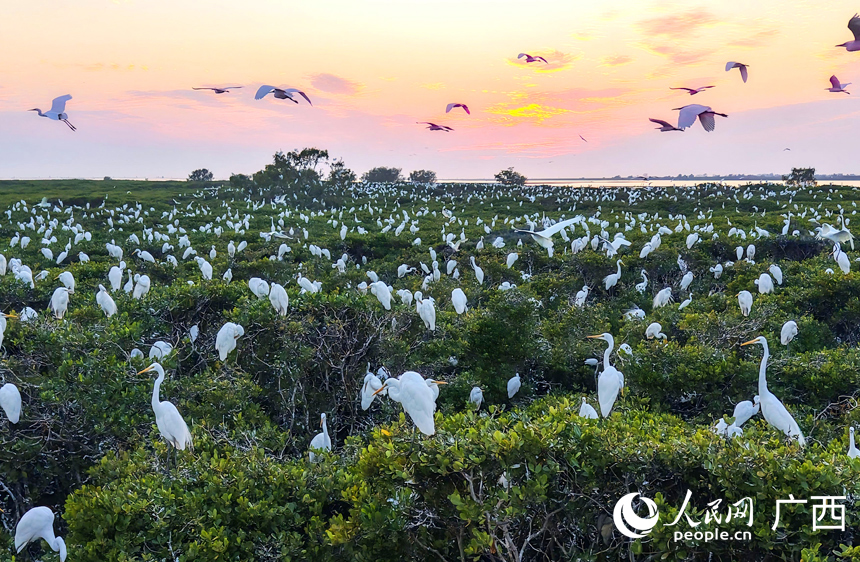
A large flock of migratory birds, including egrets, spotted doves, and pied avocets, are seen in the mangrove forests of Qixing Island, Shagang township, Hepu county, south China's Guangxi Zhuang Autonomous Region.
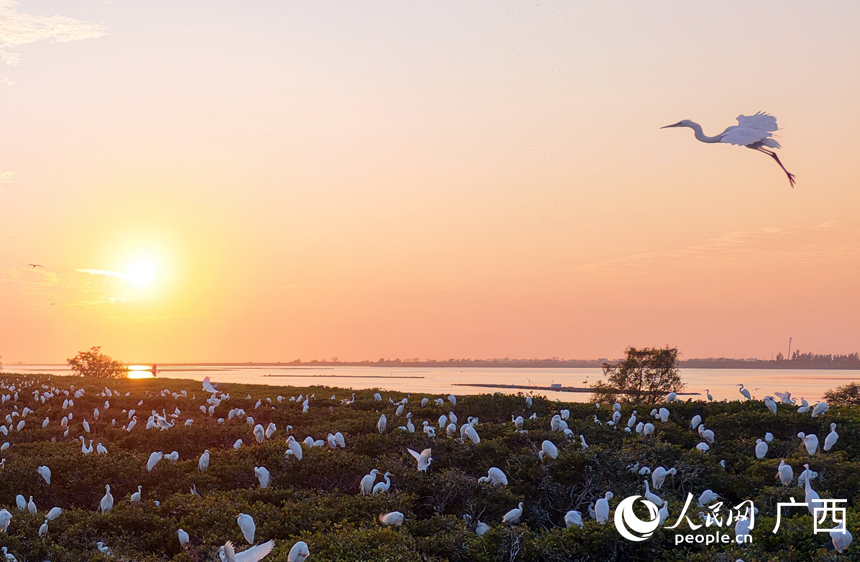
A migratory bird takes flight at sunset over the coastal mangroves on Qixing Island, Shagang township, Hepu county, south China's Guangxi Zhuang Autonomous Region.
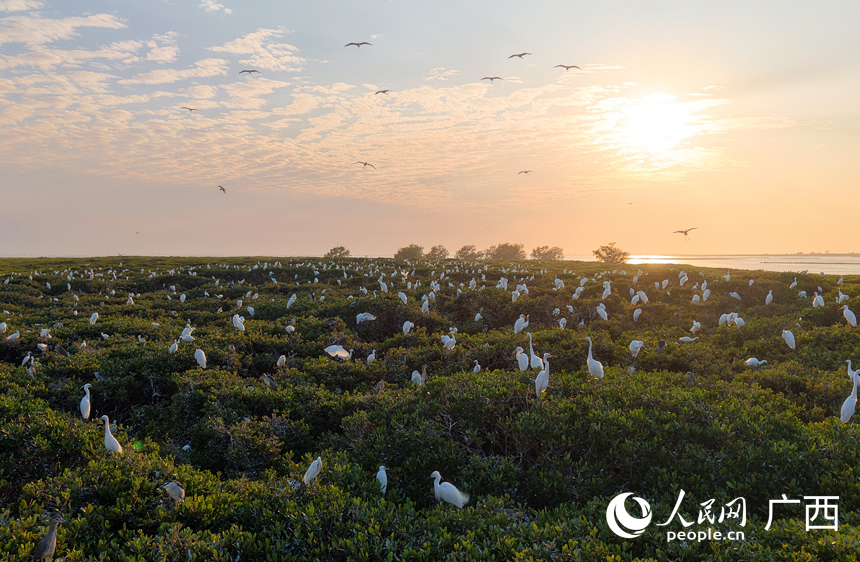
Photo shows migratory birds resting and feeding in the lush mangrove forests of Qixing Island, Shagang township, Hepu county, south China's Guangxi Zhuang Autonomous Region.
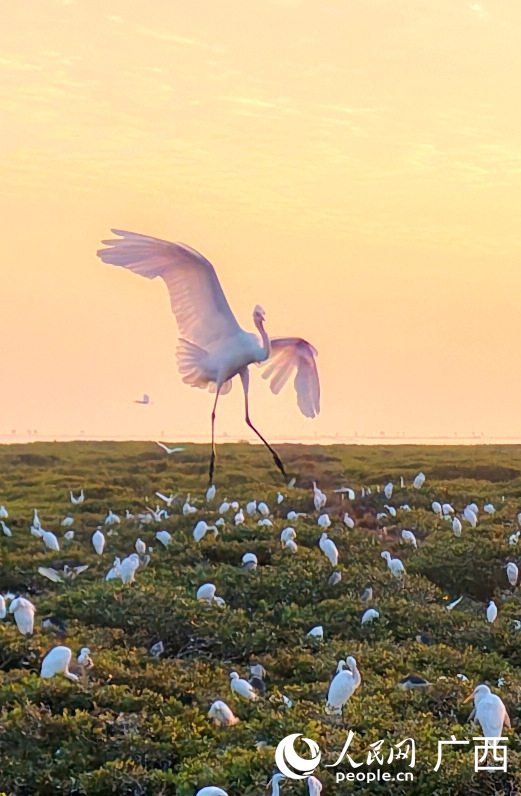
A migratory bird spreads its wings above the lush mangrove forests of Qixing Island, Shagang township, Hepu county, south China's Guangxi Zhuang Autonomous Region