


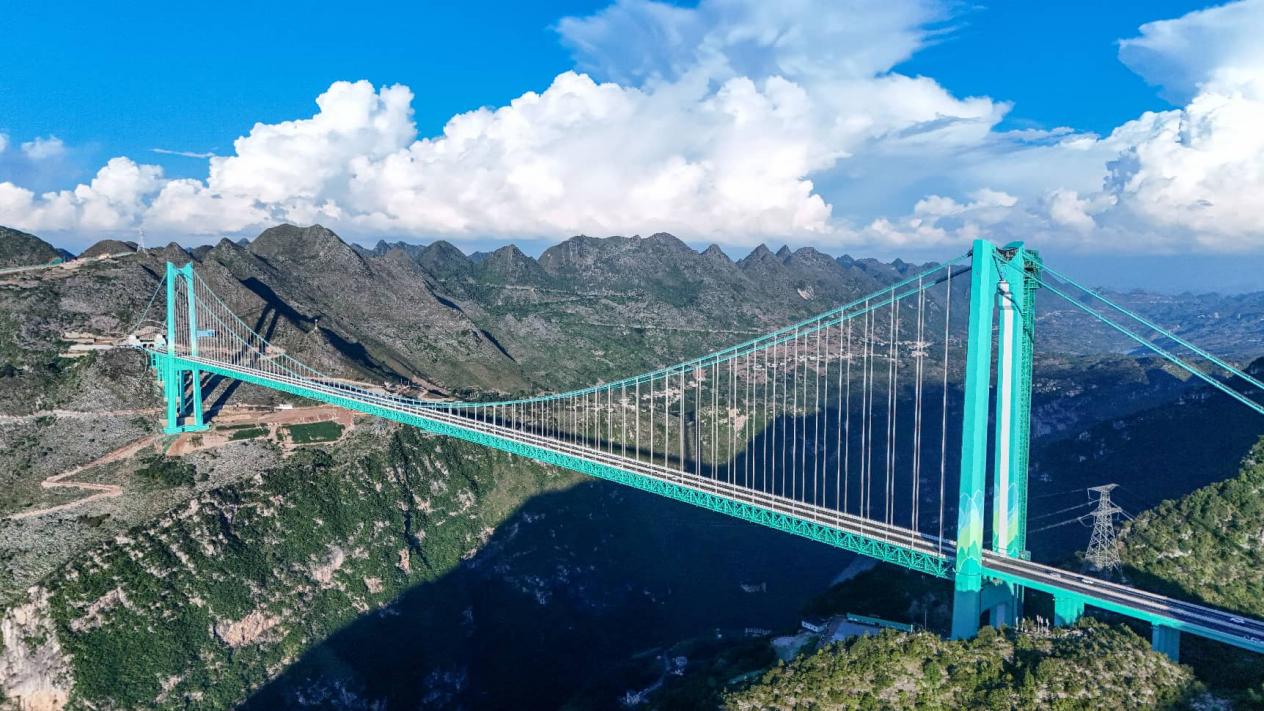
Photo shows the Huajiang Grand Canyon Bridge. (Photo/Li Yunfeng)
Since the beginning of this year, the Yundu service area at the Huajiang Grand Canyon Bridge in southwest China's Guizhou Province has drawn more than 1.3 million tourist visits and over 300,000 vehicles.
After opening to traffic Sept. 28 last year, the bridge, recognized as the world's highest bridge, has become one of the country's most popular tourist destinations in just over half a year.
Spanning the Huajiang Grand Canyon and linking Zhenfeng county and Guanling Buyi and Miao Autonomous County, the bridge soars 626 meters above the Beipan River. With a main span of 1,420 meters, the project is also the world's longest-span steel truss girder suspension bridge.
Building it was no easy feat. The canyon's complex terrain and volatile weather can generate strong gusts, making construction operations especially difficult, said Han Hongju, deputy general manager and chief engineer at Guizhou Communications Investment Group Co., Ltd. Engineers deployed Doppler laser wind radar to monitor wind speeds around the clock and conducted wind tunnel tests to fine-tune the bridge's aerodynamics, and installed stabilizing panels that disperse turbulent gusts.
Tourism functions were integrated into the bridge's design from the outset. "We laid a blue rubber track on the wind-stabilizing panels to create a high-altitude sprint track. Secured with safety harnesses, visitors can walk or run high above the canyon — a perfect fusion of engineering function and tourism appeal," said Li Can, head of market operations at the Yundu service area.
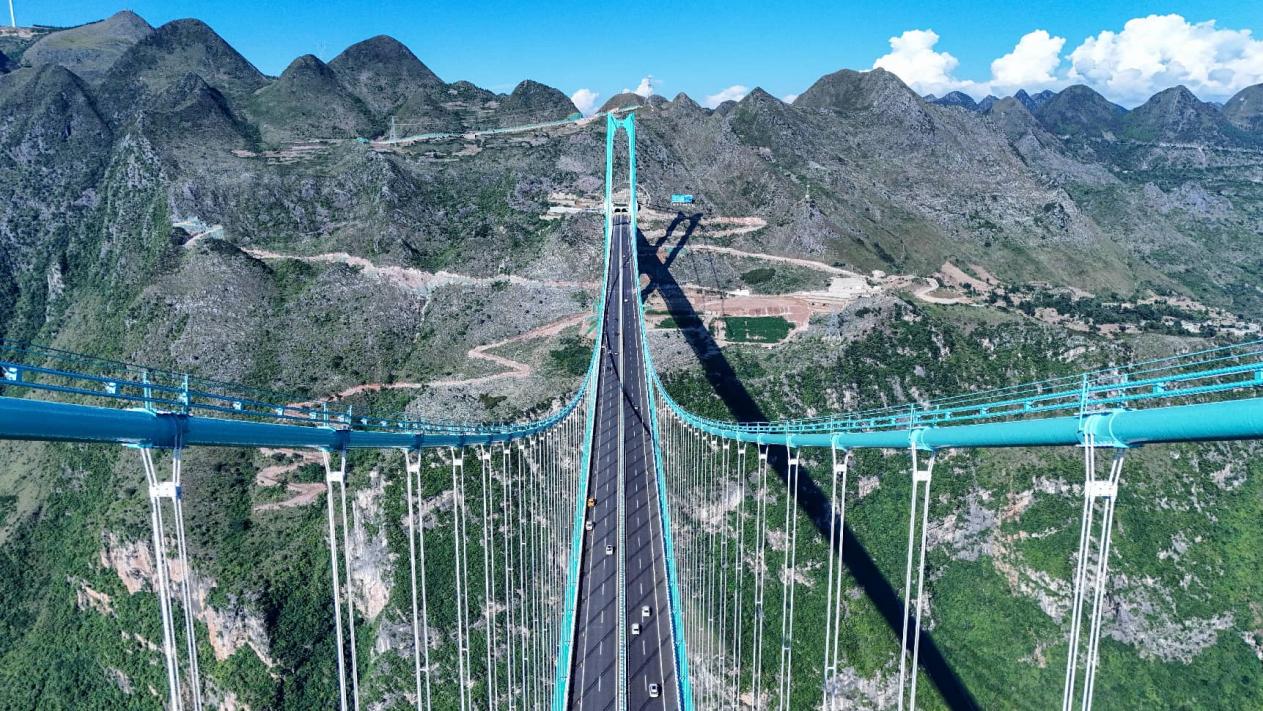
Photo shows the Huajiang Grand Canyon Bridge. (Photo/Li Yunfeng)
Temporary access roads used during construction have been widened into tourist roads, while the bridge's original maintenance walkways have been converted into sightseeing corridors.
Li described the bridge as the third generation of Guizhou's bridge-tourism model, which combines bridge access with a service area and enables visitors to walk on the bridge.
The Yundu service area has gone beyond the traditional role of a highway rest stop, evolving into a culture and tourism complex that integrates sightseeing, immersive experiences, shopping and accommodation. It operates under a public-private partnership model.
Offerings include a coffee shop, VR bungee jumping, cultural and creative products, a cliffside hotel and a water-screen light show. During this year's May Day holiday, the service area also launched open-air concerts and night markets.
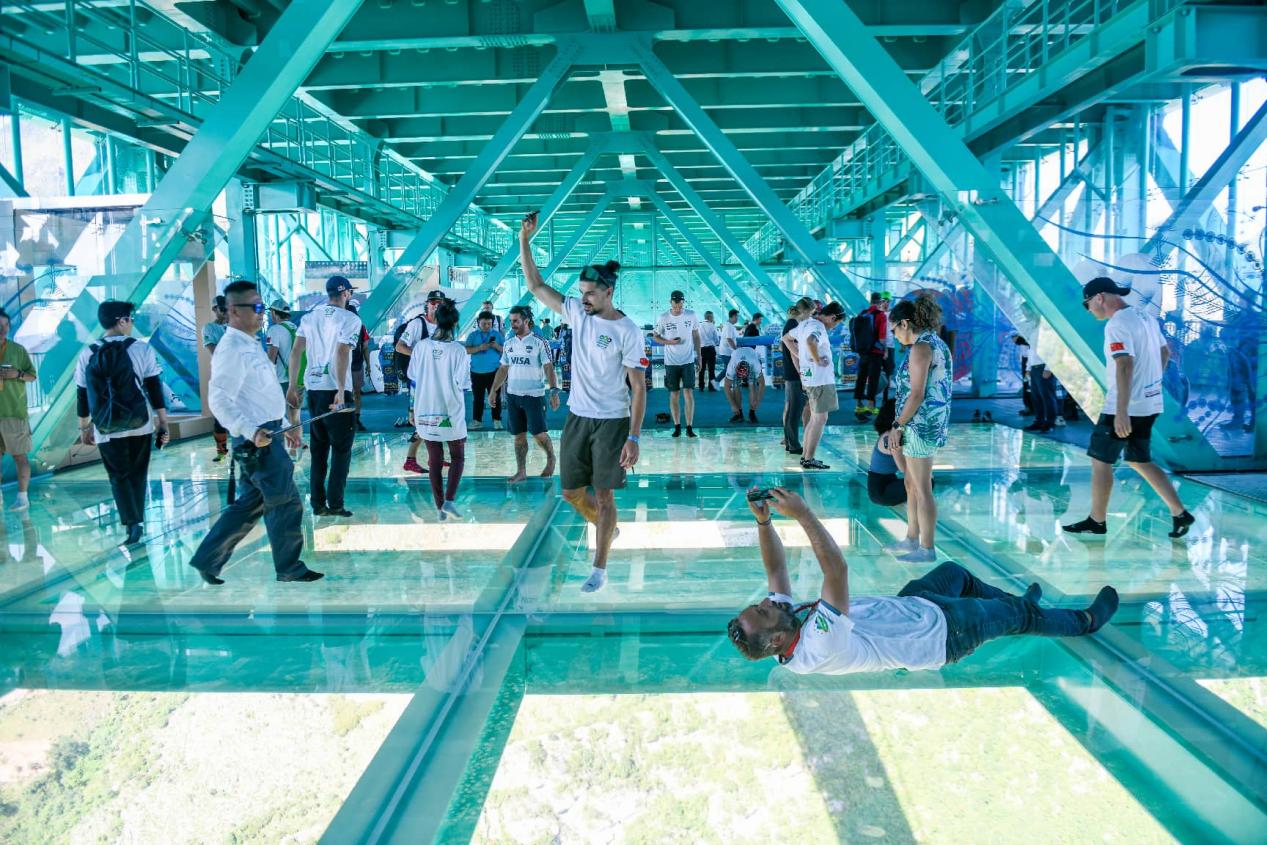
Tourists walk on a glass sightseeing walkway of the Huajiang Grand Canyon Bridge. (Photo/Liu Zhaofu)
"We are also advancing programs, including educational tours, so that tourists can do more than just take photos and can also learn about bridge engineering and geology," Li said.
Below the bridge, Xiaohuajiang, once a fading village with only elderly residents remaining, has become a hub for B&Bs. The village now has 16 operating B&Bs, 14 more under construction, and five restaurants, with more than 40 former migrant workers returning home to start businesses.
The bridge has created more than 400 direct jobs and helped support over 2,000 more indirectly. During this year's May Day holiday, the Huajiang Grand Canyon Bridge tourist area drove year-on-year growth of 67.87 percent in tourist visits and 71.6 percent in total tourism spending in Zhenfeng county.