


Step into a virtual archaeological dig at Sanxingdui Museum through XR
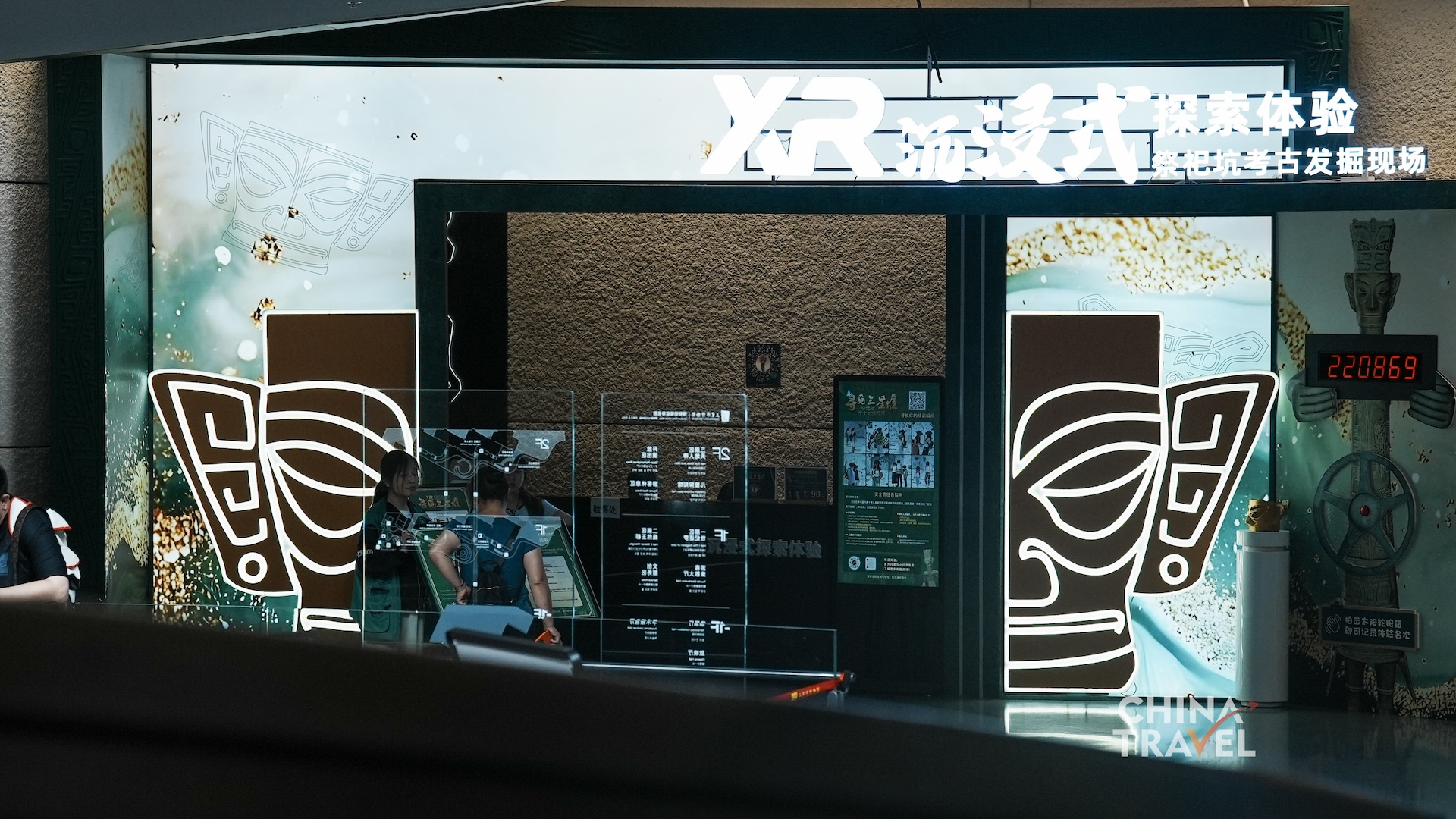
Oversized mask graphics introduce the entrance to the extended reality (XR) archaeology experience and its virtual journey into the ancient world of Sanxingdui at the new Sanxingdui Museum in Guanghan, Sichuan Province. (Photos: CGTN)
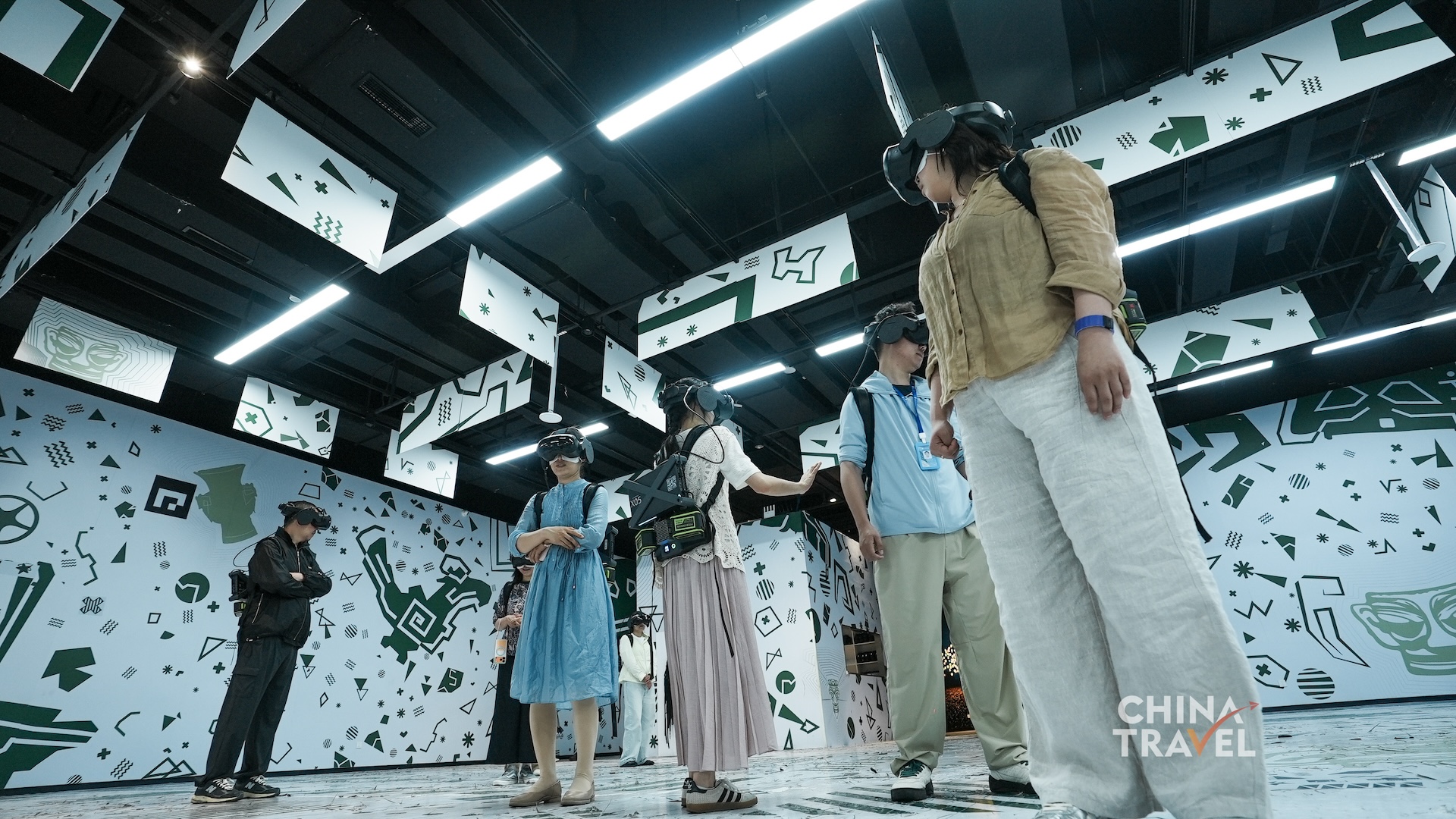
Wide views show multiple participants moving independently within one mapped play area supported by headsets and backpack computers at the new Sanxingdui Museum in Guanghan, Sichuan Province.
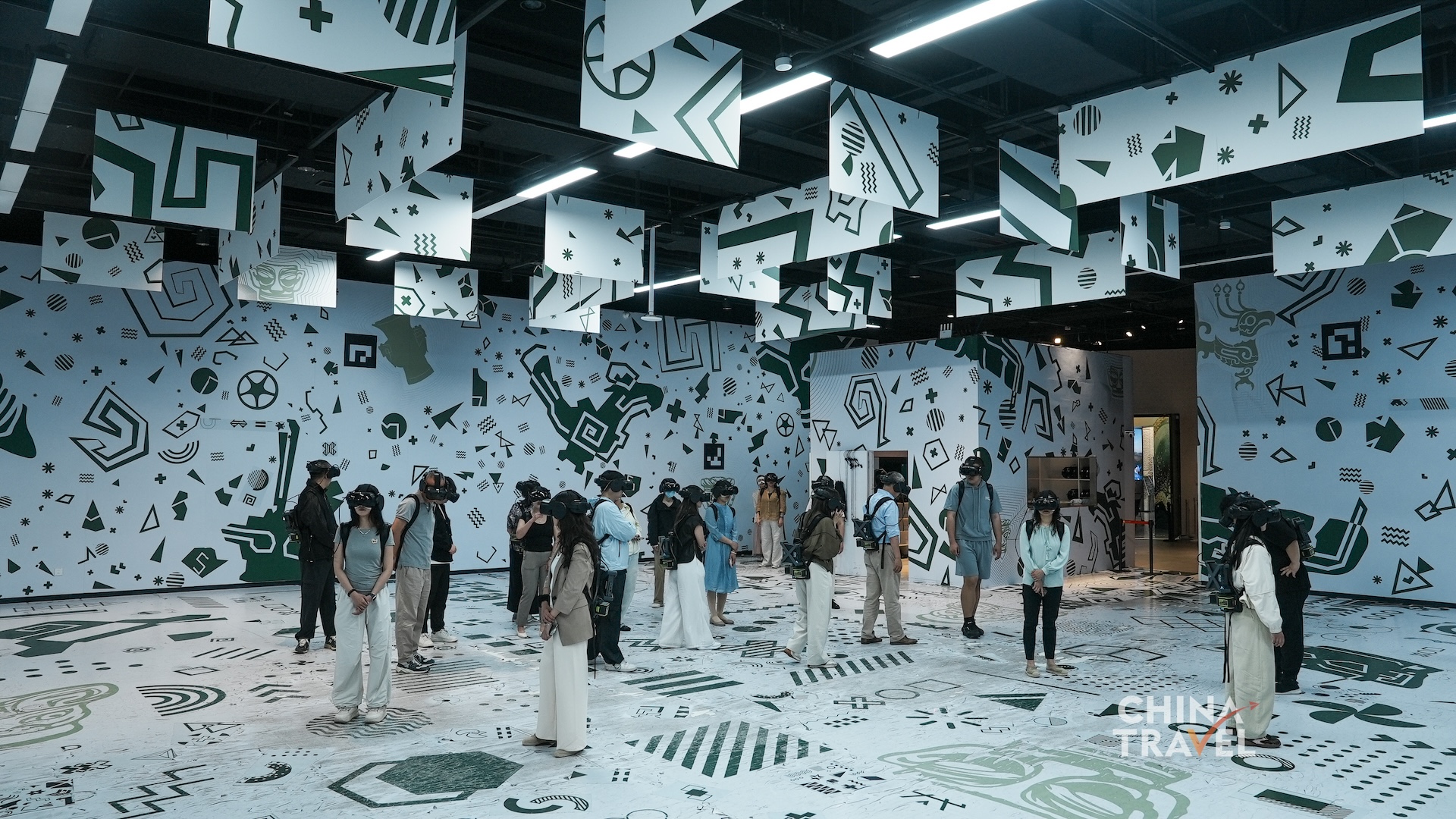
Wide views show multiple participants moving independently within one mapped play area supported by headsets and backpack computers at the new Sanxingdui Museum in Guanghan, Sichuan Province.
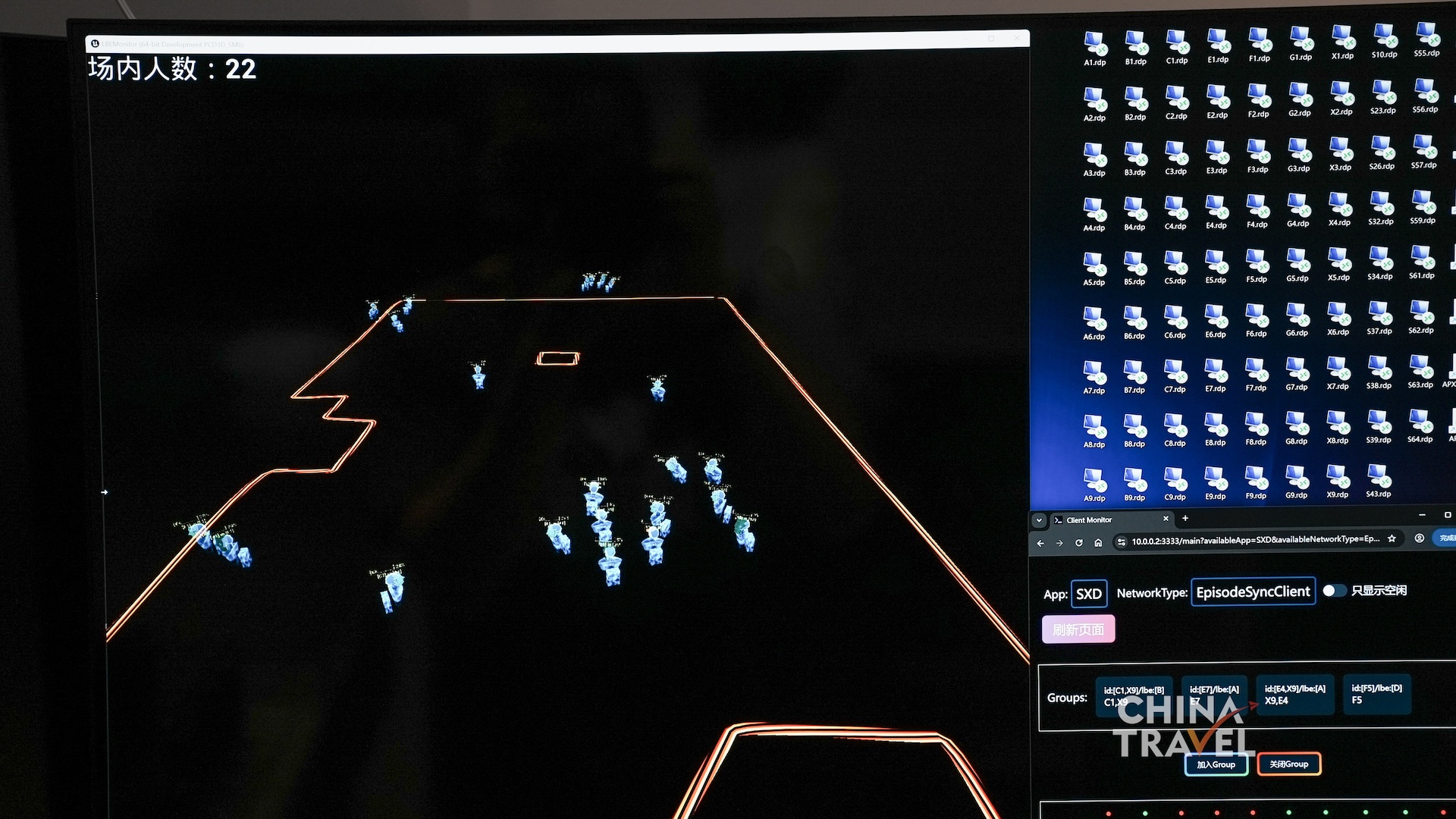
A control monitor shows participants moving within one mapped play area supported by headsets and backpack computers at the new Sanxingdui Museum in Guanghan, Sichuan Province.
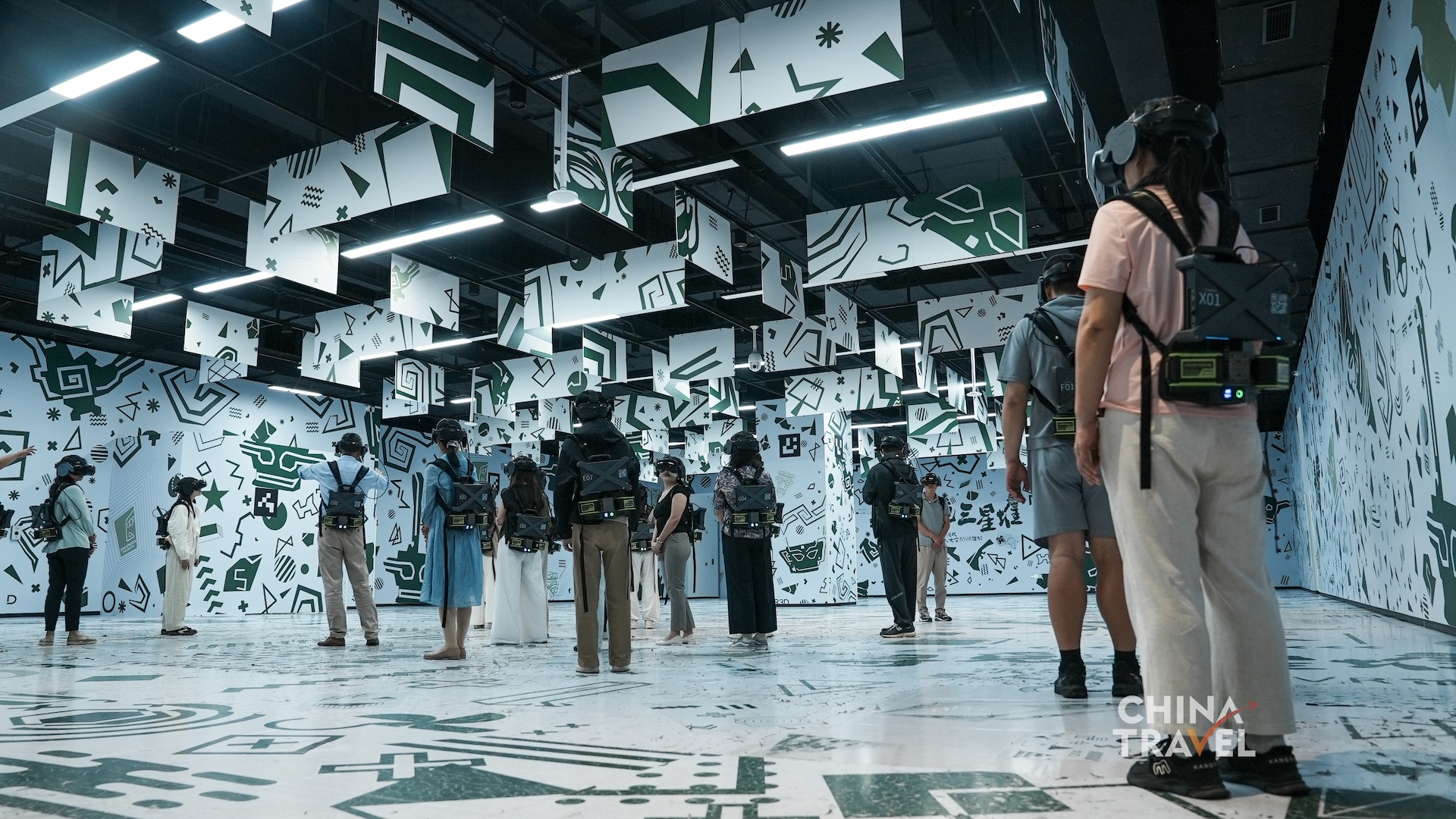
Wide views show multiple participants moving independently within one mapped play area supported by headsets and backpack computers at the new Sanxingdui Museum in Guanghan, Sichuan Province.
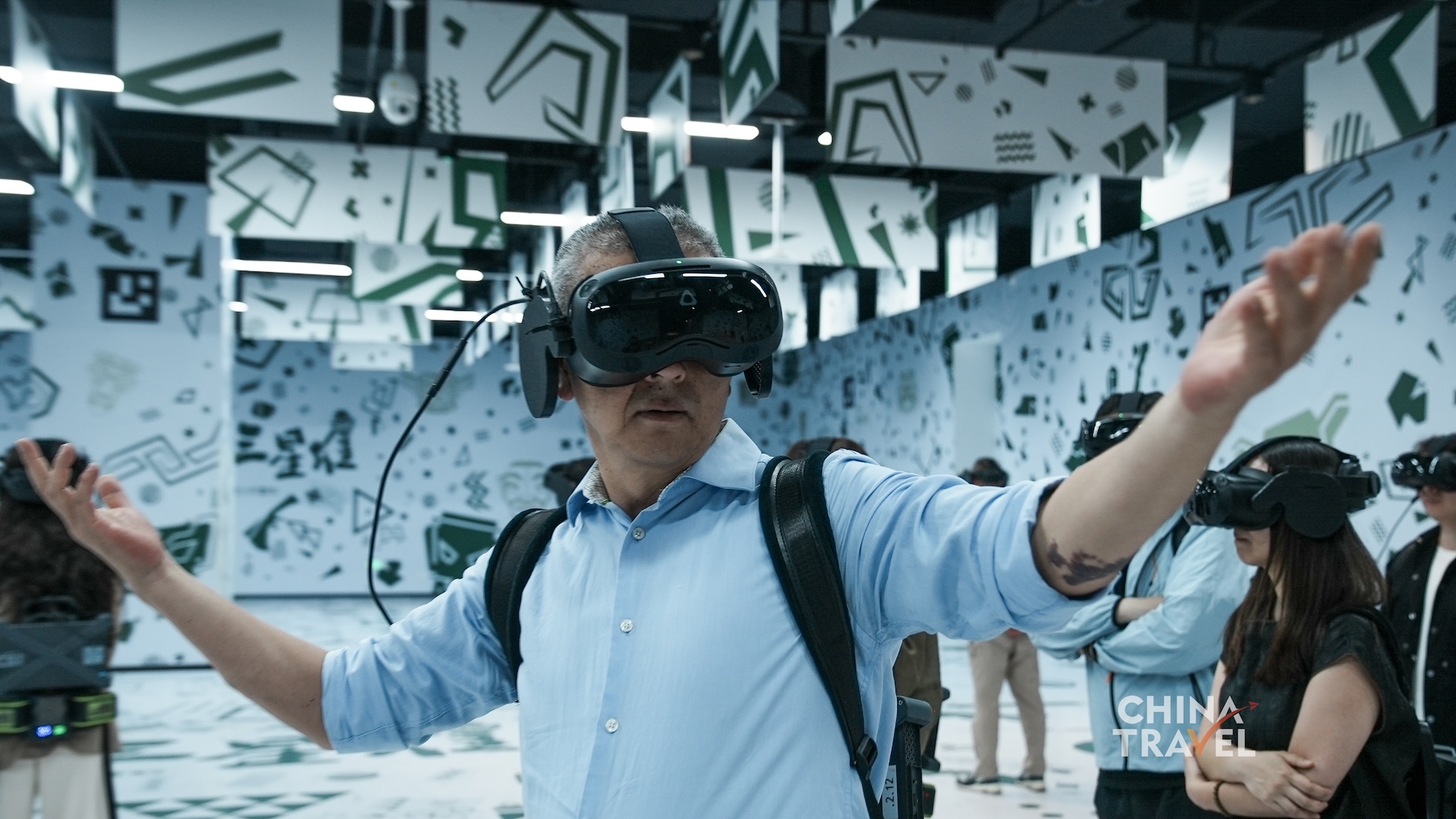
Visitors adjust headsets, enter the tracked room and use physical gestures to interact with the shared virtual environment at the new Sanxingdui Museum in Guanghan, Sichuan Province.
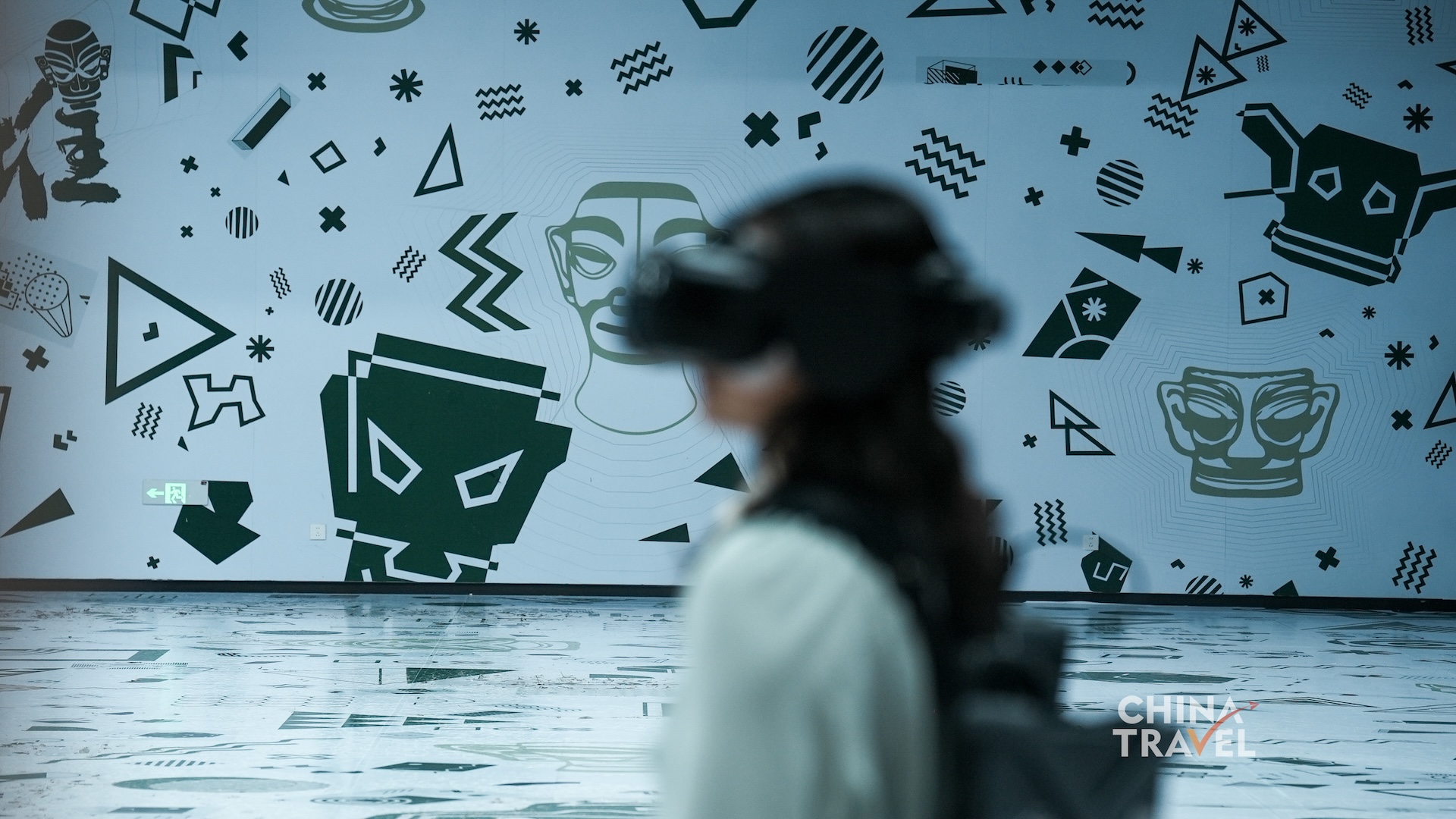
Visitors adjust headsets, enter the tracked room and use physical gestures to interact with the shared virtual environment at the new Sanxingdui Museum in Guanghan, Sichuan Province.
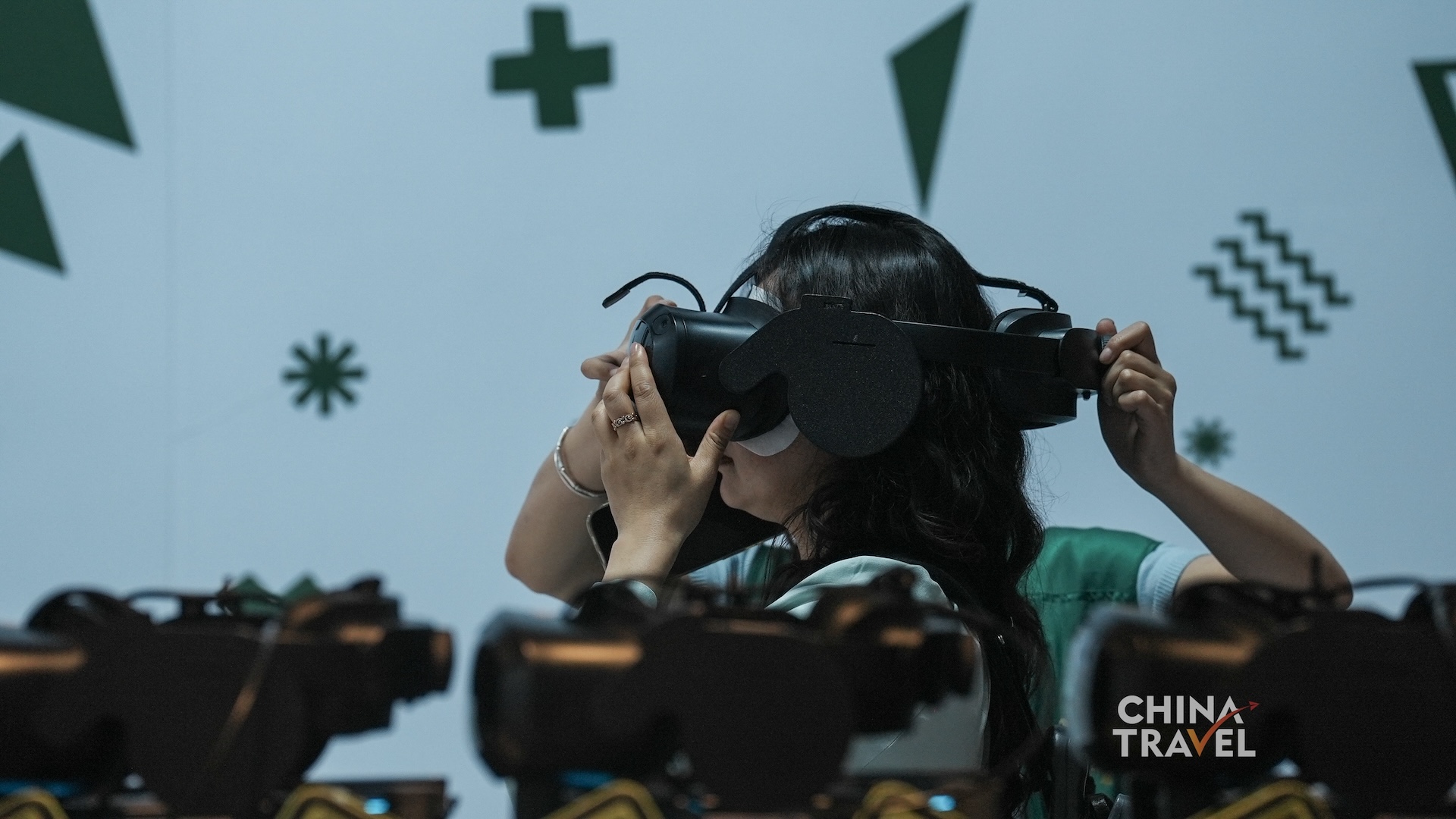
Visitors adjust headsets, enter the tracked room and use physical gestures to interact with the shared virtual environment at the new Sanxingdui Museum in Guanghan, Sichuan Province.
Extended reality (XR) changes the visitor's point of view. At the new Sanxingdui Museum in Guanghan, Sichuan Province, wearing a headset and tracked backpack, participants can move through reconstructed spaces, approach enlarged artifacts and encounter stages of archaeological work that are normally inaccessible.
A shared system tracks many people at once, allowing physical movement to correspond with positions inside the virtual environment. This sense of presence can make spatial relationships – between a pit, an excavation shelter, a conservation area and a museum display – easier to understand. Yet the experience is still an interpretation built from research, design and technical choices. When these interpretive choices and limitations are made clear, XR does not replace the evidence; it offers a new route into it, inviting visitors to learn through movement, observation and curiosity.