


High hopes rise for tourism recovery at Cambodia's famed Angkor Park as peak season arrives
SIEM REAP, Cambodia, Nov. 9 (Xinhua) -- Beneath the warm November sun casting a golden glow over the towers of iconic Angkor Wat in Cambodia's Angkor Archaeological Park, a quiet wave of optimism is sweeping through this ancient kingdom.
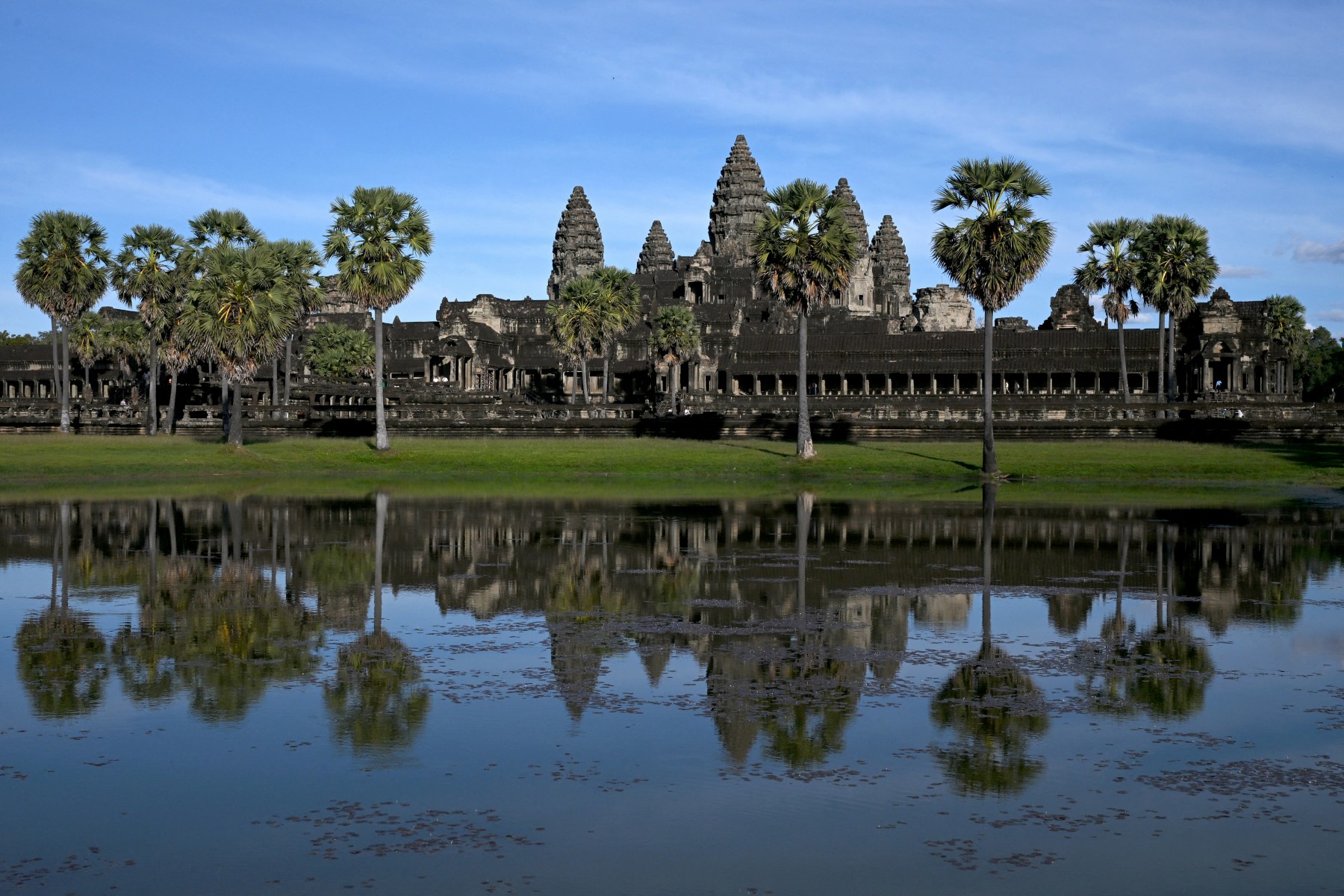
File photo: AFP
As the peak travel season kicks off, the historic stones of Angkor Wat are once again echoing with the footsteps of global travelers, bringing a renewed sense of hope to the locals who depend on them.
For 28-year-old To Mach, a souvenir vendor who has spent the last four years amidst the majestic backdrop of Angkor Wat, the changing season brings more than just cooler weather; it brings the promise of revival. Her stall, a vibrant tapestry of intricately carved sculptures, Angkor-printed shirts, woven bracelets, colorful bags, and traditional scarves, is ready for the world.
After a prolonged slump that began last year, Mach is finally seeing the first signs of a comeback.
The kingdom's high tourist season, running from November through February, with December and January marking the vibrant crescendo, is officially underway. While the initial trickle of international visitors is gentle, it represents a vital turning point.
"Currently, tourist numbers are modest, but the energy is starting to shift," Mach told Xinhua on Sunday.
Reflecting on recent hardships, she noted that the global economic slowdown and regional tensions had heavily quieted the bustling markets she once knew. Yet, rather than dwelling on the past, her focus is fixed firmly on a brighter horizon.
"I'm eager to see more foreign and domestic tourists come and visit Angkor Wat," Mach said. "When the world comes here, our livelihoods flourish."
The sentiment is echoed by Nou Rattana, a 43-year-old tuk-tuk driver whose livelihood is intricately tied to the rhythm of Siem Reap's tourism. Rattana agreed that while the global economic climate and border tensions with Thailand slowed momentum, the tide is turning.
Since the dawn of November, the trickle of international arrivals at Angkor has steadily transformed into a promising stream.
"It's expected that from mid-November, more international tourists will be coming," he told Xinhua.
For Rattana and thousands of others in Siem Reap province, every arriving flight and every smiling face represents a step toward community-wide recovery.
"I am so deeply keen to see our streets and temples alive with local and foreign visitors again," he said. "When tourism breathes, our communities thrive. A bustling Angkor means a better, brighter life for all of us."
Joining the chorus of hopeful voices is Un Kimyoeun, an English-speaking tour guide who walks the historic pathways of the Angkor Archaeological Park daily.
He noted that while local, regional, and global headwinds brought a challenging quiet to the temples earlier this year, the atmosphere is finally shifting.
"Since the start of November, we have seen a truly welcome increase in both national and international tourist numbers," the 63-year-old tour guide said.
Spread across a sprawling 401 square kilometers in northwestern Siem Reap province, the Angkor Archaeological Park is the crown jewel of Cambodia's tourism. It encloses 91 breathtaking temples built between the ninth and 13th centuries, monuments that have survived centuries of change and are now waiting to welcome the world back.
The road to recovery follows a period of undeniable hardship. According to the state-owned Angkor Enterprise, the UNESCO World Heritage site welcomed 955,131 international visitors in 2025, a 6.7 percent dip from the previous year. That slump deepened into the first 10 months of 2026, with foreign arrivals dropping by 26 percent to 566,714.
Industry experts attribute the downturn to global travel anxieties, including rising fuel costs from Middle East conflicts and border frictions.
Yet, tourism leaders believe the soul of Angkor remains untouched by these temporary challenges.
Thourn Sinan, chairman of the Pacific Asia Travel Association Cambodia Chapter, looks toward the future with optimism. For him, the global appeal of the temples is permanent.
"Angkor Wat is not simply another tourist attraction; it is an extraordinary part of humanity's cultural heritage," he told Xinhua.
He explained that the lower numbers do not mean Angkor has lost its magic. Instead, they reflect broader global struggles with travel access, international demand, and destination confidence.
He added that the beauty of the temples remains as powerful as ever; it is simply a matter of reconnecting the world to them.
"My expectation is that Angkor can and will fully recover," Sinan said. "But this revival must be championed by bolder international marketing, seamless travel connections, and a richer, broader range of high-quality experiences that showcase the very best of Siem Reap province."
As the peak season brightens the skies over Cambodia, the foundation for that comeback is already being laid, one footstep, one smiling visitor, and one ancient temple at a time.